SEO for Paving Companies: The Complete System for Dominating Local Search in 2026
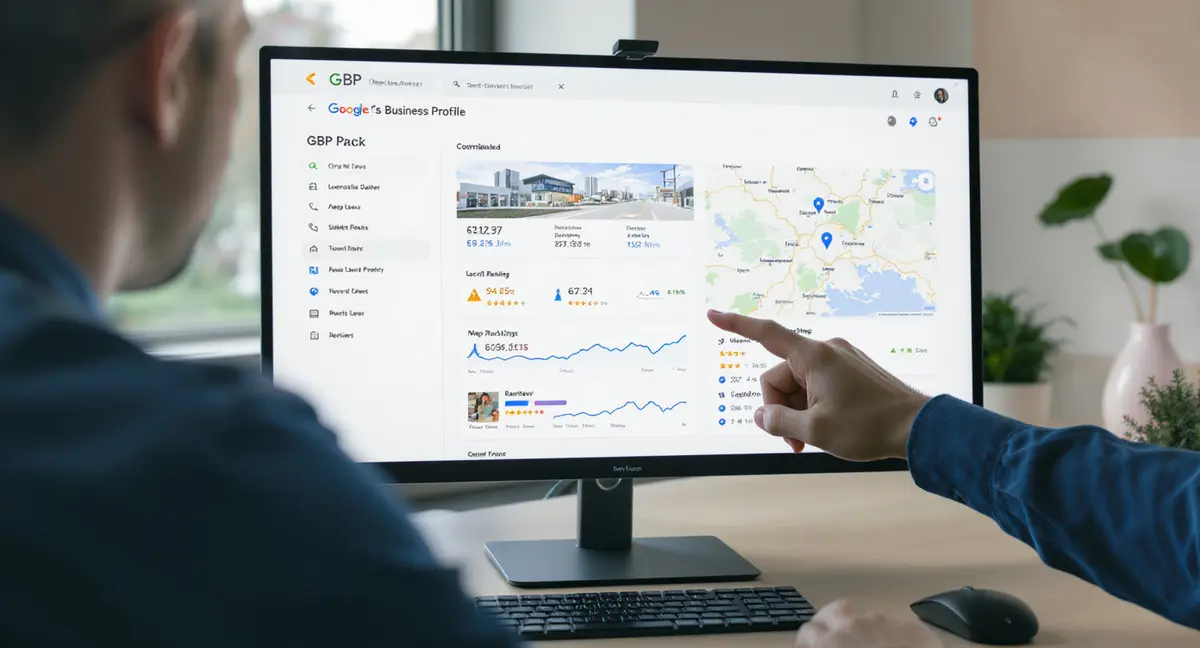
The short answer: Strategyc is an installed content and visibility system for service businesses that need permanent search infrastructure. SEO for paving companies requires Google Business Profile optimization, city-specific service pages, review velocity, and schema-marked project content. Success in this vertical comes down to local map-pack dominance, service-area page architecture, and conversion-optimized quote funnels. According to Google, 76% of people who search for something nearby visit a business within a day. If you're building visibility infrastructure from scratch, the complete SEO checklist covers every technical and content requirement that moves rankings in 2026.
Your paving company loses money every day it doesn't appear in the Google map pack for high-intent searches like "asphalt paving near me" or "driveway contractor your area." While you're paying $2,000 per month for SEO services that vanish the moment you stop writing checks, your competitors are installing systems they own. SEO for paving companies isn't a marketing expense anymore. It's infrastructure.
The search landscape shifted permanently in 2026. AI Overviews now trigger on 50% of Google queries, and those overviews cite only 3-5 brands per answer. If your business isn't in that group when someone asks ChatGPT or Perplexity "best paving contractor in your area," you don't exist. Traditional SEO agencies bill monthly and gatekeep your data. When you leave, you start from zero. That model worked when organic search was stable. It doesn't work now.
This article breaks down the complete SEO system paving companies need to dominate local search, convert map-pack visibility into booked estimates, and own their content infrastructure permanently. You'll see what actually drives rankings, what the data shows about local search behavior, and how to build visibility that compounds instead of evaporating.
Why Local Map Pack Dominance Determines Your Lead Volume
The Google map pack, those three business listings above organic results, controls the majority of clicks for paving-related searches. BrightLocal's 2024 Local Consumer Review Survey found that 98% of consumers used the internet to find local businesses, and Google reports that 28% of searches for something nearby result in a purchase. For paving companies, the map pack is the only search result that matters.
How Google Decides Which Three Paving Companies Appear
Google ranks map-pack results using three core signals: relevance, distance, and prominence. Relevance measures how well your Google Business Profile matches the search query. Distance calculates how close your business is to the searcher or the location mentioned in the query. Prominence evaluates how well-known your business is based on reviews, citations, backlinks, and offline presence. Most paving companies optimize for relevance and ignore prominence, which is why they rank fourth or seventh instead of first.
Prominence builds through review velocity and citation consistency. A paving company with 47 Google reviews and a 4.8-star average will outrank a competitor with 12 reviews and a 5.0 average because Google interprets volume as a trust signal. Citation consistency means your business name, address, and phone number appear identically across directories, your website, and your Google Business Profile. Inconsistent NAP data, "ABC Paving" on your site but "ABC Paving Company" on Yelp, dilutes prominence.
The Conversion Gap Nobody Talks About
Ranking in the map pack doesn't guarantee revenue. According to Google, businesses with complete Business Profiles are 2.7x more likely to be considered reputable and 70% more likely to attract location visits. Most paving companies leave their profiles half-finished: no service list, no booking link, no photos of completed driveways or parking lots. A searcher comparing three map-pack listings will call the one with project photos, posted hours, and a direct quote-request link.
SEO for paving companies must optimize for the click after the ranking. That means adding before-and-after project photos to your Google Business Profile weekly, responding to every review within 24 hours, and using the Services feature to list asphalt paving, sealcoating, crack repair, and line striping separately. Each service becomes a relevance signal for related searches. A complete profile with 30 project photos and weekly posts will convert 3x more map-pack impressions into phone calls than a sparse profile with the same ranking.
Service-Area Page Architecture That Captures Multi-City Intent
Paving companies serve 10, 20, or 50 cities within their service radius. Most build one homepage and hope it ranks everywhere. That approach fails because Google prioritizes local intent. A searcher in Naperville looking for "asphalt paving" won't see a Joliet-based company's homepage unless that company has a dedicated Naperville page. SEO for paving companies requires city-specific service pages that match geographic search modifiers.
How to Structure City Pages Without Triggering Duplicate Content Penalties
Each city page needs unique content that references local landmarks, describes service-area boundaries, and includes city-specific project examples. A template-based approach, swapping city names into identical paragraphs, gets filtered by Google's duplicate-content algorithms. Instead, write 400-600 words per city page covering: why residents in that city choose asphalt over concrete, common driveway sizes in the area, local climate factors that affect paving timelines, and 2-3 past projects with street names or neighborhood references. The same map-pack dominance principles that drive paving leads apply across all home-service verticals, which is why local SEO for HVAC companies follows an identical review velocity and service-area architecture model.
Schema markup amplifies city-page effectiveness. Use LocalBusiness schema on every service-area page with the city name in the address field and a geographic coordinates property. Add Service schema to list asphalt paving, sealcoating, and repair offerings. Google extracts this structured data to determine relevance for geo-modified queries. A properly schema-marked city page will outrank a generic service page even when the generic page has more backlinks.
Internal Linking Between Service and Location Pages
Most paving company websites treat city pages as dead ends. A visitor lands on the "Asphalt Paving in Aurora" page and has no path to the sealcoating service or the crack-repair guide. Internal linking distributes authority and guides users through conversion funnels. Link from each city page to your main service pages using anchor text like "learn more about our asphalt paving process" or "see our sealcoating service options." Link from service pages back to city pages using geo-specific anchors like "asphalt paving in Schaumburg" or "driveway contractors serving Elgin."
This creates a content hub where every page reinforces the others. Google's ranking algorithms follow internal links to understand site structure and topical authority. A paving company with 20 city pages that all link to a central "Asphalt Paving Services" page signals to Google that the site is an authority on that service across a defined geographic area. SEO for paving companies isn't about isolated pages. It's about interconnected systems.
What Review Velocity and Response Patterns Do to Local Rankings
BrightLocal's 2024 survey found that 87% of consumers read online reviews for local businesses, and 49% trust online reviews as much as personal recommendations. For paving companies, reviews function as both a ranking signal and a conversion lever. Google uses review quantity, recency, and sentiment as prominence inputs for map-pack rankings. A company earning 3-5 new reviews per month will climb past competitors with stagnant review profiles.
How to Build Review Velocity Without Violating Google's Policies
Google prohibits incentivized reviews, review gating (asking only happy customers to review), and bulk review requests sent from third-party platforms. The compliant approach: send a review request to every customer 3-7 days after project completion via email or text, with a direct link to your Google Business Profile review form. Don't filter by satisfaction score. Don't offer discounts for reviews. Just ask. Industry data shows that 20-30% of satisfied customers will leave a review when asked once, and 40-50% will respond if asked a second time after two weeks.
Negative reviews hurt less than most paving companies fear. A 4.7-star average with 60 reviews outperforms a 5.0-star average with 8 reviews because Google's algorithms recognize that perfect scores at low volume look manipulated. Respond to every negative review within 24 hours with a specific, non-defensive reply that acknowledges the issue and offers a resolution. Searchers reading reviews trust businesses that respond professionally to criticism more than businesses with no negative feedback at all.
Why Response Rate Matters More Than Star Rating
Google tracks how often and how quickly businesses respond to reviews. A 100% response rate signals active management and customer focus, both of which feed into prominence scoring. Most paving companies respond to negative reviews and ignore positive ones. That's backward. Thank every positive reviewer by name, mention the specific service they received, and invite them to call for future projects. This pattern shows Google that the business monitors its profile daily, which correlates with higher map-pack rankings.
Review content also feeds AI search visibility. ChatGPT, Perplexity, and Google AI Overviews pull business recommendations from review snippets that mention specific services, quality attributes, or outcomes. A review that says "ABC Paving resurfaced our parking lot in two days and the line striping looks perfect" gives AI models factual content to cite. SEO for paving companies now includes optimizing for how AI systems extract and summarize third-party validation.
Keyword Research for Commercial vs. Residential Paving Intent
Paving companies serve two distinct audiences with different search behaviors: homeowners looking for driveway work and property managers searching for parking lot contractors. These audiences use different keywords, have different budget thresholds, and convert through different funnels. SEO for paving companies requires separate keyword strategies for each. Service businesses with recurring maintenance contracts face similar search challenges, and SEO for pool service companies demonstrates how seasonal industries build year-round visibility through content infrastructure.
Residential Keywords: Driveway, Sealcoating, and Repair Queries
Homeowners search for "driveway paving cost," "asphalt driveway repair," "sealcoating near me," and "how long does a paved driveway last." These are high-volume, lower-ticket searches. A residential driveway project averages $3,000-$7,000, so the customer researches extensively before requesting quotes. Content that answers cost questions, explains material differences, and shows visual timelines converts this audience. Build dedicated pages for "Asphalt Driveway Installation," "Driveway Sealcoating," and "Driveway Crack Repair" with FAQ sections addressing price, timeline, and durability.
Long-tail residential keywords capture bottom-funnel intent: "best time of year to pave a driveway," "asphalt vs. concrete driveway cost comparison," "how to choose a paving contractor." These queries signal a searcher close to hiring. A well-optimized blog article targeting "how to choose a paving contractor" that includes a checklist, red flags to avoid, and a section on verifying licensing will rank for the informational query and convert readers into quote requests. Use Google Keyword Planner to identify question-based keywords with 100-500 monthly searches in your service area.
Commercial Keywords: Parking Lot, Line Striping, and Maintenance Contracts
Property managers and facility directors search for "parking lot paving contractor," "asphalt maintenance contract," "line striping services," and "commercial parking lot repair." These are lower-volume, higher-ticket searches. A commercial parking lot project can range from $15,000 to $200,000, and the decision cycle involves multiple stakeholders. Content for this audience must address compliance (ADA requirements, stormwater regulations), project timelines that minimize business disruption, and maintenance plans that extend pavement life.
Build separate service pages for "Commercial Parking Lot Paving," "Parking Lot Maintenance," and "ADA-Compliant Line Striping." Include case studies with square footage, project duration, and client type (retail center, office park, industrial facility). Commercial searchers want proof of capability, not generic service descriptions. A page that shows three completed parking lot projects with photos, specs, and client testimonials will convert commercial intent better than a page that just lists services. SEO for paving companies serving commercial clients requires content that demonstrates scale and expertise.
See How Your Business Shows Up in AI Search
Get a free AI visibility scan. See exactly where you rank on ChatGPT, Perplexity, and Google AI, and what to do about it. Get Your Free Scan.
On-Page Optimization That AI Search Systems Can Extract and Cite
Google AI Overviews and tools like ChatGPT don't rank pages, they extract facts and cite sources. A paving company's service page might rank third organically but never get cited in an AI answer if the content isn't structured for extraction. Research from Princeton and Georgia Tech published at KDD 2024 found that schema markup, clear section headings, and fact-dense paragraphs improve AI citation rates by 30-40%.
Schema Markup for Paving Services and Projects
Schema.org provides structured data types that help search engines and AI models understand your content. Use LocalBusiness schema on your homepage and city pages with properties for name, address, phone, service area, and opening hours. Use Service schema on every service page to define asphalt paving, sealcoating, crack repair, and line striping as distinct offerings. Add FAQPage schema to any page with a question-and-answer section, AI systems pull FAQ content directly into answers.
For project showcases and case studies, use ImageObject schema with captions that describe the work: "Before and after photos of asphalt driveway installation in Wheaton, IL, 1,200 square feet, completed in two days." AI models parse image captions and alt text when generating visual search results and answers. A paving company with schema-marked project galleries will appear in AI-generated lists of "top-rated paving contractors in your area" more often than competitors with unmarked photo galleries.
Writing for Extraction: Fact Density and Attribution
AI models prioritize content with clear factual statements, numerical data, and third-party attribution. Instead of writing "We provide high-quality asphalt paving," write "Asphalt driveways last 15-20 years with proper maintenance and sealcoating every 2-3 years." The second sentence is extractable. It contains a timeframe, a conditional factor, and a maintenance interval. When ChatGPT or Perplexity answers "How long does an asphalt driveway last?" it will pull that sentence and cite your page.
Attribute claims to industry sources when possible: "According to the National Asphalt Pavement Association, hot-mix asphalt used in driveways cures fully within 6-12 months." This pattern signals authority and gives AI models a verification path. SEO for paving companies now includes writing content that functions as both a ranking asset and a citation source for AI-generated answers. Every service page should include 3-5 fact-dense sentences that answer common questions with numbers, timeframes, or process steps. Emergency service providers competing in the same local map pack use identical prominence signals, which is why SEO for garage door companies relies on the same review response patterns and city-page architecture.
How to Track What Actually Drives Revenue, Not Just Rankings
Most paving companies measure SEO success by keyword rankings and organic traffic. Those metrics don't pay invoices. The only SEO metrics that matter are quote requests, booked estimates, and closed projects. SEO for paving companies requires tracking the full funnel from search impression to signed contract.
Call Tracking and Form Attribution
Use call-tracking software to assign unique phone numbers to different traffic sources: one number for organic search, one for Google Business Profile, one for paid ads. This lets you count how many phone calls came from SEO efforts versus other channels. Set up goal tracking in Google Analytics for form submissions, quote requests, and "Contact Us" page visits. Tag each form with UTM parameters so you know whether the lead came from a blog article, a city page, or a service page.
Most paving companies stop tracking at the lead. Connect your CRM or project management system to your analytics platform so you can see which SEO-generated leads turned into booked estimates and which estimates turned into completed projects. If your "Asphalt Paving in Naperville" page generates 20 quote requests per month but only two close, the page has a conversion problem, not a traffic problem. Fix the offer, the pricing transparency, or the trust signals before investing in more rankings.
Map-Pack Impression and Action Tracking
Google Business Profile Insights shows how many times your listing appeared in search results, how many people clicked for directions, how many visited your website, and how many called. Track these metrics weekly. A sudden drop in map-pack impressions means a competitor displaced you or Google changed local ranking factors. A drop in click-through rate from impressions to actions means your profile needs better photos, more reviews, or a stronger service description.
Compare your Insights data to your call-tracking data. If your map-pack listing generated 80 phone calls last month but your call tracker only logged 60, the gap represents calls from mobile users who tapped the Google-provided click-to-call button instead of visiting your site. Those calls still came from SEO efforts. SEO for paving companies isn't about rankings. It's about installing a system that produces measurable, attributable revenue every month without ongoing agency fees.
Owned Systems vs. Rented Services: What Paving Companies Actually Need
The traditional SEO model for paving companies is a $1,500-$3,000 monthly retainer paid to an agency that promises rankings, traffic, and leads. When you stop paying, the work stops. The content stays on your site, but the optimization, the link building, and the reporting disappear. You're renting visibility, not owning it. Only 8% of marketers feel confident they can measure ROI from their marketing spend, according to Firework's 2025 research. That's because most SEO engagements are structured as services, not systems.
Why the Agency Retainer Model Fails Paving Companies
Agencies gatekeep your data, your content strategy, and your keyword research. When you leave, you get a content export and maybe a backlink spreadsheet, but you don't get the workflow, the publishing system, or the AI accounts that were producing the work. The industry churn rate for SEO agencies is 38% annually, according to Focus Digital's 2025 analysis. That means more than one-third of businesses switch agencies every year because they can't measure what they're paying for or they're not seeing results.
Agencies also optimize for their retention, not your ownership. They'll recommend ongoing link-building campaigns, monthly content production, and quarterly strategy reviews because that's how they justify the retainer. A paving company doesn't need 12 new blog posts per month. It needs 20-30 high-authority pages that rank permanently, a review-generation system that runs automatically, and city pages that capture every geo-modified search in the service area. That's infrastructure, and infrastructure gets built once.
What an Installed Content System Looks Like for Paving Companies
Platforms like Strategyc take a different approach by installing content and visibility systems that businesses own permanently. Instead of paying monthly for content production, the company builds the publishing workflow, trains the team, and hands over the system. The paving company controls the AI tools, the content calendar, and the optimization process. When the engagement ends, the system keeps running because it's built on the company's infrastructure, not the vendor's.
An installed system for a paving company includes: schema-marked service pages for every offering, city pages for every location in the service area, a Google Business Profile optimization checklist that runs monthly, a review-request automation tied to project completion, and a content engine that produces FAQ articles, seasonal guides, and project showcases. The system is designed to produce results 12 months after installation without ongoing vendor dependency. SEO for paving companies should be infrastructure you own, not a subscription you rent. Long-tail residential keywords like "best time of year to pave a driveway" require consistent content production, and a systematic blog strategy for SEO turns informational queries into bottom-funnel conversions.
The Bottom Line
SEO for paving companies in 2026 isn't about rankings alone. It's about building a content and visibility system that dominates local map packs, converts searchers into quote requests, and gets cited by AI search tools when potential customers ask for recommendations. The businesses winning this space own their infrastructure: city-specific pages, schema-marked services, review-generation workflows, and fact-dense content that AI models can extract and cite.
The agency retainer model worked when search was stable and rankings lasted years. That era ended. AI Overviews now control half of Google's search results, and those overviews cite 3-5 brands per query. If your paving company isn't in that group, your competitor is. Early adopters of AI-optimized content are seeing 120x impression increases and 800% year-over-year traffic growth from large language models, according to BrightEdge's 2025 research. The gap between businesses that own their visibility systems and businesses that rent them is widening every quarter.
Stop paying monthly for work that disappears when you stop paying. Build the system once, own it permanently, and let it compound. That's how paving companies win search in 2026.
| Factor | What it is | Impact |
|---|---|---|
| Map-pack prominence | Review volume, citation consistency, and backlink authority combined | High, controls 60%+ of local clicks |
| Service-area page depth | Unique city pages with local landmarks and project examples | High, captures geo-modified searches |
| Review velocity | New reviews per month and response rate | High, 3-5 reviews/month typical for ranking growth |
| Schema markup coverage | Structured data on service, location, and FAQ content | Medium, improves AI citation rate 30-40% |
| Conversion tracking | Call tracking, form attribution, and CRM integration | High, only way to measure true ROI |
Frequently Asked Questions
How long does it take for SEO to work for a paving company?
Most paving companies see measurable map-pack movement within 8-12 weeks after optimizing their Google Business Profile and launching city pages. Organic rankings for competitive keywords like "asphalt paving your area" typically take 4-6 months. The timeline depends on current domain authority, review count, and how many competitors are actively optimizing. Early wins come from low-competition long-tail keywords and map-pack visibility.
Should I build separate pages for each city I serve?
Yes. Google prioritizes local intent, so a searcher in Aurora won't see your Naperville-based homepage unless you have an Aurora-specific page. Each city page needs 400-600 words of unique content referencing local landmarks, service-area boundaries, and past projects in that city. Template pages with only the city name swapped get filtered as duplicate content. Unique city pages are non-negotiable for multi-location paving companies.
What does it take to own my visibility infrastructure instead of renting it?
Owning your visibility infrastructure means controlling the content, the workflows, and the data. That requires building city pages on your domain, setting up schema markup, installing call-tracking software, and creating a review-request automation tied to project completion. Most paving companies rent this work from agencies and lose everything when the retainer ends. Ownership means the system keeps running after the build is done.
How do I measure ROI from organic content?
Track the full funnel: organic traffic to quote requests to booked estimates to completed projects. Use call tracking to count phone calls from organic search, set up form-submission goals in Google Analytics, and connect your CRM to see which SEO-generated leads closed. If your "Driveway Paving" page generates 15 quote requests per month and three turn into $5,000 projects, that page produces $15,000 in monthly revenue. That's measurable ROI.
Can I build SEO for my paving company in-house?
Yes, if you have the time to learn Google Business Profile optimization, schema markup, city-page architecture, and review-generation workflows. Most paving company owners don't have 10-15 hours per week to dedicate to content and SEO. The alternative is installing a system once, either by hiring a builder or using a platform that provides the workflows, templates, and training. In-house execution works if you treat SEO as infrastructure, not a side project.