Local SEO for Hvac Companies: The 2026 Guide to Dominating Your Service Area
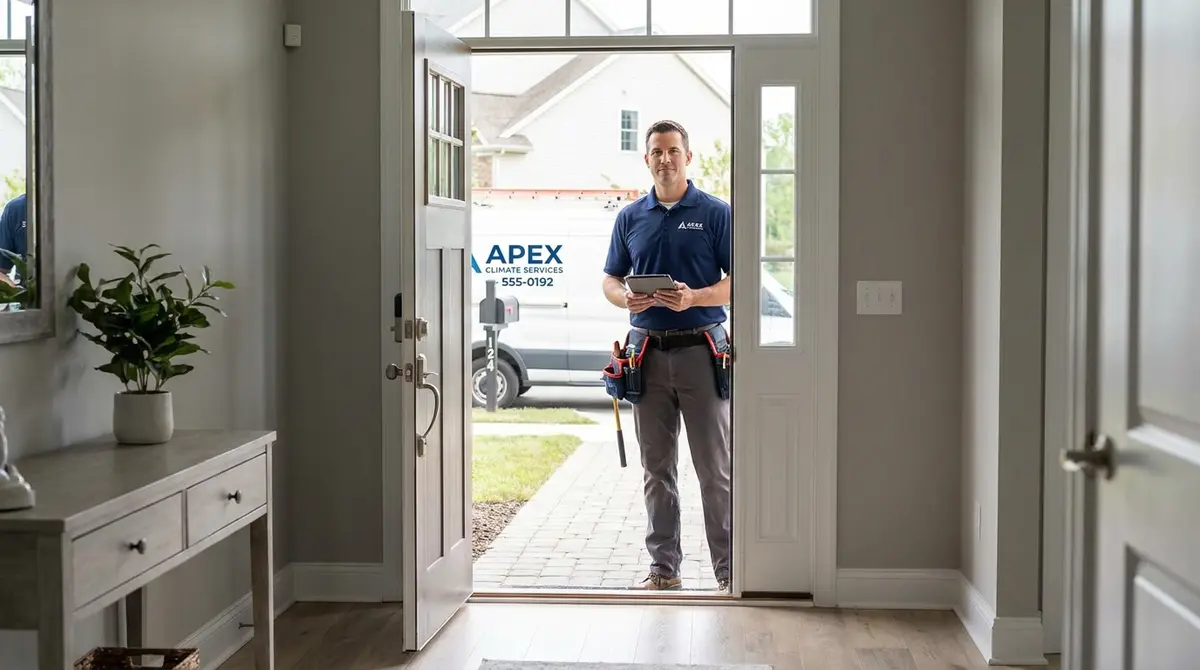
The short answer: Local SEO for HVAC companies is the process of optimizing your digital presence so homeowners find you when they search for heating and cooling services in your area. It combines Google Business Profile management, service-area content, review generation, and technical site optimization to capture emergency-intent searches like "AC repair near me." Success comes down to GBP completeness, review velocity, and city-specific service pages. According to BrightEdge, 53% of all trackable website traffic comes from organic search, and for HVAC contractors competing in emergency-driven markets, local visibility is the difference between a full schedule and empty trucks. If you're building a broader organic strategy beyond local, the full SEO checklist covers technical, content, and authority factors that apply across all search verticals.
Local SEO for HVAC companies isn't optional anymore. It's infrastructure. When a homeowner's AC dies on a 95-degree afternoon, they're not flipping through the Yellow Pages. They're typing "AC repair near me" into Google, and the first three results in the map pack get the calls. If your business isn't there, your competitor is answering that phone. The gap between first and fourth in local search is the gap between profit and struggle. This article breaks down exactly how HVAC contractors build local visibility that produces calls, not just traffic. You'll see what actually moves rankings in the map pack, how to structure service-area content that converts searchers into customers, and how to measure whether your local SEO investment is working. The tactics here are built for business owners who want to own their lead generation, not rent it month-to-month from an agency.Why Local SEO for HVAC Companies Outperforms Every Other Marketing Channel
Local SEO for HVAC companies delivers a return that paid advertising can't match long-term. Organic leads close at 14.6% compared to 1.7% for outbound marketing, according to Search Engine Journal. That's not a small edge. That's an eight-times multiplier on conversion rates. The reason is intent. Someone searching "furnace repair in your area" has a problem right now. They're not browsing. They're buying. Your job is to be the answer Google shows them. The other advantage: compounding returns. Every dollar spent on local SEO builds an asset. Service pages rank for years. Reviews accumulate. Authority grows. Paid ads stop the second you stop paying. A well-optimized Google Business Profile and a library of location-specific service content keep producing leads 12, 18, 24 months after you publish them. For HVAC contractors with tight margins and seasonal cash flow, that compounding effect is the difference between surviving winter and thriving year-round.Emergency Intent Drives HVAC Search Behavior
HVAC searches are high-urgency, high-value queries. When someone types "AC not cooling" or "furnace won't turn on," they need help within hours, not days. Google knows this. That's why 46% of all Google searches have local intent, and 76% of people who search for something nearby visit a business within a day, according to Google's own data. For HVAC contractors, that urgency creates opportunity. The homeowner who finds you first is the homeowner who calls first. And in emergency service industries, first call wins. The challenge is that every HVAC company in your service area knows this too. The map pack only shows three businesses. Everyone else is invisible. Local SEO for HVAC companies is about earning one of those three spots consistently, across every city and service you offer. That requires more than a claimed Google Business Profile. It requires a system.Local Search Captures the Entire Customer Journey
Local SEO doesn't just capture emergency searches. It also captures research-phase queries like "best HVAC company in your area" and "how much does a new furnace cost." These searches happen weeks or months before the homeowner is ready to buy, but they shape the decision. The HVAC contractor who shows up with helpful, detailed content during the research phase becomes the trusted name when the buying decision arrives. This is where most HVAC companies fail. They optimize for "AC repair near me" and ignore "how long should an AC unit last" or "signs you need a new furnace." The latter queries have lower immediate conversion rates, but they build brand recognition and topical authority. When that homeowner's AC finally dies, your name is already in their head. According to the Demand Gen Report, B2B buyers (and high-ticket residential service buyers behave similarly) consume 3-7 pieces of content before engaging with a vendor. HVAC contractors who publish that content own the pipeline.Google Business Profile Optimization: The Foundation of Local HVAC Visibility
Your Google Business Profile is the single highest-leverage asset in local SEO for HVAC companies. Whitespark's 2024 local ranking factors study confirms that GBP optimization is the number one factor influencing map pack rankings. If your profile is incomplete, inconsistent, or stale, you're losing calls to competitors who took 20 minutes to fill out every field. This isn't about gaming the algorithm. It's about giving Google the information it needs to confidently show your business to searchers. Businesses with complete GBP profiles are 70% more likely to attract location visits, according to Google. That stat alone justifies the time investment. But "complete" doesn't mean claimed and verified. It means every section filled, every category chosen, photos uploaded, posts published weekly, and reviews responded to within 24 hours. Most HVAC contractors claim their profile and stop. That's leaving money on the table.Claiming, Verifying, and Structuring Your Profile Correctly
Start by claiming your profile at google.com/business. If your business already appears on Google Maps, claim the existing listing rather than creating a duplicate. Google will verify ownership through phone, text, email, or postcard. Choose phone or text if available, it's faster. Once verified, the real work begins. Choose your primary category carefully. "HVAC contractor" is the most common, but if you specialize, consider "Air conditioning contractor" or "Heating contractor" as primary. Add secondary categories for every service you offer: furnace repair, air duct cleaning, heat pump supplier, air conditioning repair. Google uses categories to match your business to search queries, so more relevant categories mean more visibility. Don't stuff unrelated categories, stick to what you actually do. Fill every field. Business description (750 characters), service areas (list every city you serve), hours (including emergency hours if you offer 24/7 service), attributes (veteran-owned, women-led, online estimates), appointment links, and messaging. Enable Google messaging so homeowners can text you directly from your profile. According to data from local SEO practitioners, profiles with messaging enabled see 20-30% more engagement than those without.Photos, Posts, and the Weekly Maintenance Routine
Upload at least 10 high-quality photos: exterior, interior, team at work, trucks with your branding, before-and-after shots of installations. Google prioritizes profiles with recent photos. Businesses with photos receive 42% more requests for directions and 35% more clicks to their website than those without, according to Google. Publish a post every week. Google posts appear in your profile and in search results. Use them to announce seasonal offers ("$50 off AC tune-ups this month"), share tips ("3 signs your furnace needs maintenance before winter"), or highlight recent projects ("Just installed a new Carrier system in your neighborhood"). Posts expire after seven days, so consistency matters more than perfection. A weekly post signals to Google that your business is active and engaged. Respond to every review within 24 hours. Thank customers for positive reviews. Address negative reviews professionally and offer to resolve the issue offline. Research from BrightLocal shows that 56% of consumers change their opinion of a business based on how the owner responds to reviews. For HVAC companies, a well-handled negative review can actually build trust.| Factor | What it is | Impact |
|---|---|---|
| Primary category selection | The main service category Google uses to match your business to searches | High - directly affects query matching |
| Profile completeness | Percentage of fields filled in your GBP (description, hours, services, photos) | High - 70% more location visits |
| Review velocity and recency | How many reviews you get per month and how recent your last review is | High - signals active, trusted business |
| Weekly posts | Regular updates published to your GBP feed | Medium - shows engagement and freshness |
| Photo uploads | High-quality images of your team, trucks, and completed work | Medium - 42% more direction requests |
Service-Area Pages: How HVAC Contractors Rank in Every City They Serve
Local SEO for HVAC companies requires city-specific content. Google doesn't rank a single homepage for "AC repair" in 15 different cities. It ranks pages that demonstrate local relevance. That means one dedicated page per service per city. If you serve 10 cities and offer 5 core services (AC repair, furnace repair, installation, maintenance, duct cleaning), you need 50 pages. That sounds like a lot. It is. But it's also how you dominate local search in every market you serve. Each service-area page should follow a consistent structure: H1 with the service and city ("AC Repair in your area"), a 150-200 word intro explaining what you do and why homeowners in that city choose you, a section on common problems specific to that area (older homes, hard water, extreme heat), service details, pricing transparency (even if it's a range), and a clear call to action with your phone number. According to HubSpot's State of Marketing report, companies that blog get 55% more website visitors. For HVAC contractors, service-area pages function as high-intent blog content that converts.Writing City Pages That Rank and Convert
Generic city pages fail. If your "AC Repair in Phoenix" page could swap "Phoenix" for "Tucson" without changing anything else, it's not a real city page. It's template spam, and Google knows the difference. Real city pages reference local landmarks, neighborhoods, climate conditions, and common HVAC issues specific to that area. Phoenix AC repair pages should mention monsoon season, dust buildup, and the stress of 115-degree summers on compressors. Tucson pages should reference the same climate challenges but frame them differently. Include a neighborhood list. "We serve your area and surrounding areas including your neighborhood, your neighborhood, your neighborhood." This helps you rank for hyper-local searches like "AC repair in your neighborhood." Use internal links to connect city pages to service pages and vice versa. If you have a main "AC Repair" page, link to all your city-specific AC repair pages from it. Google follows those links and understands your site structure. Add schema markup to every service-area page. LocalBusiness schema tells Google your business name, address, phone, service area, and hours in a structured format that AI and search engines can parse easily. Research from Princeton and Georgia Tech published at KDD 2024 found that structured content with schema markup improves AI visibility by 30-40%. For HVAC contractors, that means better placement in AI Overviews and voice search results when someone asks Siri or Alexa for AC repair recommendations.What to Do When You Serve 50+ Cities
If your service area covers dozens of cities, prioritize the highest-value markets first. Build full service-area pages for the 10-15 cities that generate the most revenue or have the highest search volume. For smaller towns, create shorter pages (300-400 words) that still demonstrate local knowledge. You can always expand them later. Avoid the temptation to auto-generate city pages with a template and a mail-merge script. Google's Helpful Content Update (September 2023) specifically targets low-quality, templated content. If you're going to build 50 city pages, each one needs unique, locally-relevant content. That takes time. The alternative is to build fewer pages that actually rank, rather than 50 pages that all sit on page 5.Reviews: The Trust Signal That Moves Local Rankings and Conversions
Reviews are a ranking factor and a conversion factor. Google uses review quantity, recency, and ratings to determine map pack placement. Homeowners use reviews to decide which HVAC contractor to call. A business with 200 reviews and a 4.8-star average will outrank a business with 30 reviews and a 5.0 average, even if the latter has better on-page SEO. Volume and velocity matter. BrightLocal's 2024 consumer survey found that 87% of consumers read online reviews for local businesses, and 79% trust online reviews as much as personal recommendations. For HVAC contractors, that means every job is an opportunity to earn a review. The companies that systematize review generation, automated follow-up texts 24 hours after job completion, QR codes on invoices, links in email receipts, get 5-10x more reviews than companies that ask verbally and hope.Building a Review Generation System That Runs on Autopilot
Manual review requests don't scale. You finish a job, thank the customer, ask them to leave a review if they're happy, and maybe 1 in 20 actually does it. That's not a system. That's hope. A real review system automates the ask. Use your CRM or scheduling software to trigger a text message 24 hours after job completion: "Hi Strategyc, thanks for choosing . If you're happy with the work, we'd appreciate a quick review: ." Keep it short. Make the link go directly to your Google review page, not a landing page that asks them to choose a platform. Timing matters. Ask too soon (while the technician is still on site) and the homeowner feels pressured. Ask too late (a week later) and they've forgotten the experience. 24 hours is the sweet spot. The job is done, the system is working, and the positive experience is still fresh. Respond to every review, positive or negative. For positive reviews, a simple "Thanks for the kind words, Strategyc. We're glad we could help" is enough. For negative reviews, acknowledge the issue, apologize if appropriate, and offer to make it right: "We're sorry to hear about your experience. Please call us at so we can resolve this." Never argue in public. Never ignore a negative review. Research shows that 56% of consumers change their opinion based on how businesses respond to reviews. A professional response to a 1-star review can actually build trust with future customers reading it.What to Do About Fake or Competitor Reviews
Fake negative reviews happen. Competitors post them. Disgruntled employees post them. Google's review policies prohibit fake reviews, but enforcement is inconsistent. If you receive a review from someone who was never a customer, flag it through Google Business Profile. Go to the review, click the three dots, select "Flag as inappropriate," and choose "Conflict of interest" or "Off-topic." Google will review it, though removal can take weeks. In the meantime, respond publicly. "We have no record of serving you. If you were a customer, please contact us directly so we can address your concern." This signals to other readers that the review is suspicious. Don't accuse the reviewer of lying, state the facts and move on. The best defense against fake reviews is volume. If you have 200 real reviews and one fake negative, the fake review barely dents your average. If you have 10 reviews total, one fake review is catastrophic. Volume is armor.NAP Consistency and Citations: The Invisible Ranking Factors Most HVAC Contractors Ignore
NAP stands for Name, Address, Phone. Every directory, social profile, and website that lists your business should display identical NAP information. If your Google Business Profile says "ABC Heating & Air" but your Yelp profile says "ABC Heating and Air Conditioning," Google sees two different businesses. That inconsistency dilutes your local authority. It's a small thing that costs real rankings. Citations are online mentions of your NAP, even without a link. Yelp, Angi, BBB, Facebook, local Chamber of Commerce directories, all of these count as citations. Google uses citations to verify that your business is real and established. A brand-new HVAC company with zero citations looks less trustworthy than a 10-year-old company with 50 citations across authoritative directories. According to Whitespark's 2024 local ranking factors study, citation consistency remains a top-10 ranking factor for local search.Where HVAC Contractors Should Build Citations
Start with the big directories: Google Business Profile (already covered), Yelp, Facebook, Angi (formerly Angie's List), HomeAdvisor, BBB, and your local Chamber of Commerce. These are high-authority, high-traffic platforms where homeowners actually look for HVAC contractors. Claim your profile on each, fill out every field, and ensure your NAP is identical across all of them. Next, target HVAC-specific directories. Carrier, Trane, Lennox, and other manufacturers maintain contractor locator tools. If you're a certified dealer, get listed. These directories carry industry-specific authority that general directories don't. They also send qualified leads, homeowners searching for a Carrier dealer are further down the buying funnel than homeowners searching generically for "AC repair." Skip low-quality directories. There are hundreds of spammy business directories that exist only to scrape data and sell ads. Submitting to 200 directories doesn't help. Focus on the 20-30 that actually matter: the ones homeowners use and the ones Google trusts. Quality over quantity.How to Audit and Fix NAP Inconsistencies
Google your business name plus your city. Look at the first three pages of results. Every mention of your business should display the same name, address, and phone number. If you find inconsistencies, fix them. Log into each directory and update the listing. If you can't access the listing (some directories auto-generate profiles), submit a claim request or a correction form. Use a spreadsheet to track your citations. Columns: Directory name, URL, NAP as listed, status (correct/incorrect/pending). This gives you a single source of truth. When you update your phone number or move offices, you'll know exactly which directories need updating. NAP consistency isn't a one-time project. It's ongoing maintenance.See How Your Business Shows Up in AI Search
Get a free AI visibility scan. See exactly where you rank on ChatGPT, Perplexity, and Google AI, and what to do about it. Get Your Free Scan. The same emergency-intent dynamics and service-area page structure apply to other trades, which is why local SEO for plumbers follows an almost identical playbook with category and keyword adjustments.
On-Page SEO for HVAC Websites: Speed, Structure, and Schema
Local SEO for HVAC companies doesn't stop at Google Business Profile and citations. Your website is the hub. It's where service-area pages live, where blog content ranks, where homeowners convert into leads. If your site is slow, confusing, or missing critical technical elements, you're losing rankings and leads. Core Web Vitals, Largest Contentful Paint (LCP), Interaction to Next Paint (INP), and Cumulative Layout Shift (CLS), are confirmed ranking factors. A slow site doesn't just frustrate users. It costs visibility. Google's March 2024 Core Update specifically targeted low-quality, thin content. HVAC websites with 10 pages of 200-word service descriptions got hit. Websites with detailed, helpful content that answered real homeowner questions saw traffic gains. The lesson: depth and quality beat volume and speed. One 1,500-word guide to "How to Choose the Right AC Unit for Your Home" outperforms 10 shallow 300-word pages on AC brands.Site Speed and Mobile Optimization for HVAC Contractors
Most HVAC searches happen on mobile. A homeowner's AC breaks, they pull out their phone, they search. If your site takes 6 seconds to load on mobile, they're gone before the page renders. Google's data shows that 53% of mobile users abandon sites that take longer than 3 seconds to load. For HVAC contractors, that's a lost call. Test your site speed at PageSpeed Insights (Google's free tool). Aim for a mobile score above 80. If you're below that, the most common culprits are oversized images, render-blocking JavaScript, and slow server response times. Compress images before uploading (use WebP format), enable lazy loading so images only load when the user scrolls to them, and consider a faster hosting provider if your server response time is above 600ms. Mobile optimization isn't just speed. It's usability. Your phone number should be tap-to-call. Your contact form should be simple (name, phone, service needed, that's it). Navigation should be thumb-friendly. If a homeowner has to pinch-zoom to read your service menu, your site isn't mobile-optimized. Test your site on your own phone. If you wouldn't use it, your customers won't either.Schema Markup: The Structured Data That AI and Voice Search Require
Schema markup is code that tells Google (and AI models) what your content means. Without schema, Google has to guess. With schema, you're handing Google structured information it can display in rich results, AI Overviews, and voice search answers. For HVAC contractors, three schema types matter: LocalBusiness, Service, and FAQPage. LocalBusiness schema includes your business name, address, phone, service area, hours, and accepted payment methods. Add it to your homepage and contact page. Service schema describes each HVAC service you offer, AC repair, furnace installation, duct cleaning, with pricing (even if it's a range), service area, and availability. Add it to every service page. FAQPage schema marks up your FAQ sections so Google can pull answers directly into search results. Research from Princeton and Georgia Tech (KDD 2024) found that structured content with schema improves AI visibility by 30-40%. For HVAC contractors, that means when someone asks ChatGPT or Perplexity "Who does AC repair in your area?", your business is more likely to be cited if your site uses schema. AI models prefer structured, parseable data. Schema is how you provide it.Content Strategy: Blogging Your Way to HVAC Topical Authority
Most HVAC websites publish service pages and stop. That's a mistake. Service pages capture bottom-of-funnel searches (people ready to buy), but they don't build topical authority or capture research-phase traffic. Blogging does both. A library of 50-100 articles answering common HVAC questions positions your business as the local expert. It also gives you content to share on social media, in email newsletters, and in Google posts. According to HubSpot's State of Marketing 2024, companies that blog get 55% more website visitors than those that don't. For HVAC contractors, that translates to more organic traffic, more brand searches, and more inbound leads. The key is publishing content that homeowners actually search for, not content you think they should care about.What HVAC Topics Homeowners Actually Search For
Start with questions your technicians hear every day. "Why is my AC blowing warm air?" "How often should I replace my furnace filter?" "What's the average lifespan of an AC unit?" "How much does a new furnace cost?" These are high-volume, high-intent queries. Write 800-1,200 word articles answering each one. Use clear headings, bullet points, and examples. Link to your relevant service pages (e.g., link "AC blowing warm air" article to your AC repair service page). Seasonal content works well for HVAC. Publish "How to Prepare Your AC for Summer" in April. Publish "Furnace Maintenance Checklist Before Winter" in September. These articles rank year after year and drive traffic during your busy seasons. They also give you evergreen content to promote in Google posts and social media. Local content builds authority. Write about common HVAC issues specific to your climate. "How Desert Heat Affects AC Efficiency in Phoenix" or "Why Coastal Humidity Requires Different HVAC Maintenance in Charleston." These articles rank for local queries and demonstrate expertise that generic HVAC blogs can't match.How Often HVAC Contractors Should Publish New Content
Consistency beats volume. One article per week (52 per year) builds a substantial content library faster than most HVAC contractors expect. After two years, you'll have 100+ articles. That's enough to dominate local search for nearly every HVAC-related query in your market. The companies that rank on page one for dozens of keywords aren't running expensive ad campaigns. They published 2-3 articles per month for three years. If one article per week feels overwhelming, start with two per month. The goal is to build a publishing habit, not to burn out in month two. Quality matters more than speed. One well-researched, properly-structured 1,200-word article outperforms three rushed 400-word posts. For HVAC contractors managing field operations, content production is a long game. Systems like Strategyc's Content & Visibility Engine exist specifically to handle this workload, installing a publishing system that produces structured, AI-optimized content without requiring the business owner to write every article.How AI Search Changes Local SEO for HVAC Companies in 2026
AI search is reshaping how homeowners find HVAC contractors. Google AI Overviews now appear in 50% of search results, according to DemandSage 2025. ChatGPT, Perplexity, and voice assistants (Siri, Alexa, Google Assistant) answer HVAC questions without sending users to websites. The shift is deep: AI models cite 3-5 brands per query. If your business isn't in that group, your competitor is. And AI models are forming their knowledge bases right now, in 2026. The content you publish today determines whether AI systems cite you tomorrow. BrightEdge's 2025 research found that early AI search adopters saw 120x impression increases and 800% year-over-year traffic growth from large language models. SingleGrain reported that AI-sourced visitors convert at 27%, compared to 2.1% from traditional search. For HVAC contractors, this means AI visibility isn't a nice-to-have. It's the next competitive battleground.What AI Models Look for When Citing HVAC Contractors
AI models prioritize structured, factual content with clear attribution. That means articles with schema markup, FAQ sections, expert-attributed quotes, and cited data points. Generic blog posts that ramble for 1,000 words without clear answers get ignored. Articles that answer specific questions in the first 100 words, use H2/H3 headings to organize information, and include structured data get cited. For HVAC contractors, this means adjusting content structure. Every article should have a "short answer" at the top (40-80 words summarizing the answer), followed by detailed sections with descriptive headings. Use FAQ sections at the end of every article. AI models pull these directly into conversational answers. If someone asks ChatGPT "How much does AC repair cost in Phoenix?", and your article has a clear FAQ answer with pricing ranges, you're the cited source. Voice search optimization follows the same principles. When someone asks Alexa "Who does furnace repair near me?", Alexa reads from a structured source, often a Google Business Profile with complete information or a website with LocalBusiness schema. HVAC contractors with incomplete profiles or unstructured content don't get cited. The ones with full GBP profiles, schema markup, and FAQ-rich content do.Why HVAC Contractors Can't Ignore AI Search Anymore
Traditional SEO still works. Google organic results still drive the majority of HVAC leads. But the trajectory is clear: AI-mediated search is growing fast. In 2024, AI Overviews caused a 61% drop in organic click-through rates for queries where they appeared, according to DemandSage. That means fewer clicks to websites, more answers delivered directly in search results. For HVAC contractors, the implication is stark: if AI doesn't cite your business, you're invisible to a growing segment of searchers. The good news: most HVAC contractors aren't optimizing for AI search yet. The local pack still favors traditional ranking factors (GBP, reviews, citations, service pages). But early movers are gaining an edge. HVAC companies that publish structured, schema-rich content now will own AI visibility in their markets for years. The companies that wait will spend 2027 and 2028 playing catch-up.Measuring What Matters: How to Track Local SEO Performance for HVAC
Local SEO for HVAC companies only works if you measure it. Too many contractors spend thousands on SEO without tracking calls, form fills, or revenue. Only 8% of marketers feel confident they can measure ROI, according to Firework 2025. That's a systemic problem. If you can't measure it, you can't improve it. And if you're paying an agency that won't show you the data, you're renting visibility, not owning it. The metrics that matter for HVAC contractors: organic traffic (from Google Analytics), map pack rankings (for your core service + city keywords), phone calls from organic search (tracked with call tracking software or Google Business Profile insights), form submissions (tracked in Google Analytics or your CRM), and revenue attributed to organic leads (tracked in your CRM). Everything else is vanity. Impressions and clicks are interesting, but calls and revenue are what pay the bills.Setting Up Google Analytics and Search Console for HVAC Lead Tracking
Google Analytics is free and essential. Install it on your website. Set up goals for form submissions (thank-you page URL as the goal) and track phone clicks if your site uses click-to-call buttons. Use UTM parameters to track traffic from Google posts, social media, and email campaigns. This tells you which channels drive traffic and which drive conversions. Google Search Console shows which keywords your site ranks for, how many impressions and clicks each page gets, and which pages have technical errors. Check it monthly. Look for pages with high impressions but low clicks, those are opportunities to improve title tags and meta descriptions. Look for pages with declining clicks, those might need content updates or better internal linking. Track map pack rankings manually or with rank tracking software. Search your core keywords (e.g., "AC repair in your area") from an incognito browser window. Are you in the top three? Top ten? Not ranking? Do this monthly for your 10-15 highest-value keywords. If you're not moving up, something in your local SEO strategy isn't working.What to Do When Local SEO Isn't Producing Results
If you've been publishing content, optimizing your GBP, and building citations for six months and you're still not ranking, audit the fundamentals. Is your NAP consistent across all directories? Is your GBP profile 100% complete? Do you have at least 20 reviews? Are your service-area pages actually unique, or are they templated? Is your site fast on mobile? Most local SEO failures come down to incomplete execution, not bad strategy. If the fundamentals are solid and you're still not ranking, the issue is likely competition. If you're in a market with 50 HVAC contractors all fighting for the same keywords, breaking into the top three takes time and volume. You need more reviews, more content, more citations, and more authority than your competitors. That's a 12-18 month project, not a 90-day sprint. Patience and consistency win. The alternative is to own the infrastructure. Agencies gatekeep data and process. When you leave, you start from zero. Platforms like Strategyc take a different approach by installing content systems that businesses own permanently, no monthly retainers, no dependency. You get the publishing engine, the workflows, and the content. The system keeps producing results after the engagement ends. For HVAC contractors tired of paying rent on their visibility, that ownership model makes more sense than another year of agency fees.The Bottom Line: Local SEO Is Infrastructure, Not a Service
Local SEO for HVAC companies isn't a campaign. It's infrastructure. The Google Business Profile you optimize today produces calls for years. The service-area pages you publish this month rank 18 months from now. The review system you install keeps generating social proof long after you stop thinking about it. This is why the rent-vs-own question matters. If you're paying an agency $2,000 per month and you stop, everything stops. If you build the infrastructure yourself, or install a system that you own, it compounds. The HVAC contractors who dominate local search in 2026 aren't the ones with the biggest ad budgets. They're the ones who published 100 articles, earned 300 reviews, and built service-area pages for every city they serve. They own their visibility. They don't rent it. And when AI search becomes the primary way homeowners find contractors, they'll be the ones AI models cite. The window to build that infrastructure is now.Frequently Asked Questions About Local SEO for HVAC Companies
How long does it take to see results from local SEO for HVAC companies?
Most HVAC contractors see measurable improvements in map pack rankings and organic traffic within 3-6 months of consistent optimization. Full results, top-three map pack placement and steady inbound leads, typically take 6-12 months. Local SEO is a compounding investment, not a quick fix. Electricians face the same map pack competition and urgency-driven search behavior, so the tactics in local SEO for electricians mirror the HVAC framework with trade-specific category and content tweaks. If you operate multiple locations under a single brand, the coordination and consistency challenges covered in local SEO for franchises become critical to maintaining map pack presence across territories.
Can I build local SEO infrastructure in-house without hiring an agency?
Yes, if you have time and technical capacity. In-house requires learning GBP optimization, schema markup, content strategy, and citation management. Most HVAC contractors lack bandwidth. The alternative is installing a system you own rather than renting monthly services, infrastructure that keeps working after the initial build. If you'd rather partner with specialists than build this system in-house, the criteria in best local SEO company will help you vet agencies that actually understand map pack mechanics and GBP optimization.
What's the biggest mistake HVAC contractors make with local SEO?
Incomplete Google Business Profile. Most contractors claim the profile and stop. They don't fill every field, upload photos, publish posts, or respond to reviews. An incomplete profile is a missed opportunity. Google prioritizes complete, active profiles in map pack rankings.
How many reviews does an HVAC company need to rank in the local pack?
There's no fixed number, but competitive markets require 50+ reviews to break into the top three. Review velocity (how many you get per month) matters as much as total count. A business with 100 reviews and 10 new reviews per month outperforms a business with 200 reviews and zero new reviews in the past year.
Does local SEO work for HVAC contractors in rural areas with low search volume?
Absolutely. Lower competition means faster results. Rural HVAC contractors can dominate local search with a complete GBP, 20-30 reviews, and 10-15 well-optimized service-area pages. The same tactics work, they just produce results faster because fewer competitors are executing them.