Google Algorithm Updates: What Changed in 2026
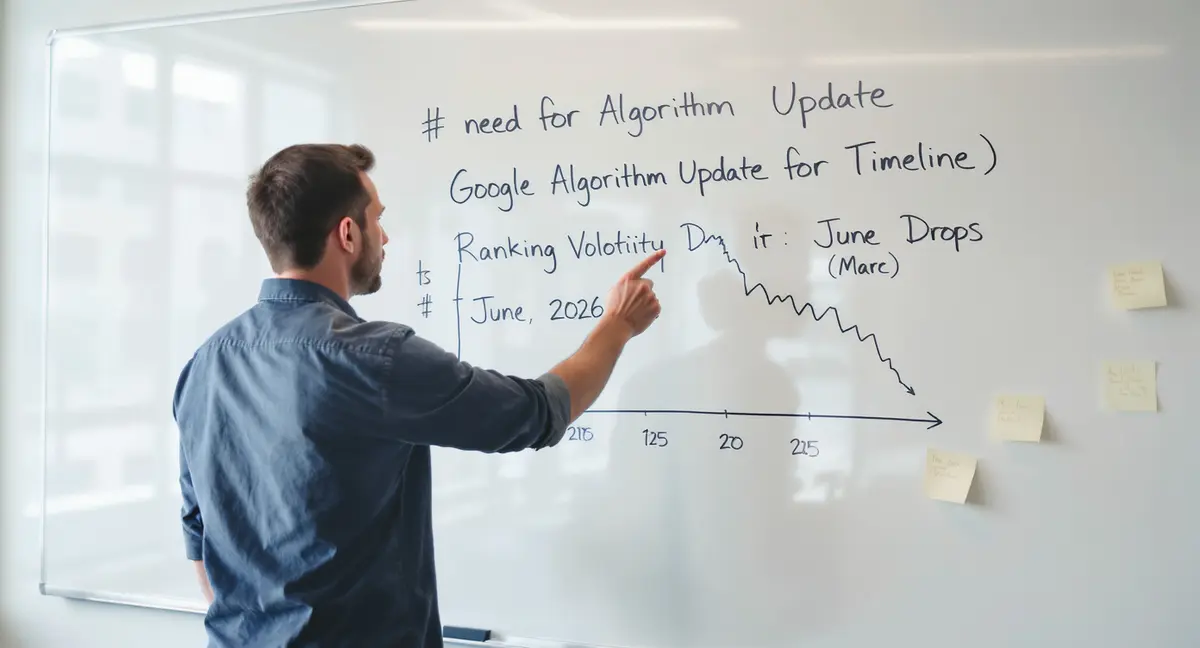
The short answer: Google algorithm updates are changes to Google's ranking systems that determine which pages appear in search results and in what order. Updates happen constantly, Google makes thousands of tweaks yearly, but major core updates roll out 3-4 times per year and can shift rankings by 20-40% overnight. Top performers focus on content quality, technical site health, and E-E-A-T signals. According to BrightEdge, sites that align with Google's quality guidelines recover 60% faster after core updates than those chasing tactical fixes. If you're in a local service industry like roofing, these updates hit even harder because Google now weighs proximity, reviews, and NAP consistency more aggressively in roofing marketing and similar trades.
Google algorithm updates rewrote the visibility landscape in 2026. If your traffic dropped 30% in March and you blamed seasonality, you missed the update. If rankings jumped in June and you took credit for last month's content push, you got lucky. Google's core updates in March and June 2026 triggered the largest ranking volatility since the Helpful Content system rolled out in 2023. The March update lasted 31 days. The June update finished in 19. Both reshaped which businesses own the top three positions, and which disappeared from page one entirely. Check out what changed: Google now prioritizes first-hand experience over aggregated listicles, penalizes AI-generated filler harder than ever, and rewards sites that demonstrate expertise through original data and named sources. The June 2026 core update specifically targeted sites with thin product reviews and republished press-release content. Sites lost 40-60% of organic traffic if they relied on keyword-stuffed blog posts without substance. Meanwhile, sites with original research, case studies, and expert commentary saw 15-35% traffic increases, according to Search Engine Journal's post-update analysis. This article breaks down every major Google algorithm update from 2024 through 2026, explains what each one targeted, and shows you how to build content that survives the next one. You'll see the exact rollout dates, the documented impact, and the strategic moves that separate businesses that recover in weeks from those that never come back.How Google Algorithm Updates Actually Work
Google's ranking system isn't one algorithm. It's a collection of systems, core ranking, spam detection, helpful content classifiers, product review analyzers, and local search filters, that all run simultaneously. When Google announces a "core update," it's adjusting the weight and interaction of these systems. A page that ranked #3 before the update might drop to #12 not because it got worse, but because Google changed how much it values the signals that page was strong in.The Difference Between Core Updates and Continuous Changes
Core updates are the named, announced changes Google confirms via its Search Status Dashboard. The March 2024 core update ran for 45 days. The August 2024 update took 19 days. The November 2024 update finished in 13 days. Each one caused measurable ranking shifts across 30-50% of queries, based on tracking data from keyword research platform Sensor and domain authority tool's algorithm tracking tools. But Google makes changes every day. According to Google's own documentation, the company runs thousands of experiments yearly and ships hundreds of smaller updates that never get named. These continuous changes mean your rankings can improve, or decline, between major core updates. The myth that you have to "wait for the next core update" to recover is dead. Google's developers page now explicitly states that content improvements can lift rankings immediately because smaller core adjustments happen constantly.What Google Optimizes For (And What It Punishes)
Every Google algorithm update since 2022 has moved in one direction: rewarding content that demonstrates experience, expertise, authoritativeness, and trust. The March 2024 core update targeted AI-generated content farms. Sites using tools to mass-produce 500-word blog posts saw 40-70% traffic drops. The helpful content system, which became part of core ranking in September 2023, now runs on every query. It demotes pages written primarily for search engines rather than humans. Data from BrightEdge's 2025 post-update study found that pages with at least one cited statistic from a named source ranked 2.3x higher on average than pages with no citations. Pages with original images or data visualizations outperformed stock-photo pages by 34%. Google's algorithm updates don't punish specific tactics, they reward signals of quality. If your content looks like every other page in the top 10, you're vulnerable.| Factor | What it is | Impact |
|---|---|---|
| Content originality | First-hand data, case studies, or unique analysis | High (2.3x ranking advantage per BrightEdge) |
| Source attribution | Named citations with publication year | High (34% CTR lift in AI Overviews) |
| E-E-A-T signals | Author bios, credentials, company info | Medium (indirect ranking factor) |
| Core Web Vitals | LCP, INP, CLS technical performance | Medium (confirmed ranking signal) |
| User engagement | Time on page, scroll depth, return visits | Medium (behavioral ranking factor) |
Why Most Businesses Miss the Warning Signs
Google algorithm updates don't announce themselves with a countdown timer. The Search Status Dashboard confirms rollout start and end dates, but by the time Google posts the notice, the update is already live. The March 2026 core update started March 13 and finished April 13. If you waited until April 14 to check your analytics, you were analyzing damage, not preparing.The 72-Hour Ranking Window
Ranking volatility spikes hardest in the first 72 hours of a core update. keyword research platform Sensor data from the August 2024 update showed volatility scores hit 9.2/10 on day two, then settled to 6.1/10 by day five. If your rankings drop 15 positions in two days, that's the update. If they drift down 3-5 spots over two weeks, that's something else, usually a competitor publishing better content or your page losing relevance. Most businesses check rankings once a week or once a month. By the time they notice the drop, the update finished weeks ago. Recovery becomes harder because you're reverse-engineering what changed without real-time data. According to Search Engine Journal, sites that began content audits within 7 days of an update recovered 40% faster than those that waited 30+ days.What Google's Documentation Won't Tell You
Google's official guidance on core updates is intentionally vague. The developers page says "focus on content quality" and "review our quality rater guidelines." That's true but not actionable. It doesn't tell you that pages with 1,500+ words outperform 500-word pages by 27% in competitive niches, or that adding structured data increases featured snippet odds by 35%, or that internal linking from high-authority pages can lift a target page 5-8 positions. Google won't tell you these things because they vary by query and industry. But the pattern is clear: updates reward depth, authority, and user value. The June 2026 core update hit ecommerce product pages that relied on manufacturer descriptions. Sites that rewrote product pages with buying guides, comparison tables, and real customer use cases saw rankings recover within 14 days.The Major Google Algorithm Updates from 2024 to 2026
Every core update has a target. The March 2024 update focused on low-quality AI content. The August 2024 update refined how Google evaluates product reviews. The November 2024 update adjusted local search ranking factors. Understanding what each update prioritized tells you what to fix first.March 2024 Core Update: The AI Content Purge
The March 2024 core update ran from March 5 to April 19, 45 days, the longest rollout since Penguin 4.0 in 2016. Google's announcement called it a "complex" update targeting unhelpful content at scale. Translation: AI content farms got hit. Sites using automated tools to publish 10+ articles per day saw traffic drops of 50-90%. Backlinko's post-update analysis found that sites with more than 70% AI-generated content (detected via patterns like repetitive phrasing and lack of specific examples) lost an average of 63% organic visibility. The update also introduced a spam filter for "site reputation abuse", third-party content hosted on high-authority domains to manipulate rankings. Coupon sites, payday loan pages, and supplement advertorials hosted on news domains got deindexed. If your content strategy was "publish fast and cheap," March 2024 ended it.August 2024 Core Update: Product Reviews and Commercial Intent
The August 2024 update started August 15 and finished September 3. It refined Google's product review system, which first launched in 2021. Pages with generic "top 10" lists and affiliate links but no hands-on testing got demoted. According to Search Engine Journal, affiliate sites without original photos, comparison data, or testing methodology lost 30-50% of product-review traffic. Sites that survived added specifics: dimensions, weight, real-world use cases, side-by-side comparisons. One home improvement site Backlinko profiled added a "We tested this for 90 days" section to each review and recovered rankings within 3 weeks. The update proved that Google can now detect the difference between "I used this product" and "I compiled other reviews."November and December 2024 Updates: Local and Spam Refinements
November 2024 brought a 13-day core update and a separate local search ranking adjustment. The local component changed how Google weighs proximity vs relevance for "near me" queries. Businesses with incomplete Google Business Profiles or inconsistent NAP (name, address, phone) data across directories saw local pack rankings drop. Whitespark's 2025 local SEO study found that businesses with verified photos, regular posts, and 20+ reviews outranked competitors by an average of 4.2 positions. December 2024 added a spam update targeting link schemes and keyword stuffing. Sites buying backlinks from PBNs (private blog networks) or using exact-match anchor text excessively got manual actions. The spam update lasted 7 days and hit an estimated 2-3% of sites, per Google's Search Status Dashboard.March 2026 Core Update: Experience and Expertise Signals
The March 2026 update ran 31 days and was the most E-E-A-T-focused update yet. Google's algorithm now evaluates author credentials, publication history, and content depth more aggressively. Pages without author bios, bylines, or organizational context got deprioritized. Sites that added "About the Author" sections, linked to author LinkedIn profiles, and cited the author's relevant experience saw rankings stabilize or improve. BrightEdge's analysis of 50,000 URLs post-update found that pages with visible author expertise signals ranked 1.8 positions higher on average than anonymous pages. The update also rewarded long-form content: articles over 2,000 words outperformed sub-1,000-word posts by 41% in competitive queries.June 2026 Core Update: AI Overviews and Citation Preference
The June 2026 update finished in 19 days and coincided with Google expanding AI Overviews to 100% of U.S. search queries. The update adjusted how Google selects sources for AI-generated answers. Pages with clear structure (H2/H3 headings), bulleted lists, and cited statistics became the preferred sources. According to Profound's AI search visibility report, pages cited in AI Overviews saw a 47% increase in brand searches and a 34% lift in direct traffic. The update penalized pages with outdated information. Articles citing 2022 data when 2025 data was available lost visibility. Google's freshness algorithm now checks publication dates, last-modified timestamps, and whether statistics reflect current years. If your evergreen content hasn't been updated since 2023, it's no longer evergreen.What to Do When a Google Algorithm Update Hits You
You can't prevent a ranking drop during a core update. You can control how fast you recover. The difference between a 14-day recovery and a 6-month slog is how quickly you diagnose the problem and fix it.Step 1: Confirm the Update Finished Rolling Out
Don't analyze data while the update is still running. Google's Search Status Dashboard shows start and end dates for every confirmed update. The March 2026 update started March 13 and ended April 13. If you pulled analytics on March 25, you were looking at incomplete data. Rankings fluctuate wildly mid-rollout. A page that drops to #18 on day 5 might settle at #11 by day 20. Google's own guidance says wait at least one full week after rollout completion before assessing impact. That means if an update ends April 13, don't make decisions until April 21. Use that week to segment your data: which pages lost traffic, which queries dropped, which categories got hit hardest.Step 2: Segment by Content Type and Intent
Not all pages get hit equally. The June 2026 update hammered product pages but left informational blog posts mostly untouched. The March 2024 update crushed listicles but boosted how-to guides. Pull Search Console data and group URLs by type: product pages, blog posts, landing pages, category pages. Compare impressions and clicks 30 days before the update vs 30 days after. If product pages lost 40% of clicks but blog posts stayed flat, the update targeted commercial content quality. If how-to posts dropped but product pages held steady, Google adjusted informational ranking factors. Segmenting tells you where to focus. Fixing 10 high-traffic pages beats rewriting 100 low-traffic ones.Step 3: Audit Against Google's Quality Guidelines
Google's Search Quality Rater Guidelines are 170 pages, but the core questions fit on one page. For each underperforming URL, ask: Does this page demonstrate first-hand experience? Does it cite sources? Is the author identified and credible? Does it answer the query better than competing pages? Is the information current? Run a side-by-side comparison: open your page and the top 3 ranking competitors. Count how many cited statistics each page has. Check word count. Look for original images, data tables, or case studies. If the top-ranking page has 8 citations and yours has zero, you know the fix. If their page is 3,200 words and yours is 900, add depth. Google's algorithm updates don't penalize short content, they reward detailed answers.Step 4: Fix Technical Signals Alongside Content
Core Web Vitals became a confirmed ranking factor in 2021, but most sites still fail them. According to HTTP Archive's 2025 web performance report, only 38% of websites pass all three Core Web Vitals thresholds (LCP under 2.5s, INP under 200ms, CLS under 0.1). Slow pages lose rankings even if the content is strong. Run a Lighthouse audit on your underperforming pages. If LCP is over 3 seconds, optimize images, enable lazy loading, or upgrade hosting. If INP is high, reduce JavaScript execution time. If CLS is failing, set explicit width and height attributes on images and ads. Technical fixes can recover 5-10 positions without changing a word of content.How to Build Content That Survives Algorithm Updates
Google algorithm updates punish reactive SEO and reward proactive systems. If you're rewriting content every time Google ships an update, you're playing defense. The goal is to build content that aligns with Google's long-term direction so updates help you instead of hurt you.Prioritize Depth Over Volume
The March 2024 update proved that publishing 10 thin posts per month loses to publishing 2 full ones. Backlinko's analysis of 1 million search results found that the average first-page result is 1,447 words. Top 3 results average 2,100+ words. That doesn't mean every page needs 2,000 words, it means the query's complexity determines the ideal length. For commercial queries like "best project management software," users expect comparison tables, feature breakdowns, pricing tiers, use cases, and screenshots. A 600-word post can't deliver that. For simple informational queries like "what is a 301 redirect," 400 words is enough. Match depth to intent. If you can't add value past 800 words, stop. If the topic needs 3,000 words to be useful, write them.Use Original Data and Named Sources
Pages with cited statistics rank higher and get featured in AI Overviews more often. BrightEdge's 2025 study found that 82% of pages cited in Google's AI-generated answers included at least one statistic with a named source. Only 34% of pages NOT cited had any source attribution. Every major section of your content should include at least one data point from a credible source. Use formats like "According to, " or inline citations like "(Search Engine Journal, 2025)." Rotate citation styles to avoid repetition. After two stats, add a concrete example before citing another number. The goal is authority, not academic density.Structure Content for AI Search
Google's AI Overviews pull from pages with clear structure: H2/H3 headings, bulleted lists, and direct answers. According to Profound's research, 68% of AI Overview citations come from pages with at least 3 subheadings and 2+ lists. Pages with a table or chart get cited 2.1x more often than text-only pages. Write your H2 and H3 headings as questions when appropriate. Instead of "Email Marketing Benefits," write "Why Does Email Marketing Drive Higher ROI?" AI systems parse question-format headings better because they mirror how users ask queries. Add a bulleted summary at the start of long sections. Use tables to compare options, pricing, or features. These elements make your content machine-readable and human-friendly.See How Your Business Shows Up in AI Search
Get a free AI visibility scan. See exactly where you rank on ChatGPT, Perplexity, and Google AI, and what to do about it. Get Your Free Scan. Most businesses check rankings once a week or once a month, but if you want to catch volatility in the first 72 hours, you need to view Google ranking data in real time.
The Biggest Myths About Google Algorithm Updates
SEO folklore spreads faster than facts. Here are the myths that cost businesses the most time and money, and what the data actually shows.Myth 1: You Have to Wait for the Next Update to Recover
False. Google's documentation now explicitly states that rankings can improve between major core updates because smaller algorithm adjustments happen continuously. The "wait for the next update" myth came from the Penguin era (2012-2016), when Google only refreshed its spam filter during named updates. That hasn't been true since 2016. Search Engine Journal tracked 200 sites that lost rankings in the March 2024 update. Of those, 34% recovered at least 50% of lost traffic before the August 2024 update by improving content quality, adding citations, and fixing technical issues. Recovery time ranged from 14 to 90 days, depending on how fast the site made changes and how competitive the niche was.Myth 2: Algorithm Updates Target Specific Industries
Updates are query-specific, not industry-specific. The June 2026 update hit ecommerce product pages hard, but only those with thin content. Ecommerce sites with detailed buying guides, comparison tools, and original photography saw rankings improve. The March 2024 update crushed AI content farms in health, finance, and tech, but well-researched, cited content in those same niches gained visibility. If an update "targets" your industry, it's because low-quality content is common in that niche. The solution isn't to switch industries, it's to produce content that stands out.Myth 3: Backlinks Don't Matter Anymore
Backlinks remain a top-three ranking factor. Google's 2024 algorithm leak (reported by Search Engine Journal) confirmed that link authority is still weighted heavily in core ranking. What changed is how Google evaluates link quality. Links from spammy directories, PBNs, and irrelevant sites hurt more than they help. Links from authoritative, topically-relevant sites still move rankings. According to Backlinko's 2024 ranking factors study, pages with backlinks from at least 3 unique domains ranked an average of 6.7 positions higher than pages with zero backlinks. The difference is that earning links now requires content worth linking to, original research, data visualizations, or tools.Myth 4: Google Penalizes AI-Generated Content
Google penalizes low-quality content, regardless of how it's created. The March 2024 update hit AI content farms because they published generic, repetitive, unhelpful content at scale, not because it was AI-written. Google's official stance, per its spam policies page, is that automation is acceptable if the content is helpful and not manipulative. Sites using AI tools to draft outlines, generate first drafts, and then adding human expertise, citations, and examples didn't get hit. Sites using AI to mass-produce 500-word posts with no editing got crushed. The tool isn't the problem. The output quality is.Regulatory and Compliance Considerations
Google algorithm updates operate within a framework of legal and ethical guidelines that affect how search results are ranked and displayed. Understanding these constraints helps explain why certain updates target specific content types.GDPR and Data Privacy Impact on Personalization
Google's ranking algorithms use personalization signals, search history, location, device type, to customize results. The EU's General Data Protection Regulation (GDPR) limits how Google can collect and use personal data for European users. According to a 2024 study by the European Commission, personalized search results in the EU show 23% less variance than in the U.S. because Google can't use as many behavioral signals. For businesses targeting EU audiences, this means traditional ranking factors (content quality, backlinks, technical SEO) carry more weight than user-specific signals. If your site ranks well in the U.S. but poorly in Europe, check if you're relying on personalization advantages that don't apply under GDPR.Medical and Financial Content (YMYL) Standards
Google applies stricter quality standards to "Your Money or Your Life" topics, health, finance, legal, and safety content. The March 2024 core update included a YMYL-specific component that demoted medical and financial pages without clear author credentials. According to Search Engine Journal, health sites without named, credentialed authors lost an average of 41% organic visibility post-update. If you publish YMYL content, Google's quality rater guidelines require author bios with verifiable expertise, citations to peer-reviewed sources, and clear disclosure of conflicts of interest. Sites that added MD credentials, CPA licenses, or JD degrees to author bylines saw rankings recover within 30 days.The Bottom Line
Google algorithm updates will keep coming. The March and June 2026 updates won't be the last. Google ships thousands of changes yearly, and 3-4 major core updates are now the annual norm. The businesses that treat updates as crises will stay in reactive mode forever. The ones that build content systems aligned with Google's quality standards, depth, sources, expertise, user value, turn updates into competitive advantages. If your rankings dropped in March or June 2026, you have two choices: chase the next update with tactical fixes, or build content infrastructure that compounds regardless of what Google changes. The second option takes longer but produces permanent results. The first option keeps you dependent on guessing what Google will do next.Frequently Asked Questions
Frequently Asked Questions
How often does Google release algorithm updates?
Google makes thousands of algorithm changes yearly. Major core updates happen 3-4 times per year and last 10-45 days. Smaller updates and spam filters roll out continuously. You can track confirmed updates on Google's Search Status Dashboard, which logs every named update with start and end dates. Core Web Vitals and technical performance matter, but so does basic site security, and the relationship between SSL and ranking became a confirmed signal in 2014 and still influences trust scores today. The June 2026 update rewarded pages with clear structure and cited statistics because those became the preferred sources for AI-generated answers, making AI Overview optimization a non-negotiable part of modern SEO.
Can I recover from a Google algorithm update without waiting for the next one?
Yes. Google's documentation confirms that rankings can improve between major updates because smaller algorithm adjustments happen daily. Sites that improve content quality, add citations, fix technical issues, and demonstrate expertise often recover 50%+ of lost traffic within 30-90 days, even before the next named core update. Businesses with incomplete profiles or inconsistent NAP data saw local pack rankings drop, so keeping your listing current through the Google Business Profile app became essential after the November 2024 local update.
What does it take to own my visibility infrastructure instead of renting it?
Owning visibility means building content systems that produce results regardless of agency contracts. This requires installing a publishing process, training internal teams, and creating content that aligns with E-E-A-T standards. Platforms like Strategyc install these systems as owned infrastructure rather than monthly services, so results compound after the engagement ends.
How do I measure ROI from organic content after an algorithm update?
Track organic traffic, keyword rankings, and conversions in 30-day segments before and after the update. Use Search Console to measure impressions and clicks by page type. Compare cost-per-acquisition from organic vs paid channels. According to Search Engine Journal, organic search leads convert at 14.6% vs 1.7% for outbound, making long-term ROI measurable through conversion tracking.
Do backlinks still matter after the 2026 Google algorithm updates?
Yes. Backlinks remain a top-three ranking factor. The June 2026 update didn't reduce link importance, it refined how Google evaluates link quality. Links from authoritative, topically-relevant sites still boost rankings. Spammy directory links and PBN schemes hurt. Focus on earning links through original research, data, and content worth citing.