How to Optimize Your Content for Google AI Overviews in 2026
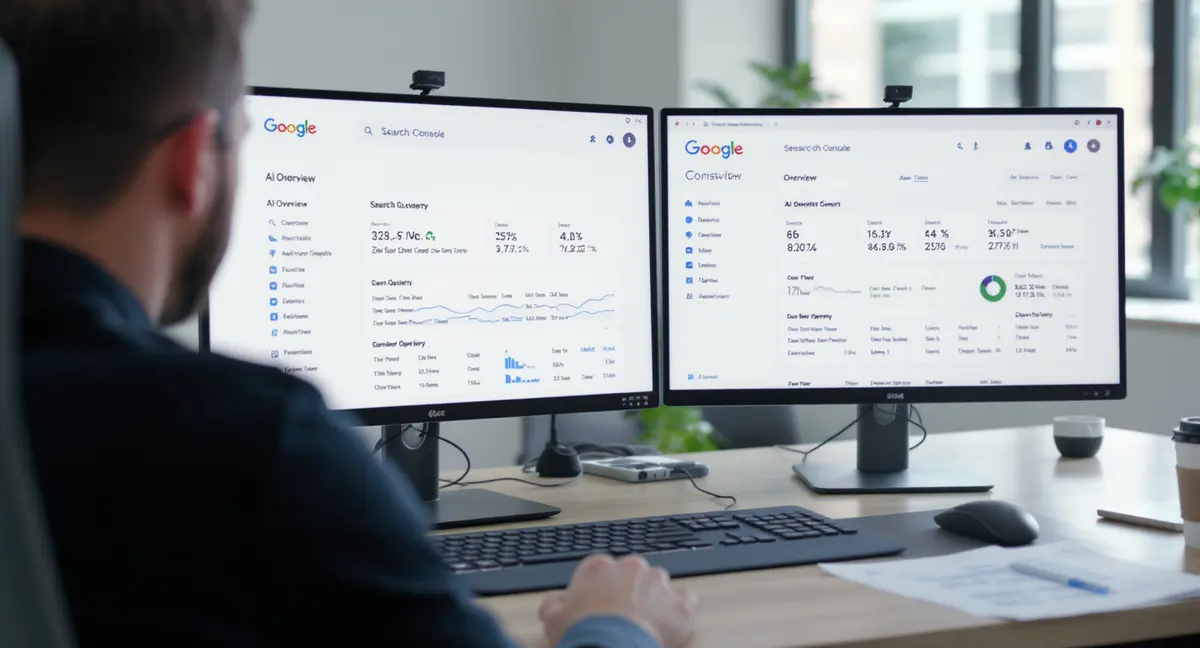
The short answer: Google AI overview optimization means making your content easy for Google's AI systems to access, understand, quote, and trust. The process combines technical requirements, structured data, clear formatting, and unique content that satisfies user intent. Three variables move the needle: crawlability and indexing, structured markup that matches visible content, and answer-focused formatting. According to BrightEdge, 50% of Google queries now trigger AI Overviews, making optimization critical for visibility. For contractors in competitive local markets, roofing marketing strategies that combine AI visibility with traditional lead generation produce the highest ROI.
Google's AI Overviews changed search in 2024. Now, instead of ten blue links, users often see an AI-generated answer at the top of results. That answer cites 3-5 sources. If your content is not one of those sources, you are invisible to half of all searchers. This is not a future trend. It is happening now. Google processes billions of queries through AI systems every day. ChatGPT handles 2.5 billion prompts daily with 800 million weekly users (Views4You, 2025). Perplexity queries grew 239% year-over-year (SeoProfy, 2025). AI search adoption doubled from 14% to 29% in just six months of 2026 (Exposure Ninja, 2025). The businesses that appear in AI Overviews see 35% more organic clicks than those that do not (Dataslayer, 2025). The businesses that do not appear lose 61% of their organic click-through rate (DemandSage, 2025). Google AI overview optimization is no longer optional. It is infrastructure. This article breaks down exactly how to optimize for AI Overviews using Google's own guidance, technical requirements, and proven formatting strategies. You will learn what makes content quotable to AI systems, how to implement structured data correctly, and how to measure whether your optimization is working.What Google AI Overviews Actually Are and How They Work
Google AI Overviews are AI-generated answer boxes that appear at the top of search results. They synthesize information from multiple web pages into a single, coherent response. The system launched as Search Generative Experience (SGE) in 2023 and became AI Overviews in 2024. When someone searches "how to fix a leaky faucet," Google's AI reads dozens of pages, extracts the most relevant steps, and presents them in a structured answer. Below that answer, Google cites the sources it used. Those citations are clickable links. According to Google's developer documentation, AI Overviews appear on approximately 50% of US queries and pull from pages that meet both traditional Search requirements and AI-specific formatting standards. The system does not replace traditional search results. It sits above them. Users can still scroll past the AI Overview to see the classic ten blue links. But research from DemandSage shows that when AI Overviews appear, organic click-through rates drop 61% for results below the Overview. The only winners are the 3-5 sources cited inside the Overview itself.How AI Overviews Select Sources
Google's AI does not randomly pick pages. It evaluates content based on the same quality signals that power traditional search, plus additional factors specific to AI readability. Google's AI optimization guide states that pages must be crawlable, indexable, and return HTTP 200 status codes. They must contain unique, satisfying content that directly answers user questions. And they must use clear formatting that AI systems can parse and quote. The AI looks for factual density, structured data that matches visible content, and sections that align with common query patterns. If your page has a section titled "How to Fix a Leaky Faucet" with numbered steps, clear images, and a 40-60 word summary at the top, the AI can extract that content cleanly. If your page buries the answer in dense paragraphs with no structure, the AI moves on to a competitor.The Relationship Between AI Overviews and Traditional Rankings
You cannot optimize for AI Overviews without first ranking well in traditional search. Google's systems use existing Search signals, domain authority, backlinks, content quality, page experience, to determine which pages are eligible for AI citation. A Reddit discussion from SEO practitioners notes that pages ranking in positions 1-10 for a query are far more likely to be cited in AI Overviews than pages on page two or three. This means Google AI overview optimization is not a replacement for SEO. It is an extension. You still need strong technical SEO, quality backlinks, and content that ranks. But ranking alone is not enough. Once you are in the top ten, you need AI-specific formatting to get cited in the Overview.Technical Prerequisites: Making Your Content Accessible to AI Systems
Google's AI cannot cite content it cannot access. The first requirement for Google AI overview optimization is ensuring Googlebot can crawl, render, and index your pages. This sounds basic, but Google's developer documentation emphasizes that many sites fail here. Your pages must return HTTP 200 status codes. They must not be blocked by robots.txt or noindex tags. They must contain indexable text content, not just images or JavaScript-rendered elements. Google's AI reads the HTML, so if your content only appears after a user clicks a button or loads a script, the AI will not see it. According to Google's guidance, you should verify crawlability in Google Search Console. Check the Coverage report for errors. Look for pages blocked by robots.txt, pages returning 404 or 500 errors, and pages with noindex tags. Fix those issues before worrying about advanced optimization.Structured Data Must Match Visible Content
Google requires that structured data, schema markup like FAQPage, HowTo, or Article, matches what users see on the page. If your schema says "How to Fix a Leaky Faucet" but your page title says "Plumbing Tips," Google will ignore the schema or potentially penalize the page. Use Google's Rich Results Test to validate your markup. The tool shows exactly what Google sees in your structured data and flags mismatches. Google's AI optimization guide explicitly states that schema must align with visible content and follow schema.org guidelines. Mismatched or spammy schema can disqualify a page from AI Overviews entirely.Page Experience and Core Web Vitals
Google's AI systems factor in page experience when selecting sources. A slow, mobile-unfriendly page with poor layout stability will not be cited, even if the content is excellent. Core Web Vitals, Largest Contentful Paint (LCP), Interaction to Next Paint (INP), and Cumulative Layout Shift (CLS), are confirmed ranking factors and influence AI citation. Target LCP under 2.5 seconds, INP under 200 milliseconds, and CLS under 0.1. Use Google's PageSpeed Insights to measure these metrics. Google's guidance notes that AI systems prioritize pages with clear separation between main content and ads or navigation. If your article is surrounded by pop-ups, interstitials, or aggressive ads, the AI may skip it.| Factor | What it is | Impact |
|---|---|---|
| Crawlability | Googlebot can access and render your pages | High, blocks AI citation entirely if failed |
| Structured Data Alignment | Schema matches visible content exactly | High, mismatches disqualify pages |
| Core Web Vitals | LCP, INP, CLS meet Google thresholds | Medium, influences selection among eligible pages |
| Mobile Friendliness | Page renders correctly on mobile devices | High, majority of queries are mobile |
| HTTP Status | Pages return 200, not 404 or 500 | High, errors block indexing |
Content Formatting: Writing for AI Readability
AI systems prefer content structured like an answer, not an essay. The most cited pages in AI Overviews use short paragraphs, clear headings, bullet lists, and direct answers at the top of sections. Reddit practitioners recommend a 40-60 word "answer box" at the start of each major section, a concise summary that AI can extract and quote verbatim. For example, if your article answers "What is Google AI overview optimization," start that section with a standalone paragraph: "Google AI overview optimization is the practice of formatting and structuring content so Google's AI systems can easily access, understand, and cite it in AI Overviews. It combines technical SEO, structured data, and answer-focused writing." That paragraph is quotable. The AI can lift it cleanly. After the summary, expand with supporting details, examples, and data. But lead with the answer. Google's systems are trained to extract information that directly addresses user queries. Burying the answer in paragraph five reduces your citation chances.Use Structured Markup for Questions and Answers
FAQPage, QAPage, and HowTo schema are the most valuable markup types for Google AI overview optimization. These schemas tell Google exactly where questions and answers are located on your page. When the AI encounters a query like "how to optimize for AI Overviews," it looks for pages with HowTo schema or FAQPage schema containing that question. Implement schema using JSON-LD in your page's `` section. Each FAQ item should have a clear question and a concise answer. Each HowTo step should be numbered and include an image if possible. Google's documentation emphasizes that schema is not a guarantee of citation, but pages with schema are far more likely to be selected than pages without it.Headings, Lists, and Visual Hierarchy
AI systems parse HTML structure. Use H2 and H3 headings to break content into logical sections. Use bullet lists and numbered lists to present steps, tips, or key points. Use tables to compare options or summarize data. These elements create visual hierarchy for human readers and parsing hierarchy for AI systems. A study from Princeton and Georgia Tech (KDD 2024) found that content with clear section-based formatting improved AI visibility by 30-40%. The AI does not want to interpret dense prose. It wants pre-structured information it can quote. Give it headings like "How to Optimize for AI Overviews" followed by a numbered list. That list becomes a citation.Creating Unique, Non-Commodity Content That AI Systems Trust
Google's AI optimization guide uses the phrase "unique, satisfying content" repeatedly. The AI does not cite generic content that could appear on any site. It cites content with original insights, specific examples, named sources, and expert attribution. If your article on "how to fix a leaky faucet" says the same things as 50 other articles, the AI will cite one of those 50 at random. But if your article includes a specific troubleshooting step no one else mentions, or quotes a plumber by name, or cites a manufacturer's technical guide, you become the unique source. The AI prefers unique sources because they add value to the Overview. According to Backlinko, sites with original research get four times more backlinks than those without. Original research also increases AI citation rates. When you publish proprietary data, case studies, or expert interviews, you create content that cannot be replicated. The AI has no choice but to cite you if it wants that information.Factual Density and Source Attribution
AI systems prioritize factual content with clear attribution. If you state "50% of Google queries trigger AI Overviews," cite the source: "50% of Google queries trigger AI Overviews (DemandSage, 2025)." The citation signals to the AI that your content is trustworthy and verifiable. Research from Princeton and Georgia Tech found that factual density, the number of verifiable facts per 100 words, correlates with AI citation rates. Pages with high factual density and inline citations are 30-40% more likely to appear in AI Overviews than pages with opinion-based or unsourced content. The AI is trained to prefer authoritative, evidence-based information.Expert Attribution and E-E-A-T Signals
Google's E-E-A-T framework (Experience, Expertise, Authoritativeness, Trustworthiness) applies to AI Overviews. The AI looks for author bylines, expert quotes, and credentials. If your article includes a quote like "'The key to AI citation is structured answers,' says John Mueller, Search Advocate at Google," the AI recognizes the expert attribution and weighs the content more heavily. Use real expert names and titles. Link to their LinkedIn profiles or company bios. The AI cross-references names against its training data to verify expertise. Fabricated experts or generic attributions ("industry experts say") carry no weight.See How Your Business Shows Up in AI Search
Get a free AI visibility scan. See exactly where you rank on ChatGPT, Perplexity, and Google AI, and what to do about it. Get Your Free Scan. Once your content appears in AI Overviews, a conversion optimization strategy ensures those citations translate into measurable business outcomes.
Managing Preview Controls and Snippet Visibility
Google offers several HTML meta tags and attributes that control how your content appears in AI Overviews and traditional snippets. These preview controls let you fine-tune what the AI can quote and how much it can show. The `max-snippet` tag limits the length of text snippets Google can display. For example, `` restricts snippets to 100 characters. This is useful if you want to appear in AI Overviews but do not want Google quoting entire paragraphs. The AI will cite your page but show only a brief excerpt, driving more clicks. The `nosnippet` tag blocks all snippets, including AI Overviews. Use this if you want to rank in traditional search but do not want your content quoted in AI-generated answers. The `data-nosnippet` attribute applies the same restriction to specific HTML elements. For example, `This paragraph will not appear in AI Overviews.
` lets you protect proprietary information while keeping the rest of your page eligible for citation.When to Use Preview Controls
Most businesses want maximum visibility in AI Overviews, so they do not use preview controls. But there are exceptions. If you publish gated content, premium research, or proprietary methodologies, you may want to limit how much Google quotes. Use `max-snippet` to show enough content to drive interest but not enough to eliminate the need to visit your site. Google's documentation notes that preview controls apply to both AI Overviews and traditional snippets. You cannot block one without blocking the other. If you use `nosnippet`, you will not appear in AI Overviews or featured snippets. This is a trade-off. You gain control over your content but lose visibility in AI-generated answers.Balancing Visibility and Proprietary Value
For most businesses, the visibility from AI Overviews outweighs the risk of content being quoted. Research from Dataslayer shows that pages cited in AI Overviews get 35% more clicks than pages not cited. Even if the AI quotes your content, users still click through to see the full article, verify the source, or explore related topics. The exception is businesses that monetize proprietary data or research. If your business model depends on gating content behind subscriptions or lead forms, preview controls make sense. But for content marketing, lead generation, and brand visibility, full participation in AI Overviews is the better strategy.Measuring and Iterating on AI Overview Performance
You cannot improve what you do not measure. Google Search Console provides limited data on AI Overview performance, but you can infer results by tracking impressions, clicks, and click-through rates for queries where AI Overviews appear. Start by identifying queries that trigger AI Overviews. Use a rank tracking tool to monitor your rankings for those queries. Then check Search Console for impression and click data. If your impressions are high but clicks are low, your page may be appearing in traditional results but not in the AI Overview. If both impressions and clicks are high, you are likely being cited in the Overview. According to BrightEdge, early AI search adopters saw 120x impression increases and 800% year-over-year traffic growth from AI citations. These are outlier results, but they show the potential. Even modest AI Overview visibility can drive large traffic gains.A/B Testing Content Formats
The best way to optimize for AI Overviews is to test different content formats and track performance. Create two versions of the same article: one with a 40-60 word answer box at the top, structured headings, and FAQPage schema, and one without. Publish both and monitor which version gets cited in AI Overviews. Google's systems update frequently, so what works today may not work in six months. Continuous testing and iteration are essential. Track which content formats, schema types, and heading structures perform best. Double down on what works and eliminate what does not.Monitoring Competitor Citations
Use a tool like backlink analysis software or keyword research platform to monitor which competitors are being cited in AI Overviews for your target keywords. Analyze their content structure, schema implementation, and formatting. What are they doing that you are not? Are they using FAQPage schema? Do they have clearer headings? Is their content more factually dense? Competitor analysis reveals gaps in your own optimization. If a competitor consistently appears in AI Overviews and you do not, their content is better formatted for AI readability. Reverse-engineer their approach and apply it to your own pages.Building an Owned System for Long-Term AI Visibility
Most businesses approach Google AI overview optimization as a one-time project. They optimize a few pages, see some results, and move on. That approach works for short-term gains but fails long-term. AI systems evolve constantly. Google updates its algorithms. New competitors enter the market. What ranks today may not rank in six months. The businesses that win long-term treat AI optimization as infrastructure, not a campaign. They build repeatable processes for creating, formatting, and publishing AI-optimized content. They install systems that produce results month after month, year after year, without ongoing agency dependency. Strategyc takes this approach with the Content & Visibility Engine, an installed publishing system that produces structured, AI-optimized content for Google, ChatGPT, Perplexity, and voice search. The system is built on your infrastructure. You own the workflows, the AI accounts, the content, and the data. Install takes 4-6 weeks. After that, the system runs independently.Ownership vs. Dependency
The traditional agency model charges $1,500-$5,000 per month for SEO services (Ahrefs, 2024). When you stop paying, the work stops. That is not ownership. That is rent. And with 38% annual churn at SEO agencies (Focus Digital, 2025), most businesses lose their investment within two years. An owned system compounds. The content you publish in month one still drives traffic in month twelve. The schema you implement in quarter one still generates AI citations in quarter four. You are not paying for labor. You are building an asset.The Role of Structured Workflows
AI optimization at scale requires structured workflows. You cannot manually format every article, implement schema for every page, and test every heading variation. You need repeatable processes that ensure consistency. A structured workflow includes content templates with pre-built schema, formatting checklists that enforce AI-friendly structure, and quality gates that verify factual density and source attribution. These workflows turn AI optimization from a manual task into an automated system.The Bottom Line
Google AI overview optimization is not a trend. It is the new baseline for search visibility. With 50% of Google queries triggering AI Overviews and 61% of organic clicks lost when Overviews appear, businesses that do not optimize are invisible to half their audience. The good news: AI optimization is not magic. It is technical requirements, structured data, clear formatting, and unique content. Google's own documentation provides the blueprint. The businesses that execute fastest win the early-mover advantage. AI systems are forming their knowledge bases right now. The sources they cite today become the authorities they reference tomorrow. Start with technical prerequisites. Ensure your pages are crawlable, indexable, and fast. Implement structured data that matches visible content. Format content with answer-focused summaries, clear headings, and bullet lists. Cite sources. Attribute experts. Publish unique insights. Measure results. Iterate. The businesses that treat AI optimization as owned infrastructure, not a rented service, will compound visibility gains for years. The businesses that wait will spend those years catching up.Frequently Asked Questions About Google AI Overview Optimization
What is Google AI overview optimization?
Google AI overview optimization is the practice of formatting and structuring content so Google's AI systems can easily access, understand, and cite it in AI Overviews. It combines technical SEO, structured data implementation, and answer-focused content formatting to increase the likelihood of being cited in AI-generated search results. Once your content appears in AI Overviews, a conversion optimization strategy ensures those citations translate into measurable business outcomes. While Google dominates search volume, ChatGPT search optimization targets the 800 million weekly users who bypass traditional search engines entirely.
How long does it take to see results from AI overview optimization?
Most businesses see initial results within 4-8 weeks after implementing AI optimization. Google's systems need time to recrawl pages, process new structured data, and evaluate content quality. According to BrightEdge, early AI search adopters saw 800% year-over-year traffic growth, but sustained results require ongoing optimization and content publication. AI citations increase top-of-funnel traffic, but conversion funnel optimization prevents that traffic from leaking out before it converts.
Can I build AI optimization systems in-house without hiring an agency?
Yes, but it requires technical expertise in schema implementation, content formatting, and SEO best practices. You need someone who understands HTML, JSON-LD structured data, and Google's quality guidelines. Most businesses find that installing an owned system once is more cost-effective than hiring ongoing agency services that stop producing results when payments end.
Do I need to optimize every page on my site for AI Overviews?
No. Focus on pages targeting high-intent queries where AI Overviews frequently appear. These are typically informational queries like "how to," "what is," and "best ways to." Product pages, service pages, and transactional pages benefit less from AI optimization because AI Overviews rarely appear for commercial queries.
What happens if Google stops showing AI Overviews?
The optimization techniques that improve AI Overview visibility, structured data, clear formatting, factual density, expert attribution, also improve traditional search rankings and featured snippet eligibility. You are not optimizing exclusively for AI. You are making content more accessible to all of Google's systems. Even if AI Overviews disappeared tomorrow, these techniques would still drive organic traffic and visibility.