Roofing Marketing in 2026: How to Generate Leads Without Burning Your Budget
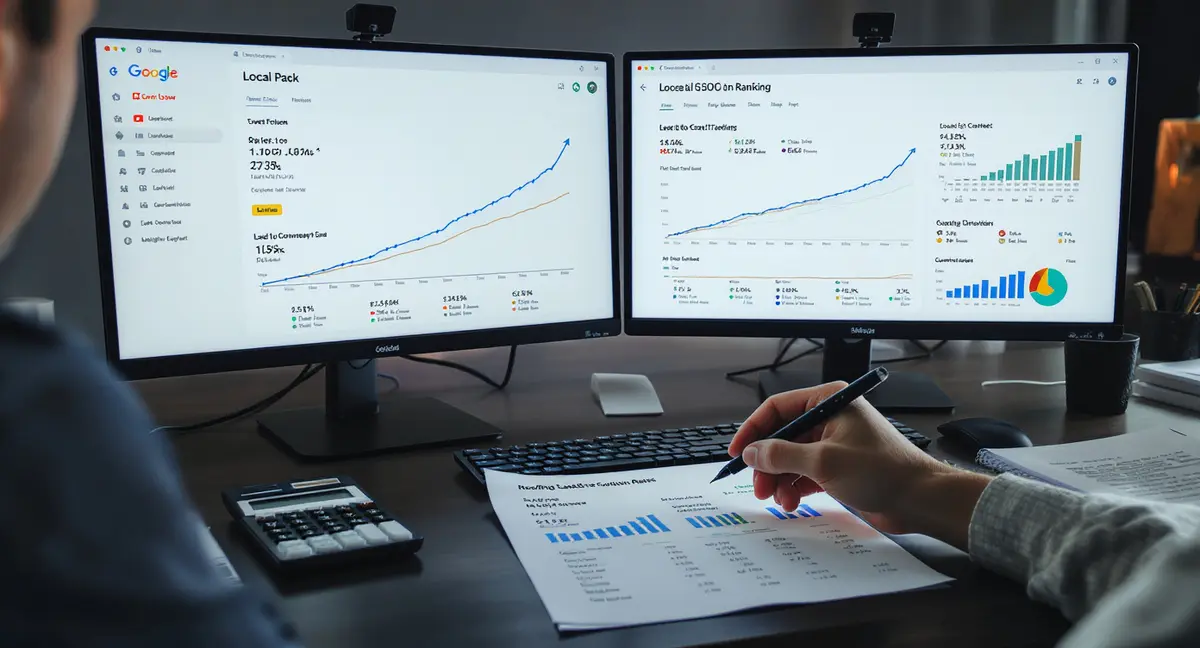
Roofing marketing has changed more in the last 18 months than in the previous decade. Homeowners no longer browse the Yellow Pages or trust the first truck they see. They ask Google, scroll through AI-generated summaries, and check reviews before they ever pick up the phone. If your business is not showing up in those first few results, or worse, if your competitor is getting cited in AI Overviews while you are invisible, you are losing jobs before you even know they existed. The roofing companies winning right now are not the ones spending the most on ads. They are the ones who built visibility systems that work across Google, AI search, and voice assistants. This article breaks down what actually moves the needle: local SEO that dominates map packs, content that answers buyer questions before competitors do, and conversion systems that turn clicks into signed contracts. You will see what works in 2026, what is already outdated, and how to stop renting visibility from platforms that change the rules every quarter. If your competitor is getting cited in AI Overviews while you remain invisible, AI search optimization is no longer optional for home service businesses.
Why Traditional Roofing Marketing Stopped Working
The playbook that worked five years ago is now a liability. Roofing contractors used to rely on door-knocking after storms, direct mail postcards, and local newspaper ads. Those tactics still exist, but they are no longer the primary way homeowners find roofers. According to BrightEdge, organic search drives 53% of all trackable website traffic, and that number climbs higher for home services. Homeowners start their search online, often on their phones, and they make decisions fast. If your business does not appear in the first three results, you might as well not exist.
Search Behavior Shifted to Mobile and Voice
More than 60% of home service searches now happen on mobile devices, and voice search is growing faster than anyone predicted. Homeowners ask Siri or Alexa questions like "Who fixes roof leaks near me?" or "How much does a roof replacement cost?" If your content is not structured to answer those questions in plain language, AI assistants will cite your competitor instead. Google's AI Overviews now appear in 50% of search results, according to DemandSage, and they only cite 3-5 brands per query. That is not a crowded field. That is a winner-take-most environment. The companies that get cited are the ones producing structured, authoritative content that answers specific questions. Everyone else is invisible.
Paid Ads Got More Expensive and Less Predictable
Google Local Services Ads and search ads still work, but the cost per lead has climbed sharply. Roofing keywords like "roof replacement" and "emergency roof repair" can cost $50-$150 per click in competitive markets. That means you are paying $200-$500 just to get a phone call, and not every call converts. Paid ads are not a system. They are a subscription. The moment you stop paying, the leads stop. That is fine for short-term campaigns, but it is a terrible foundation for long-term growth. Roofing marketing in 2026 requires a mix: paid ads to capture immediate demand, and owned content to build authority that compounds over time.
Local SEO: The Foundation of Roofing Lead Generation
Local SEO is not optional for roofing companies. It is the foundation. Homeowners search for roofers by location, not by brand. They type "roofers near me" or "roof repair in your area" and they call whoever shows up in the map pack. If your Google Business Profile is incomplete, your competitors are getting those calls. Local SEO for roofing marketing means optimizing every signal Google uses to rank local businesses: your profile, your website, your reviews, and your citations across the web.
Optimize Your Google Business Profile Like Your Business Depends on It
Your Google Business Profile is the single most important asset in local roofing marketing. It controls whether you appear in the map pack, what information homeowners see, and whether they call you or your competitor. Start with the basics: claim your profile, verify your address, and choose the right categories. Use "Roofing Contractor" as your primary category, then add secondary categories like "Roof Repair Service" or "Gutter Cleaning Service" if they apply. Upload high-quality photos of completed jobs, your trucks, and your team. Google prioritizes profiles with recent photos. Post updates weekly, project completions, seasonal tips, storm damage alerts. Respond to every review, positive or negative, within 24 hours. Profiles with high engagement rank higher. The same principles that drive roofing visibility apply across every content channel, which is why AI content marketing systems are replacing one-off campaigns in 2026.
Build Service Pages for Every City You Serve
If you serve multiple cities or neighborhoods, each one needs its own service page. A single "Service Area" page does not cut it. Google ranks pages that match the searcher's location. Create dedicated pages for "Roof Replacement in your area" and "Roof Repair in your area" for every major area you cover. Each page should include unique content: local photos, city-specific details, and answers to questions homeowners in that area actually ask. Do not duplicate content across pages. Write genuinely useful information. Include a map, your service area boundaries, and a clear call-to-action. These pages are how you dominate local search results when competitors are still running generic campaigns.
Content That Converts Homeowners Into Leads
Most roofing websites treat content as an afterthought. They have a homepage, a services page, and maybe a contact form. That is not enough. Homeowners are researching roofing decisions for weeks before they call anyone. They want to know how much a roof replacement costs, whether they should repair or replace, what materials last longest, and how to spot storm damage. If your website does not answer those questions, they will find a competitor who does. Content-driven roofing marketing means publishing the answers homeowners are already searching for, then capturing the lead when they are ready to act.
Answer the Questions Homeowners Actually Ask
Start by listing every question a homeowner asks during a sales call or estimate. Those questions are your content roadmap. Write articles like "How Much Does a Roof Replacement Cost in your area?" or "Roof Repair vs. Replacement: Which One Do You Need?" or "5 Signs Your Roof Has Storm Damage." Each article should be 800-1,200 words, include local pricing context, and end with a clear next step, book an inspection, request a quote, or call for emergency service. Use simple language. Avoid industry jargon. Structure content with short paragraphs, bullet points, and subheadings so it is easy to scan on mobile. Google rewards content that matches search intent. Homeowners reward it with phone calls.
Use Video to Build Trust Before the First Call
Video is the fastest way to build trust in roofing marketing. Homeowners want to see your work, hear your voice, and know you are a real company before they invite you to their property. Film short videos showing completed projects, explaining common roofing problems, or walking through the inspection process. Post them on YouTube, embed them on your website, and share them on social media. A 90-second video explaining "What to Expect During a Roof Inspection" will convert more leads than a wall of text. Video also helps you appear in YouTube search results, which Google increasingly prioritizes. If your competitors are not using video yet, you have a 12-month head start.
Reviews and Reputation: The Invisible Sales Team
Homeowners trust online reviews more than they trust your sales pitch. According to Roofr, 90% of customers turn to online reviews to help decide on a purchase. If you have 12 reviews and your competitor has 120, you are losing jobs even if your work is better. Reputation management is not about gaming the system. It is about building a consistent process to ask happy customers for reviews, responding to every review publicly, and making sure your best work is visible online. Roofing marketing without a review strategy is like running ads with no landing page.
Build a System to Request Reviews After Every Job
Most roofing companies wait for reviews to happen organically. That is a mistake. You need a system. After every completed job, send a text or email asking the customer to leave a review on Google. Make it easy, include a direct link to your review page. Time it right: ask within 24-48 hours of project completion, when satisfaction is highest. Offer a small incentive like entry into a monthly drawing for a gift card, but never pay for reviews directly. That violates Google's guidelines. Train your team to mention reviews during the final walkthrough: "If you are happy with the work, we would appreciate a Google review. It notably helps other homeowners find us." Most customers will do it if you ask. They just need a reminder. The same principles that drive roofing visibility apply across every content channel, which is why AI content marketing systems are replacing one-off campaigns in 2026.
Respond to Every Review, Especially the Negative Ones
Responding to reviews shows future customers that you care about feedback and handle problems professionally. Thank customers who leave positive reviews. Be specific, mention the type of project or the crew member they worked with. For negative reviews, respond quickly, acknowledge the issue, and offer to resolve it offline. Never argue publicly. Even if the review is unfair, your response is what other homeowners will judge. A professional reply to a 1-star review can actually build trust. It shows you take accountability. Ignoring negative reviews signals that you do not care about customer experience, and that costs you more jobs than the bad review itself.
Ready to take the next step with Strategyc?
Our team is ready to help you achieve your goals. Get Your Free Scan.
Paid Ads That Actually Generate Profit
Paid advertising is part of roofing marketing, but only if it is profitable. Too many contractors burn thousands of dollars on Google Ads or Facebook campaigns that generate clicks but no signed contracts. The difference between wasted ad spend and profitable campaigns comes down to targeting, messaging, and conversion infrastructure. You need to reach homeowners at the right moment, with the right offer, and send them to a page designed to capture the lead. Paid ads work when they are treated as a system, not a set-it-and-forget-it campaign.
Google Local Services Ads for Immediate, High-Intent Leads
Google Local Services Ads put your business at the highly top of search results, above even paid search ads. Homeowners see your business name, your Google rating, and a "Google Guaranteed" badge if you qualify. They can call you directly from the ad. You only pay per lead, not per click, which makes LSAs more predictable than traditional search ads. To succeed with LSAs, keep your profile updated, respond to leads within minutes, and maintain a high rating. Google prioritizes responsiveness. If you miss calls or take hours to reply, your ad position drops. LSAs work best for emergency services like leak repairs and storm damage, where homeowners need help immediately and are not price-shopping.
Search Ads for High-Value Keywords and Storm Events
Google Search Ads still work for roofing marketing, but only if you target the right keywords and control your costs. Focus on high-intent keywords like "roof replacement near me" or "emergency roof repair your area." Avoid broad keywords like "roofing" or "roofer", they attract tire-kickers, not buyers. Use location targeting to show ads only in the zip codes you serve. Set a daily budget you can afford to lose, then optimize based on conversion data. After a storm, pause your regular campaigns and run storm-specific ads: "Hail Damage Roof Inspection" or "Free Storm Damage Assessment." These campaigns convert at higher rates because the urgency is real. Track every lead source so you know which keywords and ads are actually producing signed contracts, not just phone calls.
Why Roofing Companies Are Switching to Owned Content Systems
The biggest shift in roofing marketing is not about tactics. It is about ownership. Contractors are realizing that paying $2,000-$5,000 per month for SEO or lead generation services is not a growth strategy, it is rent. When the contract ends, the traffic stops, the content disappears, and you start over. That is not a system. That is dependency. Companies that want long-term visibility are building owned content engines: publishing systems that produce SEO-optimized articles, service pages, and FAQ content on their own domain, structured to rank in Google and get cited by AI search tools like ChatGPT and Perplexity. Roofing contractors face the same local search challenges as other trades, and the strategies that work here mirror what drives results in electrician marketing and other home services.
The Problem With Agency Retainers
Most roofing marketing agencies charge monthly retainers for services like SEO, content writing, and link building. The work might be good, but the model is flawed. You do not own the content. You do not control the process. And the moment you stop paying, everything stops. According to Focus Digital, SEO agencies see 38% annual churn, which means most clients leave within three years. When you leave, you lose access to the content, the keyword research, and the optimization work. You are back to square one. Agencies gatekeep the infrastructure because it keeps you paying. That is fine if you want short-term results. It is a terrible deal if you want compounding growth.
What an Owned Content System Looks Like
An owned system means the content lives on your domain, the publishing process is documented, and the infrastructure is yours permanently. Platforms like Strategyc's Content & Visibility Engine install publishing systems that roofing companies own outright. The system produces SEO-optimized content, structures it for AI search visibility, and integrates with your website. You are not paying rent. You are building equity. The content keeps working after the engagement ends. That is the difference between a service and a system. Services stop when you stop paying. Systems compound. If content and visibility are critical to your growth, they should be infrastructure you own, not a subscription you rent.
Measuring What Actually Matters in Roofing Marketing
Most roofing contractors track the wrong metrics. They look at website traffic, social media likes, or ad impressions and assume those numbers mean success. They do not. The only metrics that matter are the ones tied to revenue: how many leads you generated, how many estimates you booked, and how many contracts you signed. Roofing marketing is not about vanity metrics. It is about profit. If you cannot connect a marketing channel to signed jobs, you are guessing. And guessing is expensive.
Track Leads by Source, Not Just Volume
You need to know where every lead came from: Google Ads, Local Services Ads, organic search, social media, or referrals. Use call tracking software to assign unique phone numbers to each channel. Tag every form submission with a hidden field that captures the traffic source. Integrate everything into a CRM so you can see which leads turned into estimates and which estimates turned into signed contracts. Most roofing companies stop tracking at the lead level. That is a mistake. A channel that generates 50 leads per month but only closes 2 jobs is worse than a channel that generates 10 leads and closes 5. Volume does not matter. Conversion rate and customer value matter.
Calculate Cost Per Acquisition, Not Just Cost Per Lead
Cost per lead is a useless metric if those leads do not close. Calculate cost per acquisition instead: how much you spent to generate one signed contract. If you spent $3,000 on Google Ads and signed 5 jobs, your CPA is $600. If the average job is worth $8,000, that is a profitable channel. If your CPA is $1,200 and your average job is $6,000, you are losing money. Track CPA by channel, by campaign, and by keyword. Cut the campaigns that do not work. Double down on the ones that do. This is how you turn marketing from a cost center into a profit driver. Most contractors never do this math. That is why they keep spending money on campaigns that do not work. The local SEO and content tactics outlined here are not unique to roofing, they are the same fundamentals that power successful HVAC marketing campaigns across the country.
The Bottom Line
Roofing marketing in 2026 is not about doing more. It is about doing what actually works. Local SEO puts you in front of homeowners searching for roofers right now. Content builds trust and answers questions before competitors do. Reviews turn satisfied customers into your best sales team. Paid ads generate immediate leads when you target the right keywords and track the right metrics. And owned content systems give you long-term visibility without the monthly rent. The contractors who win are the ones who stop chasing tactics and start building systems. If you are still paying $3,000 per month for services that disappear when you stop paying, you are not investing in growth. You are renting it. Build infrastructure you own. Publish content that compounds. Show up where homeowners are searching, whether that is Google, ChatGPT, or voice assistants. That is how you generate leads without burning your budget.
Frequently Asked Questions
What is the most effective roofing marketing strategy in 2026?
Local SEO combined with owned content produces the best long-term results. Optimize your Google Business Profile, build service pages for every city you serve, and publish content that answers homeowner questions. Paid ads work for immediate leads, but organic visibility compounds over time without ongoing ad spend.
How much should a roofing company spend on marketing?
Most roofing companies allocate 5-10% of revenue to marketing. New companies or those entering competitive markets may spend 10-15% initially. Focus spending on channels with measurable ROI: Local Services Ads, search ads, and content systems. Avoid long-term agency retainers unless you own the content they produce.
Can I build a roofing marketing system in-house without hiring an agency?
Yes, but it requires time, process, and consistency. You need someone to manage your Google Business Profile, publish content weekly, request reviews, and track lead sources. Many contractors start with an installed system that handles content production and SEO structure, then manage updates internally. Ownership matters more than who does the work.
How do I measure ROI from organic content and SEO?
Track leads by source using call tracking and form tags. Calculate cost per acquisition by dividing total marketing spend by signed contracts. Compare organic lead close rates to paid ad close rates. SEO ROI is slower to measure than paid ads, but compounds over time. Most roofing companies see measurable organic traffic growth within 6-12 months.
Do roofing companies need to optimize for AI search and voice assistants?
Yes. Google AI Overviews now appear in 50% of searches and only cite 3-5 brands per query. Voice assistants like Siri and Alexa pull answers from structured content. If your content is not formatted to answer specific questions in plain language, AI tools will cite your competitors. Optimize now while most roofing companies are still ignoring it.
```