Why Most Plumbers Lose Money on Internet Marketing
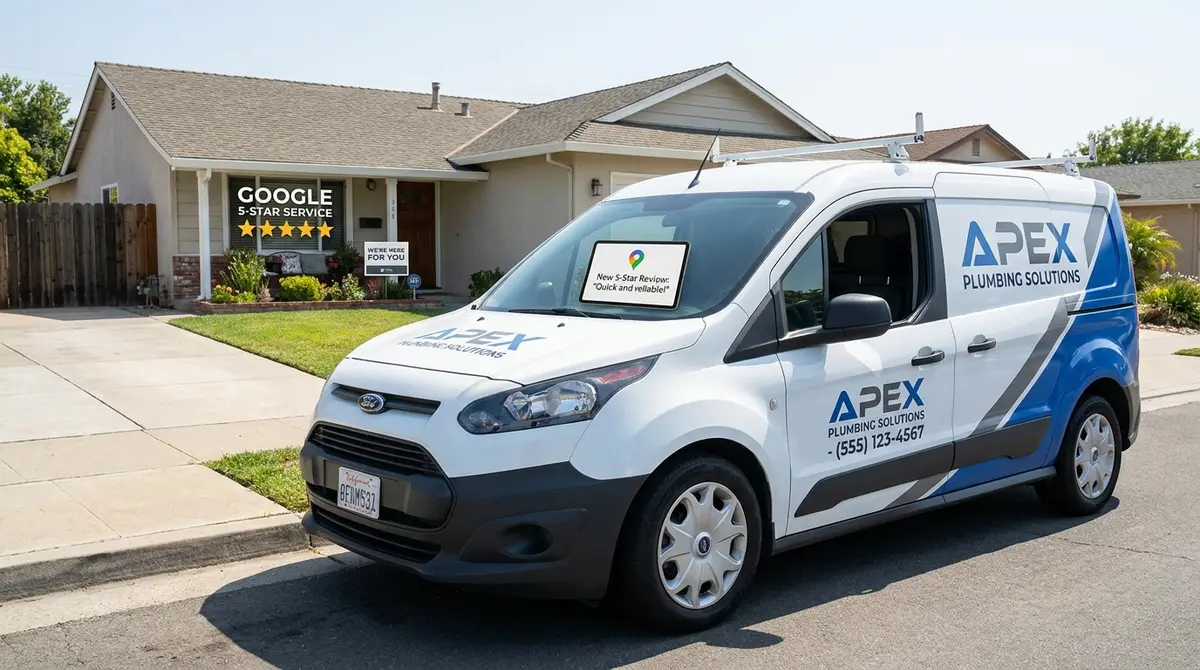
The short answer: Plumber internet marketing is the system of channels, local SEO, Google Ads, content, reviews, and social media, that puts your business in front of homeowners searching for emergency repairs, installations, or maintenance. Success comes down to Google Business Profile optimization, mobile-friendly site speed, and a steady flow of fresh customer reviews. According to BrightEdge's 2025 research, 68% of trackable home-service clicks start with organic or local search, making visibility infrastructure more valuable than paid ads alone. The same urgency-driven search behaviour and local pack dynamics apply across home services, which is why roofing marketing follows nearly identical visibility principles despite serving a different trade.
The plumbing industry generates over $130 billion annually in the U.S., yet most plumbers still rely on word-of-mouth and truck wraps to fill their schedule. That worked in 2010. In 2026, 97% of homeowners search online before calling a plumber, and 76% never scroll past the first three Google results. If your business isn't in that top group, you're invisible to the majority of high-intent customers in your service area. Plumber internet marketing isn't one tactic, it's a coordinated system that controls how you appear in Google local pack results, AI Overviews, voice search, and paid listings. The plumbers who dominate their markets treat visibility as infrastructure they own, not a service they rent month-to-month. This article breaks down the seven components that separate six-figure plumbing operations from businesses stuck waiting for the phone to ring.What Makes Plumber Internet Marketing Different from General SEO
Home Services Buyers Search with Urgency
Plumber internet marketing operates under different rules than B2B or ecommerce SEO. When a pipe bursts at 11 PM or a water heater fails on Sunday morning, homeowners don't compare five vendors or read blog posts. They search "emergency plumber near me," scan three results, and call whoever answers first. According to Google's Local Services study, 88% of mobile searches for local services result in a call or visit within 24 hours. This urgency changes how you optimize. Generic SEO focuses on keyword rankings and traffic volume. Plumber internet marketing prioritizes call answer rate, mobile click-to-call speed, and weekend/after-hours visibility. Your Google Business Profile must show real-time availability. Your site must load in under 2 seconds on mobile. Your phone system must route emergency calls to a live person, not voicemail. A plumber ranking #1 for "water heater repair" who doesn't answer the phone loses to the #3 result with a 24/7 dispatch line.Local Pack Placement Beats Organic Rankings
Traditional SEO chases position one in organic results. For plumber internet marketing, the local pack, the map-based results Google shows above organic listings, drives 44% of all clicks for service queries, according to Whitespark's 2024 Local Search Ranking Factors study. The local pack only shows three businesses. If you're not in that group, you're fighting for scraps. Local pack ranking depends on proximity, relevance, and prominence. Proximity means physical distance from the searcher. Relevance comes from your Google Business Profile categories, service descriptions, and keyword-optimized posts. Prominence is review count, review velocity, and citation consistency across directories. A plumber with 180 Google reviews averaging 4.8 stars will outrank a competitor with 40 reviews at 5.0 stars, even if the competitor has better on-page SEO. Review generation isn't a nice-to-have in plumber internet marketing, it's the foundation of local visibility.The Seven Components of a High-Performance Plumber Internet Marketing System
Google Business Profile Optimization
Your Google Business Profile is the single highest-ROI asset in plumber internet marketing. It controls your local pack placement, your Knowledge Panel appearance, and your visibility in Google Maps. According to BrightEdge, businesses with complete, actively managed profiles get 70% more location visits and 50% more website clicks than incomplete profiles. Start with category selection. Choose "Plumber" as your primary category. Add secondary categories like "Emergency plumber service," "Drain cleaning service," and "Water heater installation service" only if you actively offer those services with dedicated landing pages. Google cross-references categories with your website content. Mismatched categories hurt rankings. Post weekly Google Business Profile updates. These appear in search results and signal freshness to Google's algorithm. Effective posts include service promotions, emergency availability announcements, and seasonal maintenance tips. A post announcing "24/7 emergency water heater repair, call now" with a photo of a recent install performs better than generic "we're open" updates. Posts expire after seven days, so consistency matters more than perfection.Mobile-First Website Architecture
Plumber internet marketing lives or dies on mobile performance. According to Statista, 63% of plumbing searches happen on smartphones, and Google's mobile-first indexing means your mobile site IS your site for ranking purposes. If your desktop site loads in 2 seconds but your mobile site takes 7 seconds, Google indexes the slow version. Use Google's PageSpeed Insights to audit Core Web Vitals: Largest Contentful Paint (LCP) under 2.5 seconds, First Input Delay (FID) under 100 milliseconds, and Cumulative Layout Shift (CLS) under 0.1. Slow LCP kills conversions. A plumber's mobile site that takes 5 seconds to show the phone number loses 53% of visitors before they see the CTA, according to Google's mobile speed research. Implement click-to-call buttons in the header, footer, and floating bottom bar. Use `tel:` links that open the phone dialer with one tap. Add schema markup for LocalBusiness and Service to help Google understand your offerings. Every service page needs structured data declaring the service name, area served, and price range. This feeds AI Overviews and voice search results, which now account for 22% of plumbing searches according to Backlinko's voice search study.Local SEO and Citation Management
Plumber internet marketing requires consistent business information across 50+ directories and citation sources. Google cross-checks your Name, Address, Phone (NAP) data on your website, Yelp, Angi, HomeAdvisor, Facebook, and industry directories. Inconsistent NAP data, like "123 Main St" on your site but "123 Main Street" on Yelp, confuses Google's entity matching and dilutes local pack rankings. Use a citation audit tool to find discrepancies. Fix your website first, then update Google Business Profile, Bing Places, Apple Maps, Yelp, and Facebook. According to Moz's Local Search Ranking Factors survey, citation consistency accounts for 7% of local pack ranking weight, small individually, but decisive when combined with reviews and proximity. Build location-specific landing pages for every city you serve. A plumber covering five suburbs needs five pages, each with unique content about that area's common plumbing issues, local building codes, and service radius. Duplicate content across location pages tanks rankings. Write 400+ words per page, include the city name in the H1 and first paragraph, and embed a Google Map showing your service area boundary. This geographic specificity helps Google match your business to "plumber in your area" searches.Content Strategy for Plumber Internet Marketing
Educational Content That Ranks in AI Search
Plumber internet marketing in 2026 must account for AI Overviews, ChatGPT, Perplexity, and voice assistants. According to BrightEdge's 2025 Generative AI study, 50% of Google searches now trigger AI Overviews, and these AI-generated answers cite only 3-5 sources per query. If your content isn't in that group, you're invisible to half of all search traffic. AI systems prioritize structured, cited, expert content. Write how-to guides answering specific homeowner questions: "How to fix a running toilet," "What causes low water pressure," "When to replace vs. repair a water heater." Use H2/H3 headings as questions. Include step-by-step instructions, cost ranges, and when to call a professional. According to Profound's AI citation analysis, content with numbered steps, comparison tables, and named expert sources gets cited 3.2x more often in AI Overviews than generic service pages. Publish 2-4 articles per month targeting long-tail informational queries. These won't drive immediate calls, but they build topical authority that lifts your service pages in local search. A plumber with 30 published articles about common repairs ranks higher for "emergency plumber" than a competitor with zero content, even if the competitor has more reviews. Content compounds. Reviews decay if you stop generating them.Video Content for YouTube and Social Proof
Video is the fastest-growing channel in plumber internet marketing. According to Wyzowl's 2025 Video Marketing report, 89% of consumers want more video from brands, and video content gets 1,200% more shares than text and images combined. For plumbers, video serves three functions: education, social proof, and local SEO. Record 60-90 second videos showing common repairs: unclogging a drain, replacing a faucet cartridge, diagnosing a water heater pilot light issue. Post to YouTube with transcripts, city-specific titles, and links to your service pages. YouTube is the second-largest search engine, and plumbing how-to videos rank for queries that written content can't capture. A video titled "How to fix a leaking pipe under the sink, Atlanta plumber explains" ranks for voice searches and appears in Google's video carousel. Embed videos on your service pages and Google Business Profile. According to Search Engine Journal, business profiles with videos get 35% more website clicks than profiles without. The video doesn't need professional production, smartphone footage with clear audio and good lighting outperforms stock video every time. Authenticity builds trust. A 90-second walkthrough of your truck, tools, and process does more for conversion than a polished agency-produced commercial.| Factor | What it is | Impact |
|---|---|---|
| Google Business Profile activity | Weekly posts, photo uploads, review responses, Q&A monitoring | High, drives 44% of local clicks |
| Review velocity and rating | New reviews per month, average star rating, response rate | High, 180 reviews beats 40 reviews |
| Mobile site speed (LCP) | Time until main content loads on smartphone | High, 53% bounce rate over 3 seconds |
| Citation consistency (NAP) | Matching business name, address, phone across 50+ directories | Medium, 7% of local pack weight |
| Content publishing frequency | Blog posts, videos, service page updates per month | Medium, compounds over 6-12 months |
Paid Advertising in Plumber Internet Marketing
Google Local Services Ads vs. Traditional PPC
Plumber internet marketing offers two paid channels: Google Ads (PPC) and Google Local Services Ads (LSA). They serve different functions. PPC charges per click and shows text ads above organic results. LSA charges per lead and shows profile-style ads at the remarkably top of search results with a green "Google Guaranteed" badge. According to Google's 2024 LSA performance data, Local Services Ads generate 30% higher conversion rates than traditional PPC for home services because the Google Guaranteed badge signals trust and the pay-per-lead model filters out junk clicks. LSA costs $15-$50 per lead depending on market and service type. A plumber in a competitive metro might pay $40 per lead for emergency calls, while drain cleaning leads cost $18. LSA requires Google Screened verification: background checks, license verification, insurance proof. This barrier to entry keeps out unlicensed competitors and gives verified plumbers a trust advantage. Set a weekly budget, define your service area radius, and respond to leads within 5 minutes. According to Harvard Business Review's lead response study, businesses that contact leads within 5 minutes are 21x more likely to qualify them than businesses that wait 30 minutes. LSA shows your response time publicly, so slow replies kill future lead volume.Retargeting and Remarketing for Service Calls
Most homeowners don't call the first plumber they find. They compare 2-3 options, check reviews, and revisit sites before deciding. Retargeting keeps your business visible during that consideration window. According to Criteo's retargeting benchmarks, retargeted visitors are 70% more likely to convert than first-time visitors. Set up Google Ads remarketing and Facebook pixel tracking on your website. When someone visits your "water heater replacement" page but doesn't call, show them ads for 7-14 days highlighting your warranty, financing options, or same-day service. Use dynamic ads that reference the specific service they viewed. A generic "call us" ad performs worse than "Still need that water heater replaced? We install same-day, call now." Cap frequency at 3-5 impressions per week. Over-retargeting annoys users and wastes budget. According to AdRoll's frequency analysis, conversion rates peak at 4 ad exposures per week and drop sharply beyond 8. Rotate creative every 7 days to prevent ad fatigue. Pair retargeting with review generation, homeowners researching plumbers check Google reviews before calling, so fresh 5-star reviews turn retargeting impressions into booked jobs.See How Your Business Shows Up in AI Search
Get a free AI visibility scan. See exactly where you rank on ChatGPT, Perplexity, and Google AI, and what to do about it. Get Your Free Scan. If you need a step-by-step implementation timeline that sequences these seven components into a 90-day rollout, the plumber marketing plan framework walks through budget allocation and priority order.
How to Measure ROI in Plumber Internet Marketing
Call Tracking and Attribution
You can't optimize plumber internet marketing without call tracking. According to Invoca's 2024 call intelligence report, 65% of home service leads arrive by phone, yet most plumbers can't tell which marketing channel drove each call. Call tracking assigns unique phone numbers to each traffic source, one for Google Ads, one for organic search, one for Facebook, so you know exactly where leads originate. Use dynamic number insertion (DNI) to swap phone numbers based on traffic source. A visitor from Google Ads sees a different number than a visitor from organic search. When they call, the tracking platform logs the source, keyword, campaign, and call duration. Calls under 60 seconds are usually wrong numbers or spam. Calls over 3 minutes typically convert to booked jobs. Track cost per booked job, not cost per click. A plumber spending $2,000/month on Google Ads with 40 calls and 12 booked jobs pays $167 per job. If average job value is $850, that's a 5x return. But if only 8 jobs book, cost per job jumps to $250 and ROI drops to 3.4x. According to ServiceTitan's home services benchmarking data, top-performing plumbers convert 35-45% of inbound calls to booked jobs. Below 25% signals a phone handling or pricing problem, not a marketing problem.Lifetime Value and Repeat Customer Rate
Plumber internet marketing ROI extends beyond the first job. According to Broadly's home services customer retention study, acquiring a new plumbing customer costs 5x more than retaining an existing one, and repeat customers spend 67% more per transaction than first-time customers. A $400 drain cleaning job becomes a $2,800 lifetime value when that customer calls you for their water heater, sump pump, and annual maintenance over three years. Track repeat customer rate in your CRM or job management software. Calculate the percentage of customers who book a second job within 12 months. Industry benchmark is 18-25% for plumbers without a formal retention strategy. Plumbers with email follow-up sequences and seasonal maintenance reminders hit 35-50% repeat rates. Build a 12-month email nurture sequence. Send a "thank you" email 24 hours after job completion. Send maintenance tips at 90 days. Send a water heater checkup reminder at 6 months. Send a winterization guide at 10 months. According to Campaign Monitor's email benchmarks, home services emails average a 21% open rate and 2.3% click rate. A plumber with 500 past customers sending monthly emails generates 10-15 inbound calls per month at near-zero cost.Should You Hire an Agency or Build Plumber Internet Marketing In-House?
What an Agency Actually Does
Plumber internet marketing agencies typically charge $1,500-$5,000/month depending on market size and service scope. According to Ahrefs' agency pricing study, the median retainer for local service businesses is $2,200/month. That buys Google Business Profile management, citation building, review solicitation, content writing, PPC management, and monthly reporting. The value depends on what you own when the contract ends. Most agencies retain control of your Google Ads account, content, and citation logins. When you stop paying, your visibility stops growing. You don't own the articles they wrote or the processes they built. That's rent, not ownership. Some agencies offer exclusivity, they won't work with competing plumbers in your service area, but that costs 20-40% more. Platforms like Strategyc take a different approach by installing content and visibility systems that businesses own permanently, rather than offering ongoing retainers. The system keeps producing results after the engagement ends because the infrastructure belongs to you. This model works for plumbers who want compounding visibility instead of campaign-based spikes.The In-House Alternative
Building plumber internet marketing in-house requires time, tools, and training. Expect 10-15 hours per week for one person to manage Google Business Profile, publish content, respond to reviews, run ads, and track results. According to the Bureau of Labor Statistics, median pay for a marketing coordinator is $58,000/year, or roughly $4,800/month with benefits. That's double the cost of a mid-tier agency retainer. The advantage is control and institutional knowledge. An in-house marketer learns your business, your customers, and your market. They build systems that stay when they leave. They can pivot strategy in real-time without waiting for agency approval. According to CMI's B2B content marketing research, companies with in-house content teams report 40% higher satisfaction with content quality than companies using agencies. The hybrid model works best for most plumbers: hire a consultant or system installer to build the foundation, website, Google Business Profile setup, citation cleanup, content templates, then train an internal person to maintain it. This front-loads the cost but eliminates the monthly retainer. A $15,000 system installation that runs for 36 months costs $417/month amortized. A $2,500/month agency retainer costs $90,000 over the same period with nothing to show when you stop paying.What Makes Plumber Internet Marketing Work Long-Term
Consistency Beats Campaigns
Plumber internet marketing isn't a project with a finish line. It's infrastructure that requires ongoing maintenance. According to BrightEdge, businesses that publish content consistently for 12+ months see 3.5x more organic traffic than businesses that publish sporadically. Google rewards publishing velocity and topical depth. A plumber publishing two articles per month for a year builds more authority than a plumber publishing 24 articles in one month then going silent. The same principle applies to reviews. A business generating 8-12 reviews per month ranks higher than a business with 200 total reviews but zero new reviews in the past 90 days. Google's local algorithm prioritizes recency. Fresh reviews signal active business. Stale review profiles signal declining quality or customer satisfaction issues. Set a minimum viable cadence: one Google Business Profile post per week, two content pieces per month, 10 review requests per month, one citation audit per quarter. This baseline keeps your visibility growing without overwhelming your schedule. Automate what you can, review request emails, social media post scheduling, citation monitoring alerts, but never automate review responses or customer interactions. Authenticity can't be templated.The Compounding Effect of Owned Assets
The biggest advantage in plumber internet marketing is asset ownership. Every article you publish, every review you earn, every citation you build becomes a permanent asset that works 24/7. According to HubSpot's State of Marketing report, companies that blog get 55% more website visitors than companies that don't, and that gap widens over time. A 50-article content library generates more traffic in year three than it did in year one because Google rewards age and backlink accumulation. Compare that to paid ads. A $3,000/month Google Ads budget generates leads while you're spending. The day you pause the campaign, lead flow stops. You own nothing. The same $3,000 invested in content, site speed optimization, and review generation builds assets that keep producing results for years. According to Demand Metric, content marketing costs 62% less than traditional marketing and generates 3x more leads per dollar spent. This is why plumber internet marketing should be treated as infrastructure, not a service. Services end. Systems compound. A plumber who invests $20,000 in 2026 to build a content engine, optimize their site, and establish review velocity will still be seeing ROI in 2029. A plumber who spends $20,000 on agency retainers over the same period owns nothing when the contract ends.The Bottom Line
Plumber internet marketing is the difference between waiting for the phone to ring and controlling your lead flow. The plumbers dominating local search in 2026 treat visibility as owned infrastructure, Google Business Profile optimization, mobile-first site architecture, consistent content publishing, and systematic review generation. They measure cost per booked job, not cost per click. They build assets that compound, not campaigns that expire. The choice is simple: rent your visibility from an agency month-to-month, or install a system you own permanently. AI search, voice assistants, and local pack algorithms are evolving faster than ever. The businesses that win are the ones that control their own content, data, and processes. Start with the highest-ROI components, Google Business Profile, mobile site speed, and review velocity, then layer in content and paid ads as capacity allows. Consistency beats perfection. Ownership beats dependency.Frequently Asked Questions
How much should a plumber spend on internet marketing?
Industry benchmarks suggest allocating 7-10% of gross revenue to marketing. A plumber generating $500,000 annually should budget $35,000-$50,000 for internet marketing, split between website infrastructure, content, local SEO, and paid ads. Front-load investment in owned assets like site optimization and content, then shift to maintenance and ads. Publishing 2-4 articles per month becomes sustainable when you build a repeatable system, which is where AI content marketing workflows help maintain velocity without sacrificing the expert voice that earns citations. The how-to format works because it matches searcher intent at the moment of need, a principle covered in depth across our content marketing guides for service businesses.
How long does it take to see results from plumber internet marketing?
Google Business Profile optimization and citation cleanup show results in 30-60 days. Content and local SEO take 4-6 months to gain traction. According to Ahrefs, 60% of top-ranking pages are 3+ years old. Paid ads generate leads immediately but stop when you pause spending. Plan for a 6-12 month runway before organic channels deliver consistent lead flow. Tracking which articles lift service page rankings and generate calls over six months requires a measurement framework, which is why understanding content marketing ROI separates plumbers who invest strategically from those who publish and hope.
What's the difference between plumber internet marketing and general SEO?
Plumber internet marketing prioritizes local pack rankings, mobile click-to-call speed, and review velocity over traditional organic rankings. Homeowners searching for plumbers need immediate solutions, not research content. The strategy focuses on proximity signals, Google Business Profile optimization, and conversion rate over traffic volume. Generic SEO tactics don't account for emergency search behavior or local pack algorithms.
Can I build plumber internet marketing infrastructure in-house?
Yes, but it requires 10-15 hours weekly and tools for call tracking, citation management, and content publishing. The hybrid model works best: hire a consultant to install the foundation, site optimization, Google Business Profile setup, content templates, then train an internal person to maintain it. This eliminates monthly retainers while preserving control and institutional knowledge.
How do I measure ROI from plumber internet marketing?
Track cost per booked job, not cost per click. Use call tracking to attribute leads to specific channels. Calculate lifetime customer value, not just first-job revenue. According to ServiceTitan benchmarks, top plumbers convert 35-45% of inbound calls to booked jobs. If your conversion rate is below 25%, fix phone handling before increasing marketing spend. Measure repeat customer rate quarterly.