The 7-part Plumber Marketing Plan That Fills Your Schedule
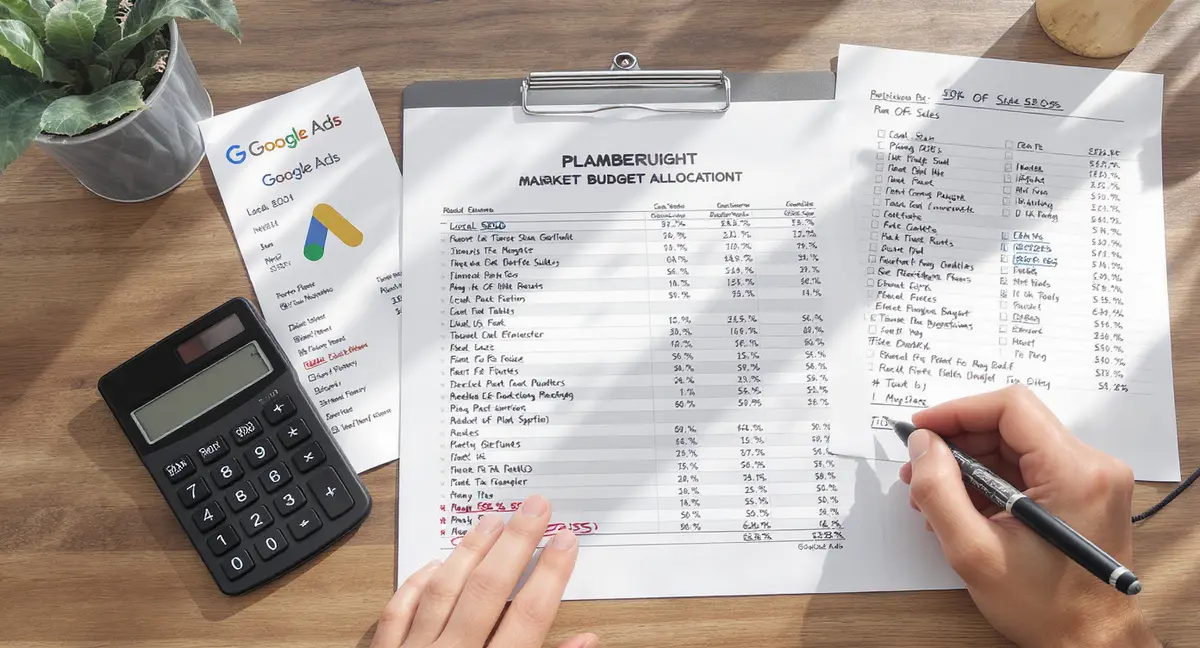
The short answer: Strategyc is a content and visibility system for plumbing businesses that need consistent lead flow without monthly retainers. The plumber marketing plan combines local SEO, paid search, reputation management, content authority, and conversion optimization into one owned system. Success in plumber marketing plan comes down to map-pack dominance, emergency-intent capture, and referral velocity. CI Web Group recommends dedicating at least 10% of sales to marketing for active growth. The same homeowners who search Google are now asking ChatGPT and Perplexity for plumber recommendations, which means AI search optimization is becoming as critical as map-pack ranking for capturing emergency demand.
Most plumbers spend marketing dollars the same way they buy parts, reactively, when something breaks. A truck wrap here. A Yelp ad there. A Google Ads campaign that runs for three months until the budget runs out. The result? Feast-or-famine lead flow, zero compounding momentum, and no idea which channel actually booked the jobs.
A real plumber marketing plan is infrastructure, not expense. It captures emergency calls at 2 a.m., ranks your business in the map pack when homeowners search "plumber near me," and turns one-time customers into repeat maintenance contracts. The businesses that treat marketing as a system, not a series of one-off campaigns, consistently fill their schedules while competitors scramble for scraps on lead aggregator sites.
This article breaks down the seven components of a plumber marketing plan that drives measurable, repeatable growth. You'll see what works, what doesn't, and how to allocate budget across channels that actually convert.
Why Most Plumber Marketing Plans Fail Before They Start
The Lead Aggregator Trap
Plumbers lose money on platforms like Angi, HomeAdvisor, and Thumbtack every day. You pay for leads you share with three other contractors. The homeowner picks the lowest bid. Your close rate hovers around 15% because the customer has no relationship with your brand, they just clicked a button. According to industry analysts, businesses that rely on pay-per-lead platforms see customer acquisition costs 40-60% higher than those who own their lead generation.
The structural problem is simple: you rent access to customers, you don't own the relationship. When you stop paying, the leads stop. There's no compounding benefit. No brand equity. No repeat business unless the aggregator sells you the same customer again. A proper plumber marketing plan shifts the economics in your favor. You capture demand directly through search, maps, and referrals. The customer finds you, not a marketplace.
No Tracking Means No Optimization
Most plumbing businesses can't answer three basic questions: which channel brought in the most jobs last month, what's the average cost per booked appointment, and which service types have the highest lifetime value. Without call tracking, form attribution, and job-close data tied back to marketing source, you're flying blind. You might know you spent $2,000 on Google Ads, but you don't know if it generated $8,000 in revenue or $800.
A plumber marketing plan without measurement is just expense. The plan must include call tracking numbers for each channel, UTM parameters on all digital ads, and a simple CRM or spreadsheet that logs lead source, job type, and revenue. This data tells you where to double down and where to cut. Field-service platforms like Housecall Pro and Workiz make this easier by connecting marketing spend to booked jobs in one dashboard, but even a Google Sheet beats guessing.
The Foundation: Local SEO and Map Pack Dominance
Google Business Profile Optimization
Your Google Business Profile is the single highest-leverage asset in a plumber marketing plan. When someone searches "emergency plumber," "water heater repair," or "drain cleaning near me," the map pack appears above organic results. If you're not in the top three, you're invisible. According to BrightLocal's 2024 research, 87% of consumers used Google to evaluate local businesses, and 56% of those searchers never scroll past the map results.
Optimization starts with completeness: accurate business name, address, phone number, service areas, hours, categories, and attributes. Add photos of your trucks, technicians, completed jobs, and the office. Post weekly updates, seasonal tips, emergency availability, new services. Respond to every review within 24 hours. Google rewards activity and relevance. A stale profile with three photos and no posts won't rank, even if your website is perfect.
Service-Area Pages and Neighborhood Targeting
Generic "plumbing services" pages don't rank in competitive markets. A strong plumber marketing plan includes dedicated pages for each service area and each high-value service type. If you serve ten zip codes, you need ten location pages with unique content, local landmarks, and neighborhood-specific FAQs. If you offer water heater installation, drain cleaning, sewer line repair, and backflow testing, each deserves its own page with pricing context, process details, and before-after examples. The same infrastructure principles that power a plumber marketing plan, owned assets, systematic lead capture, and compounding visibility, apply equally to service businesses in other industries, including a well-structured insurance marketing plan.
Search engines reward specificity. A page titled "Emergency Plumber in Downtown Austin" with 800 words of original content, local schema markup, and embedded Google Maps will outrank a thin page that lists twenty cities in a bullet list. The goal isn't to trick Google, it's to match the searcher's intent better than competitors. When someone types "tankless water heater installation in Scottsdale," they want a page that speaks directly to that need, not a homepage.
Paid Search: Google Ads and Local Services Ads
High-Intent Emergency Keywords
Paid search works for plumbers because the intent is immediate. Someone searching "burst pipe repair" or "clogged toilet emergency" needs help in the next two hours, not next week. A well-structured plumber marketing plan allocates 30-40% of the marketing budget to Google Ads, focused on emergency and high-ticket keywords. According to WordStream's 2024 benchmarks, home services advertisers see average cost-per-click between $5 and $15, with conversion rates around 6-10% when landing pages are optimized.
The key is negative keywords and geo-targeting. You don't want clicks from DIY researchers or people outside your service area. Build campaigns around job type: emergency repairs, water heater replacement, drain cleaning, sewer line work. Use ad extensions to show phone number, location, reviews, and callout text like "24/7 Emergency Service" or "Licensed & Insured." Every ad should lead to a dedicated landing page for that service, not your homepage. The tighter the match between keyword, ad, and landing page, the higher your Quality Score and the lower your cost per click.
Local Services Ads for Guaranteed Leads
Google Local Services Ads appear above traditional search ads, marked with a green "Google Guaranteed" badge. You pay per lead, not per click. The cost is higher, often $20 to $60 per lead depending on market, but the quality is better because Google pre-qualifies the customer and only charges when they call or message you directly. For emergency plumbing, Local Services Ads often deliver the fastest payback because the customer sees your business first and trusts the Google endorsement.
To qualify, you need a Google Business Profile, background checks for all technicians, proper licensing, and insurance verification. Once approved, you set a weekly budget and service categories. Google shows your business based on proximity, reviews, and responsiveness. The catch: you compete on price and speed. If you don't answer the phone within minutes, the lead goes to the next contractor. A plumber marketing plan that includes Local Services Ads must also include fast dispatch and call-handling protocols, or you'll pay for leads you never convert.
Reputation Management and Review Generation
The Review Velocity Advantage
Reviews drive map pack ranking, click-through rate, and close rate. A plumbing business with 150 reviews and a 4.8-star average will outrank a competitor with 40 reviews and 5.0 stars, because Google values recency and volume as much as rating. BrightLocal's 2024 study found that 76% of consumers trust online reviews as much as personal recommendations, and 46% won't consider a business with fewer than four stars.
The best plumber marketing plan includes a systematic review request process. Send a text or email within 24 hours of job completion with a direct link to your Google Business Profile review page. Make it one-click easy. Train technicians to ask in person: "If we did a good job today, would you mind leaving us a quick review? It truly helps our small business." Offer a small thank-you gift or entry into a monthly drawing for compliance. The goal is 10-15 new reviews per month, every month. That velocity signals to Google that you're active, trusted, and worth ranking.
Responding to Negative Reviews
Every plumbing business gets bad reviews. The difference between a 4.8 and a 4.2 average is how you handle them. Respond to every negative review within 24 hours. Acknowledge the issue, apologize for the experience, and offer to make it right offline. Never argue. Never deflect blame. Prospective customers read your responses to see how you treat problems, not just successes. Field service businesses face similar lead generation challenges across trades, and the strategies that work for plumbers, map dominance, emergency-intent capture, and review velocity, mirror the tactics that drive successful roofing marketing campaigns.
A professional response to a one-star review can actually increase trust. Industry data shows that businesses that respond to negative reviews see 12% higher conversion rates than those that ignore criticism. The response demonstrates accountability. If the complaint is unfair or fraudulent, keep your reply factual and invite the reviewer to contact you directly. Future customers will see the pattern and judge accordingly. A plumber marketing plan that ignores reputation management will lose jobs to competitors who manage theirs actively.
Content Marketing That Educates and Converts
FAQ Pages for Common Plumbing Problems
Homeowners search hundreds of plumbing questions every day: "Why is my water heater making noise?" "How do I fix a running toilet?" "What causes low water pressure?" Most click on blog posts or YouTube videos, not service pages. A content-driven plumber marketing plan captures that early-stage traffic and builds authority before the emergency happens. When the water heater finally fails, the homeowner remembers the plumber whose article helped them troubleshoot the issue.
Create 20-30 FAQ pages targeting common problems, seasonal issues, and maintenance tips. Write 500-800 words per page with clear headings, step-by-step instructions, and a call-to-action at the end: "If the problem persists, call us for same-day service." Optimize each page for a long-tail keyword. Use schema markup for FAQPage to increase visibility in Google's featured snippets. According to Ahrefs' 2024 research, FAQ pages rank in the top 10 for informational queries 3x more often than generic service pages, and they drive 40% higher engagement time.
Seasonal Content and Preventive Maintenance Guides
Plumbing demand follows predictable seasonal patterns. Frozen pipes in winter. Sewer backups in spring. Water heater failures in fall when usage increases. A smart plumber marketing plan publishes content 4-6 weeks before peak season to capture search traffic early. Write articles like "How to Prevent Frozen Pipes This Winter" in October, "Spring Plumbing Checklist for Homeowners" in February, and "Signs Your Water Heater Is About to Fail" in August.
These articles do three things: they rank for high-volume informational keywords, they position your business as the local expert, and they generate leads from homeowners who want professional help instead of DIY risk. Include downloadable checklists, video walkthroughs, and clear CTAs. Seasonal content compounds year over year, the article you publish in 2026 will still rank and drive leads in 2028. That's the difference between rented visibility and owned infrastructure.
See How Your Business Shows Up in AI Search
Get a free AI visibility scan. See exactly where you rank on ChatGPT, Perplexity, and Google AI, and what to do about it. Get Your Free Scan.
Owned Systems vs. Rented Services
The Agency Retainer Problem
Most plumbing businesses hire a marketing agency, pay $1,500 to $3,000 per month, and hope for results. The agency runs Google Ads, posts on Facebook, maybe writes a blog article or two. When you ask for performance data, you get a PDF with impressions, clicks, and "engagement." You can't see cost per job, revenue per channel, or whether the content they published six months ago is still driving traffic. When you stop paying, everything stops. The ads pause. The content stays on a website you don't control. You're back to zero.
According to Firework's 2025 research, only 8% of marketers feel confident they can measure ROI from their marketing spend. That confidence gap is worse for small businesses that outsource everything and never build internal capability. A better plumber marketing plan treats marketing as infrastructure you own, not a service you rent. That means owning your content, your analytics, your customer data, and your process. Platforms like Strategyc install content and visibility systems that keep producing results after the engagement ends, so you're not dependent on monthly retainers to maintain what you've already paid to build.
Building Internal Capability
You don't need to become an SEO expert to own your marketing. You need a system that's documented, repeatable, and trainable. That means templates for service pages, a content calendar for seasonal articles, a review-request workflow in your CRM, and a simple dashboard that tracks leads by source. Once the system is installed, a part-time admin or office manager can run it. You add new content monthly, respond to reviews weekly, and adjust ad spend based on what's converting. Publishing seasonal guides and FAQ pages at scale requires efficient production systems, which is where AI content marketing helps plumbing businesses maintain content velocity without hiring full-time writers.
The alternative is perpetual dependency. Agencies have no incentive to make you self-sufficient, they profit from your reliance. A plumber marketing plan built for ownership gives you the option to scale, pause, or pivot without starting over. You control the timeline, the budget, and the data. That control compounds. Every piece of content you publish, every review you earn, every backlink you build becomes a permanent asset that works for you 24/7, not a rented service that disappears when the contract ends.
Budget Allocation and Channel Mix
How Much to Spend on Marketing
CI Web Group recommends dedicating at least 10% of sales to marketing for active growth and 5% for maintenance. For a plumbing business doing $500,000 annually, that's $50,000 in growth mode or $25,000 to maintain current volume. Most plumbers underspend, then wonder why competitors dominate the map pack and their phone stays quiet. Marketing isn't an expense, it's the engine that fills your schedule and raises your prices.
Split the budget across channels based on speed and compounding. Allocate 30-40% to Google Ads and Local Services Ads for immediate lead flow. Allocate 25-30% to local SEO, content, and website optimization for long-term compounding. Allocate 15-20% to reputation management, referral systems, and retention marketing. Reserve 10-15% for testing new channels like Nextdoor ads, direct mail to high-value neighborhoods, or video content. Track cost per lead and cost per job by channel monthly. Double down on what works. Cut what doesn't.
Measuring ROI and Adjusting the Plan
A plumber marketing plan without ROI tracking is just guessing. You need three metrics: total marketing spend, total leads generated, and total revenue from those leads. From there, calculate cost per lead, close rate, average job value, and customer lifetime value. If you spent $5,000 on marketing, generated 50 leads, closed 20 jobs at an average ticket of $800, you made $16,000 in revenue. That's a 3.2x return. If your close rate is 40% and your average job is $800, your cost per job is $250. That math tells you whether to increase spend or fix conversion.
Most plumbing businesses don't track this because they lack the tools or discipline. Call tracking software like CallRail or CallTrackingMetrics costs $50-$100 per month and shows exactly which campaigns drive phone calls. Google Analytics with UTM parameters shows which content drives form fills. A simple spreadsheet that logs lead source, job type, and revenue closes the loop. Review the data monthly. If Google Ads is delivering jobs at $200 each and organic search is delivering jobs at $50 each, shift budget toward SEO. If Local Services Ads convert at 50% and Facebook ads convert at 8%, pause Facebook. Let the data decide.
What Separates High-Performing Plumber Marketing Plans
Speed to Lead and Follow-Up Systems
The plumber who answers the phone first books the job. According to Harvard Business Review, companies that contact leads within five minutes are 100x more likely to convert than those who wait 30 minutes. For emergency plumbing, the window is even tighter. If a homeowner calls three plumbers and you're the second to answer, you've already lost unless the first contractor is booked or quotes a ridiculous price.
High-performing plumber marketing plans include call-answering protocols: live answer during business hours, after-hours answering service for emergencies, and automated SMS confirmation within 60 seconds of form submission. Use scheduling software that lets customers book appointments online without waiting for a callback. Follow up on every lead within 24 hours, even if they didn't book. A text that says "Hi, this is Mike from ABC Plumbing. I saw you requested a quote for water heater installation. Still need help?" converts 15-20% of leads that went cold. Most plumbers never send it.
Retention Marketing and Maintenance Plans
Most plumber marketing plans obsess over new customer acquisition and ignore the customers they already have. The highest-margin revenue comes from repeat business and referrals. A customer who paid you $1,200 to replace a water heater will pay you $150 annually for a maintenance plan, refer you to neighbors, and call you first when the next issue arises. The cost to retain that customer is near zero compared to the $200-$400 you spent to acquire them. For plumbing businesses ready to move beyond reactive campaigns and build a complete visibility system, the full framework for digital marketing for plumbers covers channel integration, budget allocation, and AI-era tactics in detail.
Build retention into the plan: send a thank-you email or handwritten card after every job, offer a maintenance plan with annual inspections and priority scheduling, and email seasonal reminders for water heater flushing, sump pump testing, and winterization. Use your CRM to track service history and set follow-up reminders. A customer who had a water heater installed in 2020 is statistically likely to need a replacement in 2030-2035. If you're still top-of-mind, you get the call. If not, they Google "water heater installation" and you compete with strangers.
The Bottom Line
A plumber marketing plan is not a PDF you write once and forget. It's a system that captures demand, builds authority, and converts leads into repeat customers. The businesses that win don't spend the most, they spend the smartest. They own their content, track their data, and optimize relentlessly. They show up in the map pack, answer the phone fast, and earn reviews that compound month over month.
The alternative is renting visibility from platforms that control your access, your pricing, and your future. Lead aggregators, agencies, and pay-per-click campaigns all stop working the moment you stop paying. A real plumber marketing plan builds infrastructure you own. The content ranks for years. The reviews stay on your profile. The customers come back. That's the difference between a marketing expense and a growth system.
Frequently Asked Questions
What is the most important part of a plumber marketing plan?
Local SEO and Google Business Profile optimization deliver the highest ROI for most plumbing businesses. Ranking in the map pack captures high-intent searches like "emergency plumber near me" without ongoing ad spend. Combine map visibility with fast call response and you'll book more jobs than competitors who rely solely on paid ads.
How much should a plumber spend on marketing each month?
CI Web Group recommends 10% of revenue for growth and 5% for maintenance. For a $50,000 monthly revenue business, that's $5,000 in growth mode. Allocate 30-40% to paid search, 25-30% to SEO and content, 15-20% to reputation and retention, and 10-15% to testing new channels. Track cost per job and adjust monthly.
Can I build a plumber marketing plan in-house without an agency?
Yes, if you have a documented system and repeatable process. You need templates for service pages, a content calendar, call tracking, review automation, and a dashboard to measure ROI. Platforms that install owned systems, not monthly retainers, make this possible. An admin or office manager can execute the plan once it's built. Agencies profit from dependency; ownership compounds.
How do I measure ROI from a plumber marketing plan?
Track three metrics: total marketing spend, total leads generated, and total revenue from those leads. Use call tracking software to attribute phone calls to campaigns. Use UTM parameters and Google Analytics for digital leads. Log lead source, job type, and revenue in a CRM or spreadsheet. Calculate cost per lead, close rate, and cost per job monthly. Let the data guide budget allocation.
What's the difference between Google Ads and Local Services Ads for plumbers?
Google Ads charges per click and appears below Local Services Ads in search results. You control targeting, budget, and landing pages. Local Services Ads charge per lead, appear at the top with a Google Guaranteed badge, and require background checks and licensing verification. LSAs convert faster for emergency jobs but cost more per lead. Use both in a complete plumber marketing plan.