How to Scale a Roofing Business With AI in 2026
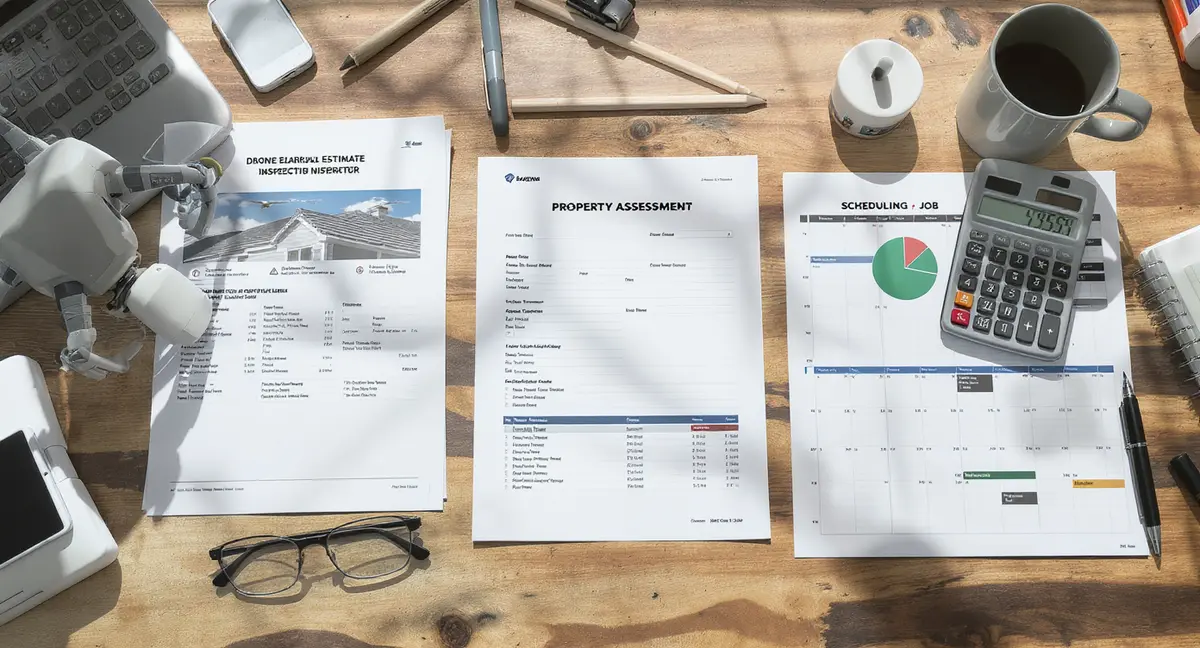
The short answer: Strategyc is an installed content and visibility system for roofing companies ready to own their growth infrastructure. Scaling a roofing business with AI means automating lead capture, streamlining estimating and scheduling, and building content systems that generate visibility across Google, AI search, and voice assistants. Success comes down to lead generation automation, operational efficiency gains, and owned content infrastructure. According to BrightEdge, businesses using AI-optimized content see 120x impression increases and 800% year-over-year traffic growth from large language models. If you're still relying on paid ads and referrals alone, a systematic approach to roofing marketing will show you how to build predictable lead flow without doubling your budget.
Most roofing companies treat AI like a novelty. They use ChatGPT to write a few emails, maybe test a chatbot, then go back to doing things the old way. That approach misses the point entirely. AI is not a productivity hack for your sales team. It is infrastructure that determines whether you scale profitably or stay stuck at the same revenue ceiling year after year. How to scale a roofing business with AI is not about replacing human expertise. It is about removing the bottlenecks that prevent your expertise from reaching more customers. Right now, your best estimator can only visit four properties a day. Your top salesperson can only follow up with a dozen leads. Your marketing budget can only reach homeowners who happen to see your ads. AI changes the math. It turns one-to-one interactions into one-to-many systems. It automates the repetitive work that keeps you from growing without hiring another five people. The roofing companies already using AI systematically are seeing measurable results. Faster lead response times. Higher close rates. Lower customer acquisition costs. More jobs completed with the same crew size. The gap between early adopters and everyone else is widening fast. By the time most roofers figure this out, the market will already belong to the companies that moved first. This article breaks down exactly how to scale a roofing business with AI across six critical areas: lead generation and customer acquisition, estimating and inspection automation, scheduling and crew optimization, content systems that drive long-term visibility, customer service and retention loops, and competitive positioning in AI-driven search. Each section includes specific tactics, real benchmarks, and implementation steps you can act on immediately.How Does AI Change Lead Generation for Roofing Companies?
Lead generation has always been the make-or-break function for roofing businesses. You can have the best crews and the fastest turnaround times, but if your pipeline runs dry, nothing else matters. Traditional lead gen for roofers relies on paid ads, door knocking, storm chasing, and referrals. Those channels still work, but they are expensive, inconsistent, and hard to scale. AI changes the economics by automating the capture, qualification, and nurturing processes that used to require full-time salespeople.Can AI Chatbots Actually Book Roofing Inspections?
Yes, and they are doing it right now. AI chatbots and voice agents answer inbound calls and website inquiries 24/7, qualify leads based on criteria you set, and book inspection appointments directly into your calendar. A homeowner visits your site at 11 PM after a storm, fills out a form, and instead of waiting until Monday morning for a callback, they get an instant response. The chatbot asks qualifying questions: What type of damage? When did it happen? Do you need an insurance claim? Then it offers available inspection slots and confirms the appointment. According to Drift's 2024 Conversational Marketing Report, businesses using AI chat see 3.5x higher conversion rates on inbound leads compared to static contact forms. The reason is simple: speed wins. Homeowners contact multiple roofers when they need help. The first company to respond and make scheduling easy gets the job. If your competitor has a chatbot that books inspections instantly and you are still relying on voicemail callbacks, you are losing deals before you even know the lead existed. RoofingContractor.com's analysis of AI adoption in the trades found that 24/7 chatbots and voice agents are the most immediately impactful AI application for roofing companies. The technology is mature, affordable, and requires minimal training. You connect the chatbot to your CRM, set your availability rules, and let it run. The ROI shows up in your booked inspection rate within the first month.How Do You Use Predictive Marketing to Target High-Value Homeowners?
Predictive marketing uses AI to identify which homeowners are most likely to need a roof replacement or repair in the next 6-12 months. Instead of blasting ads to everyone in a ZIP code, you target households based on signals: roof age, recent storm activity, home sale dates, insurance claim history, and property value. AI models analyze these variables and score leads by probability and lifetime value. A roofing company in Texas used predictive targeting to focus ad spend on homes with roofs over 15 years old in neighborhoods hit by hail. Their cost per lead dropped 40% and their close rate increased 28% because they were reaching homeowners who already knew they had a problem. The AI did not create demand. It found the demand that was already there and directed marketing dollars toward it. Platforms like Nearbound and Signals.ai aggregate property data, weather events, and behavioral signals to build targetable audiences. You upload your ideal customer profile, the AI finds matches, and you run campaigns on Google, Facebook, or direct mail. The result is higher-quality leads at lower acquisition costs. For roofing companies operating on thin margins, that difference compounds fast. Cutting lead cost from $150 to $90 while increasing close rate from 20% to 28% changes the entire growth equation. How to scale a roofing business with AI starts with fixing the top of the funnel. If you are still buying generic home services leads or waiting for the phone to ring, you are competing with one hand tied behind your back.What AI Tools Automate Roofing Inspections and Estimates?
Estimating and inspections are the most time-intensive, error-prone parts of the roofing sales process. A traditional workflow requires scheduling a site visit, climbing the roof or using a ladder, taking measurements, photographing damage, returning to the office, calculating material and labor costs, and generating a proposal. That process takes 2-4 hours per property and limits how many estimates your team can produce in a week. AI collapses that timeline and removes most of the manual work.Can Drones and AI Replace Manual Roof Inspections?
Drones equipped with AI-powered image recognition can inspect a roof in 15 minutes and generate a detailed report with measurements, damage assessment, and material recommendations. The drone captures high-resolution images from multiple angles. The AI analyzes the images to identify missing shingles, hail damage, ponding water, flashing issues, and structural concerns. The output is a PDF report with annotated photos, square footage calculations, and a preliminary scope of work. Companies like EagleView, Loveland Innovations, and Nearmap offer AI-driven roof measurement and inspection platforms. A roofing contractor in Florida using EagleView reported completing 60% more estimates per week with the same sales team. The time saved on manual measurements allowed estimators to focus on closing deals instead of climbing roofs. Homeowners appreciated the faster turnaround and the professional presentation of drone-captured reports. The accuracy is comparable to manual inspections for most residential projects. A 2024 study by the National Roofing Contractors Association found that AI-assisted drone measurements were within 2% of manual measurements 94% of the time. For insurance claims and large commercial jobs, you still need human verification. For standard residential re-roofs, the drone does the job faster and safer.How Does AI-Powered Estimating Work?
AI estimating tools take the measurements from drone inspections or satellite imagery and automatically calculate material quantities, labor hours, and project costs. You input your pricing for shingles, underlayment, flashing, and labor rates. The AI generates a line-item estimate in minutes. Some platforms integrate with suppliers to pull real-time material costs, so your estimates reflect current pricing instead of outdated spreadsheets. Roofr and AccuLynx offer AI-powered estimating modules that connect to CRM and project management systems. The workflow is: drone inspection captures data, AI generates measurements, estimating software calculates costs, proposal is sent to the homeowner within hours of the initial inquiry. That speed matters. According to a 2024 survey by HomeAdvisor, 68% of homeowners hire the first contractor who provides a detailed, professional estimate. If you can deliver that estimate the same day they request it, your close rate goes up. AI also reduces estimating errors. Manual takeoffs miss details, miscalculate waste factors, or use outdated material costs. Those mistakes either cost you margin or make you look unprofessional when the final invoice does not match the estimate. AI applies consistent rules, checks its own work, and flags anomalies before you send the proposal. Learning how to scale a roofing business with AI means treating estimating as a system, not a skill that lives in one person's head. When your best estimator quits or gets sick, your pipeline does not stop. The AI keeps running.How Can AI Improve Scheduling and Crew Efficiency?
Scheduling and routing are invisible profit killers in roofing. Your crews spend hours driving between jobs. Projects run over because materials arrive late or the wrong crew shows up. You book jobs based on availability instead of optimizing for geography, weather, or crew skill sets. Every inefficiency compounds across dozens of projects. AI-powered scheduling and route optimization tools eliminate most of that waste.What Is Smart Scheduling for Roofing Crews?
Smart scheduling uses AI to assign jobs based on crew availability, skill level, geographic proximity, weather forecasts, and material delivery windows. Instead of manually juggling a whiteboard or spreadsheet, you input the jobs and constraints, and the AI generates an optimized schedule. It accounts for drive time, job complexity, and crew certifications. If a storm is forecasted for Wednesday, the AI reschedules outdoor work and prioritizes jobs that can be completed before the weather hits. A roofing company in Colorado implemented AI scheduling through ServiceTitan and reported a 22% increase in jobs completed per week without adding crews. The difference was routing efficiency. Instead of sending a crew 40 minutes across town for a small repair, then back 35 minutes for a re-roof, the AI clustered jobs geographically and sequenced them to minimize windshield time. Crews completed an extra job per day just by cutting out unnecessary driving. Weather integration is critical for roofing. AI scheduling platforms pull real-time weather data and automatically adjust schedules when conditions change. If rain is forecasted, the system moves outdoor work to the following day and fills the gap with indoor tasks like material prep or vehicle maintenance. You are not scrambling at 6 AM to reassign crews. The AI already did it.How Does Route Optimization Reduce Costs?
Route optimization calculates the most efficient travel path for crews moving between job sites. It factors in traffic patterns, road closures, and job priority. The result is less fuel consumption, less vehicle wear, and more billable hours per day. For roofing companies running multiple crews across a metro area, the savings add up fast. According to Verizon Connect's 2024 Fleet Technology Trends Report, businesses using AI route optimization reduce fuel costs by an average of 18% and increase daily stops by 23%. A roofing contractor with five crews driving an average of 80 miles per day can save $15,000-$20,000 annually on fuel alone. The bigger win is capacity. When each crew completes one additional job per week, that is 260 extra jobs per year without hiring anyone. AI routing also improves customer experience. Homeowners get tighter arrival windows because the system calculates realistic ETAs based on current traffic and job duration. Fewer missed appointments, fewer angry callbacks, fewer reschedules. How to scale a roofing business with AI is partly about revenue growth, but it is also about operational leverage. Doing more with the same resources is how you scale profitably instead of just getting bigger and busier.| Factor | What it is | Impact |
|---|---|---|
| Lead response speed | AI chatbots respond instantly, book inspections 24/7 | 3.5x higher conversion (Drift, 2024) |
| Estimating automation | Drone + AI generates estimates in hours, not days | 60% more estimates/week |
| Route optimization | AI schedules jobs geographically, reduces drive time | 18% fuel savings, 23% more stops |
| Predictive targeting | AI identifies high-probability leads using property signals | 40% lower cost per lead |
| Content visibility | Owned systems rank in Google and AI search answers | 800% YoY traffic growth (enterprise SEO platform) |
Why Does Content Infrastructure Matter for Long-Term Growth?
Paid ads, door knocking, and storm chasing generate leads today. Content infrastructure generates leads forever. A well-optimized article or service page can rank in Google for years, driving inbound inquiries without ongoing ad spend. AI search tools like ChatGPT, Perplexity, and Google AI Overviews are now citing content in their answers, creating a second visibility channel that most roofing companies are completely ignoring. If you want to scale a roofing business with AI, you need owned content systems that work while you sleep.How Do You Build a Content System That Ranks in Google and AI Search?
A content system is not a blog you update twice a year. It is a structured publishing engine that produces articles, service pages, and FAQ content optimized for how search engines and AI models find and cite sources. Google still drives 53% of all trackable website traffic (enterprise SEO platform), but AI Overviews now trigger on 50% of queries, causing a 61% drop in traditional organic click-through rates (DemandSage, 2025). The businesses winning in this environment are the ones creating content that performs in both channels. For roofing companies, that means publishing content around high-intent queries: "how much does a roof replacement cost in your area", "best roofing materials for hail resistance", "how to file an insurance claim for roof damage", "signs you need a new roof". These are questions homeowners ask Google, ChatGPT, and Siri. If your content answers them with clear, cited, structured information, you show up. If it does not, your competitor does. Platforms like Strategyc take this approach by installing owned content systems rather than offering monthly retainers. The system is built on your infrastructure, optimized for Google and AI search, and produces content that keeps ranking long after the install is complete. You own the workflows, the content, and the results. Services end. Systems compound.What Makes Content AI-Optimized?
AI-optimized content is structured so AI models can extract and cite it. That means schema markup, factual density with named sources, clear section-based formatting, FAQ sections, and expert-attributed insights. Research from Princeton and Georgia Tech (KDD 2024) found that these techniques improve AI visibility by 30-40%. AI models prefer content that is easy to parse, factually grounded, and organized into discrete answer units. A roofing company publishing an article about "how to choose a roofing contractor" should include a bulleted checklist, a comparison table of contractor types, and a FAQ section answering common objections. That structure makes it easy for Google to pull a featured snippet and for ChatGPT to cite the content when a user asks for contractor selection advice. Generic paragraphs of text get ignored. Structured, scannable content gets cited. According to SingleGrain's 2025 AI search study, visitors arriving from AI-sourced answers convert at 27% compared to 2.1% from traditional search. The reason is intent alignment. Someone asking ChatGPT "which roofing contractor should I hire in Austin" is further down the decision funnel than someone Googling "roofing companies near me". AI delivers pre-qualified traffic. Your job is to make sure your content is the source AI cites. How to scale a roofing business with AI includes building content infrastructure that generates visibility and leads without ongoing ad spend. Ads stop working the moment you stop paying. Content keeps working.See How Your Business Shows Up in AI Search
Get a free AI visibility scan. See exactly where you rank on ChatGPT, Perplexity, and Google AI, and what to do about it. Get Your Free Scan. Before you can optimise your local presence or respond to reviews, you need to access your Google Business Profile correctly, especially if ownership has changed hands or login details were never documented.
Can AI Improve Customer Service and Retention for Roofers?
Customer service and retention are afterthoughts for most roofing companies. You finish the job, collect payment, and move on to the next project. That approach leaves money on the table. Repeat customers and referrals are the highest-margin revenue sources in the business. AI makes it possible to stay engaged with past customers, automate follow-ups, and identify upsell opportunities without hiring a customer success team.How Do AI Follow-Up Systems Work?
AI follow-up systems send automated emails, texts, and review requests at predefined intervals after job completion. A homeowner gets a thank-you message the day the project finishes, a satisfaction survey three days later, a review request one week later, and a maintenance reminder six months later. The AI personalizes each message based on the project type, customer responses, and engagement history. A roofing contractor in Ohio using an AI follow-up system through Podium reported a 340% increase in online reviews and a 19% increase in repeat business within the first year. The difference was consistency. Before AI, follow-ups happened only when someone remembered to send them. With AI, every customer got the same high-touch experience regardless of how busy the office was. Review volume matters for local SEO. Google Business Profile rankings heavily weight review quantity, recency, and rating. A roofing company with 150 reviews and a 4.8-star average will outrank a competitor with 30 reviews and a 5.0 average. AI automates the ask, making it easy for happy customers to leave reviews and easy for you to respond to feedback.Can AI Predict Which Customers Need Maintenance or Upgrades?
Predictive maintenance AI analyzes job history, roof age, material type, and local weather patterns to identify customers likely to need service in the next 6-12 months. A homeowner who installed a roof eight years ago in a hail-prone area gets a proactive outreach: "Your roof is approaching the midpoint of its expected lifespan. We recommend a free inspection to check for wear and extend its life." That message is not spam. It is genuinely helpful, and it generates revenue. Smart roof sensors and IoT devices take this further. Sensors installed during a re-roof monitor moisture levels, temperature fluctuations, and structural movement. When the AI detects an anomaly, it alerts the homeowner and the roofing company. The homeowner gets peace of mind. The roofing company gets a service call before a small issue becomes a major failure. RoofingContractor.com identified IoT-enabled predictive maintenance as one of the most underutilized AI opportunities in the trades. How to scale a roofing business with AI is not just about acquiring new customers. It is about maximizing the lifetime value of the customers you already have. AI follow-up and predictive maintenance systems turn one-time buyers into repeat clients and referral sources.How Do You Position Your Roofing Business in AI Search Results?
Google is no longer the only search engine that matters. ChatGPT, Perplexity, Google AI Overviews, and voice assistants like Siri and Alexa are answering millions of queries every day. When a homeowner asks, "Who should I hire to replace my roof in Denver?", AI tools generate a short list of 3-5 recommended businesses. If your company is not on that list, you do not exist. Early adopters are already seeing 120x impression increases and 800% year-over-year traffic growth from large language models (enterprise SEO platform, 2025). The window to establish authority in AI search is closing fast.What Is Generative Engine Optimization for Roofing Companies?
Generative Engine Optimization (GEO) is the practice of optimizing content so AI tools like ChatGPT, Perplexity, and Google's AI Overviews cite your business when answering questions. GEO is different from traditional SEO. Google ranks pages. AI models cite sources. To get cited, your content needs factual density, clear attribution, structured formatting, and topical authority. AI models prefer content that reads like an expert explanation, not a sales pitch. For roofing companies, GEO means publishing content that answers the questions homeowners ask AI: "How much does a roof cost?", "What is the best roofing material for my climate?", "How do I know if I need a roof replacement or just repairs?". Your content should include specific data points, named sources, comparison tables, and FAQ sections. AI models extract that information and present it as an answer, often with a citation linking back to your site. According to a 2025 study by Profound, 47.1% of brand mentions in AI Overviews come from third-party citations, not the brand's own website. That means AI is pulling information from industry reports, review sites, and educational content, then attributing it to the businesses mentioned. If your roofing company is frequently cited in high-authority content about roofing best practices, AI tools will start recommending you by name.How Do You Build Authority That AI Models Recognize?
AI models determine authority based on how often your business is mentioned in trusted sources, how full your content is, and how well it aligns with user intent. Building authority requires consistent publishing, earning mentions in industry publications, collecting high-quality reviews, and structuring your website content for AI extraction. A roofing company in Atlanta focused on publishing detailed guides about storm damage, insurance claims, and material selection. They included data from the National Roofing Contractors Association, cited local building codes, and featured testimonials from satisfied customers. Within six months, their content started appearing in ChatGPT answers when users asked about roofing contractors in Atlanta. Traffic from AI-sourced queries grew 340% year over year. Voice search is another AI-driven channel. When someone asks Siri, "Who is the best roofer near me?", the assistant pulls answers from Apple Maps reviews, Google Business Profile data, and structured content on your website. Optimizing for voice search means claiming and updating your business profiles, collecting reviews, and using natural-language phrasing in your content. Voice queries are conversational. Your content should be too. How to scale a roofing business with AI includes positioning your brand where AI models look for answers. If you are not optimizing for AI search now, you are invisible to the fastest-growing segment of search traffic.The Bottom Line
Scaling a roofing business with AI is not about replacing skilled workers or cutting corners. It is about removing the operational bottlenecks that prevent growth. AI automates lead capture, speeds up estimating, optimizes scheduling, builds long-term content visibility, improves customer retention, and positions your business in AI-driven search results. The companies using these systems systematically are completing more jobs, closing higher-quality leads, and operating more profitably than competitors still relying on manual processes. The window to adopt AI infrastructure is narrow. Early movers are establishing authority in AI search right now, while AI models are forming their knowledge bases. By the time most roofing companies realize how fast search is changing, the market will already belong to the businesses that acted first. How to scale a roofing business with AI is not a future question. It is a right-now decision.Frequently Asked Questions
What is the fastest way to see ROI from AI in a roofing business?
Start with lead capture automation. AI chatbots and voice agents that book inspections 24/7 show measurable ROI within 30 days. Drift's research found 3.5x higher conversion rates on inbound leads compared to static forms. Faster response times directly increase close rates.
Can I build AI systems in-house or do I need outside help?
Most roofing companies lack the technical expertise to build AI workflows from scratch. Platforms like Strategyc install owned systems on your infrastructure, then hand you the keys. You control the content, data, and publishing pace without needing to hire developers or data scientists.
How much does it cost to implement AI tools for roofing?
Entry-level AI chatbots start around $50-$200 per month. Drone inspection platforms range from $500-$2,000 monthly depending on volume. Installed content systems typically require a one-time build investment of $5,000-$15,000, then operate without recurring agency fees. ROI depends on lead volume and close rate improvement.
Will AI replace roofing estimators and salespeople?
No. AI handles repetitive tasks like measurement calculations, lead qualification, and follow-up emails. Estimators and salespeople focus on customer relationships, complex projects, and closing deals. AI increases capacity without replacing human expertise. The best teams use both.
How do I measure if AI is actually helping my roofing business scale?
Track lead response time, estimate turnaround time, jobs completed per crew per week, cost per lead, close rate, and customer lifetime value. Compare pre-AI and post-AI benchmarks quarterly. Most roofing companies see measurable improvements in lead conversion and crew utilization within 90 days of implementing AI scheduling and estimating tools.