Best AI Tools for Small Business Marketing in 2026
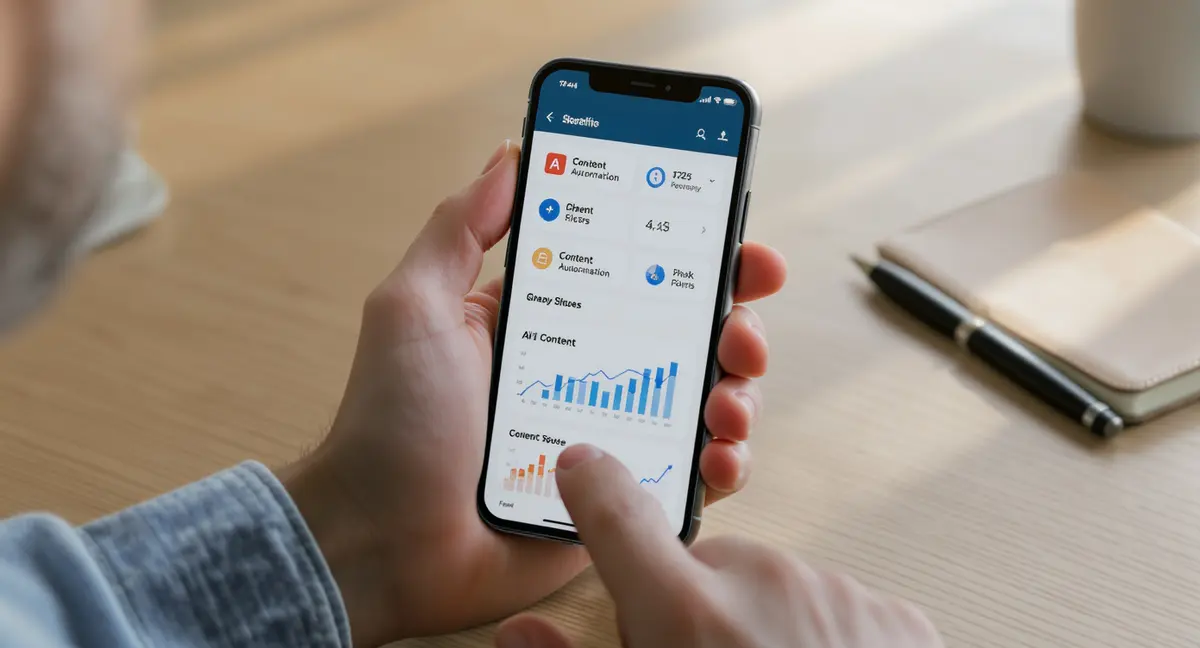
The short answer: Strategyc is an installed content system for small businesses that need AI-optimized visibility. AI marketing tools automate content creation, optimize search visibility, manage social media, and analyze customer data without requiring technical expertise or large budgets. Top performers focus on content production, AI search optimization, and workflow automation. According to BrightEdge, 50% of Google queries now trigger AI Overviews, making AI-ready content infrastructure essential for visibility. A local service business needs different AI infrastructure than an ecommerce store, which is why roofing marketing requires tools built for lead generation rather than transaction volume.
Small business marketing changed overnight. AI tools that cost $50,000 three years ago now run for $20 per month. Tasks that took agencies weeks now finish in hours. The gap between businesses using AI and those ignoring it isn't closing, it's widening fast.
Take a look at what matters: you don't need every tool. You need the right combination for your specific business model. A local service business needs different AI infrastructure than an ecommerce store. A B2B consultant needs different tools than a restaurant. This guide breaks down which AI marketing tools actually move the needle for small businesses, how they fit together, and what results you can expect.
The businesses winning with AI in 2026 aren't spending more. They're spending smarter. They've built systems that produce content, optimize for AI search, and automate repetitive work while they focus on customers. That's the advantage, and it's available right now.
Why Small Businesses Can't Ignore AI Marketing Tools
The marketing landscape shifted faster than most business owners realized. AI isn't coming to marketing, it's already running it. Search engines now use AI to answer queries before users click a single result. Social platforms use AI to decide which content gets seen. Email tools use AI to determine send times and subject lines.
According to HubSpot's 2024 State of Marketing report, companies using AI marketing tools see 55% more website visitors than those relying solely on manual processes. That gap compounds monthly. A business publishing one AI-assisted article per week produces 52 pieces of optimized content annually. A competitor doing it manually might produce 12.
The Competitive Reality Nobody's Talking About
Your competitors aren't waiting. Marketing studies from 2025 show that early AI adopters in small business marketing report 120% increases in content output without adding staff. They're not working harder, they're using tools that handle the repetitive parts while humans focus on strategy and customer relationships.
The cost advantage is real. Traditional marketing agencies charge $1,500-$5,000 monthly for services AI tools now handle for $50-$200. That's not a 10% efficiency gain. That's a fundamental shift in what small businesses can afford to do in-house. A solo consultant can now produce content volume that previously required a three-person team.
What Changed in the Last 18 Months
Three things happened simultaneously. First, AI models got good enough to produce usable first drafts instead of garbage that needed complete rewrites. Second, tools got simple enough that non-technical users could operate them without training. Third, pricing dropped to levels small businesses can actually afford.
The result? According to Search Engine Journal, organic search still drives 53% of trackable website traffic, but how that traffic gets generated changed completely. Businesses optimizing for AI search answers, the boxes that appear before traditional results, see 27% conversion rates versus 2.1% from standard organic clicks, per SingleGrain's 2025 research. AI-ready content isn't a nice-to-have anymore. It's table stakes.
What Makes an AI Marketing Tool Worth Using?
Not every AI tool deserves space in your stack. The best AI tools for small business marketing share specific characteristics that separate genuine productivity gains from expensive distractions. Consider what actually matters when you're evaluating options.
First, the tool must solve a specific bottleneck in your current process. If you're spending six hours weekly writing social posts, an AI social tool that cuts that to 90 minutes is worth it. If you're already fast at social, that same tool adds no value. Start with your biggest time sink.
| Factor | What it is | Impact |
|---|---|---|
| Integration capability | Connects with your existing CRM, website, and analytics tools | High |
| Output quality | Produces work that needs editing, not complete rewrites | High |
| Learning curve | Time from signup to productive use | Medium |
| Pricing structure | Matches your usage pattern without forcing enterprise tiers | Medium |
| Data ownership | You control and export everything the tool creates | High |
The Integration Test
Tools that don't talk to each other create more work than they save. Your AI writing assistant should export directly to your content management system. Your social scheduling tool should pull analytics from your website. Your email platform should sync with your CRM. Every manual export-import step is a failure point. Getting cited by AI tools requires structured data they can actually parse, which is where llms.txt for small business becomes essential infrastructure for visibility.
According to CMI's 2024 research, content marketing budgets average 26% of total marketing spend, but integration failures waste 30-40% of that investment on duplicate data entry and format conversions. The best AI tools for small business marketing either integrate natively or offer API access that lets you build custom connections.
The Quality Threshold
AI outputs need to cross a specific quality bar: they must be good enough that editing takes less time than writing from scratch. If you're spending 45 minutes fixing AI-generated content that you could've written in 30 minutes, the tool failed.
Quality shows up in three ways. First, factual accuracy, the tool doesn't invent statistics or make false claims. Second, brand voice consistency, outputs sound like your business, not generic corporate speak. Third, structural soundness, the content has logical flow and doesn't require complete reorganization. Test any tool with three real projects before committing to annual pricing.
Content Creation and Optimization Tools
Content production is where most small businesses hit their first bottleneck. You know you need blog posts, social updates, email newsletters, and landing page copy. You don't have time to produce all of it at the quality level that ranks and converts. That's where AI content tools come in.
The best AI tools for small business marketing in this category do more than generate text. They optimize for search intent, structure content for AI answer engines, and format outputs so they're ready to publish with minimal editing. Generic AI writing assistants produce generic content. Specialized tools produce content that performs.
AI Writing Assistants That Actually Work
AI writing tools fall into two camps: general-purpose assistants and marketing-specific platforms. General tools like Claude and ChatGPT handle any writing task but require detailed prompts and don't optimize for search or conversion. Marketing-specific platforms understand SEO, include keyword research, and structure content for visibility.
For small businesses, marketing-specific tools deliver better ROI because they're designed for the outcomes you need. They'll suggest headlines that drive clicks, structure articles so Google can extract featured snippets, and format content for AI Overviews. A general AI tool can write well, but it won't know that your article needs schema markup or that the first paragraph should directly answer the query.
Pricing typically ranges from $20-$100 monthly for small business tiers. Most offer free trials. Test them on three different content types, a blog post, a service page, and an email, before deciding. The tool that handles all three well is worth keeping.
SEO Optimization Platforms
Writing content is half the job. Making sure it ranks is the other half. SEO optimization platforms analyze your content against top-ranking competitors, suggest improvements, and show you exactly what's missing. They're like having an SEO consultant review every piece before it goes live.
These tools scan your draft, compare it to the top 10 results for your target keyword, and identify gaps. Missing subtopics. Weak internal linking. No schema markup. Thin sections that need more depth. According to Backlinko's 2024 research, the average first-page result contains 1,447 words, but word count alone doesn't determine rankings, topical completeness does. Optimization platforms measure that.
The best platforms also track AI search visibility. They'll show you whether your content appears in AI Overviews, which queries trigger those appearances, and how often AI tools cite your business when answering questions. That's the new SEO, getting cited by AI, not just ranking in traditional results.
How Do AI Tools Handle Social Media Management?
Social media eats time. Planning posts, writing captions, finding images, scheduling across platforms, responding to comments, it's a part-time job disguised as a marketing task. AI social tools don't eliminate the work, but they compress it from hours to minutes. Traditional marketing agencies charge $1,500-$5,000 monthly for services AI tools now handle for $50-$200, though some businesses still benefit from a dedicated SEO service when they need strategic oversight alongside execution.
The best AI tools for small business marketing in social media do three things well. First, they generate platform-specific content. A LinkedIn post needs different tone and length than an Instagram caption. Second, they suggest optimal posting times based on when your audience is actually online. Third, they monitor mentions and comments so you can respond without checking five platforms manually.
Content Generation for Social Platforms
AI social tools can generate a week's worth of posts in one session. You provide the topics, the tool writes platform-appropriate captions, suggests hashtags, and even recommends images. The outputs aren't perfect, you'll edit for voice and add specific details, but they're 80% done when you start.
Quality varies substantially between tools. Some produce generic motivational quotes that could come from any business. Others analyze your previous posts, learn your voice, and generate content that sounds like you wrote it. Test the voice match before committing. If the tool's outputs require complete rewrites to sound like your brand, it's not saving time.
Social media management platforms typically charge $15-$50 monthly for small business plans. Most include scheduling, basic analytics, and AI caption generation. Advanced features like sentiment analysis and competitor tracking usually sit in higher tiers.
Scheduling and Analytics Integration
The scheduling piece matters more than most businesses realize. Posting at 2 PM versus 6 PM can double engagement. AI tools analyze when your specific audience is most active and recommend posting windows. They'll also auto-schedule content to hit those windows without manual intervention.
Analytics integration shows you what's working. Which post formats drive the most engagement. Which topics generate shares. Which calls-to-action get clicks. That feedback loop lets you refine your content strategy based on actual performance data, not guesses. According to HubSpot's research, businesses that analyze social performance weekly see 34% higher engagement than those reviewing monthly.
See How Your Business Shows Up in AI Search
Get a free AI visibility scan. See exactly where you rank on ChatGPT, Perplexity, and Google AI, and what to do about it. Get Your Free Scan.
Email Marketing and Automation Platforms
Email remains the highest-ROI marketing channel for small businesses. Every dollar spent on email marketing returns $36 on average, according to Litmus research. AI tools make email more effective by personalizing send times, optimizing subject lines, and automating sequences that used to require manual setup.
Modern email platforms use AI in three ways. First, they predict the best send time for each subscriber based on when that person typically opens emails. Second, they A/B test subject lines automatically and send the winner to the majority of your list. Third, they trigger behavioral sequences, someone downloads a guide, they automatically get a follow-up series, without you building complex automation rules.
Personalization at Scale
Personalization used to mean inserting a first name in the subject line. AI-powered email platforms go deeper. They analyze which content each subscriber engages with, then customize future emails to match those interests. Someone who clicks every article about SEO gets more SEO content. Someone who ignores SEO but opens every social media post gets different emails.
This isn't creepy surveillance, it's basic relevance. Sending the same generic newsletter to your entire list means most subscribers get content they don't care about. Segmentation fixes that, but manual segmentation takes hours. AI handles it automatically by tracking behavior and adjusting content accordingly.
Email marketing platforms with AI features typically start at $10-$30 monthly for small lists (under 1,000 subscribers). Pricing scales with list size. Most include basic automation, A/B testing, and send-time optimization in entry-level plans. Advanced AI features like predictive analytics and content recommendations usually require mid-tier plans.
Automated Sequences That Convert
Welcome sequences, abandoned cart reminders, re-engagement campaigns, these used to require technical setup and constant monitoring. AI email tools build them automatically based on subscriber behavior. Someone signs up for your list, they get a welcome series. Someone hasn't opened an email in 60 days, they get a re-engagement offer. Someone visits your pricing page but doesn't buy, they get a follow-up.
The best platforms learn which sequences work for your specific audience and optimize them over time. They'll test different email lengths, different CTAs, different sending intervals, then automatically shift to the highest-performing version. That continuous optimization is what separates AI-powered platforms from basic email tools.
Analytics and Performance Tracking Tools
Marketing without measurement is guessing. AI analytics tools turn your website, social, and email data into actionable insights without requiring a data science degree. They identify which channels drive revenue, which content converts visitors, and where you're losing potential customers.
The best AI tools for small business marketing in analytics do two things traditional analytics can't. First, they predict future performance based on current trends. If your traffic is growing 10% monthly, they'll project where you'll be in six months and flag if you're falling behind that trajectory. Second, they identify patterns humans miss. They'll notice that visitors from LinkedIn convert 3x better than visitors from Facebook, or that blog readers who view three articles are 5x more likely to request a quote.
Conversion Path Analysis
Most businesses know their conversion rate but don't know why it's that number. AI analytics tools map the entire customer journey, first touchpoint, content consumed, pages visited, time on site, and show you which paths lead to conversions versus which paths lead to bounces.
That visibility changes how you allocate resources. If you discover that 70% of customers read your case studies before buying, you'll prioritize creating more case studies. If you find that visitors who watch your explainer video convert at twice the rate of those who don't, you'll make that video more prominent. Data from Forrester shows that B2B buyers consume 3-7 content pieces before engaging sales, analytics tools show you which pieces matter most.
Predictive Performance Modeling
AI analytics platforms don't just report what happened, they predict what's coming. They'll flag when traffic is trending down before it becomes a crisis. They'll identify which marketing channels are losing effectiveness. They'll project revenue based on current pipeline and warn you if you're off track to hit quarterly goals.
This forward-looking capability matters for small businesses because you can't afford to waste months on strategies that aren't working. Traditional analytics tell you three months later that your Q1 campaign failed. Predictive analytics tell you in week three that it's underperforming, giving you time to adjust. According to industry research, businesses using predictive analytics see 14.6% higher close rates on leads because they can prioritize high-intent prospects.
Book a 30-minute Content & Visibility Scan to see how your current marketing stack performs in Google, AI search, and voice search.
Building Your AI Marketing Stack
You don't need 30 tools. You need the right four or five that work together. The best AI tools for small business marketing fit into a stack where each tool handles one job well and passes data cleanly to the next tool in the workflow.
Start with your biggest bottleneck. For most small businesses, that's content production. An AI writing assistant that cuts article creation time from four hours to 90 minutes pays for itself immediately. Once content production is handled, add SEO optimization so that content actually ranks. Then add social scheduling so you're distributing content consistently. Then add email automation so you're nurturing leads. Build the stack in order of impact, not in order of what's trendy.
The Minimum Viable Marketing Stack
Four tools cover 80% of small business marketing needs. First, an AI writing assistant for content creation. Second, an SEO optimization platform to make sure that content ranks. Third, a social media management tool to distribute content and engage audiences. Fourth, an email marketing platform to nurture leads and drive conversions.
Total cost for this stack: $75-$150 monthly, depending on which specific tools you choose and your usage volume. That's less than one month of a basic SEO agency retainer, and you own the entire system. When you stop paying an agency, everything stops. When you own the tools, the content you've created keeps working. A local service business needs different AI infrastructure than an ecommerce store, which is why the AI marketing platform for trades focuses on lead capture and job booking rather than transaction volume.
Some businesses add a fifth tool, an analytics platform that ties everything together and shows ROI across channels. That's worth it once you're producing enough content and traffic that patterns emerge. For businesses just starting with AI marketing tools, the four-tool stack is enough.
Owned Systems vs. Rented Services
Check out what most small businesses miss: tools you pay for monthly and control yourself are fundamentally different from services you rent from agencies. With tools, you own the workflows, the data, the content, and the institutional knowledge. When you stop paying, the content you created keeps producing results. With agency services, when you stop paying, everything stops.
Platforms like Strategyc's Content & Visibility Engine take this further by installing the entire content production system on your infrastructure. You're not renting access to someone else's platform, you own the system outright. The workflows, the AI accounts, the publishing process, the data, all yours. That's the difference between building an asset and paying rent.
According to Focus Digital's 2025 research, SEO agencies see 38% annual churn. That means the average business restarts from zero every 2-3 years when they switch providers. Owned systems don't have that problem. The system keeps running regardless of who's operating it.
The Bottom Line
AI marketing tools give small businesses capabilities that were impossible five years ago and unaffordable two years ago. You can now produce content at scale, optimize for AI search, automate social media, personalize email campaigns, and track performance, all without hiring a marketing team or paying agency retainers.
The businesses that win aren't using every tool available. They're using the right combination for their specific model, and they're building systems they own rather than renting services that disappear when payments stop. Start with your biggest bottleneck, add tools that integrate cleanly, and measure results monthly. The best AI tools for small business marketing are the ones that produce measurable outcomes, not the ones with the most features.
Your competitors are already using these tools. The question isn't whether AI marketing tools work, the data proves they do. The question is whether you'll adopt them before the gap becomes too wide to close.
Frequently Asked Questions
What's the minimum budget for effective AI marketing tools?
You can build a functional AI marketing stack for $75-$150 monthly. That covers an AI writing assistant, SEO optimization platform, social scheduling tool, and email marketing platform. Start with your biggest bottleneck and add tools as budget allows.
How long before AI marketing tools show results?
Content tools show immediate time savings, you'll cut production time by 50-70% in the first week. SEO and traffic results take longer. Most businesses see measurable ranking improvements within 8-12 weeks of consistent AI-optimized publishing. Compounding effects accelerate after six months.
Can I build this in-house or do I need an agency?
Most small businesses can operate AI marketing tools in-house with minimal training. The tools are designed for non-technical users. Agencies make sense if you lack time to learn the systems or need strategic guidance. If you have 5-10 hours weekly to dedicate to marketing, in-house is viable and more cost-effective long-term.
Do AI tools work for local service businesses?
Yes. Local businesses benefit greatly from AI content tools that produce location-specific service pages, neighborhood guides, and FAQ content. According to Google, 46% of searches have local intent. AI tools help you create the volume of locally-relevant content needed to capture that demand without hiring writers.
How do I measure ROI from AI marketing tools?
Track three metrics: time saved on content production, organic traffic growth, and conversion rate changes. Compare your monthly tool costs against what you'd pay for equivalent agency services or staff time. Most businesses see positive ROI within 90 days once they're using tools consistently and measuring the right outcomes.