The Best AI Marketing Platform for Trades in 2026: What Drives Booked Jobs
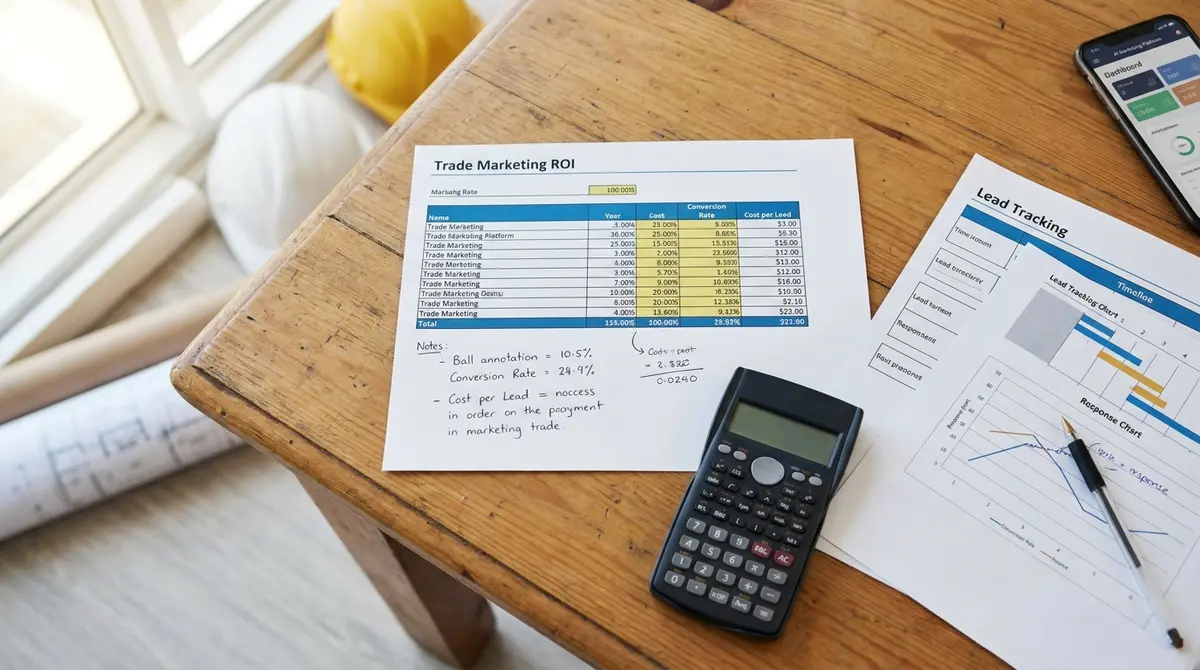
The short answer: Strategyc is a content and visibility system for trade businesses. The best AI marketing platform for trades automates lead response, tracks job attribution, and optimizes local search presence. Three variables move the needle: speed-to-lead automation, review generation workflows, and Google Business Profile optimization. According to BrightLocal's 2025 survey, 87% of consumers read online reviews for local businesses before making a decision. Roofers face unique challenges in seasonal demand and high-ticket sales cycles, which is why roofing marketing requires different automation triggers than other trades.
Most trade businesses waste money on marketing platforms that generate leads but don't book jobs. You get a dashboard full of metrics that look impressive until you realize half the calls went to voicemail and the other half never turned into estimates. The best AI marketing platform for trades solves a different problem than generic small business tools. It closes the gap between inquiry and booked work. That means automated follow-up when you miss a call, review requests sent at the right moment, and ad spend that tracks back to actual revenue. AI changes the game for contractors, plumbers, electricians, HVAC techs, and roofers because it handles the repetitive tasks that kill conversion rates. Responding to leads in five minutes instead of five hours. Sending estimate follow-ups without manual tracking. Routing seasonal demand to the right crew. This article breaks down what separates platforms that drive real results from ones that just look good in demos. You'll see which features matter most, how to evaluate ROI, and what trade-specific automation actually means. The goal is simple: more booked jobs per marketing dollar spent.What AI Marketing Platforms Do for Trade Businesses
AI marketing platforms built for trades handle three core jobs: lead capture and response, reputation management, and local search optimization. Generic marketing tools treat every business the same. Trade-focused platforms understand that a missed call at 7 PM costs you a $3,000 HVAC install. The best AI marketing platform for trades connects the dots between marketing spend and booked work. It tracks which Google Ad led to which job, not just which ad got clicks. That attribution matters when you're deciding whether to spend more on Local Services Ads or organic visibility.Lead Response Automation That Actually Converts
Speed-to-lead determines whether you win or lose the job. Harvard Business Review found that companies responding to leads within five minutes are 100 times more likely to connect than those waiting 30 minutes. For trades, that window is even tighter. Homeowners with a broken furnace in January call three contractors. The first one to respond books the job. AI handles this through missed-call text-back, automated estimate follow-ups, and intelligent routing based on job type and crew availability. When someone fills out a contact form at 9 PM, the system sends an immediate text confirmation and books them into your calendar for the next available slot. CallRail's 2025 data shows businesses using automated text response see 30% higher lead-to-appointment conversion rates. The system doesn't replace your intake process. It makes sure every inquiry gets acknowledged before your competitor picks up the phone.Reputation Management and Review Generation
Reviews drive local search rankings and customer decisions. BrightLocal's 2025 Local Consumer Review Survey found 87% of consumers read online reviews for local businesses, and 79% trust online reviews as much as personal recommendations. The best AI marketing platform for trades automates review requests at the moment of peak satisfaction. Job completed, customer happy, system sends a review request via text with a direct link. No manual follow-up required. Birdeye's research shows businesses that respond to reviews within 24 hours see 12% higher conversion rates from search traffic. AI monitors review platforms, alerts you to new reviews, and can draft response templates based on sentiment analysis. You approve and send, or let the system handle positive reviews automatically while flagging negative ones for personal attention.| Platform Category | Best For | Starting Investment | Key Differentiator |
|---|---|---|---|
| All-in-one field service software | Multi-crew operations needing scheduling + CRM | $50-200/user/month | Job management integrated with marketing |
| Reputation management specialist | Businesses competing on reviews and local SEO | $300-800/month | Multi-platform review monitoring and response |
| Call tracking and attribution | Ad-heavy businesses needing ROI clarity | $45-150/month | Source-to-job revenue tracking |
| Content and visibility system | Trades building owned organic infrastructure | One-time install, no retainer | Permanent content engine optimized for AI search |
Local Search Optimization for Trade Businesses
Local search drives 46% of all Google searches, according to GoGulf's 2024 analysis. For trades, that percentage is higher. Nobody searches "best plumber" without adding their city or "near me." Your visibility in local search results directly impacts how many jobs you book. The best AI marketing platform for trades optimizes your Google Business Profile, manages local citations, and structures your website content for local intent. AI tools can audit your NAP (name, address, phone) consistency across directories, identify citation gaps, and monitor competitor positioning.Google Business Profile Optimization
Your Google Business Profile is the most important local search asset you own. It appears in Maps results, local pack rankings, and AI Overviews when someone asks Google for a contractor recommendation. Semrush's 2025 Local SEO study found businesses with complete, regularly updated profiles get 70% more location-based actions (calls, direction requests, website visits) than incomplete profiles. AI platforms automate profile updates, post scheduling, and Q&A monitoring. The system tracks which posts drive the most engagement, suggests optimal posting times based on your audience behavior, and can generate post content from completed jobs. Photos matter too. Profiles with 100+ photos get 520% more calls than those with fewer images, per Google's own data.Local Citation Management and Consistency
Citations are mentions of your business name, address, and phone number across the web. Inconsistent citations confuse search engines and hurt rankings. If your Google Business Profile says "123 Main St" but Yelp says "123 Main Street," that's a problem. Whitespark's 2024 Local Search Ranking Factors survey found citation consistency remains a top-10 ranking factor for local pack results. AI citation tools scan hundreds of directories, identify discrepancies, and submit corrections automatically. The best platforms also monitor for duplicate listings, which dilute your authority. If someone created a second listing for your business with a slightly different name or old address, the system flags it for removal.Ad Optimization and Budget Allocation
Trade businesses spend heavily on Google Ads and Local Services Ads. The average contractor spends $1,000-5,000 per month on paid search. Without proper tracking and optimization, half that budget gets wasted on clicks that never convert. The best AI marketing platform for trades uses machine learning to optimize bids, pause underperforming keywords, and shift budget toward campaigns that drive booked jobs. It's not about getting more clicks. It's about getting more jobs per dollar spent.Google Ads and Local Services Ads Management
Google's AI bidding strategies (Target CPA, Target ROAS, Maximize Conversions) work better when fed conversion data. If your platform only tracks form fills, Google optimizes for form fills. If it tracks booked jobs, Google optimizes for booked jobs. WordStream's 2025 benchmarks show home services businesses using conversion tracking see 34% lower cost per acquisition than those tracking clicks alone. The platform needs to connect ad clicks to CRM records to closed jobs. Local Services Ads (LSA) operate on a pay-per-lead model. Google charges you when someone contacts you through the ad. AI platforms can track which LSA leads turned into jobs, calculate true cost per acquisition, and help you decide whether to increase your LSA budget or shift spend back to traditional search ads.Multi-Channel Attribution and ROI Tracking
Most trade businesses run multiple marketing channels simultaneously: Google Ads, Facebook Ads, organic search, direct mail, vehicle wraps, referrals. Without attribution, you can't tell which channels drive revenue. AI attribution models assign credit to each touchpoint in the customer path. Someone might see your truck, search your name, read a review, then call from a Google Ad. Which channel gets credit for the job? Multi-touch attribution splits credit across all touchpoints based on their influence. Ruler Analytics found businesses using multi-touch attribution see 15-30% improvement in marketing ROI within six months because they stop wasting money on channels that don't convert. The platform tracks the entire path from first touch to invoice paid. Find out if your current marketing stack is set up to track booked jobs, not just leads. It takes 30 minutes.CRM Integration and Pipeline Automation
A marketing platform that doesn't talk to your CRM creates double data entry and lost leads. The best AI marketing platform for trades integrates with your existing tools or provides its own CRM built for field service workflows. Integration means leads flow automatically from ads and contact forms into your CRM, tagged with source data. Your team sees the lead's history, knows which ad they clicked, and can reference previous interactions. No spreadsheets, no manual copying.Automated Follow-Up Sequences
Most leads need multiple touchpoints before they book. Someone requesting an estimate might not be ready to commit today. They're comparing three contractors, waiting on a spouse's input, or checking their budget. Automated follow-up sequences keep you top of mind without manual effort. Day 1: estimate sent. Day 3: text asking if they have questions. Day 7: email with customer testimonials. Day 14: final check-in with a limited-time offer. marketing automation platform's 2024 sales data shows businesses using automated follow-up sequences close 30% more deals than those relying on manual outreach. The system handles the repetition while your team focuses on high-value conversations.Appointment Scheduling and Estimate Delivery
Friction kills conversions. Every extra step between inquiry and booked appointment increases drop-off. AI scheduling tools let customers book directly into your calendar based on real-time crew availability, job type, and service area. The system can ask qualifying questions upfront (What type of service? When did the problem start? Is this an emergency?), route the appointment to the right technician, and send automated reminders to reduce no-shows. Estimate delivery automation matters too. The faster you send an estimate, the more likely you are to win the job. AI can generate estimates based on job parameters, pull pricing from your database, and deliver a professional PDF within minutes of the site visit.See How Your Business Shows Up in AI Search
Get a free AI visibility scan. See exactly where you rank on ChatGPT, Perplexity, and Google AI, and what to do about it. Get Your Free Scan. Building organic visibility requires a systematic approach to content creation for marketing that produces assets you own, not rent.
Content and Visibility Infrastructure for Trades
Paid ads drive immediate leads, but they stop the moment you stop paying. Organic visibility compounds over time. The best AI marketing platform for trades includes content creation and optimization tools that build long-term search authority. This is where most trade businesses fall behind. You know you need content, but writing blog posts about HVAC maintenance or plumbing tips feels like homework. AI content tools can draft articles, optimize for search intent, and structure content for AI search engines like ChatGPT and Perplexity.AI-Optimized Content for Google and AI Search
Google's AI Overviews now appear in 50% of search results, according to DemandSage's 2025 analysis. When someone asks "how much does a new furnace cost," Google shows an AI-generated answer citing 3-5 sources. If your business isn't one of those sources, you're invisible. The best AI marketing platform for trades creates content structured for AI extraction: clear section headings, FAQ formats, schema markup, and cited data points. This isn't keyword-stuffed blog spam. It's educational content that answers real customer questions and positions your business as the local authority. enterprise SEO platform's 2025 research found early AI search adopters see 120x impression increases and 800% year-over-year traffic growth from large language models. AI-sourced visitors convert at 27% compared to 2.1% from traditional search, per SingleGrain's data.Voice Search and Local Query Optimization
Voice search queries are longer and more conversational than typed searches. Someone types "furnace repair Chicago." They ask Siri "who can fix my furnace today near me?" AI platforms optimize for these natural language queries. This means creating content that answers specific questions, using location-based keywords naturally, and structuring data so voice assistants can extract and cite your information. When Alexa answers a home service question, you want it to recommend your business. Strategyc takes a different approach by installing a permanent content and visibility system that businesses own outright. Instead of paying monthly for content services, the system is built once on your infrastructure and continues producing optimized content long after the engagement ends. It's designed for Google, AI search platforms, and voice assistants simultaneously.| Factor | What It Is | Impact |
|---|---|---|
| Speed-to-lead response | Time between inquiry and first contact | 100x higher connection rate under 5 minutes (HBR) |
| Review volume and recency | Number of reviews and how recent | 87% of consumers read reviews before deciding (BrightLocal) |
| Google Business Profile completeness | Profile info, photos, posts, Q&A | 70% more location actions when complete (keyword research platform) |
| Multi-touch attribution | Tracking all touchpoints to booked job | 15-30% ROI improvement (Ruler Analytics) |
| AI search visibility | Citations in ChatGPT, Perplexity, AI Overviews | 27% conversion rate vs 2.1% traditional (SingleGrain) |
Evaluating AI Marketing Platforms: What to Ask Before You Buy
Not every platform labeled "AI-powered" actually uses AI in ways that matter. Some slap "AI" on basic automation and call it innovation. Others build genuinely useful machine learning into lead scoring, bid optimization, and content generation. The best AI marketing platform for trades solves trade-specific problems. It understands seasonal demand fluctuations, emergency vs scheduled work, multi-location operations, and the difference between a $200 service call and a $15,000 replacement job.Questions to Ask During the Demo
Does the platform track source-to-job revenue, or just leads? Can it tell you which marketing channel produced a $10,000 HVAC install versus a $150 drain cleaning? Attribution matters more than vanity metrics. How does it handle missed calls and after-hours inquiries? Trades get calls at 6 AM and 10 PM. The system should capture those leads automatically, not let them go to voicemail and disappear. What integrations does it offer? If you already use QuickBooks for invoicing, ServiceTitan for scheduling, or Jobber for estimates, the platform should connect easily. Ripping out your existing tools and starting over is expensive and disruptive. Can you export your data if you leave? Some platforms lock your customer data, review history, and content inside their system. If you cancel, you lose everything. That's not ownership. That's dependency.Red Flags and Green Flags
Red flag: long-term contracts with auto-renewal and early termination fees. If the platform delivers results, you'll stay voluntarily. If it requires a contract to keep you locked in, that tells you something. Red flag: vague pricing with "contact us for a quote." Transparent pricing shows confidence. Hidden pricing suggests the cost varies wildly based on how much they think you can pay. Green flag: free trial or money-back guarantee. The vendor is confident enough to let you test before committing. Green flag: case studies from businesses like yours. If every testimonial comes from enterprise companies and you're a three-truck operation, the platform probably isn't built for your scale. Green flag: training and onboarding included. Complex platforms require setup time. The vendor should help you get it running, not hand you a login and wish you luck.The Bottom Line on AI Marketing Platforms for Trades
The best AI marketing platform for trades automates the repetitive tasks that kill conversion rates while giving you visibility into what's actually driving revenue. It's not about having the fanciest dashboard. It's about booking more jobs per marketing dollar spent. Speed-to-lead automation, review generation, local search optimization, and multi-channel attribution are the features that move the needle. Everything else is nice to have but not essential. Most platforms operate on monthly subscriptions. You pay as long as you use them, and when you stop paying, the results stop too. A small but growing number of businesses are choosing owned infrastructure instead: systems installed once that keep producing results without ongoing fees. The right platform depends on your business model, team size, and growth goals. A solo electrician needs different tools than a 20-truck HVAC company. Start by identifying your biggest conversion leak. Is it missed calls? Slow estimate follow-up? Invisible local search presence? Fix that first, then expand.Frequently Asked Questions
What is the best AI marketing platform for trades?
The best AI marketing platform for trades depends on your biggest conversion gap. Field service software like ServiceTitan or Housecall Pro works for multi-crew operations. Reputation platforms like Birdeye excel at review generation. Call tracking tools like CallRail provide attribution clarity. Owned content systems like Strategyc build permanent organic visibility. Evaluate based on your specific bottleneck. Landscapers deal with similar seasonal patterns and local competition, making AI marketing for landscapers a parallel system worth studying. Painters operate in a similar high-trust, visual-proof environment where AI marketing for painters automates the exact same reputation and follow-up workflows.
How much should I budget for an AI marketing platform?
Monthly subscription platforms range from $50-500 per user for field service software, $300-800 for reputation management, and $45-150 for call tracking. All-in-one solutions can exceed $1,000 monthly. Owned infrastructure systems typically require a one-time investment of $8,000-25,000 with no recurring fees. Calculate ROI based on booked jobs, not features. While trades rely heavily on speed-to-lead, service businesses with longer sales cycles like email marketing for life insurance show how automated sequences nurture leads over weeks instead of hours.
Can I build this marketing infrastructure in-house?
Building in-house requires technical expertise, ongoing maintenance, and integration work. Most trade businesses lack the time and resources to build custom automation, manage API connections, and optimize for AI search. Installed systems provide the benefits of ownership without requiring internal development. You own the infrastructure, but you don't have to build it from scratch.
How do I measure ROI from AI marketing tools?
Track source-to-job revenue, not just leads or clicks. Connect your marketing platform to your CRM and invoicing system. Measure cost per booked job by channel, not cost per lead. Calculate customer lifetime value to understand which marketing sources produce the most profitable customers. Review attribution reports monthly and shift budget toward channels driving actual revenue.
Do AI marketing platforms work for seasonal trade businesses?
Yes, but the platform must handle demand fluctuations intelligently. Look for tools that adjust ad spend based on seasonal patterns, route leads differently during peak vs off-season, and maintain visibility during slow months. AI forecasting can predict demand spikes and help you prepare. Content marketing builds year-round authority even when call volume drops.