Will AI Kill SEO Agencies? the Truth About Search in 2026
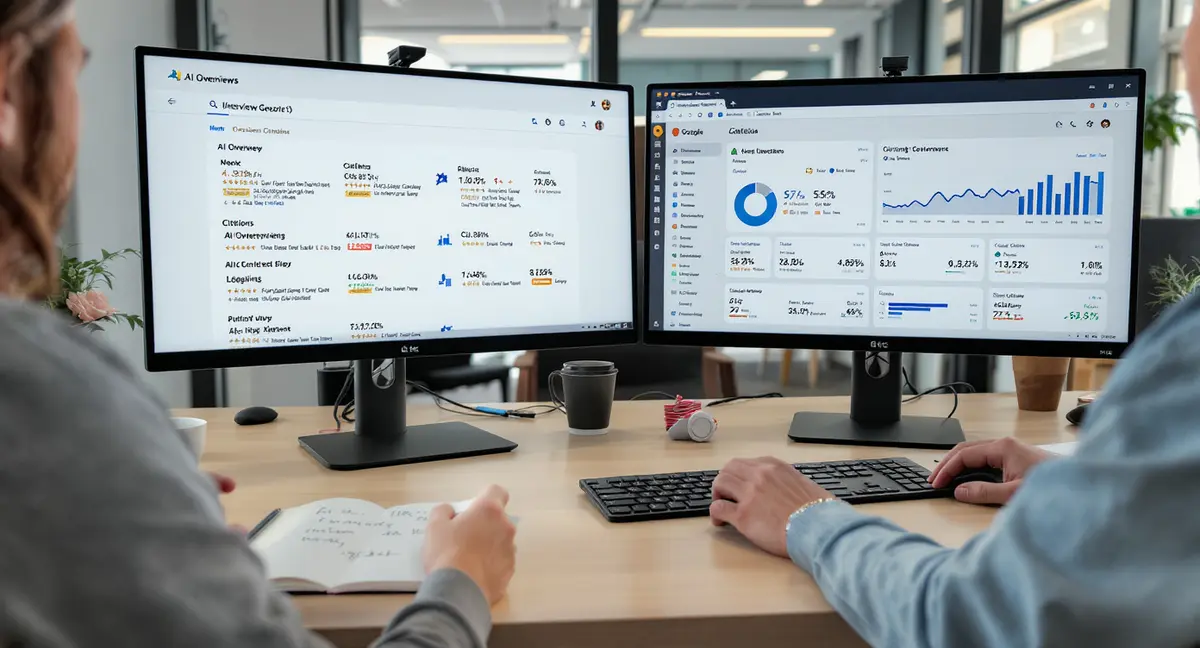
The short answer: AI won't kill SEO agencies, but it will eliminate those that refuse to evolve. Agencies still selling 2018-era keyword and backlink packages face obsolescence. According to BrightEdge, 50% of Google queries now trigger AI Overviews, causing a 61% drop in organic click-through rates. Success in will ai kill seo agencies comes down to AI citation optimization, owned content infrastructure, and multi-platform visibility. Agencies that shift from monthly retainers to installed systems and measure brand mentions alongside rankings will thrive. Those that don't will churn out. If you're rebuilding your approach from scratch, start with a current SEO checklist that reflects what actually moves rankings in 2026.
Every six months, someone declares SEO dead. In 2026, that drumbeat is louder than ever. Will AI kill SEO agencies? The question is everywhere, Reddit threads, Forbes headlines, agency conference panels. Google's AI Overviews now dominate half of all search results. ChatGPT answers questions that used to send traffic to your site. Perplexity cites three brands per query, and yours isn't one of them. If you run an agency or pay one, you're wondering if the entire model just became obsolete. Consider what's actually happening. AI isn't killing SEO, it's exposing which agencies were selling theater instead of results. The agencies that survive aren't the ones with the biggest client rosters or the fanciest dashboards. They're the ones that stopped chasing rankings and started building visibility infrastructure their clients own. This article breaks down what will ai kill seo agencies means for businesses that depend on search traffic, which agency models are collapsing, and what replaces them.Why the "AI Killed SEO" Narrative Took Off
The panic started when Google rolled out AI Overviews at scale in early 2024. Suddenly, the top of search results wasn't ten blue links, it was a generated answer box citing two or three sources. According to DemandSage, AI Overviews triggered on 50% of queries by mid-2025, and organic click-through rates dropped 61% on those pages. Businesses that had spent years climbing to position one watched their traffic evaporate overnight. The agencies they'd paid $2,000 a month couldn't explain what happened or how to fix it. Then ChatGPT, Perplexity, and Claude became search engines. People stopped typing queries into Google and started asking AI assistants for recommendations. A study from SingleGrain found that AI-sourced visitors convert at 27%, compared to 2.1% from traditional organic search. That's a 12x conversion advantage. But here's the problem: if your business isn't cited in the AI's answer, you don't exist. The old SEO playbook, rank for 50 keywords, capture 3% of clicks, doesn't work when there are no clicks to capture.The Reddit Effect and Community Credibility
AI models trained on the open web learned to value community-driven content. Reddit threads, Quora answers, and niche forums now outrank polished corporate blog posts in AI citations. Google's algorithm updates in 2024 explicitly rewarded firsthand experience and user-generated discussion. A Reddit thread titled "I Keep On Hearing That SEO Is Dead In The AI Era" got more visibility than most agency white papers because it reflected real practitioner experience, not SEO-optimized fluff. This shift punishes agencies that produce generic, keyword-stuffed content at scale. AI models can spot the difference between a business owner sharing what actually worked and a content mill churning out 800-word blog posts. The agencies that relied on volume over substance are the ones asking will ai kill seo agencies. The answer for them is yes.Zero-Click Search and the Attention Economy
SparkToro's 2025 research found that 58.5% of Google searches end without a click to any website. AI Overviews, featured snippets, and knowledge panels answer the question right on the results page. For agencies selling traffic as the primary KPI, this is catastrophic. If half your target keywords never send a visitor, your entire value proposition collapses. But zero-click search isn't the end of visibility, it's a shift in how visibility works. Being cited in the AI Overview or featured snippet means your brand is the answer, even if the user doesn't click. BrightEdge found that brands appearing in AI citations saw 120x impression increases and 800% year-over-year traffic growth from large language models. The agencies that adapted started measuring brand mentions, citation frequency, and share of voice in AI answers. The ones that didn't kept reporting on rankings that no longer mattered.How Do AI Search Engines Decide What to Cite?
AI models don't rank pages the way Google does. They select sources based on content structure, factual density, and external validation. Research from Princeton and Georgia Tech published at KDD 2024 found that structured content with clear section headers, FAQ blocks, and schema markup improved AI citation rates by 30-40%. The model isn't reading your page like a human, it's extracting entities, facts, and relationships. This changes everything about how content needs to be built. Traditional SEO optimized for keyword density and backlink count. AI search optimization, often called Generative Engine Optimization (GEO), requires content that AI can parse, verify, and cite. That means short, declarative sentences. Bullet lists over paragraphs. Named sources for every claim. Expert attribution. The agencies asking will ai kill seo agencies are the ones still writing 2,000-word keyword-stuffed articles with no factual structure.What Makes Content AI-Citable
AI models prioritize content that reduces their hallucination risk. If your page makes a claim without a source, the model skips it. If your page is full of marketing fluff and no concrete data, the model moves on. According to Semrush's 2025 AI search study, 47.1% of brand mentions in AI Overviews came from third-party citations, reviews, news articles, industry reports, not the brand's own site. That means agencies need to stop thinking about content as something you control entirely. Visibility in AI search depends on what others say about you. A business with 200 five-star Google reviews, a Wikipedia page, and coverage in industry publications will get cited over a business with a perfect website and zero external validation. The agency model that only touches your owned content is structurally incapable of solving this problem.The Role of Structured Data and Schema Markup
Schema markup has been a ranking signal for years, but in AI search it's foundational. AI models use schema to identify entities, what your business is, what you sell, who your experts are, and how you relate to other entities in your industry. A study by Search Engine Journal found that pages with FAQ schema were 4x more likely to appear in voice search results and AI-generated answers. Most SEO agencies treat schema as a checklist item. They add Organization and LocalBusiness markup and call it done. AI-era visibility requires Product schema, Review schema, HowTo schema, and custom entity definitions. It requires marking up every expert mentioned in your content, every data point cited, and every service offered. The agencies that built schema strategies in 2023 are the ones dominating AI citations in 2026. The ones that didn't are asking will ai kill seo agencies.| Factor | What it is | Impact |
|---|---|---|
| Structured content format | Clear headers, FAQ blocks, bullet lists AI can parse | 30-40% citation lift (Princeton/Georgia Tech) |
| Third-party validation | Reviews, news mentions, industry citations | 47.1% of AI citations (keyword research platform) |
| Schema markup depth | Entity definitions beyond basic Organization schema | 4x voice search appearance (SEJ) |
| Factual density with sources | Named sources for every claim, no unsupported statements | Reduces model skip rate |
| Expert attribution | Bylines, credentials, firsthand experience signals | High (E-E-A-T alignment) |
Which Agency Models Are Collapsing Right Now?
The agencies in freefall are the ones that sold commoditized monthly services with no ownership transfer. You paid $1,500 a month for keyword research, on-page optimization, and link building. When you stopped paying, everything stopped. You owned nothing, no content system, no data infrastructure, no process. According to Focus Digital's 2025 research, SEO agencies have a 38% annual churn rate. That's not because the work stopped producing results. It's because clients couldn't measure what they were getting and didn't own what they paid for. These agencies are structurally vulnerable to AI disruption because their entire value proposition was execution labor. If AI tools can generate keyword lists, write meta descriptions, and identify link opportunities, what are you paying the agency to do? The agencies that survived automation in the past did it by moving upmarket, offering strategy, not just execution. But will ai kill seo agencies that only offer strategy? No, because strategy without implementation is consulting, and consulting doesn't scale.The Retainer Trap and Client Dependency
Monthly retainers create a perverse incentive. The agency makes more money the longer you stay dependent. There's no motivation to build a system you can eventually run yourself. A 2024 report from Ahrefs found that the average SMB SEO retainer costs $1,500-$5,000 per month. Over three years, that's $54,000 to $180,000. At the end, you own nothing. The content is on your site, but the process, the tools, and the knowledge walk out the door when the contract ends. This model was already fragile before AI. Now it's untenable. Businesses are realizing they can pay once to install a content and visibility system, workflows, AI accounts, publishing infrastructure, and own it permanently. Platforms like Strategyc take this approach by installing owned content systems rather than offering monthly retainers. The install takes 4-6 weeks. After that, the business controls the publishing pace and keeps every result. No churn, no dependency, no wondering what you're paying for.Agencies That Gatekeep Data and Process
Some agencies won't give you admin access to your Google Analytics, Search Console, or content management system. They position it as "protecting their methodology," but it's notably about control. When you leave, you lose access to your own performance data. You can't see which content drove results, which keywords converted, or how traffic changed over time. You start from zero with the next agency. This gatekeeping is indefensible in 2026. Businesses expect to own their infrastructure. They expect to log into their own dashboards and see their own data. The agencies that refuse to hand over access are the ones clients leave first. The question isn't will ai kill seo agencies, it's will clients tolerate agencies that treat visibility like a rented service instead of owned infrastructure.What Replaces the Old Agency Model?
The agencies thriving in 2026 aren't selling monthly retainers. They're installing systems. They're building content engines, visibility infrastructure, and AI citation workflows that businesses own. The engagement is a project, not a subscription. The deliverable is a functioning system, not a report. After install, the business runs it. The agency moves on to the next client. This shift mirrors what happened in software. Companies used to pay IT consultants monthly fees to manage their servers. Then cloud infrastructure and DevOps made it possible to install systems that ran themselves. The consultants who adapted became infrastructure architects. The ones who didn't went out of business. SEO is going through the same transition. The agencies asking will ai kill seo agencies are the ones still selling server management in a cloud-native world.Installed Content Systems vs. Managed Services
An installed content system is infrastructure you own. It includes the workflows, the AI writing accounts, the publishing calendar, the schema templates, and the quality gates. The agency builds it, trains your team, and hands you the keys. You control when content publishes, what topics you cover, and how fast you scale. The system keeps producing results long after the agency engagement ends. Managed services are the opposite. The agency owns the process. You pay monthly for them to execute it. When you stop paying, the process stops. There's no asset you can take with you. According to CMI's 2024 research, companies that own their content infrastructure see 3x higher ROI than those that outsource to agencies. The reason is compounding. Every piece of content you publish builds on the last. After 12 months, you have 50+ articles working together. After 24 months, you have 100+. Managed services reset the clock every time you switch agencies.Vertical Specialization and Industry Expertise
The agencies winning in 2026 are vertical specialists, not generalists. They work exclusively with healthcare providers, or law firms, or B2B SaaS companies. They know the compliance requirements, the buyer journey, and the terminology. They've built schema templates specific to that vertical. They know which AI models cite which types of sources in that industry. Generalist agencies can't compete on depth. A healthcare SEO specialist knows HIPAA-compliant content practices, medical schema markup, and how to get cited in health-related AI answers without making unverified claims. A generalist agency treats healthcare like any other vertical and produces content that AI models skip because it lacks the credibility signals the models look for. The question will ai kill seo agencies depends on whether the agency has defensible expertise or just generic execution capacity.See How Your Business Shows Up in AI Search
Get a free AI visibility scan. See exactly where you rank on ChatGPT, Perplexity, and Google AI, and what to do about it. Get Your Free Scan. The shift from traffic volume to citation frequency changes how you measure success, which is why understanding AI SEO ROI requires tracking brand mentions and conversion quality, not just keyword positions.
Is Traditional SEO Still Relevant in an AI-First Search World?
Yes, but the definition of SEO has expanded. Keywords still matter. Backlinks still matter. Technical site performance still matters. But those are table stakes now, not differentiators. In 2026, SEO includes optimizing for AI Overviews, voice search, and chatbot citations. It includes building external validation through reviews, press mentions, and community engagement. It includes structured data strategies that go beyond basic schema. According to Backlinko's 2024 research, organic click-through rate for position one is still 27.6%. That hasn't disappeared. But the queries that drive those clicks are shifting. High-intent commercial queries, "best CRM for real estate," "emergency plumber near me", still send traffic. Informational queries, "what is SEO," "how does AI search work", increasingly end in zero-click answers. The agencies that understand this split are the ones building strategies that capture both.The Continued Importance of Technical SEO
AI search doesn't eliminate the need for fast page load times, mobile optimization, and clean site architecture. In fact, technical SEO matters more now because AI models prioritize sources they can crawl and parse efficiently. A site with broken internal links, slow Core Web Vitals, and poor mobile usability won't get indexed properly by Google, which means it won't be in the dataset AI models use to generate answers. Google's March 2024 Core Update explicitly targeted low-quality AI-generated content and sites with poor user experience. Core Web Vitals, Largest Contentful Paint, Interaction to Next Paint, Cumulative Layout Shift, are confirmed ranking factors. A study by Search Engine Journal found that sites in the top three positions had average LCP scores under 2.5 seconds. Technical SEO isn't optional. It's the foundation everything else is built on.Content That Serves Humans and AI Models Simultaneously
The best content in 2026 is written for human readers but structured for AI extraction. That means clear section headers that answer specific questions. Bullet lists that summarize key points. FAQ blocks that address common objections. Expert quotes that provide attribution and credibility. Data points with named sources. This isn't dumbing down your content, it's making it more useful. HubSpot's 2024 State of Marketing report found that companies publishing structured, educational content get 55% more website visitors than those that don't. B2B buyers consume 3-7 pieces of content before engaging sales, according to Demand Gen Report. The content that performs is the content that gives them what they need at each stage, definitions early, comparisons mid-funnel, case studies and pricing late. AI models surface the right content for the right query because it's structured to match intent.How Should Businesses Evaluate SEO Partners in 2026?
Start by asking what you'll own at the end of the engagement. If the answer is "a better ranking" or "more traffic," walk away. Those are outcomes, not assets. Ask if you'll own the content system, the workflows, the data, and the process. Ask if you'll have admin access to every tool and platform. Ask what happens if you stop paying, does everything stop, or does the system keep running? Second, ask how they measure success beyond rankings and traffic. Do they track brand mentions in AI answers? Do they monitor citation frequency in ChatGPT and Perplexity? Do they measure share of voice in AI Overviews? According to Firework's 2025 research, only 8% of marketers feel confident they can measure ROI from content and SEO. The agencies that have solved this problem are the ones worth hiring. The ones still reporting on keyword rankings as the primary KPI are the ones asking will ai kill seo agencies.Questions to Ask Before Signing a Contract
Ask: "What infrastructure will I own at the end of this engagement?" If the agency can't list specific deliverables, content workflows, schema templates, publishing systems, they're selling a service, not a system. Ask: "How do you optimize for AI citations and voice search?" If they talk only about keywords and backlinks, they're stuck in 2018. Ask: "What happens to my data and access if I stop paying?" If they hesitate or say you'll lose access, that's a red flag. Ask: "How do you measure visibility in AI search?" If they don't have a methodology for tracking brand mentions in AI Overviews, ChatGPT, and Perplexity, they're not equipped for 2026. Ask: "Can you show me a client who owns their content system and runs it independently?" If they can't, they've never built a system designed for ownership. The agencies that answer these questions confidently are the ones that will survive. The ones that deflect are the ones wondering will ai kill seo agencies.Red Flags That Signal an Outdated Agency
Red flag one: they sell packages based on the number of keywords or backlinks. That's commodity pricing for commodity work. Red flag two: they require a six- or twelve-month minimum contract. That's a retention tactic, not a confidence signal. Red flag three: they won't give you admin access to your own tools and data. That's control, not partnership. Red flag four: they don't mention AI search, voice search, or GEO in their pitch. If they're not talking about how they'll get you cited in AI answers, they don't have a strategy for it. Red flag five: they promise specific rankings or traffic numbers. No one can guarantee rankings in 2026. The algorithm changes weekly. AI models update constantly. Agencies that promise specific outcomes are either lying or inexperienced.The Bottom Line: Will AI Kill SEO Agencies?
AI will kill the agencies that refused to evolve. The ones selling 2018-era keyword packages and monthly retainers with no ownership transfer are already in decline. The 38% annual churn rate isn't sustainable. The clients are leaving because they can't measure ROI and they don't own what they paid for. AI didn't create that problem, it exposed it. The agencies that survive are the ones that stopped selling services and started installing systems. They're building content engines their clients own. They're optimizing for AI citations, not just rankings. They're measuring brand mentions, not just traffic. They're specialists, not generalists. They're infrastructure architects, not monthly vendors. The question isn't will ai kill seo agencies, it's which agencies are building infrastructure that outlasts the engagement. Those are the ones that thrive.Frequently Asked Questions
Will AI completely replace SEO agencies?
No. AI will eliminate agencies that sell outdated tactics and gatekeep client data. Agencies that install owned content systems, optimize for AI citations, and specialize in verticals will grow. The shift is from rented services to owned infrastructure. The agencies that adapted early recognised that the future of SEO isn't about predicting algorithm changes, it's about building systems that work regardless of how search engines evolve. When organic click-through rates drop 61% and businesses question their entire search strategy, the SEO vs PPC decision becomes less about channel preference and more about which builds long-term owned visibility.
How do I know if my current SEO agency is preparing for AI search?
Ask if they track brand mentions in AI Overviews, ChatGPT, and Perplexity. Ask how they optimize content for voice search and AI citations. If they only report on keyword rankings and traffic, they're not prepared. Before rebuilding your content infrastructure, it helps to understand what is AI SEO and why it requires structured data and factual density instead of keyword optimization.
Can I build AI search visibility in-house without an agency?
Yes, if you install the right infrastructure. You need structured content workflows, schema markup templates, AI writing accounts, and quality gates. The upfront build requires expertise, but once installed, your team can run it independently.
What should I measure instead of keyword rankings in 2026?
Track brand mentions in AI Overviews and chatbot answers. Measure citation frequency, share of voice in AI search, and conversion rates from AI-sourced traffic. Monitor impression growth from large language models. Rankings still matter, but they're not the only metric.
How long does it take to see results from AI search optimization?
Early adopters saw 120x impression increases and 800% traffic growth within 12 months, according to BrightEdge. Most businesses see measurable citation increases in 3-6 months if content is structured correctly and external validation is strong.