Why Influencers Need a Content Calendar
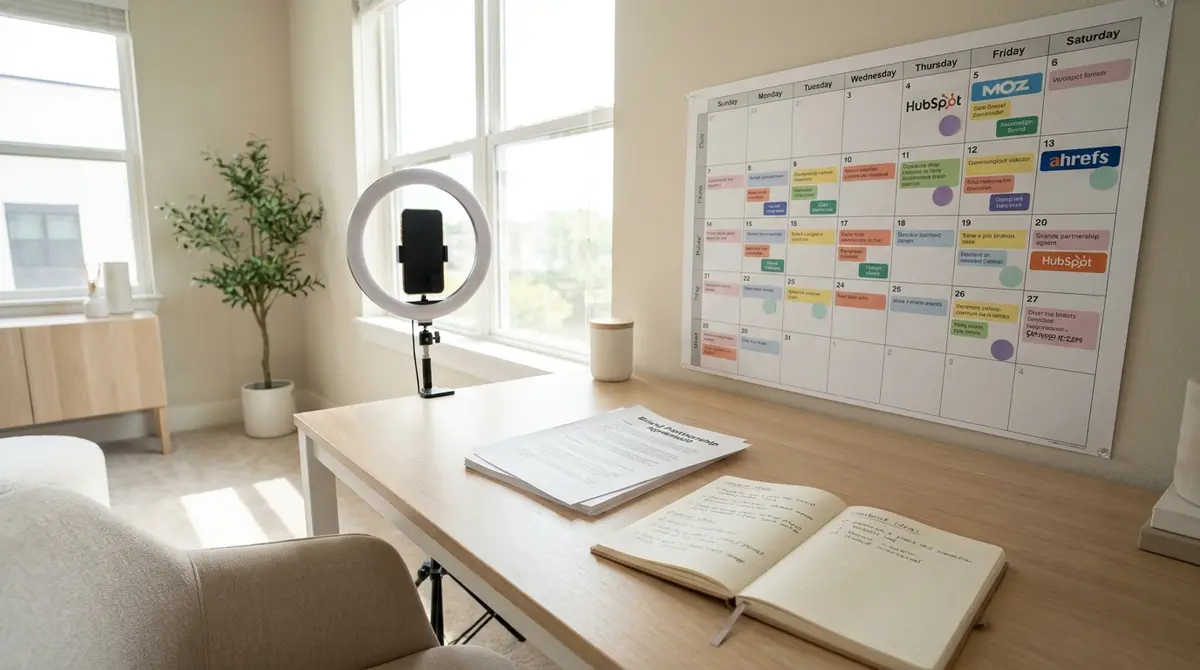
The short answer: An influencer content calendar is a planning system that maps posts, brand deals, and content production across platforms before publication. It organizes deliverables, deadlines, and creative themes into a single view, reducing last-minute scrambles and missed opportunities. Success in influencer content calendar management comes down to platform-specific timing, brand deliverable tracking, and consistent posting cadence. According to Influencer Marketing Hub, 63% of brands plan to increase influencer budgets in 2026, making organized content delivery a competitive advantage. As AI-powered search platforms reshape discovery, influencers who want brand visibility beyond traditional social feeds should understand Perplexity SEO and how to position content for citation in AI-generated answers.
Influencers who post reactively lose brand deals. The creator economy hit $250 billion in 2024, according to Goldman Sachs, but only 12% of influencers report consistent monthly income. The gap between sporadic posting and reliable revenue is a content calendar. Brands pay for predictability. Followers engage with consistency. Algorithms reward regular publishing. A content calendar turns chaos into infrastructure. Most influencers treat calendars as optional admin work. That mindset costs money. A calendar is not a spreadsheet of post ideas. It is a business operating system that tracks brand deliverables, coordinates cross-platform campaigns, and ensures you never miss a sponsored deadline. When a brand pays you $3,000 for three Instagram posts and two TikToks over two weeks, a calendar is the difference between getting paid on time and scrambling to explain why deliverables are late. This article breaks down how to build an influencer content calendar that handles brand partnerships, platform-specific posting schedules, and content production workflows. You will see what to track, how to structure it, and which mistakes kill consistency.What Makes an Influencer Content Calendar Different from a Brand Calendar
| Factor | What it is | Impact |
|---|---|---|
| Brand deliverable tracking | Contracted posts with deadlines and approval gates | High, missed deadlines void contracts |
| Multi-platform coordination | Same campaign across Instagram, TikTok, YouTube, Pinterest | High, 73% of influencers use 3+ platforms |
| Content production lead time | Days needed for shooting, editing, approval cycles | Medium, prevents last-minute rushes |
| Evergreen vs trending balance | Mix of timeless content and trend-responsive posts | Medium, trending content drives 40% more reach |
| Posting frequency by platform | Instagram daily, TikTok 3-5x/week, YouTube weekly | High, consistency drives algorithmic favor |
Brand Deliverables Require Deadline Precision
Corporate social media calendars plan posts. Influencer content calendars track contractual obligations. When a brand pays you for sponsored content, the contract specifies post dates, platform, format, and approval windows. Missing a deliverable date can void payment or damage future partnerships. Sprout Social's 2025 Influencer Marketing Report found that 68% of brands cite "missed deadlines" as the top reason for not rehiring an influencer. A content calendar that treats brand deals like optional ideas rather than binding commitments creates financial risk. Each sponsored post needs a production start date, draft submission date, brand approval window, and final publish date. Without that structure, you are guessing.Multi-Platform Campaigns Need Synchronized Timing
Influencers rarely post to one platform. A typical brand campaign might require two Instagram Reels, three TikToks, one YouTube integration, and a Pinterest idea pin, all within a two-week window. Each platform has different optimal posting times, format requirements, and audience expectations. Data from Later shows Instagram engagement peaks between 9-11 AM on weekdays, while TikTok performs best between 6-9 PM. A calendar that does not account for platform-specific timing wastes reach. The same piece of content published at the wrong time on the wrong platform underperforms by 30-50%. Influencer content calendars must map each deliverable to its platform's engagement window, not just "post sometime Tuesday."Production Workflows Determine What You Can Actually Deliver
Brands think influencers can create content instantly. Reality: a single high-quality Instagram Reel requires scripting, shooting, editing, captioning, and thumbnail design. That process takes 2-4 hours for experienced creators, according to Creator Economy Report 2025. Multiply that across five posts per week and production becomes a full-time job. Your influencer content calendar must include production lead time. If a brand deal requires a post on Friday, you need to shoot by Wednesday, edit by Thursday, and submit for approval Thursday evening. Calendars that only show publish dates ignore the work required to hit those dates. Production bottlenecks are the most common reason influencers miss deadlines.Core Components Every Influencer Content Calendar Must Track
Post Metadata: Platform, Format, and Publishing Details
Each calendar entry needs platform, format, scheduled time, caption draft status, and asset location. A line item that says "Instagram post about skincare" is useless. You need "Instagram Reel, 30 seconds, skincare routine, publish 10 AM EST, caption drafted, video file in Dropbox/Q1-Sponsored." HubSpot's 2025 Social Media Trends report found that influencers who track asset locations in their calendars reduce production time by 22%. When you know exactly where the edited video lives, you do not waste 20 minutes searching your camera roll. Metadata turns a calendar into a production dashboard.Brand Partnership Fields: Contract Terms and Approval Gates
Sponsored content requires additional tracking fields: brand name, contract value, deliverable count, approval contact, submission deadline, and payment terms. These fields turn your calendar into a revenue tracker. You can see at a glance which deals are pending approval, which payments are overdue, and which brands are repeat clients. Influencer Marketing Hub's 2025 survey found that 47% of influencers report payment delays, often because they cannot prove deliverables were submitted on time. A calendar with approval tracking creates an audit trail. When a brand claims you missed a deadline, you can show the exact timestamp you submitted the draft.Content Themes and Pillar Topics
Random posts do not build audiences. Successful influencers organize content around 3-5 pillar topics that define their niche. A fitness influencer might have pillars for workout routines, nutrition tips, mindset coaching, and gear reviews. Each week's content should touch at least two pillars. Data from social media management tool shows that influencers with defined content pillars grow followers 34% faster than those posting reactively. Your influencer content calendar should tag each post with its pillar topic, making it easy to see if you are overweighting one theme and neglecting others. Balance across pillars keeps your feed cohesive and your audience engaged.How to Structure Your Influencer Content Calendar for Maximum Efficiency
Choose the Right Tool for Your Workflow
Influencers use everything from Google Sheets to Notion to Airtable to dedicated tools like Later or Planoly. The best tool is the one you will actually use. Google Sheets works if you need simple rows and columns. Notion works if you want linked databases and rich media embeds. Airtable works if you need relational data and filtered views. According to Content Marketing Institute's 2025 report, 58% of solo creators use spreadsheet-based calendars, while 31% use database tools like Notion or Airtable. The tool matters less than the structure. Your calendar must show weekly and monthly views, filter by platform or brand, and export to share with collaborators or brand partners.Build Weekly and Monthly Planning Rhythms
Plan monthly themes at the start of each month. Plan weekly posts every Sunday. Daily execution follows the plan. This three-layer rhythm prevents both over-planning and reactive chaos. Monthly planning sets strategic direction. Weekly planning assigns specific posts to specific days. Daily execution focuses on production and publishing. Research from CoSchedule found that marketers who plan content weekly are 331% more likely to report success than those who plan daily. The same principle applies to influencers. A weekly planning session takes 60-90 minutes and eliminates the "what do I post today" panic that kills consistency.Map Content to Platform-Specific Posting Frequencies
Instagram tolerates daily posts. TikTok rewards 3-5 posts per week. YouTube punishes inconsistency but does not require daily uploads. Pinterest thrives on batch scheduling 10-15 pins per day. Your influencer content calendar must reflect these platform realities, not impose a one-size-fits-all cadence. Sprout Social's 2025 data shows that Instagram accounts posting 4-7 times per week see 2.3x higher engagement than those posting 1-3 times. TikTok accounts posting 3-5 times per week grow 40% faster than daily posters, who often sacrifice quality for volume. Frequency is not universal. Your calendar should set platform-specific targets based on what your audience expects and what you can sustain.See How Your Business Shows Up in AI Search
Get a free AI visibility scan. See exactly where you rank on ChatGPT, Perplexity, and Google AI, and what to do about it. Get Your Free Scan. Influencers managing multiple brand partnerships across platforms can reclaim production hours by exploring how AI content calendars automate scheduling decisions and reduce planning overhead.
Common Influencer Content Calendar Mistakes That Kill Consistency
Overloading the Calendar with Unrealistic Volume
New influencers often plan 20 posts per week across four platforms. By week two, they are burned out and posting nothing. Overcommitment is the fastest way to abandon a calendar entirely. Start with what you can sustain: 3-5 posts per week across your primary platforms. Add volume only after you have maintained that baseline for a month. Data from Buffer shows that 61% of influencers who plan more than 15 posts per week fail to hit their targets, while 78% of those planning 5-10 posts per week meet or exceed their goals. Consistency beats volume. A calendar that sets achievable targets builds momentum. A calendar that demands heroic effort creates guilt and avoidance.Ignoring Content Production Lead Time
A calendar that shows "Instagram Reel, Tuesday 10 AM" without accounting for when you will shoot and edit that Reel is a wish list, not a plan. Production lead time is the gap between starting work and publishing. For most influencers, that gap is 1-3 days depending on content complexity. Creator Economy Report 2025 found that influencers who schedule production tasks separately from publish dates reduce missed deadlines by 54%. Your calendar should show both "shoot content" and "publish content" as distinct entries. If Tuesday's post requires filming, editing, and captioning, those tasks need to appear on Monday or earlier.Failing to Track Brand Deliverable Status
Sponsored posts move through stages: contract signed, brief received, content shot, draft submitted, brand approved, published, payment received. A calendar that only tracks "publish date" loses visibility into where each deal stands. When a brand asks "where is the draft," you should not have to search your email. Influencer Marketing Hub reports that 52% of brand-influencer disputes stem from unclear deliverable status. A calendar with status tracking (draft, submitted, approved, published, paid) eliminates ambiguity. You know exactly which deals need attention and which are on track.How to Use Your Influencer Content Calendar to Grow Revenue
Identify Content Gaps and Pitch Brands Proactively
A well-structured influencer content calendar reveals gaps: weeks with no sponsored content, platforms you are underutilizing, or themes you have not covered recently. Those gaps are pitch opportunities. If your calendar shows you have no brand deals in March, you can proactively pitch brands in January. According to Aspire's 2025 Influencer Benchmark Report, influencers who pitch brands proactively earn 43% more annually than those who wait for inbound offers. Your calendar is a revenue planning tool. It shows you where you have capacity to take on new partnerships and which content pillars align with potential sponsors.Prove Reliability to Secure Repeat Partnerships
Brands pay premiums for influencers who deliver on time, every time. A content calendar with a track record of met deadlines is a sales tool. When pitching a new brand, you can show your calendar and say "here is how I manage deliverables." That professionalism wins contracts. Influencer Marketing Hub's data shows that repeat brand partnerships pay 28% more than one-off deals. Brands value reliability over reach. A calendar that demonstrates your process and consistency makes you a safer investment than an influencer with twice your followers and zero organizational system.Analyze Performance Patterns to Optimize Posting Strategy
Your influencer content calendar should integrate performance data: views, engagement rate, saves, shares. Over time, patterns emerge. You might discover that Instagram Reels posted at 7 PM on Thursdays consistently outperform other time slots, or that TikToks about a specific topic drive 3x more profile visits. Later's 2025 analysis found that influencers who track performance data in their calendars improve engagement rates by 37% within six months. The calendar becomes a feedback loop. You plan, publish, measure, and adjust. Without that loop, you are guessing what works.The Bottom Line
An influencer content calendar is not optional infrastructure. It is the difference between reactive posting and strategic publishing, between missed brand deals and reliable income, between burnout and sustainable growth. The calendar tracks what you will post, when you will post it, which brands you owe deliverables to, and how much you are getting paid. Without that structure, you are running a business on hope. Start with a simple weekly view. Add platform, format, and publish time for each post. Layer in brand deliverable tracking as you take on sponsored work. Review and adjust every Sunday. The calendar compounds. Each week of consistent execution makes the next week easier. Each met deadline builds your reputation. Each performance insight improves your strategy.Frequently Asked Questions
How far in advance should I plan my influencer content calendar?
Plan monthly themes 30 days ahead and weekly posts 7 days ahead. Daily execution follows the weekly plan. This rhythm balances strategic direction with flexibility for trending topics. Brands typically brief sponsored content 2-4 weeks before publish dates, so your calendar should accommodate that lead time. The production workflow principles that prevent influencer burnout apply equally to teams, which is why understanding the broader framework of a content creation calendar helps scale beyond solo creator workflows. Choosing between Google Sheets, Notion, and Airtable becomes easier when you compare feature sets across dedicated content calendar platforms built for collaboration and client reporting.
Can I build an effective influencer content calendar using free tools?
Yes. Google Sheets, Notion's free tier, and Trello all support influencer content calendar structures. The tool matters less than the discipline. Track platform, publish time, deliverable status, and brand details. Upgrade to paid tools only when free options create workflow friction or limit collaboration. Influencers transitioning from reactive posting to strategic planning benefit from the foundational steps in building a content calendar that aligns business goals with publishing cadence.
What is the minimum posting frequency to maintain audience growth?
Platform-dependent. Instagram rewards 4-7 posts per week. TikTok performs best with 3-5 posts per week. YouTube tolerates weekly uploads if quality is high. Consistency matters more than volume. A calendar that sets sustainable targets you can meet beats an aggressive plan you abandon after two weeks.
How do I track brand deliverables without missing approval deadlines?
Add status fields to your influencer content calendar: draft, submitted, approved, published, paid. Set submission deadlines 2-3 days before publish dates to allow brand approval time. Use calendar reminders for each stage. This audit trail protects you when brands claim missed deadlines and ensures you get paid on time.
Should my content calendar include production tasks or just publish dates?
Include both. A publish date without a production schedule is a wish. Add "shoot content" and "edit content" as separate calendar entries 1-3 days before publish dates. This prevents last-minute scrambles and ensures you have time for quality work. Production visibility is what separates functional calendars from fantasy lists.