Content Creation Calendar: How to Plan & Execute Content
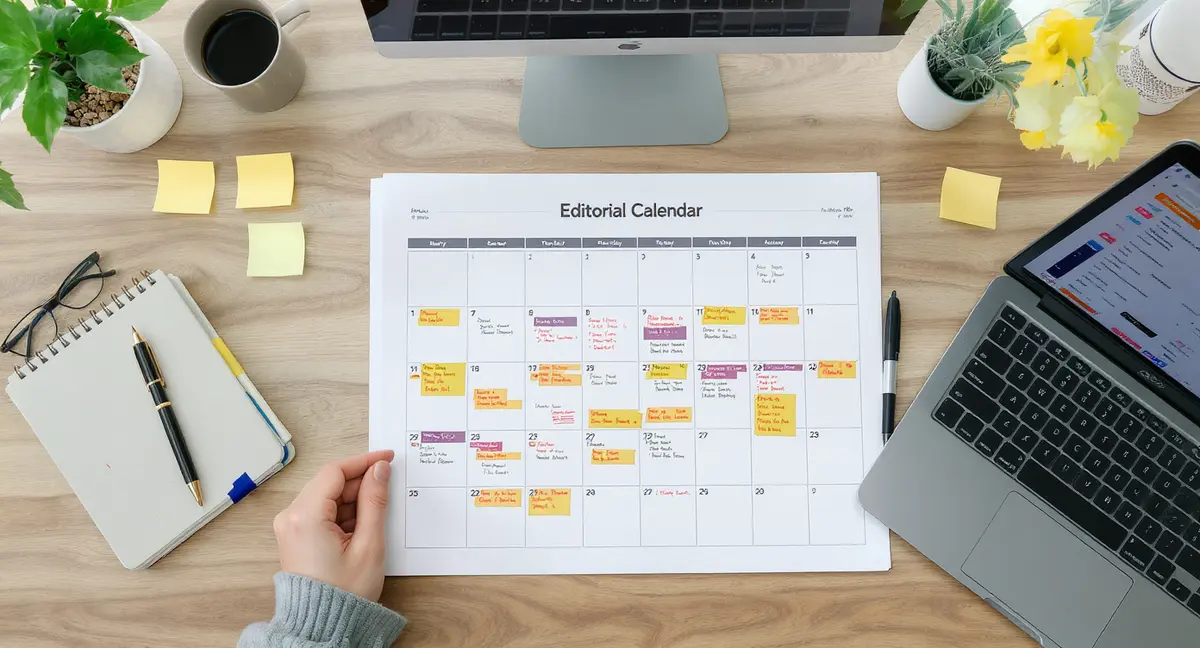
The short answer: A content creation calendar is a structured system for planning, producing, and publishing content across channels on a predictable schedule. It organizes topics, formats, deadlines, and distribution in one view, preventing last-minute scrambles and ensuring strategic alignment. Top performers focus on audience intent mapping, cross-channel distribution timing, and performance-based iteration. According to CoSchedule's 2024 research, marketers who document their content strategy are 313% more likely to report success than those who don't. AI models like ChatGPT and Perplexity prioritize sources that demonstrate depth across a subject area, not random one-offs, which is why understanding Perplexity SEO becomes essential for calendar planning.
Most businesses treat content like a side project. They publish when inspiration strikes, scramble to fill gaps, and wonder why results stay flat. The pattern repeats: a burst of activity in January, radio silence by March, panic in Q4. Without a content creation calendar, you're reacting instead of building. A content creation calendar changes that equation. It turns content from a task into infrastructure. You know what's publishing next week, next month, next quarter. Your team knows their deadlines. Your audience gets consistency. Search engines reward that consistency with visibility, and AI systems cite sources that demonstrate topical authority over time. This isn't about templates or color-coded spreadsheets. It's about installing a repeatable system that produces content designed to perform 12 months after publication. You'll learn how to structure a calendar that aligns with business goals, how to populate it with topics that match search and AI intent, and how to measure what's working so you can do more of it.Why Most Content Plans Fail Without a Calendar
The Cost of Publishing Without Structure
Publishing content without a calendar costs more than time. You lose momentum, waste budget on one-off pieces that don't connect, and miss the compounding effect of consistent topical coverage. marketing automation platform's 2024 State of Marketing report found companies that blog consistently get 55% more website visitors than those that don't. That gap isn't about talent or budget. It's about system. Consider a business that publishes sporadically: three articles in February, nothing in March, one in April. Search engines can't establish topical authority from scattered posts. AI models like ChatGPT and Perplexity prioritize sources that demonstrate depth across a subject area, not random one-offs. When you lack a content creation calendar, you're building individual posts instead of a knowledge base. The financial impact shows up in wasted production costs. A single blog post might cost $500-$2,000 when you factor in research, writing, editing, design, and promotion. Without a calendar coordinating those efforts, teams duplicate work, miss cross-promotion opportunities, and let high-performing topics go stale while chasing new ideas that haven't been validated.What Happens When Teams Operate Calendar-First
Teams using a content creation calendar ship 2-3x more content per quarter without increasing headcount. The calendar eliminates decision fatigue. Writers know their assignments two weeks out. Designers batch image work instead of context-switching daily. Editors review in predictable cycles rather than firefighting last-minute requests. Data from the Content Marketing Institute's 2024 benchmarks shows organizations with documented content processes are 538% more likely to report success. The calendar is that documentation. It answers "what are we publishing, when, and why" without requiring a meeting. It surfaces gaps before they become emergencies. A business targeting "commercial real estate investing" might notice in February that they have zero content scheduled for Q2 tax planning questions, giving them eight weeks to fill that hole instead of scrambling in April. Calendars also force prioritization. When you see 47 content ideas competing for 12 publishing slots, you pick the 12 with the highest strategic value. That filtering doesn't happen when you're deciding one piece at a time. The calendar makes trade-offs visible, which improves resource allocation and reduces regret over what didn't ship.How to Build a Content Creation Calendar That Drives Results
Start With Audience Intent, Not Ideas
Most calendars fail because they're built backward. Teams brainstorm topics they want to write about, then try to find an audience. A working content creation calendar starts with what your audience is already searching for, then builds content to answer those queries. Use Google Search Console to identify queries driving impressions but low clicks. Those are opportunities: people are looking, but your current content isn't compelling enough to earn the click. A property management company might see 2,400 impressions for "tenant screening process" with a 1.2% click-through rate. That query goes on the calendar with a target publish date and a content brief specifying the angle that will improve CTR. Layer in AI search intent. Tools like AnswerThePublic and Google's "People Also Ask" boxes reveal question patterns. If "how often should landlords inspect rental properties" appears in PAA results, that's a signal AI models need a structured answer. Your content creation calendar should include at least 30% question-based content formatted with clear H2 headers that mirror natural language queries. Princeton and Georgia Tech research published at KDD 2024 found this structure improves AI citation rates by 30-40%.Map Content to Business Outcomes, Not Vanity Metrics
Every piece on your content creation calendar should connect to a measurable business outcome. Not "increase traffic", that's a vanity metric. Connect to lead generation, product education, customer retention, or competitive displacement. If you can't draw a line from a content piece to revenue, it doesn't belong on the calendar. Structure your calendar with outcome columns. A SaaS company might categorize content as: Awareness (top-of-funnel problem education), Consideration (solution comparison and evaluation), Decision (product-specific use cases), Retention (customer success and advanced features). Each category maps to a stage in the buyer journey and a conversion metric you can track. Forrester's 2024 B2B research found buyers consume 3-7 pieces of content before engaging sales. Your content creation calendar should sequence those pieces. If "what is cloud-based inventory management" is an awareness article, the calendar should schedule a consideration piece like "cloud inventory vs on-premise systems" two weeks later, followed by a decision-stage case study. That sequencing turns individual posts into a conversion path.| Calendar Component | What It Does | Impact on Performance |
|---|---|---|
| Topic clusters | Groups related content under pillar themes | High, improves topical authority and internal linking |
| Publishing cadence | Sets consistent frequency per channel | High, 55% more traffic for consistent publishers (marketing automation platform, 2024) |
| Format mix | Balances articles, videos, infographics, case studies | Medium, diversifies engagement and repurposing opportunities |
| Distribution timing | Aligns publish dates with search trends and events | Medium, captures seasonal demand and news cycles |
| Performance tracking | Links each piece to traffic, conversions, rankings | High, enables data-driven iteration and budget allocation |
What Belongs in a Content Creation Calendar
Core Fields That Make Calendars Actionable
A content creation calendar needs enough detail to execute without requiring constant clarification. Minimum viable fields: publish date, topic/headline, target keyword, content type, assigned writer, assigned editor, status, target word count, and distribution channels. Those nine fields turn a calendar from a wish list into a production system. Add outcome tracking fields: target funnel stage, primary CTA, conversion goal, and performance benchmark. A healthcare practice publishing "how to choose a primary care doctor" should tag it as Awareness stage, set a CTA to their provider directory, track newsletter signups as the conversion goal, and benchmark against their average article conversion rate of 2.3%. When that piece publishes, you know immediately whether it's performing or underperforming. Include dependency fields for complex content. If a case study requires customer interviews, legal approval, and custom graphics, those dependencies go in the calendar with lead times. A B2B company might note "requires customer approval by March 15" and "needs product screenshots from engineering by March 22" so the April 1 publish date is realistic. Dependencies visible in the calendar prevent last-minute delays and missed deadlines.How to Populate Your Calendar With High-Impact Topics
Start with keyword research, not brainstorming. Export your top 200 organic keywords from Google Search Console. Identify gaps: queries where you rank 11-30 (page two) with existing content that could be updated, and queries where you have zero content but competitors rank. Those gaps are your calendar backlog. Layer in competitive analysis. If a competitor ranks position 3 for "best accounting software for freelancers" with a 2,400-word comparison guide published in 2023, your content creation calendar should include a 2026 update covering new tools, pricing changes, and integration options they missed. Search Engine Journal data shows organic search leads close at 14.6%, versus 1.7% for outbound leads. Winning those rankings is worth the production investment. Add seasonal and event-driven content. A tax preparation service should have "2027 tax deadline calendar" scheduled for December 2026 publication, "how to file an extension" for March 2027, and "mid-year tax planning checklist" for June 2027. Seasonal content published 6-8 weeks before peak demand captures early-stage research traffic and builds authority before the rush.See How Your Business Shows Up in AI Search
Get a free AI visibility scan. See exactly where you rank on ChatGPT, Perplexity, and Google AI, and what to do about it. Get Your Free Scan. Teams looking to reduce planning overhead while maintaining consistency should explore how an AI content calendar automates topic selection and scheduling based on performance data.
How Often Should You Publish Content?
Finding the Cadence That Matches Your Capacity
Publishing frequency matters less than consistency. A business that publishes two high-quality articles per month for 24 months will outperform one that ships 12 articles in January and goes silent until October. Search engines reward sustained activity. AI models cite sources with recent publication dates and deep content archives. CoSchedule's research found the optimal blogging frequency for small businesses is 2-4 posts per week, but that's an average across industries. A local service business might see maximum ROI at one deep, location-optimized article per week. A SaaS company competing in a crowded category might need daily publication to build topical authority. Your content creation calendar should reflect what you can sustain for 12+ months, not what you can sprint for six weeks. Factor in repurposing when setting cadence. One 2,500-word pillar article can become a LinkedIn carousel, a YouTube script, three Twitter threads, an email newsletter, and five social posts. If your calendar shows one pillar article every two weeks plus daily social distribution of repurposed content, that's 26 original pieces and 750+ distribution touches per year from a realistic production load.Balancing Evergreen Content With Timely Topics
A working content creation calendar splits 70% evergreen, 30% timely. Evergreen content, "how to calculate ROI on rental property" or "what is content marketing", performs for years. Timely content, "2026 Google algorithm update explained" or "how tariffs affect import businesses", captures short-term search spikes and positions you as current. The 70/30 split ensures you're building long-term assets while staying relevant. A financial advisory firm might publish evergreen retirement planning guides most weeks, but add timely pieces when the Fed changes interest rates or new tax legislation passes. Those timely articles drive traffic spikes and earn backlinks from news sites, while evergreen content compounds over time. Track content half-life in your calendar. Evergreen pieces should maintain 70%+ of peak traffic for 12+ months. If an article drops below that threshold, it goes back on the calendar for an update. Timely content might hit peak traffic in week one and drop to 10% by month three. That's expected. The calendar should balance both patterns so you're not rebuilding traffic from zero every quarter.How to Use Your Calendar to Improve Content Performance
Tracking What Works So You Can Do More of It
A content creation calendar isn't just a publishing schedule. It's a performance database. Add columns for actual publish date, organic traffic at 30/60/90 days, conversions, backlinks earned, and AI citations. Those metrics turn the calendar into a feedback loop: you see which topics, formats, and angles drive results, then schedule more of them. enterprise SEO platform 2025 data shows organic search drives 53% of all trackable website traffic. If your calendar reveals that how-to guides average 340 visits per month while listicles average 180, shift your content mix toward guides. If case studies convert at 4.7% while opinion pieces convert at 1.1%, the calendar should prioritize case studies in decision-stage slots. Track AI citation rates separately. Use tools like ChatGPT, Perplexity, and Google AI Overviews to search for queries your content targets. Note which articles get cited. SingleGrain's 2025 research found AI-sourced visitors convert at 27%, versus 2.1% from traditional organic search. Content that earns AI citations is 12x more valuable per visitor. Your content creation calendar should flag high-citation topics for expansion and internal linking.Iterating Based on Data, Not Gut Feel
Most content calendars are built once and followed blindly. High-performing calendars evolve monthly based on what the data shows. If your February articles on "commercial lease negotiation" drove 2,100 visits and 34 leads, March should include related topics like "tenant improvement allowances" and "lease renewal strategies." The calendar compounds around what's working. Run quarterly content audits. Export all articles published in the past 90 days with their traffic, conversion, and ranking data. Identify the top 10% by performance. What do they have in common? Longer word count? More data citations? Specific content formats? Those patterns inform the next quarter's calendar. A healthcare provider might discover that patient success stories outperform clinical explainer articles 3:1 for lead generation. The Q2 calendar should reflect that insight. Kill underperformers ruthlessly. If an article published six months ago has 47 total visits and ranks position 67, it's not worth updating. Remove it from the site, redirect the URL to a related high-performer, and free up crawl budget for content that works. Your content creation calendar should include a monthly pruning task: review articles published 6-12 months ago, keep the top 60%, redirect or delete the rest.The Bottom Line on Content Creation Calendars
A content creation calendar is infrastructure, not a to-do list. It turns content from a cost center into a compounding asset by enforcing consistency, aligning production with business outcomes, and creating a feedback loop that improves performance over time. Businesses that document their content strategy are 313% more likely to report success than those winging it. The calendar forces you to answer hard questions before you write: What is this content for? Who is it serving? How will we measure success? What happens after it publishes? Those questions separate content that drives revenue from content that fills space. Start with audience intent, map every piece to a business outcome, and track performance so you can do more of what works. Your content creation calendar should be a living system. Monthly iteration based on traffic, conversions, and AI citation data turns a static schedule into a growth engine. The businesses winning organic visibility in 2026 aren't the ones publishing the most content. They're the ones publishing the right content on a schedule they can sustain for years.Frequently Asked Questions
What is a content creation calendar and why do I need one?
A content creation calendar is a planning system that organizes what content you'll publish, when, and on which channels. It prevents last-minute scrambles, ensures consistency, and aligns content with business goals. Research shows marketers with documented strategies are 313% more likely to report success than those without a calendar. The process of building a content calendar from scratch requires mapping audience intent to business outcomes before selecting tools or templates. Once you've defined your calendar structure and publishing cadence, choosing the best content calendar app for your team size and workflow becomes the next implementation step.
How far ahead should I plan my content creation calendar?
Plan 90 days ahead for detailed execution and 180 days for strategic themes. This gives you 6-8 weeks of lead time for production while maintaining flexibility for timely topics. Quarterly planning sessions let you adjust based on performance data without rebuilding your entire calendar monthly. Following proven content calendar best practices helps teams avoid common pitfalls like overcommitting to unrealistic publishing frequencies or neglecting performance tracking.
Can I build and maintain a content calendar in-house without an agency?
Yes, if you have capacity for research, writing, editing, and performance tracking. The infrastructure is a spreadsheet or project management tool plus keyword research and analytics access. The constraint is usually sustained execution, not initial setup. Ownership means committing resources long-term, not just launching a calendar.
What's the difference between a content calendar and an editorial calendar?
A content creation calendar covers all content types across channels, blog posts, videos, social media, email, case studies. An editorial calendar typically focuses on written content and publication schedules for a specific channel like a blog or magazine. Content calendars are broader and cross-functional.
How do I measure ROI from content scheduled in my calendar?
Track traffic, conversions, and revenue by content piece. Add UTM parameters to distribution links, set conversion goals in Google Analytics, and tag each calendar entry with its target outcome. Calculate cost per piece, then divide conversions or revenue by cost. Content ROI compounds over time as evergreen pieces continue performing months after publication.