Why Most Businesses Can't Prove SEO ROI (And What Matters in 2026)
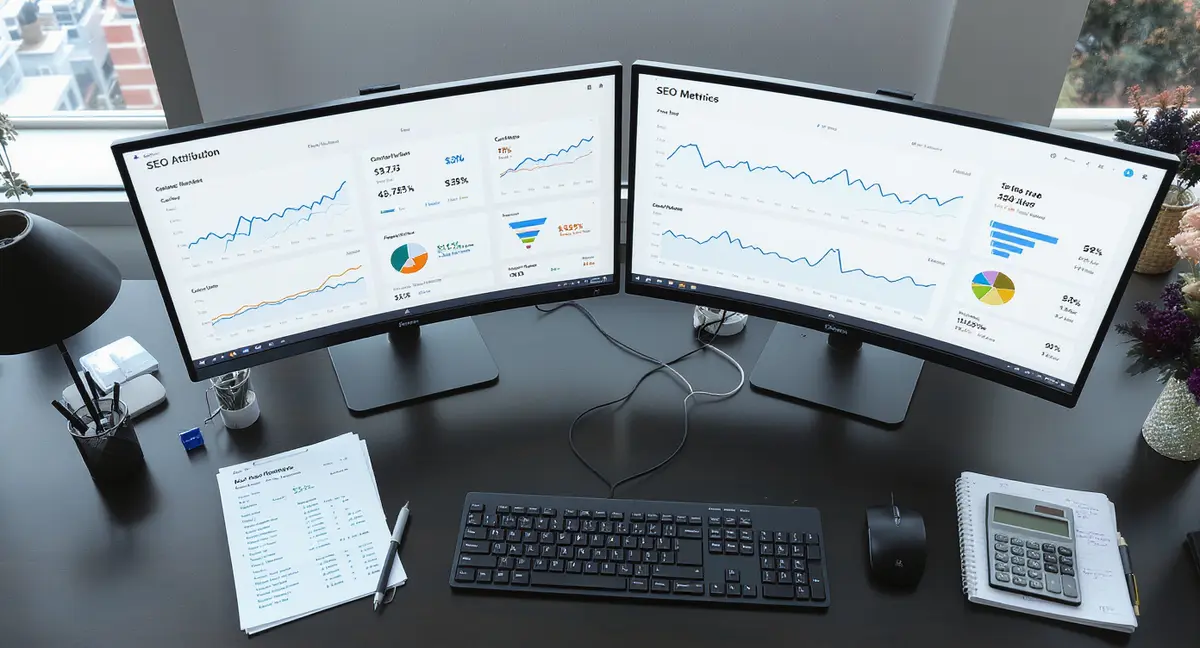
The short answer: Top SEO reporting tools in 2026 track revenue attribution, AI search citations, and conversion-driving metrics instead of vanity stats like domain authority. The best tools measure organic leads generated, revenue per channel, keyword rankings for commercial intent, AI Overview presence, and click-through rates. Success in this space comes down to revenue attribution, leading indicators that predict performance, and data ownership. Only 8% of marketers feel confident measuring SEO ROI, but businesses using revenue-focused dashboards close organic leads at 14.6% versus 1.7% for outbound channels.
Most businesses spend $1,500 to $5,000 monthly on SEO but can't tell you what they're getting for it. Only 8% of marketers feel confident they can measure SEO ROI (Firework, 2025). That's not because SEO doesn't work. It's because top SEO reporting tools often track vanity metrics instead of revenue. You're watching keyword rankings move while your competitors track leads, conversions, and actual dollars earned. The gap between what agencies report and what business owners need to know has never been wider. This article shows you which metrics predict revenue, which ones waste your time, and how to demand reporting that connects SEO work directly to business outcomes. You'll see what leading indicators matter, how to spot inflated metrics, and why the best top SEO reporting tools in 2026 track AI search visibility alongside traditional Google rankings. If your business isn't visible when potential customers ask ChatGPT or Perplexity for recommendations, you're losing ground to competitors who've invested in AI search optimization.
What Top SEO Reporting Tools Measure in 2026
The reporting space split into two camps. Traditional platforms track Google rankings, backlinks, and domain authority. Modern systems measure AI search citations, voice query presence, and conversion attribution. Most businesses still pay for the old model while their customers increasingly find answers through ChatGPT, Perplexity, and Google AI Overviews. AI search adoption doubled from 14% to 29% in just six months of 2026 (Exposure Ninja, 2025). Your reporting needs to reflect where search in practice happens now.
Revenue Metrics That Prove SEO Value
The metrics that matter to business owners aren't complicated. Leads from organic traffic, tracked through form submissions or CRM entries. Revenue attributable to those organic leads. Customer acquisition cost from organic versus paid channels. These numbers tell you whether SEO pays for itself. Content marketing returns $3 for every $1 spent versus PPC's $2 return (Genesys Growth, 2025). But most reporting dashboards bury these metrics under pages of keyword data and traffic charts. You want a single view that shows: how many leads came from organic search this month, what those leads are worth, and how that compares to what you're spending.
Leading Indicators Before Revenue Appears
Revenue metrics lag by weeks or months. You need signals that predict future performance. Organic traffic growth month-over-month shows momentum. Keyword rankings for commercial-intent terms like "buy", "hire", or "near me" indicate you're visible for queries that convert. AI search citations matter more every quarter. Is your content being referenced by ChatGPT when someone asks about your industry? Does Perplexity cite you as a source? Brands mentioned in AI Overviews see 35% more organic clicks than those excluded (Dataslayer, 2025). Top SEO reporting tools in 2026 track these AI visibility metrics alongside traditional Google performance. Content indexing rate from Google Search Console and click-through rates round out the picture. These indicators move weeks before leads appear in your CRM.
The Data Ownership Problem Most Agencies Won't Mention
Consider what happens at most SEO agencies. They report through their own dashboards. You see a filtered view of performance, not raw data. When the relationship ends, the reporting history often goes with them. That's not ownership. That's rent. And with 38% annual churn at SEO agencies (Focus Digital, 2025), the average business restarts from zero every 2-3 years. Top SEO reporting tools should give you direct access to the data, not just pretty charts in someone else's system.
What You Should Own Versus What You're Renting
You should have direct access to Google Search Console. It's free, it's yours, and it shows exactly which queries drive traffic to your site. You should own Google Analytics access with admin privileges, not viewer-only permissions. Raw data exports matter more than dashboard screenshots. If your provider can only show you a PDF report each month, you don't control the data. Clear documentation of what was done and why should live in your systems, not theirs. When you pay for SEO work, you're buying the results and the institutional knowledge. If that knowledge disappears when you stop paying, you never truly owned it.
AI Search Tracking Changes the Ownership Equation
Traditional SEO reporting tracked Google rankings and clicks. But with AI search growing 239% year-over-year for platforms like Perplexity (SeoProfy, 2025), you need to track whether AI systems cite your content. This includes AI Overview presence for your target keywords, citation rates in Perplexity results, and mention tracking in ChatGPT responses. Most agencies don't track these metrics yet because they require new tools and processes. Businesses that track AI visibility alongside traditional SEO see the full picture of their content performance. The question is whether that tracking happens in systems you own or platforms you rent. Top SEO reporting tools built for ownership let you see AI search performance in the same dashboard as your Google data, all under your account. The problem isn't just which metrics you track, it's whether your SEO reporting platform gives you direct access to the data or just filtered views that disappear when you switch providers.
Vanity Metrics That Inflate Reports Without Driving Growth
Agencies love metrics that always go up. Total impressions can be inflated by irrelevant queries that never convert. Domain authority is a third-party metric created by tool companies, not a Google ranking factor. Number of backlinks sounds impressive until you realize ten high-quality links outperform a thousand spam directory submissions. "Keywords ranked" means nothing without specifying which keywords and their commercial value. Ranking #1 for a term nobody searches is worthless. These metrics fill reports because they look good, not because they predict revenue.
Why Impressions and Rankings Mislead Business Owners
Impressions measure how many times your site appeared in search results. But if nobody clicks, impressions don't matter. You can rank for thousands of informational queries that never lead to a phone call or form submission. Research from Backlinko shows position 1 in Google gets a 27.6% click-through rate. Position 2 drops to 15.8%. By position 10, you're below 2%. So ranking matters, but only for queries that drive business outcomes. Top SEO reporting tools should show you rankings for commercial-intent keywords separately from informational ones. If your provider lumps them together, they're hiding the real story. The same goes for traffic. A spike in blog traffic from an informational post might feel good, but if it doesn't lead to conversions, it's not moving your business forward.
The Domain Authority Distraction
Domain authority is a score created by third-party tool companies to estimate how well a site might rank. Google doesn't use it. Google has its own internal quality signals that aren't public. Agencies report domain authority because it's a single number that clients can understand and that usually trends upward over time. But improving domain authority doesn't guarantee better rankings or more traffic. You can have a domain authority of 60 and get crushed by a site with a DA of 35 if they have better content for the query. Focus on metrics Google in fact uses: E-E-A-T signals like original research and expert attribution, Core Web Vitals like page speed and interactivity, and content that satisfies search intent. Those factors drive rankings. Domain authority is just a proxy that tool companies sell subscriptions around.
How to Build Reporting That Connects SEO Work to Business Outcomes
Most reporting fails because it's built backward. Agencies start with what's easy to track, then try to explain why it matters. You need reporting that starts with business outcomes and works backward to the SEO activities that drive them. Top SEO reporting tools in 2026 let you customize dashboards around the metrics you care about. What matters is how to structure reporting that proves value instead of obscuring it.
| Factor | What it is | Impact |
|---|---|---|
| Revenue Attribution | Organic leads tracked through CRM to closed deals | Proves direct ROI; content marketing returns $3 per $1 spent |
| AI Search Visibility | Citations in ChatGPT, Perplexity, Google AI Overviews | Brands in AI Overviews see 35% more organic clicks |
| Commercial Intent Keywords | Rankings for "buy", "hire", "near me" type queries | Predicts conversions weeks before revenue appears |
| Data Ownership | Direct access to GSC, Analytics, raw exports | Protects continuity across agency switches (38% annual churn) |
Start With Revenue Attribution and Work Backward
Your reporting should start with a revenue number. How much revenue came from organic search this month? Most businesses track this by tagging organic leads in their CRM and following them through to closed deals. If you're not tracking this, start now. Once you know the revenue number, work backward. How many leads generated that revenue? What was the conversion rate from visitor to lead? Which pages drove the most conversions? Which keywords brought in the highest-value traffic? This flow shows you the direct line from SEO work to money in the bank. SEO leads close at 14.6% versus 1.7% for outbound leads (Search Engine Journal). That's an 8x difference. But you only see it if your reporting connects organic traffic to closed revenue. Building SEO analytics reporting that connects organic traffic to closed revenue requires tracking attribution across multiple touchpoints, not just last-click conversions.
Layer in Leading Indicators That Predict Future Performance
Once you have revenue attribution working, add leading indicators that move before revenue does. Track organic traffic growth by landing page. Monitor keyword rankings for your top 20 commercial-intent terms. Measure content indexing speed and click-through rates from Search Console. Add AI search tracking: are you being cited in AI Overviews, Perplexity, or ChatGPT for queries related to your business? Early adopters of Generative Engine Optimization techniques saw 800% year-over-year traffic growth from large language models (enterprise SEO platform, 2025). These indicators tell you whether your SEO investment is building momentum or stalling out. Top SEO reporting tools let you set alerts when these metrics dip below thresholds, so you catch problems before they hit revenue.
Ready to take the next step with Strategyc?
Our team is ready to help you achieve your goals. Get Your Free Scan.
What Real-World SEO Reporting Looks Like for Growing Businesses
Theory is one thing. Execution is another. Businesses that get SEO reporting right share common patterns. They track fewer metrics but track them consistently. They review reports monthly with the same discipline they apply to financial statements. And they hold their SEO providers accountable for outcomes, not activities. Check out what that looks like in practice across different business models.
Service Businesses That Depend on Local Visibility
Consider a service business operating in a competitive local market. Their reporting focuses on Google Business Profile views, direction requests, and phone calls. They track rankings for "near me" queries and city-specific service terms. Their dashboard shows organic leads by service type, so they know which offerings generate the most search demand. They measure how many AI search platforms cite them when users ask for local service recommendations. Businesses that blog consistently generate 126% more leads than those that don't (DemandSage, 2025). For service businesses, that means publishing location-specific content that answers common customer questions. Their reporting shows which content pieces drive the most local traffic and which convert visitors into phone calls. This is what top SEO reporting tools enable when configured for local service businesses.
B2B Companies With Long Sales Cycles
B2B buyers consume 3-7 content pieces before engaging sales (Demand Gen Report, 2024). That means attribution gets messy. A visitor might read three blog posts over two months before filling out a demo request form. B2B companies need reporting that tracks content engagement over time, not just last-click attribution. They measure which content topics drive the most return visits. They track keyword rankings for bottom-of-funnel terms like "software comparison" or "implementation guide". They monitor AI search citations because B2B buyers increasingly use ChatGPT and Perplexity for research before visiting vendor websites. Their reporting shows assisted conversions, where organic search played a role even if it wasn't the final touchpoint. Top SEO reporting tools for B2B integrate with CRM systems to show the full customer path from first search to closed deal.
Where SEO Reporting Is Headed as AI Search Dominates Discovery
The next 12 months will separate businesses that adapt from those that don't. AI search isn't a trend. It's a structural shift in how people find information. ChatGPT has 800 million weekly users (Views4You, 2025). Perplexity queries grew 239% year-over-year (SeoProfy, 2025). Google's AI Overviews now appear on 50% of US queries (DemandSage, 2025). Your reporting needs to reflect this reality, or you're measuring yesterday's game while your competitors dominate tomorrow's. Service businesses in competitive local markets need contractor SEO strategies that prioritise Google Business Profile performance and city-specific rankings over vanity metrics like domain authority.
AI Citation Tracking Becomes Table Stakes
Within 12 months, tracking whether AI systems cite your content will be as standard as tracking Google rankings. The platforms are different, but the principle is the same: if you're not visible, you don't exist. AI models only cite 3-5 brands per query. If your business isn't in that group, your competitor is. Research from Princeton and Georgia Tech shows that Generative Engine Optimization techniques improve AI visibility by 30-40% (KDD, 2024). That includes structured content with clear section headings, factual density with citations, schema markup, and expert attribution. Top SEO reporting tools in 2026 will show you which of your pages get cited by which AI platforms, how often, and for which queries. This data will drive content strategy the same way keyword rankings do now.
Conversion Attribution Gets More Complex and More Critical
As buyers use multiple platforms to research, attribution gets harder. Someone might ask ChatGPT a question, read your blog post from Google, watch a video on YouTube, and then convert through a paid ad. Traditional last-click attribution gives all the credit to the ad. Multi-touch attribution spreads credit across touchpoints. But even that misses the AI search interaction that started the path. The businesses that win will build reporting systems that capture the full path to purchase, including AI search touchpoints. They'll track which content gets cited by AI platforms and which of those citations lead to site visits and conversions. AI-sourced visitors convert at 27% versus 2.1% from traditional search (SingleGrain, 2025). That's a 13x difference. Your reporting needs to show whether you're capturing that high-intent AI search traffic or leaving it on the table.
Comparing Reporting Approaches: Agency Dashboards Versus Owned Systems
The choice isn't between different tool brands. It's between renting access to someone else's reporting system or owning infrastructure that keeps working after the engagement ends. Most agencies use proprietary dashboards that pull data from Google Search Console, Google Analytics, and third-party rank trackers. You see the reports, but you don't control the data pipeline. When you leave, you lose access to historical trends and the institutional knowledge built into those dashboards. Top SEO reporting tools in an owned system work differently.
What Agency Reporting Gets Right and Where It Falls Short
Agency reporting excels at presentation. Reports look polished. Metrics are explained in client-friendly language. You get a monthly PDF or dashboard link showing what changed and why. The problem is control. You're seeing a filtered view of performance, not raw data. If you want to dig deeper or ask a question the report doesn't answer, you have to go back to the agency. That dependency creates friction. It also creates switching costs. When you leave an agency, you often lose access to historical data and the context around why certain decisions were made. With 38% annual churn at SEO agencies (Focus Digital, 2025), that means the average business restarts its SEO measurement every 2-3 years. You can't compound results if you keep resetting the baseline.
How Owned Reporting Systems Change the Equation
An owned reporting system means you control the data pipeline. You have direct access to Google Search Console and Google Analytics with admin privileges. Historical data stays with you forever. When you want to analyze a trend or test a hypothesis, you don't need to ask permission or wait for someone else's availability. Platforms like Content & Visibility Engine take this approach by installing reporting infrastructure on your systems rather than offering dashboard access through a third-party platform. You own the workflows, the data connections, and the institutional knowledge. If you decide to bring SEO in-house or switch providers, everything stays. The reporting keeps working. The historical trends remain intact. That's the difference between renting visibility and owning it. Businesses running WordPress sites can build compounding visibility by implementing AI SEO WordPress strategies that track both traditional rankings and AI search citations in systems they own.
The Bottom Line on SEO Reporting That Drives Decisions
Most businesses can't prove SEO ROI because they're tracking the wrong metrics. Impressions, domain authority, and total backlinks fill reports but don't predict revenue. What matters: leads from organic traffic, revenue from those leads, and leading indicators like commercial-intent keyword rankings and AI search citations. The best top SEO reporting tools in 2026 connect SEO work directly to business outcomes and track AI visibility alongside traditional Google performance. If you can't draw a clear line from your SEO investment to leads and revenue, you have a measurement problem. Only 8% of marketers feel confident measuring SEO ROI (Firework, 2025). That's not because SEO doesn't work. It's because most reporting obscures value instead of proving it. Demand better. Track what matters. Own your data.
Frequently Asked Questions
What metrics should top SEO reporting tools track for small businesses?
Small businesses need to track organic leads by source, revenue from organic traffic, keyword rankings for commercial-intent terms, and customer acquisition cost from SEO versus paid channels. Skip vanity metrics like domain authority. Focus on numbers that connect directly to revenue and show ROI clearly.
How do I measure ROI from organic content when sales cycles are long?
Track assisted conversions where organic search played a role even if it wasn't the final touchpoint. Use CRM tagging to follow leads from first visit through closed deals. Measure content engagement over time and which topics drive return visits. Multi-touch attribution shows the full customer process better than last-click models.
Can I build SEO reporting infrastructure in-house or do I need an agency?
You can absolutely build reporting in-house using Google Search Console, Google Analytics, and data visualization platforms. The question is whether you have time to set up data pipelines and maintain them. Installed systems like owned content engines give you the infrastructure without the ongoing maintenance burden. You own it, but you don't have to build it from scratch.
Why do top SEO reporting tools need to track AI search visibility now?
AI search adoption doubled from 14% to 29% in six months of 2026 (Exposure Ninja, 2025). ChatGPT has 800 million weekly users. If you're only tracking Google rankings, you're missing half the picture. AI-sourced visitors convert at 27% versus 2.1% from traditional search (SingleGrain, 2025). Tracking AI citations shows whether you're capturing that high-intent traffic.
What's the difference between reporting I rent versus reporting I own?
Rented reporting means accessing dashboards through an agency or platform. When you stop paying, you lose access to historical data and context. Owned reporting means you control the data pipeline through direct access to Google Search Console, Analytics, and your own systems. Historical trends stay forever. No switching costs. No dependency. That's infrastructure versus service.