Why Most SEO Reporting Platforms Hide the Numbers That Matter
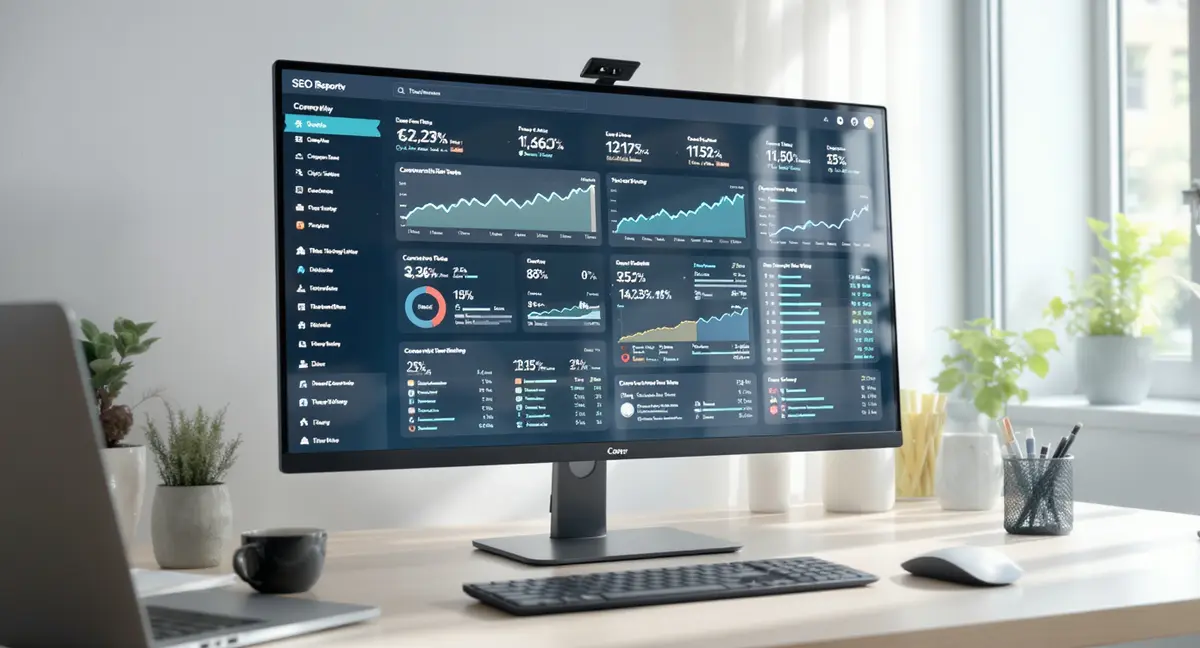
The short answer: An SEO reporting platform should track metrics that connect to revenue, not vanity numbers like domain authority. The best platforms measure organic leads, conversions by traffic source, and AI search citations with clear revenue attribution. Success in this space comes down to revenue-connected metrics, data ownership, and AI search visibility. Only 8% of marketers feel confident measuring SEO ROI, largely because most platforms hide the metrics that actually matter.
Most businesses pay thousands per month for SEO services and get reports that look impressive but reveal nothing about whether the work is generating revenue. An SEO reporting platform should answer one question: is this investment producing leads and sales? Instead, most platforms bury that answer under vanity metrics like impressions and domain authority scores that have no direct connection to your bottom line. Local seo is worth reading alongside this.
The reporting problem runs deeper than bad dashboards. Only 8% of marketers feel confident they can measure SEO ROI (Firework, 2025). That's not because SEO is unmeasurable. It's because most reporting tools are designed to make agencies look busy rather than help businesses understand what's working. When you can't connect the dots between content, traffic, and revenue, you're flying blind with a $36,000+ annual budget.
What matters is what actually matters: leads from organic traffic tracked to revenue. Keyword rankings for commercial-intent terms that drive customers. Content citations in AI search platforms like ChatGPT and Perplexity, where 50% of Google queries now trigger AI Overviews (DemandSage, 2025). This article breaks down what a functional SEO reporting platform should track, what to ignore, and how to stop paying for reporting theater that hides whether your SEO investment is working.
What an SEO Reporting Platform Needs to Track
A functional SEO reporting platform connects content performance to business outcomes. That means tracking metrics that predict revenue, not just traffic. The gap between what most platforms report and what business owners need is the difference between knowing your site got 10,000 impressions last month and knowing whether those impressions turned into paying customers.
Revenue-Connected Metrics vs. Vanity Numbers
Revenue metrics tell you what's working. Organic traffic to high-intent pages. Form submissions and phone calls from organic visitors. Lead-to-customer conversion rates by traffic source. Customer acquisition cost for organic leads compared to paid channels. These numbers connect directly to growth. If your SEO reporting platform doesn't surface these metrics in the first view, it's designed for the wrong audience.
Vanity metrics make reports look good but don't predict revenue. Total impressions can be inflated by irrelevant queries. Domain authority is a third-party metric, not a Google ranking factor. Backlink counts without quality context mean nothing, ten links from industry publications outperform 1,000 directory listings. Most platforms emphasize these numbers because they're easier to move than actual revenue metrics. Data from HubSpot's State of Marketing 2024 shows companies that blog get 55% more website visitors, but visitors without conversion infrastructure just mean more wasted traffic.
Leading Indicators That Predict Future Performance
Leading indicators show whether your content strategy is building momentum. Month-over-month organic traffic growth to commercial pages. Keyword rankings for terms with clear buyer intent, someone searching "best CRM for real estate" is closer to purchase than someone searching "what is CRM." Click-through rates from search results tracked in Google Search Console. Content indexing speed and coverage issues that might block visibility.
The new critical metric: AI search citations. With AI search adoption doubling from 14% to 29% in six months (Exposure Ninja, 2025), businesses need to track whether their content appears in ChatGPT responses, Perplexity citations, and Google AI Overviews. An SEO reporting platform that only tracks traditional Google rankings is missing half the picture. Brands cited in AI Overviews get 35% more organic clicks (Dataslayer, 2025), but most reporting tools don't track this yet.
Why Most SEO Reporting Platforms Are Built for Agencies, Not Business Owners
Most SEO reporting platforms are designed to make agencies look productive, not help businesses measure ROI. The incentive structure is simple: agencies need to justify monthly retainers. Reports that show lots of activity, rankings tracked, pages crawled, links built, serve that goal. Reports that show whether the activity produced revenue would reveal that most SEO work doesn't have a measurable impact for months, if ever.
The Data Ownership Problem
When agencies control the reporting platform, they control what you see. Most agency dashboards filter data through their own tools and interfaces. You get a curated view of performance, not raw access to Google Search Console or Analytics. When the relationship ends, the reporting history often disappears with it. That's not an accident, it's a retention mechanism.
What businesses should demand: direct access to Google Search Console and Google Analytics, both free tools owned by you. Raw data exports, not just dashboard screenshots. Clear documentation of what was done each month and why. Any SEO reporting platform worth using should connect to your data sources, not replace them. If an agency refuses to give you admin access to your own Search Console, they're gatekeeping your data. The 38% annual churn rate at SEO agencies (Focus Digital, 2025) exists partly because clients can't evaluate performance when they don't own the data.
Activity Metrics vs. Outcome Metrics
Activity metrics measure what was done. Pages optimized. Keywords researched. Content published. Links acquired. These numbers fill monthly reports and create the appearance of progress. The problem: activity doesn't equal results. Publishing 20 articles that get no traffic and generate no leads is worse than publishing 5 that convert.
Outcome metrics measure what happened as a result. Organic traffic to money pages. Leads generated from organic search. Revenue attributed to organic channels. Time to first lead from new content. Consider a typical scenario: an agency reports "ranked 47 new keywords this month." Sounds impressive. But if those keywords have no search volume or commercial intent, the activity produced zero business value. An SEO reporting platform built for business owners would show the revenue impact of those rankings, not just the rankings themselves.
Common Reporting Failures That Hide Poor Performance
Bad reporting doesn't just fail to show results, it actively obscures them. Agencies and platforms use specific tactics to make underperformance look acceptable. Recognizing these patterns helps you evaluate whether your SEO reporting platform is designed to inform or to deflect.
Cherry-Picked Date Ranges and Selective Metrics
Date range manipulation is the easiest way to hide declining performance. A report showing "20% traffic increase" might compare this month to a historically slow month last year, not to the previous month or quarter. Seasonal businesses see this constantly, comparing December to July makes any retail site look like it's crushing it, even if December-to-December growth is flat or negative.
Selective metric reporting shows only the numbers that look good. A report might highlight "150,000 impressions" while burying the fact that click-through rate dropped 40% and actual visits declined. Or it shows "500 new backlinks" without mentioning that most are low-quality directory spam that Google ignores. A functional SEO reporting platform should show trends over consistent time periods and surface declining metrics as prominently as growing ones. If your reports only ever show green arrows, you're not getting the full picture.
Technical Jargon That Obscures Meaning
Jargon serves two purposes: demonstrating expertise and hiding lack of results. Reports filled with "domain authority increased 3 points" and "technical debt remediation in progress" sound sophisticated but say nothing about business impact. Domain authority isn't a Google metric, it's a third-party score that has no direct connection to rankings or revenue.
Consider a business owner reviewing a report that says "implemented structured data markup across 47 pages." That's activity. The outcome version: "structured data implementation resulted in rich snippets for 12 commercial pages, increasing CTR from 3.2% to 5.8% and generating 47 additional leads last month." One version hides behind technical terminology. The other connects the work to measurable business results. An SEO reporting platform should translate technical work into business language, not use complexity as camouflage.
What a Business-Focused SEO Reporting Platform Looks Like
A reporting platform built for business owners, not agencies, prioritizes clarity and accountability. It connects content performance to revenue. It surfaces problems before they become crises. It provides enough context to make decisions without requiring an SEO degree to interpret the data. White label essentials is worth reading alongside this.
| Factor | What it is | Impact |
|---|---|---|
| Revenue-Connected Metrics | Organic leads, conversions, customer acquisition cost by channel | Shows whether SEO produces measurable business results |
| Data Ownership | Direct access to Google Search Console and Analytics, not curated dashboards | Prevents gatekeeping; enables performance evaluation when changing vendors |
| AI Search Visibility | Tracking citations in ChatGPT, Perplexity, and Google AI Overviews | Captures visibility in platforms handling 29% of searches; brands cited get 35% more clicks |
| Outcome vs. Activity Metrics | Results (leads, revenue) instead of activity (pages optimized, links built) | Reveals true ROI; 47 ranked keywords with no intent equals zero business value |
Revenue Attribution and Lead Tracking
Revenue attribution connects organic traffic to actual sales. This requires integration between your SEO reporting platform and your CRM or sales system. At minimum, you need to see: leads generated from organic search by source page, conversion rates for organic traffic vs. other channels, revenue attributed to organic leads, and customer acquisition cost by channel.
Most platforms stop at traffic numbers. They'll show you that a blog post got 2,000 visits but not whether those visits turned into customers. Businesses that blog generate 126% more leads (DemandSage, 2025), but only if the content is designed for conversion and the reporting tracks it. SEO leads close at 14.6% vs. 1.7% for outbound (Search Engine Journal), which means organic traffic is worth more per visit than cold outreach, but only if you're measuring it.
AI Search Visibility Tracking
Traditional SEO reporting platforms track Google rankings. That's half the story now. With Perplexity queries growing 239% year-over-year (SeoProfy, 2025) and ChatGPT reaching 800 million weekly users (Views4You, 2025), businesses need to know whether their content is being cited by AI systems. This means tracking: presence in Google AI Overviews, citation rates in Perplexity and ChatGPT responses, and voice search answer rates for commercial queries.
Most businesses don't track this yet because most tools don't support it. But early adopters are seeing results, companies optimizing for AI search report 800% year-over-year traffic growth from large language models (BrightEdge, 2025). AI-sourced visitors convert at 27% compared to 2.1% from traditional search (SingleGrain, 2025). An SEO reporting platform that doesn't track AI visibility is reporting on yesterday's search space, not today's.
Ready to take the next step with Strategyc?
Our team is ready to help you achieve your goals. Get Your Free Scan.
How Industry Leaders Use SEO Reporting Platforms Differently
High-performing businesses use reporting platforms as decision tools, not just progress trackers. They connect content performance to strategic priorities. They use data to kill underperforming initiatives as quickly as they scale winners. The difference isn't access to better tools, it's how they use the data.
Content Performance Analysis That Drives Publishing Decisions
Advanced users analyze content performance to determine what to publish next. They track: which topics generate the most qualified leads, not just the most traffic; time-to-rank for new content by topic category; content decay rates, how quickly traffic drops after initial publication; and internal linking patterns that move visitors from educational content to commercial pages.
In a typical scenario, a B2B software company might notice that "how-to" content drives high traffic but low conversion, while "comparison" content drives less traffic but 5x more demo requests. That finding shifts the content strategy toward more comparison and evaluation content. Most businesses publish based on keyword volume alone, which is why they end up with high-traffic content that generates no revenue. An SEO reporting platform should make these patterns visible without requiring manual spreadsheet analysis.
Competitive Visibility Gaps and Opportunity Identification
Sophisticated users track where competitors appear and they don't. This includes: keywords where competitors rank in top 3 and you don't appear in top 20; AI Overview presence, topics where competitors are cited and you're not; content gaps where competitors have complete coverage and you have nothing. This isn't about copying competitors. It's about identifying where you're invisible on topics that matter to your customers.
Research from Princeton and Georgia Tech (KDD, 2024) shows that techniques like structured data, clear section formatting, and expert attribution improve AI visibility by 30-40%. Businesses tracking these metrics can see which content formats work and scale them. Most businesses only discover they've lost visibility when leads dry up. A functional SEO reporting platform surfaces these gaps while there's still time to fix them. If you want the practical breakdown, White label seo reporting is a good next step.
The Future of SEO Reporting Platforms and AI Search Integration
SEO reporting platforms are being forced to evolve or become irrelevant. The shift from traditional search to AI-mediated answers is happening faster than most tools can adapt. Platforms that only track Google rankings are measuring a shrinking piece of total search behavior. The next generation of reporting will need to track visibility across multiple AI systems, not just traditional search engines.
Multi-Platform Visibility Becomes the Standard
Within 24 months, full SEO reporting platforms will track visibility across Google Search, Google AI Overviews, ChatGPT, Perplexity, Claude, and voice assistants. The technical challenge is meaningful, these platforms don't offer official APIs for citation tracking. Early movers are using proxy metrics: monitoring branded queries, tracking referral traffic from AI platforms, and using test queries to measure presence.
The business impact is already visible. With 61% drop in organic click-through rates from AI Overviews (DemandSage, 2025), businesses need to know whether they're being cited or bypassed. AI search adoption doubled in six months during 2026 (Exposure Ninja, 2025). Any SEO reporting platform that doesn't track this shift is showing you data about a search space that's already obsolete. The question isn't whether to track AI visibility, it's whether your reporting platform can do it yet.
Real-Time Performance Tracking Replaces Monthly Reports
Monthly reporting cycles made sense when SEO changes took months to show impact. AI search moves faster. A piece of content can start appearing in AI Overviews within days of publication. Real-time dashboards will become standard, showing: immediate indexing status and crawl issues; AI citation tracking within 24-48 hours of publication; traffic and conversion data updated daily, not monthly; and automated alerts when performance drops below thresholds.
This shift benefits businesses that want to own their data infrastructure. Real-time dashboards connected to Google Search Console and Analytics eliminate the information delay that agencies use to control the narrative. When you can see performance data the same day, you don't need to wait for a monthly report to know whether something is working. Platforms like Strategyc's Content & Visibility Engine approach this by installing reporting systems that businesses own, not rent through agency dashboards.
Choosing an SEO Reporting Platform: What Matters
Selecting an SEO reporting platform comes down to ownership, integration, and clarity. Can you access your data directly, or only through a vendor's dashboard? Does it connect to your CRM and sales data, or stop at traffic numbers? Can a non-technical business owner understand the reports, or do they require an SEO specialist to interpret?
Owned Data Access vs. Vendor Lock-In
The most important question: do you own the data, or does the platform? Tools that require you to log into their system to see your performance are renting you access to your own information. If the relationship ends, your historical data often disappears. This is why direct integration with Google Search Console and Google Analytics matters, those are free tools you own permanently.
Vendor lock-in extends beyond data access. Some platforms require proprietary tracking codes or redirect your URLs through their systems. If you leave, you lose historical tracking. Others use their own metrics (domain authority, proprietary "SEO scores") that can't be replicated elsewhere. A business-focused SEO reporting platform should strengthen your access to standard metrics, not replace them with proprietary alternatives. The 38% annual churn at SEO agencies (Focus Digital, 2025) means most businesses will change providers, choose tools that don't erase your history when you do.
Integration Depth and Revenue Attribution Capabilities
An SEO reporting platform that doesn't connect to your CRM or sales system can't answer whether SEO is producing revenue. Integration requirements include: form submission tracking with source attribution; phone call tracking by landing page; CRM integration to track lead-to-customer conversion by source; and e-commerce integration for direct revenue attribution. SEO checklist is worth reading alongside this.
Most platforms stop at Google Analytics integration, which shows traffic but not closed deals. The gap between a visitor and a customer is where most SEO ROI gets lost. Content marketing returns $3 for every $1 invested vs. $2 for PPC (Genesys Growth, 2025), but only if you're tracking the full funnel. Consider whether you need a standalone reporting platform or an installed system that connects content production to performance tracking. The difference is whether you're measuring activity or outcomes.
What This Means for Your Business
The right SEO reporting platform should answer one question clearly: is this investment producing customers? If your current reporting doesn't connect content to revenue, you're measuring the wrong things. With AI search reshaping how people find businesses and 50% of Google queries now triggering AI Overviews (DemandSage, 2025), reporting that only tracks traditional rankings is already outdated.
Three things matter: direct access to your data through Google Search Console and Analytics, not filtered through an agency dashboard. Revenue attribution that connects organic traffic to actual sales. AI visibility tracking to measure whether your content appears in ChatGPT, Perplexity, and AI Overviews. If your current SEO reporting platform doesn't provide these, you're flying blind with a meaningful budget.
Find out where you actually stand. Book a 30-minute Content & Visibility Scan to see how your business appears in Google, AI search, and voice search. No commitment, no pressure, just a clear picture of your current visibility and what to fix first.
Frequently Asked Questions
What metrics should an SEO reporting platform track for business owners?
Focus on revenue-connected metrics: leads from organic traffic, conversion rates by source, customer acquisition cost for organic leads, and keyword rankings for commercial-intent terms. Avoid vanity metrics like total impressions or domain authority that don't predict revenue. Track AI search citations in ChatGPT, Perplexity, and Google AI Overviews.
How do I measure ROI from organic content if my current platform doesn't track it?
Connect Google Analytics to your CRM to track lead source attribution. Use UTM parameters on internal links to identify which content drives conversions. Track form submissions and phone calls by landing page. Calculate customer acquisition cost for organic leads vs. paid channels. Only 8% of marketers feel confident measuring SEO ROI (Firework, 2025) because most platforms don't surface this data by default.
Can I build SEO reporting infrastructure in-house instead of using a platform?
Yes, if you have direct access to Google Search Console, Google Analytics, and your CRM. The technical challenge is connecting these data sources and building dashboards that surface business-relevant metrics. Most businesses either pay for a platform or work with a system installer that builds owned infrastructure. The key is ensuring you control the data and reporting, not a vendor.
Why don't most SEO reporting platforms track AI search visibility?
AI platforms like ChatGPT and Perplexity don't offer official APIs for citation tracking yet. Most traditional reporting tools were built for Google rankings and haven't adapted to multi-platform search. Early adopters are using proxy methods: monitoring branded queries, tracking referral traffic, and running test queries. With AI search adoption doubling in six months (Exposure Ninja, 2025), this gap won't last long.
What's the difference between an agency dashboard and an owned reporting system?
Agency dashboards filter your data through their tools and interfaces. You see what they choose to show. When the relationship ends, access often disappears. An owned system connects directly to Google Search Console, Analytics, and your CRM, you control the data permanently. The 38% annual churn at SEO agencies (Focus Digital, 2025) means most businesses will change providers. Choose infrastructure you keep.