Why Most Roofing Contractors Lose Local Search Leads (And How to Fix It)
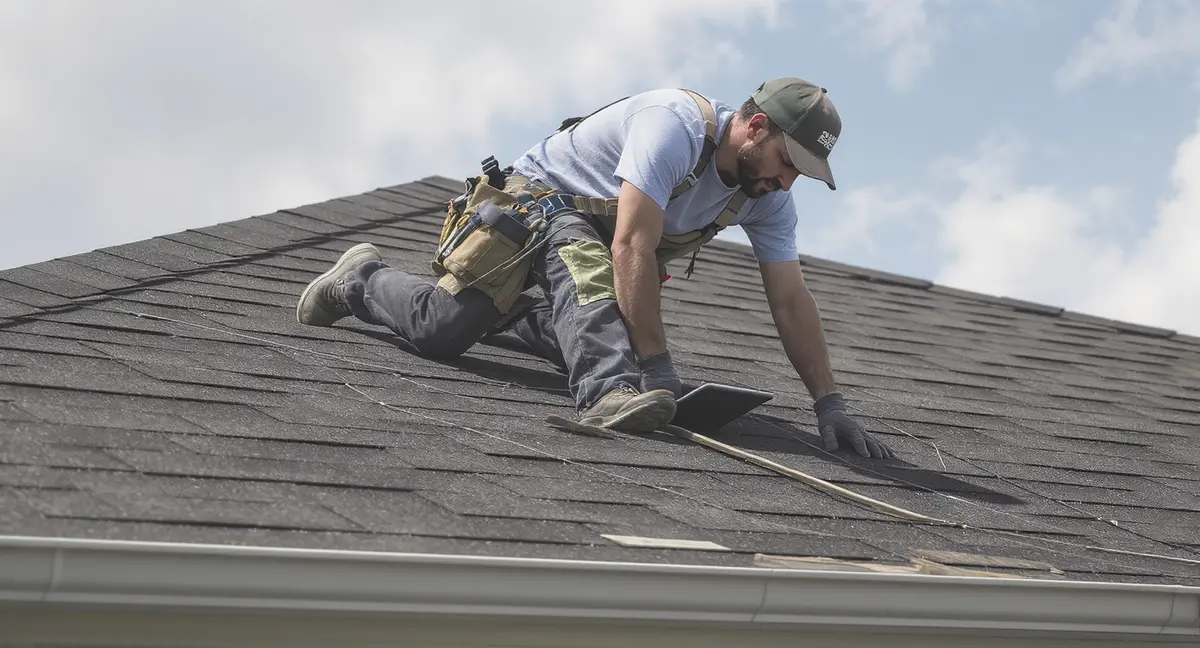
The short answer: Roofing contractor SEO is the practice of optimizing your online presence to capture local search leads when homeowners search for emergency repairs or replacements. The roofing SEO strategy focuses on local relevance, AI citation authority, and Google Business Profile dominance. Success hinges on geographic precision, content depth demonstrating expertise, and owned infrastructure rather than agency dependency. According to BrightLocal, 76% of local searches lead to a phone call within 24 hours.
Your roofing business could be invisible where it matters most. When a homeowner searches "roof repair near me" at 11 PM after spotting a leak, roofing contractor SEO determines whether your phone rings or your competitor's does. BrightLocal found that 76% of local searches lead to a phone call within 24 hours. If you're not showing up in Google, AI search answers from ChatGPT and Perplexity, or voice search results from Siri and Alexa, you're losing three out of four potential customers before they even know you exist. Future of SEO is worth reading alongside this.
The roofing industry faces a visibility crisis. National franchises, directories like Angi and HomeAdvisor, and the handful of contractors who invested early in search optimization dominate local results. According to Local SEO Bot, roofing companies using strategic SEO see 300% more leads than those relying on referrals alone. Yet most contractors still treat online visibility as an afterthought, paying agencies $1,000 to $5,000 monthly for services they can't measure or control.
This article breaks down how roofing contractor SEO works in 2026, when AI systems are reshaping how homeowners find contractors. You'll see why seasonal search patterns, local competition dynamics, and AI-driven answer engines require a different approach than generic SEO advice. More importantly, you'll learn what it takes to own your visibility infrastructure instead of renting it month to month from an agency that gatekeeps your data.
How Roofing Contractor SEO Differs From Standard Local SEO
Roofing contractor SEO operates under constraints most industries don't face. Homeowners don't casually browse roofing services. They search during emergencies, after storms, when they spot damage, or when a leak forces immediate action. This urgency changes everything about how search optimization must work.
Emergency Search Patterns and Seasonal Demand Spikes
Storm seasons create massive search volume spikes that standard SEO strategies can't handle. A contractor ranking on page two during calm weather gets zero calls when a hailstorm hits and search volume explodes 400%. Your content infrastructure needs to be in place months before peak season hits, not scrambled together when leads are already flowing to competitors.
Roofing contractor SEO requires content that addresses both emergency scenarios and long-term planning. Homeowners searching "emergency roof repair" need different information than those researching "roof replacement cost." Your site must serve both audiences without diluting authority on either topic. This means building topical clusters around emergency response, insurance claims, material selection, and preventive maintenance rather than thin service pages that repeat the same keywords.
Geographic Precision Beyond City-Level Targeting
Service area boundaries determine your revenue, not arbitrary city limits. A roofing contractor in Dallas might serve 30 distinct neighborhoods, each with different home ages, roof types, and storm exposure patterns. Generic city-level SEO leaves money on the table.
Effective roofing contractor SEO targets neighborhood-specific searches. Someone in Highland Park searches differently than someone in Oak Cliff, even though both are Dallas residents. They use different landmarks, mention different zip codes, and care about different architectural details. Your content needs to reflect this granularity. Neighborhood landing pages, suburb-specific service descriptions, and locally-tagged photos signal to Google and AI systems that you actually operate in these areas, not just stuff keywords into generic templates.
The AI Search Problem Every Roofing Contractor Faces in 2026
Homeowners aren't starting their roofing searches on Google anymore. They're asking ChatGPT "who are the best roofers near me" or telling Siri "find emergency roof repair." AI systems answer these queries by citing 3 to 5 sources they consider authoritative. If your business isn't in that group, you don't exist to that customer. If you want the practical breakdown, AI SEO is a good next step.
How AI Overviews Are Stealing Roofing Leads
Google's AI Overviews now appear in 50% of searches, according to DemandSage. These AI-generated answers sit above traditional organic results, causing a 61% drop in click-through rates for standard listings. When someone searches "how much does roof replacement cost," Google's AI pulls data from sources it trusts and displays an answer box. The homeowner gets their information without clicking through to your site.
This shift hits roofing contractors harder than most industries. Emergency searches drove immediate clicks. Now AI provides enough information for homeowners to narrow their options before visiting any contractor's site. The contractors who get cited in AI answers capture the leads. Everyone else waits for scraps. Research from Princeton and Georgia Tech found that structured content with clear sections, schema markup, and factual density increases AI citation rates by 30 to 40%. Your content either feeds these systems or gets ignored by them.
Voice Search and the Zero-Click Roofing Query
Voice search creates zero-click queries where the AI assistant reads an answer aloud and the conversation ends. A homeowner asks Alexa "what causes roof shingles to curl" while inspecting their roof. Alexa reads a 30-second answer sourced from a contractor's FAQ page. The homeowner never opens a browser, but they just learned that contractor's name and expertise.
Voice search optimization for roofing contractor SEO means writing content that AI assistants can extract and read naturally. Short paragraphs, clear topic sentences, and direct answers to common questions make your content voice-friendly. The contractor whose content gets read aloud becomes the authority in that homeowner's mind, even if no website visit occurs. When that homeowner is ready to call, they remember the name Alexa mentioned.
What Drives Rankings for Roofing Contractors
Google's algorithm for local service businesses prioritizes three factors: relevance, distance, and prominence. Every roofing contractor SEO strategy either strengthens these signals or wastes effort on tactics that don't move rankings.
| Factor | What it is | Impact |
|---|---|---|
| Google Business Profile Optimization | Complete profiles with photos, weekly posts, rapid review responses | Controls local map pack visibility and relevance signals |
| Content Depth and Expertise Signals | 2,500+ word guides, project specifics, local code details | Ranks against thin pages; feeds AI citation systems |
| Geographic Precision Targeting | Neighborhood-level landing pages, zip codes, local landmarks | Captures hyper-local searches; outperforms city-level targeting |
| AI Content Structure | Clear sections, schema markup, factual density | Increases AI Overview citation rates by 30-40% |
| Owned Infrastructure | Self-hosted site, owned workflows, retained performance data | Protects visibility; eliminates agency dependency risk |
Google Business Profile Optimization as Foundation
Your Google Business Profile controls whether you appear in the local map pack, the three-business cluster that dominates mobile search results. Incomplete profiles, inconsistent business information, or sparse review activity kill your map pack chances before content quality even matters.
Complete every field in your profile. Upload photos of completed projects with geographic tags showing the neighborhoods you serve. Post weekly updates about recent jobs, seasonal tips, or storm preparation advice. Respond to every review within 24 hours, using natural language that includes location details. A roofing contractor who posts "Just completed a GAF Timberline installation in Lakewood" signals more local relevance than one who posts "Great roofing work today." These signals compound. Consistent activity over six months builds authority that new competitors can't match in weeks.
Content Depth That Demonstrates Roofing Expertise
Thin service pages don't rank anymore. A 300-word "Roof Repair" page competes against 2,500-word guides that explain repair types, material options, cost factors, and when replacement makes more sense than patching. Google's Helpful Content Update specifically targets shallow content that exists only to rank for keywords. Best ecommerce essentials is worth reading alongside this.
Roofing contractor SEO requires content that demonstrates first-hand expertise. Write about specific projects, explain why you recommended certain materials, detail how local building codes affect installations. Include photos of your crew working, not stock images of generic roofers. Answer the questions homeowners actually ask: "Can you replace a roof in winter?" "How long does insurance claim processing take?" "What's the difference between architectural and 3-tab shingles?" This depth signals to Google's E-E-A-T framework that you have genuine experience, not just keyword-stuffed pages.
The Hidden Costs of Agency Dependency
Most roofing contractors pay agencies $1,500 to $4,000 monthly for SEO services they can't measure or verify. The agency promises "improved rankings" and "more organic traffic," delivers monthly reports full of charts, and the contractor has no idea if they're getting value or being strung along.
Why 38% of Contractors Leave Their SEO Agency Annually
Focus Digital's research shows 38% annual churn at SEO agencies. Contractors leave because they can't connect spending to revenue, can't get straight answers about what's being done, or realize they own nothing when the relationship ends. The agency controls the content, the keyword strategy, the backlink profile, and the reporting dashboard. When you stop paying, everything stops.
This dependency model fails roofing businesses specifically because seasonal revenue requires year-round visibility work. You can't pause SEO in December and restart in March when storm season approaches. Rankings take months to build and days to lose. An agency relationship that ends in January leaves you scrambling to rebuild visibility by April when search volume spikes. You're starting from zero because the agency owned the system, not you.
What You Own After 12 Months of Agency SEO
Ask your agency what you keep if you stop paying. Most contractors discover they own nothing. The blog posts live on the agency's content management system. The keyword research stays in the agency's tools. The backlink outreach contacts belong to the agency. The conversion tracking runs through the agency's analytics setup. You've spent $18,000 to $48,000 over 12 months and own zero infrastructure.
Compare this to owned content systems. A roofing contractor who installs a publishing infrastructure owns the WordPress site, the content workflows, the AI optimization templates, and the performance data. The system keeps producing after the installation engagement ends. Content published in month six still drives leads in month 18. That's infrastructure, not a service subscription. Platforms like Strategyc's Content & Visibility Engine build this kind of owned system rather than offering monthly retainers that create perpetual dependency.
Ready to take the next step with Strategyc?
Our team is ready to help you achieve your goals. Get Your Free Scan. If you want the practical breakdown, Seo optimization consultant is a good next step.
Building a Roofing Content System That Compounds
Content marketing for roofing contractor SEO works when you publish consistently on topics that matter to homeowners at different stages of need. One-off blog posts don't move rankings. A systematic approach to content creation does.
Topic Clusters That Cover the Roofing Decision path
Homeowners move through predictable stages: problem awareness, solution research, contractor evaluation, and decision. Your content needs to serve each stage. Someone discovering a leak needs different information than someone comparing GAF versus Owens Corning shingles versus someone deciding between three contractor bids.
Build content clusters around these stages. A "Roof Damage" cluster might include articles on identifying hail damage, understanding wind damage patterns, and knowing when repair versus replacement makes sense. A "Materials Selection" cluster covers shingle types, warranty differences, and cost-to-value comparisons. A "Contractor Selection" cluster addresses licensing verification, insurance requirements, and red flags in roofing estimates. Each cluster establishes topical authority that generic "roofing tips" posts never achieve. Google and AI systems recognize this depth and cite it more frequently.
Seasonal Content Calendars That Match Search Patterns
Roofing search volume follows weather patterns. Storm preparation content needs to publish before storm season, not during it. Insurance claim guidance should go live when hail forecasts appear. Winter roofing articles should publish in November, not February when search volume already peaked.
Plan content six months ahead based on your market's seasonal patterns. A Dallas roofer publishes hail preparation content in February and March before spring storm season. A Minnesota roofer publishes winter damage prevention in September before snow arrives. This timing means your content ranks when homeowners start searching, not after your competitors already captured the leads. Roofing contractor SEO requires this kind of strategic calendar planning, not random blog posts whenever someone has time to write.
Why Most Roofing Contractors Should Skip Link Building
Every generic SEO guide tells you to build backlinks. For roofing contractors, this advice wastes time and money. Local service businesses don't need the same backlink profile as national brands or content publishers.
Local Citations Matter More Than Guest Posts
A backlink from a national home improvement blog doesn't help you rank in Plano, Texas. A citation in the Plano Chamber of Commerce directory does. Local citations, mentions of your business name, address, and phone number on local directories, industry associations, and community sites, signal geographic relevance to Google.
Focus citation efforts on sources that matter: your local Better Business Bureau, chamber of commerce, manufacturer partner directories (GAF, CertainTeed, Owens Corning), and roofing industry associations. These citations reinforce that you're a legitimate local business, not a fly-by-night operation. They also appear in AI search results when homeowners ask for "licensed roofers in your area." Spending time on generic directory submissions or chasing backlinks from irrelevant blogs dilutes effort that should go toward content and local visibility.
Review Velocity Beats Link Velocity
New reviews signal business activity more effectively than new backlinks. A roofing contractor earning five reviews monthly shows Google they're actively serving customers. Stale review profiles suggest the business is declining or inactive, regardless of how many backlinks exist.
Build a review generation system that asks every satisfied customer for feedback. Send follow-up texts three days after project completion with a direct link to your Google Business Profile. Respond to every review, positive or negative, within 24 hours. These responses get indexed by Google and read by AI systems. A thoughtful response to a complaint demonstrates customer service and provides keyword-rich content that reinforces your expertise. Review activity compounds faster than link building and costs nothing but time. Wordpress seo consultant is worth reading alongside this.
The Bottom Line on Roofing Contractor SEO
Roofing contractor SEO in 2026 means optimizing for AI systems, building owned content infrastructure, and establishing local authority through consistent expertise demonstration. The contractors who treat visibility as rented services stay dependent on agencies and lose ground when budgets tighten or relationships end. The contractors who build owned systems compound results over years, not months.
Three priorities matter most: optimize your Google Business Profile with complete information and weekly activity, publish in-depth content that demonstrates genuine roofing expertise across the decision process, and generate consistent review activity that signals business health. These fundamentals drive more leads than chasing backlinks, buying directory listings, or paying agencies for opaque monthly services.
Stop renting your visibility. Find out where your business currently stands in Google, AI search, and voice search. to see how homeowners in your market find roofing contractors right now and what it takes to show up where they're actually searching.
Frequently Asked Questions
How long does roofing contractor SEO take to show results?
Most roofing contractors see measurable ranking improvements within 4 to 6 months of consistent content publishing and local optimization. Competitive markets may take 8 to 12 months to break into top positions. Results compound over time as content authority builds.
Can I build roofing contractor SEO infrastructure in-house?
Yes, if you have someone who can write detailed roofing content, manage technical site elements, and maintain publishing consistency. The challenge isn't capability but time. Most contractors lack bandwidth to publish weekly while running operations. Owned systems solve this by installing workflows that don't require ongoing expert involvement.
What does it take to own my visibility infrastructure instead of renting it?
Ownership requires control over your content management system, keyword strategy, performance tracking, and publishing workflows. This means WordPress or similar platforms on your hosting, content templates you can replicate, and analytics dashboards you access directly. When the system lives on your infrastructure, you keep producing content after any external engagement ends.
How do I measure ROI from roofing contractor SEO?
Track phone calls from organic search using call tracking numbers on your site, monitor form submissions through Google Analytics goal tracking, and measure ranking positions for your core service and location keywords monthly. Compare lead volume and cost per lead against paid advertising channels to assess relative performance.
Does roofing contractor SEO work for small service areas?
Small service areas often present easier SEO opportunities because competition is lower and local signals carry more weight. A contractor serving three suburbs can dominate those specific areas faster than competing across an entire metro. Geographic precision matters more than service area size.