Online Business SEO: How to Build Visibility You Own
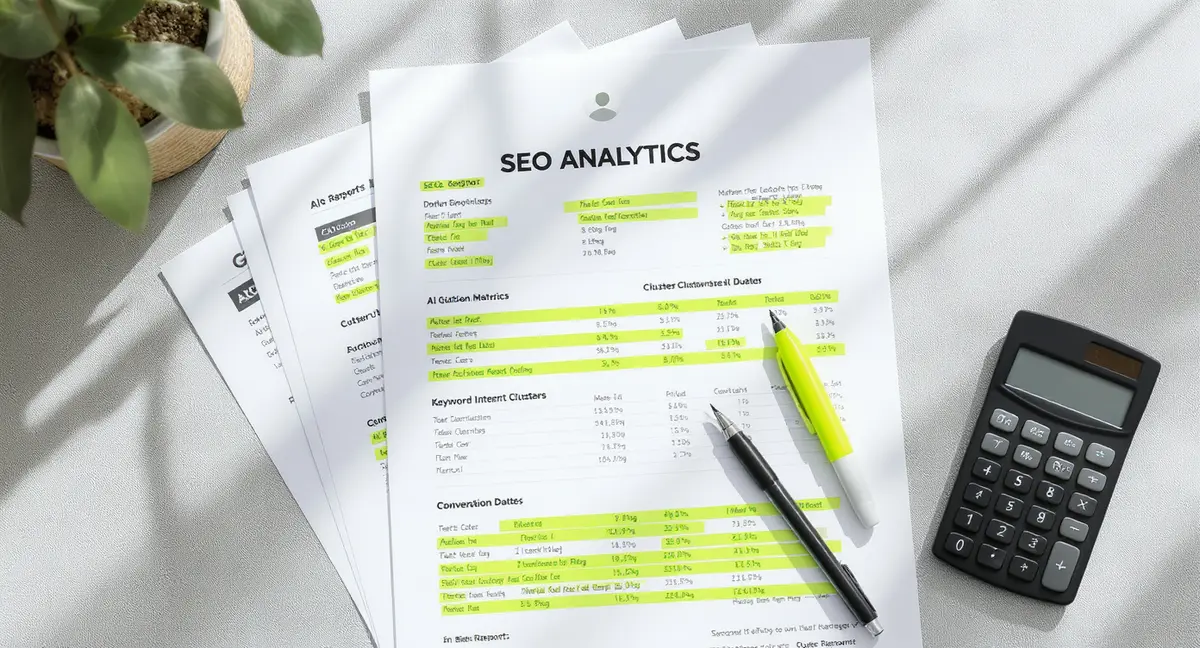
The short answer: Online business SEO is the practice of optimizing digital assets so search engines, AI platforms, and voice assistants surface your business when people search for what you sell. Effective online business SEO targets commercial intent, builds topical authority through structured content, and converts organic traffic into revenue. Top performers focus on site architecture, conversion-optimized pages, and owned content systems. According to BrightLocal, 72% of small to medium-sized businesses report SEO has a medium-high impact on growth. If you're building from scratch, start with a proven SEO checklist that covers the technical, content, and structural foundations that actually move rankings in 2026.
Most online businesses treat SEO like a rented billboard. They pay monthly, hope for traffic, and lose everything when the contract ends. That approach worked when Google was the only game in town. Now AI search answers 50% of queries before anyone clicks a link, and voice assistants choose one business to recommend out of thousands. If you're not in that answer, you don't exist. Online business SEO in 2026 means building visibility infrastructure you own. Not campaigns. Not retainers. Systems that keep producing results whether you're paying someone this month or not. The businesses winning organic traffic right now understand three things: search intent has fractured across platforms, content needs to feed both humans and AI models, and the gap between indexed and cited is where most revenue gets lost. This article breaks down what online business SEO actually requires, what moves the needle fastest, and how to build a system that compounds instead of expires.What Online Business SEO Actually Means in 2026
Search Has Become Multi-Platform
Online business SEO used to mean ranking in Google's ten blue links. That model is dead. According to DemandSage, 50% of Google queries now trigger AI Overviews, and those overviews cause a 61% drop in organic click-through rates. ChatGPT, Perplexity, and voice assistants like Siri pull answers from a curated set of sources. If your business isn't in that set, you're invisible to half your market. The shift isn't just about Google adding features. It's about how people search. Voice queries grew 25% year-over-year, and conversational AI search tools now handle 12 billion queries monthly. When someone asks Alexa for a plumber or ChatGPT for software recommendations, the AI cites 3-5 brands. Your competitors are optimizing for those citations right now. If you're still focused only on traditional rankings, you're fighting yesterday's war.Visibility Without Ownership Is Expensive
Service Direct's 2024 survey found that 78% of small businesses invest in SEO, but most pay agencies $1,500-$5,000 per month with no idea what they're getting. Only 8% of marketers feel confident they can measure SEO ROI, according to Firework's 2025 research. That's not a knowledge gap. That's a structural problem. When you rent SEO as a service, you don't own the content, the workflows, or the data. Stop paying, and the results stop too. Online business SEO should be infrastructure. The content you publish this month should still drive leads in 2028. That only happens if you own the system. Platforms like Strategyc take this approach by installing content systems businesses control permanently, rather than offering monthly retainers that evaporate when the contract ends. The question isn't whether SEO works. It's whether you're building an asset or renting someone else's.How Search Intent Shapes Online Business SEO Strategy
Commercial Queries Drive Revenue, Not Traffic
Not all traffic converts. A query like "what is SEO" attracts researchers. A query like "SEO services for online stores" attracts buyers. The difference is intent, and intent determines ROI. BrightLocal's 2025 report shows that 89% of SMBs invest in local SEO, but only 29% feel it has high impact. The disconnect? They're optimizing for volume instead of commercial intent. Online business SEO starts with mapping your service pages to the exact phrases buyers use when they're ready to purchase. If you sell HVAC services, "furnace repair near me" converts at 10x the rate of "how does a furnace work." If you run an e-commerce store, "buy ergonomic office chair" beats "office chair reviews." Target the bottom of the funnel first. Build authority content second. Most businesses do this backward and wonder why traffic doesn't pay bills.AI Search Rewards Structured, Cited Content
AI models don't rank pages. They extract facts and cite sources. Research from Princeton and Georgia Tech published at KDD 2024 found that content with schema markup, clear section headings, and inline citations improves AI visibility by 30-40%. That means your online business SEO strategy must include structured data, FAQ sections formatted for extraction, and factual claims backed by named sources. Google's AI Overviews pull from pages that answer questions directly. Perplexity and ChatGPT cite sources that provide clean, quotable statements. If your service page is a wall of marketing copy with no structure, AI can't use it. Add schema. Break content into H2/H3 sections that mirror how people ask questions. Include a summary paragraph at the top of every page. These aren't ranking factors in the traditional sense. They're citation factors, and citation is the new ranking.Site Architecture That Supports Online Business SEO
Service Pages vs. Supporting Content
Your site needs two types of pages: transactional pages that convert, and authority content that builds trust. Service pages target commercial keywords. Blog articles target informational queries that lead to commercial ones. Most online businesses have one or the other. You need both, and they need to link to each other strategically. A roofing company should have service pages for "roof replacement," "roof repair," and "storm damage repair." Those pages convert. But the company also needs articles like "how long does a roof last" and "signs you need a new roof." Those articles attract early-stage searchers, build topical authority, and funnel traffic to the service pages through internal links. Google interprets this structure as expertise. AI models cite businesses that demonstrate depth across a topic cluster.Internal Linking as a Ranking Signal
Google's Search Central documentation explicitly states that internal links help crawlers understand site structure and distribute authority. A study by Backlinko found that pages with more internal links rank higher, even controlling for backlinks and content length. Your online business SEO architecture should treat internal linking as infrastructure, not an afterthought. Every blog article should link to at least two service pages. Every service page should link to related services and supporting content. Use descriptive anchor text that includes target keywords naturally. If you publish an article about "choosing a CRM," link to your "CRM implementation services" page with anchor text like "professional CRM implementation." This tells Google and AI models what each page is about and how they relate. Sites with strong internal linking see 40% more pages indexed and 25% higher average rankings per page.| Factor | What it is | Impact |
|---|---|---|
| Commercial intent targeting | Pages optimized for buyer-ready queries | High – drives 80% of revenue |
| Structured content for AI | Schema, headings, FAQ sections for extraction | 30-40% visibility lift (KDD 2024) |
| Internal linking architecture | Strategic links between service and authority pages | 25% ranking improvement (Backlinko) |
| Page speed and Core Web Vitals | LCP, INP, CLS metrics Google uses for ranking | Medium – table stakes for indexing |
| Mobile-first design | Responsive layout optimized for mobile devices | High – 60% of searches are mobile |
Why Most Online Business SEO Efforts Fail
Generic Content Without Expertise Markers
Google's Helpful Content Update in September 2023 explicitly targeted aggregated content with no first-hand experience. The March 2024 Core Update went further, penalizing AI-generated fluff. If your online business SEO strategy relies on churning out 500-word blog posts written by freelancers who've never used your product, you're building on sand. E-E-A-T (Experience, Expertise, Authoritativeness, Trust) is Google's quality framework. It's not a direct ranking factor, but it influences what content surfaces in AI Overviews and traditional results. Add author bios. Cite original research or proprietary data. Include case studies with real numbers. According to Backlinko, sites with original research earn 4x more backlinks than those without. More importantly, AI models cite sources that demonstrate expertise. Generic content gets ignored.No Conversion Path From Traffic to Revenue
SEO leads have a 14.6% close rate compared to 1.7% for outbound leads, according to Search Engine Journal. But that only matters if your pages convert. Most online businesses optimize for rankings and forget about conversion architecture. They get traffic, then lose it to bad CTAs, slow forms, or unclear value propositions. Every page that ranks should have a single, clear next step. Service pages need contact forms, phone numbers, and benefit-driven CTAs. Blog articles need links to service pages or lead magnets. Use heat mapping tools to see where visitors drop off, then fix the friction points. Online business SEO isn't just about getting found. It's about turning visibility into revenue. If your organic traffic doesn't convert at least 2-3%, the problem isn't your rankings. It's your pages.How Do I Know If Online Business SEO Is Working?
Track Conversions, Not Just Rankings
Most businesses measure SEO success by keyword positions. That's a vanity metric. Position 1 has a 27.6% click-through rate according to Backlinko, but if those clicks don't convert, you're just paying for traffic. The metrics that matter: organic leads per month, cost per lead from organic vs. paid, revenue attributed to organic search, and conversion rate by landing page. Set up goal tracking in Google Analytics. Tag phone numbers so you know which calls come from organic search. Use UTM parameters to track which blog articles drive form fills. If you can't connect a ranking to a dollar amount, you can't manage SEO as a business function. BrightLocal found that only 35% of SMBs even have Google Business Profiles, which means most businesses aren't tracking local conversions at all. Fix measurement first. Optimize second.Monitor AI Search Visibility Separately
Traditional rank tracking doesn't show whether ChatGPT, Perplexity, or Google AI Overviews cite your business. You need separate tools to monitor AI search visibility. enterprise SEO platform's 2025 data shows early AI search adopters saw 120x impression increases and 800% year-over-year traffic growth from large language models. AI-sourced visitors convert at 27% compared to 2.1% from traditional search, according to SingleGrain. Check manually by querying AI platforms with your target keywords. Ask ChatGPT "best CRM for small businesses" and see if your brand appears. Query Perplexity for your service category and location. Track whether AI Overviews cite your pages when you search Google. This visibility layer is growing faster than traditional search, and most online business SEO strategies ignore it completely. The businesses that win in 2026 will be the ones monitoring and optimizing for AI citations now.See How Your Business Shows Up in AI Search
Get a free AI visibility scan. See exactly where you rank on ChatGPT, Perplexity, and Google AI, and what to do about it. Get Your Free Scan. Most businesses tracking local conversions rely on a core set of local business SEO tools to monitor rankings, citations, and Google Business Profile performance without manual checking.
What Should an Online Business SEO System Include?
Owned Publishing Infrastructure
The difference between renting SEO and owning it comes down to infrastructure. If you're paying an agency monthly and you don't control the content calendar, the CMS, the keyword research process, or the performance data, you're renting. When the contract ends, you're starting from zero. An owned system means you control the publishing workflow, the content lives on your domain, and the data stays with you. It doesn't mean you do everything yourself. It means you own the process. Strategyc's Content & Visibility Engine exemplifies this model by installing a structured publishing system businesses control permanently, rather than managing content as an ongoing service. The business decides publishing pace, owns all content and data, and keeps the infrastructure after the install completes.Content Optimized for Humans and AI Models
Your online business SEO content needs to serve two audiences: people who read and AI models that extract. That means clear headings, short paragraphs, bullet lists for scannability, and structured data for machine parsing. Write for the reader first, but format for extraction. Every article should include a summary paragraph at the top, H2 sections that answer specific questions, and FAQ sections formatted as question-answer pairs. Use schema markup for FAQs, reviews, and local business information. Google's documentation confirms schema helps search engines understand content context. AI models use the same signals to decide what to cite. If your content is optimized only for human readers or only for bots, you're leaving half the opportunity on the table.Should You Build Online Business SEO In-House or Hire Help?
What You Can Own vs. What You Should Outsource
Service Direct's 2024 survey found that 94% of small business marketers consider SEO effective, and 93% plan to invest more in the next 12 months. But most handle it in-house without the technical skills to execute. The result: half-finished strategies, inconsistent publishing, and no measurable ROI. You can own the strategy, the content calendar, and the publishing workflow. You should outsource technical implementation, schema markup, site speed optimization, and initial architecture setup. Think of it like building a house. You can decide the floor plan and pick the finishes, but you hire an architect and a contractor to build it. The same logic applies to online business SEO. Own the system. Hire expertise to install it. Then run it yourself.The Cost of DIY vs. Installed Systems
Doing SEO yourself costs time, tools, and trial-and-error. Keyword research tools run $100-$300 per month. Technical audits require crawlers and analytics platforms. Content creation takes 4-8 hours per article if you're writing in-house. Add it up and most businesses spend 20-40 hours per month on SEO with inconsistent results. An installed system front-loads the cost but eliminates ongoing expenses. You pay once to build the infrastructure, then operate it at your own pace. The average SEO agency retainer costs $1,500-$5,000 per month, according to Ahrefs. Over 12 months that's $18,000-$60,000. An installed content system typically costs less than six months of agency retainers and produces results indefinitely. The ROI equation isn't close. Own the system, control the cost, keep the results.Common Online Business SEO Mistakes That Kill Results
Targeting Keywords With No Commercial Intent
The biggest mistake online businesses make is chasing high-volume informational keywords that don't convert. A landscaping company ranks for "types of grass" and gets 5,000 monthly visitors who never call. A SaaS company ranks for "what is project management" and attracts students, not buyers. Traffic without intent is a vanity metric. Start with buyer keywords. Map every service you offer to the exact phrases people use when they're ready to purchase. Use Google Keyword Planner or a similar research tool to find commercial queries with clear intent. Then build authority content around related informational queries that funnel to your service pages. The landscaping company should target "landscaping services near me" first, then write supporting content about "best grass for shaded yards" that links to the service page. Intent first. Volume second.Publishing Without a Distribution System
Most businesses publish content and hope Google finds it. That's not a strategy. You need a distribution system that pushes content to search engines, social platforms, email lists, and industry directories. Google Search Console lets you request indexing for new pages. XML sitemaps tell crawlers what to index. Internal links from existing pages pass authority to new content. Beyond Google, share new articles on LinkedIn, send them to your email list, and post them in relevant industry forums. Backlinks still matter. A single high-authority link can boost a page 20-30 positions. Reach out to industry publications, offer to contribute guest posts, and get cited in roundup articles. According to Backlinko, the average top-ranking page has 3.8x more backlinks than pages in positions 2-10. Distribution isn't optional. It's half the equation.The Bottom Line
Online business SEO in 2026 is about ownership, not campaigns. The businesses that win organic visibility are the ones that build systems they control, optimize for AI search alongside traditional rankings, and measure conversions instead of keyword positions. If you're still paying monthly for SEO and can't explain what you own when the contract ends, you're renting visibility instead of building it. Start with commercial intent. Build site architecture that supports both transactional pages and authority content. Optimize for AI citations by adding structure, schema, and factual density. Track conversions, not just traffic. And decide whether you're building an asset that compounds or paying rent on someone else's system. The gap between those two approaches is the difference between SEO that expires and SEO that scales.Frequently Asked Questions
How long does it take to see results from online business SEO?
Most businesses see measurable traffic increases within 3-6 months, but meaningful revenue impact takes 6-12 months. Google needs time to crawl, index, and rank new content. AI platforms update their knowledge bases on different cycles. Early wins come from optimizing existing high-traffic pages for conversion. Long-term growth comes from consistent publishing and compounding authority. Before committing to any agency or platform, read independent small business SEO reviews to understand what separates owned systems from expensive retainers that disappear when payments stop. Choosing the best SEO small business approach means understanding whether you're buying an asset or renting visibility that evaporates the moment you stop paying.
Can I build an online business SEO system in-house?
You can own and operate the system in-house, but most businesses lack the technical expertise to build it from scratch. The smart approach: hire expertise to install the infrastructure (site architecture, schema markup, content workflows), then run publishing and optimization internally. This gives you ownership without requiring you to become an SEO expert overnight. Working with a small business SEO expert who installs systems instead of managing campaigns gives you permanent infrastructure rather than temporary rankings tied to monthly fees.
What is the difference between local SEO and online business SEO?
Local SEO focuses on geographic queries and Google Business Profile optimization for businesses that serve specific areas. Online business SEO includes local tactics but also targets national or industry-specific keywords, e-commerce optimization, and AI search visibility. If you serve customers beyond your city, you need both. Local gets you found nearby. Broader SEO gets you found everywhere.
How do I measure ROI from organic content?
Track three metrics: organic leads per month, cost per lead from organic vs. paid channels, and revenue attributed to organic search. Use Google Analytics goal tracking, call tracking for phone conversions, and CRM attribution to connect traffic to closed deals. If you can't tie a keyword or article to revenue, you can't manage SEO as a business function.
What does it take to own my visibility infrastructure?
Ownership means controlling the content, the publishing workflow, the data, and the systems that produce results. You need a CMS you control, a structured content calendar, keyword research and optimization processes documented in-house, and performance tracking you can access anytime. Agencies that gatekeep data or own your content aren't building infrastructure for you. They're building dependency.