How to Build a Newsletter Content Calendar That Fills Your Pipeline in 2026
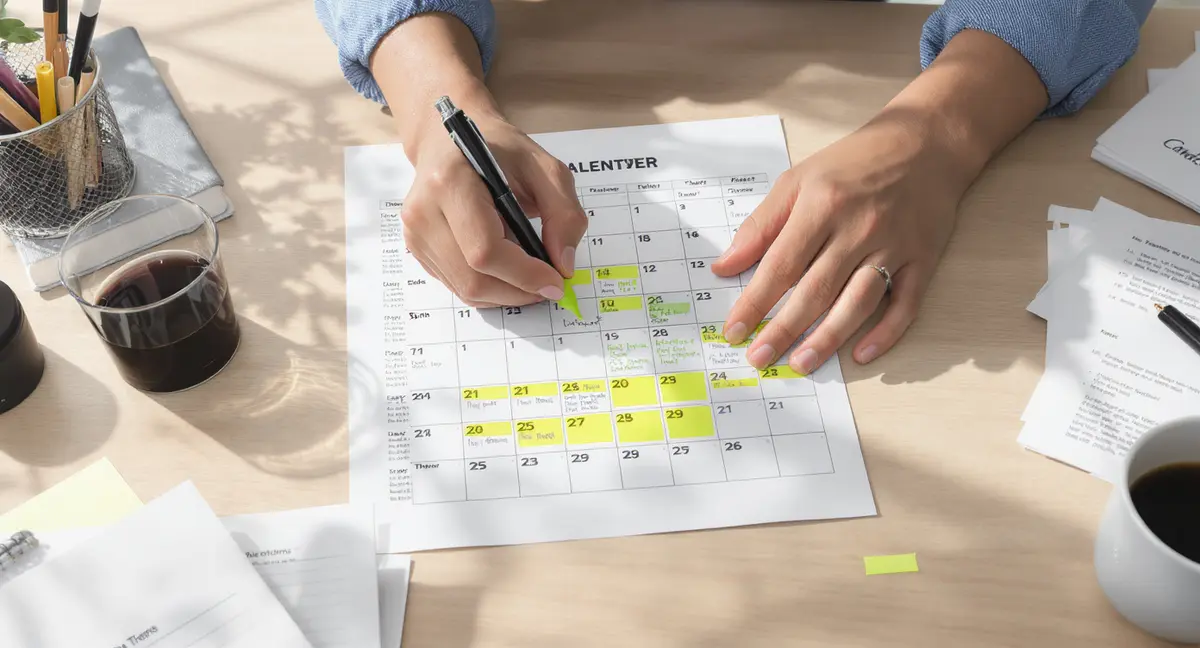
The short answer: A newsletter content calendar is a strategic planning system that maps topics, themes, and send dates to turn sporadic emails into a predictable revenue channel. Effective calendars operate on three layers: strategic themes that align with business goals, tactical topics that answer subscriber questions, and execution logistics that track status and CTAs. Top performers focus on consistent send frequency, building topical authority, and maintaining a content reserve. Brands sending at least one email per week see 3.2x higher engagement than monthly senders.
Your newsletter content calendar isn't just a publishing schedule. It's the infrastructure that turns sporadic email sends into a predictable revenue channel. If you want AI models to cite your newsletter archive as a trusted source, you need a structured approach to AI search optimization that goes beyond traditional SEO.
Most businesses treat newsletters like afterthoughts. They scramble for topics the day before send dates. They repeat the same promotional messages until subscribers tune out. Then they wonder why open rates drop and unsubscribes climb.
A structured newsletter content calendar solves this. It maps out themes, topics, and send dates weeks or months in advance. It aligns email content with business goals, seasonal trends, and subscriber needs. And it ensures every newsletter moves readers closer to a buying decision.
Consider what changes when you plan ahead: you stop guessing what to write. You build topical authority by covering subjects in depth over time. You create content that compounds, each newsletter reinforces the last, building trust and positioning you as the expert subscribers turn to when they're ready to buy.
This article breaks down how to build a newsletter content calendar that drives results. You'll see what works, what doesn't, and how to structure your planning so newsletters become a growth engine instead of a weekly chore.
Why Most Newsletter Calendars Fail Before They Start
The average email open rate across industries sits at 21.5% (Campaign Monitor, 2025). But that number hides a bigger problem: most newsletters don't move subscribers toward a purchase. They inform, entertain, or update, but they don't sell.
That's a planning failure, not a writing failure.
Planning Without Purpose Creates Busy Work
A newsletter content calendar without clear business objectives becomes a content treadmill. You fill slots on a schedule, but you're not building toward anything. Each email exists in isolation.
Consider a business that sends weekly newsletters for six months. If those 26 emails cover 26 unrelated topics, subscribers never develop a clear picture of what the business does or why they should care. There's no narrative arc. No deepening expertise. Just noise.
Effective calendars tie every send to a business outcome. One month might focus on educating subscribers about a specific problem your product solves. The next month introduces your solution. The third month shares case studies and social proof. Each email builds on the last.
Inconsistent Frequency Kills Momentum
Subscribers forget who you are when you disappear for weeks. Then you reappear with a sales pitch, and they unsubscribe.
Data from Litmus (2024) shows that brands sending at least one email per week see 3.2x higher engagement than brands that send monthly. Consistency matters more than volume. A predictable schedule trains subscribers to expect and open your emails.
Your newsletter content calendar should lock in send dates first, then fill in topics. Not the reverse. If you can't commit to weekly sends, commit to bi-weekly. But commit. Sporadic publishing destroys trust faster than bad content does.
The Three-Layer Framework for Newsletter Planning
A functional newsletter content calendar operates on three layers: strategic themes, tactical topics, and execution logistics. Most businesses skip straight to execution and wonder why their emails don't convert.
Strategic Themes Align Content With Business Goals
Strategic themes are the big-picture narratives you're building over weeks or months. They connect individual newsletters into a cohesive story that moves subscribers through your funnel.
For example, a property investment firm might structure quarterly themes like this: Q1 focuses on market conditions and opportunity identification. Q2 covers financing strategies and risk management. Q3 highlights case studies and portfolio growth tactics. Q4 addresses tax planning and year-end optimization.
Each theme supports a business goal. Q1 content warms up cold subscribers and positions the firm as a market authority. Q2 content addresses objections and builds confidence. Q3 content provides social proof. Q4 content creates urgency around year-end deadlines.
Without strategic themes, you're just publishing random content. With them, every newsletter serves a purpose.
Tactical Topics Break Themes Into Actionable Sends
Once you've defined strategic themes, break them into specific topics for individual newsletters. Each topic should answer one question or solve one problem your subscribers face. If you're starting from scratch, a proven content calendar template can save you weeks of trial and error.
Using the property investment example: a Q1 theme of "market conditions" might include topics like "Three indicators that signal a buyer's market," "How rising interest rates change investment math," and "Where institutional investors are buying in 2026."
Tactical topics should be specific enough that a subscriber knows exactly what they'll learn before opening. Generic subject lines like "Market Update" get ignored. Specific ones like "Why Austin's rental yields just hit a 5-year high" get opened.
Your newsletter content calendar should list tactical topics at least four weeks in advance. That gives you time to research, write, and refine without scrambling.
Common Mistakes That Sabotage Newsletter Consistency
Even businesses that start with a solid newsletter content calendar often derail within weeks. The culprits are predictable: overcommitment, lack of content reserves, and no feedback loop.
Overcommitting to Frequency You Can't Sustain
Launching with daily newsletters sounds ambitious. It's also a fast track to burnout and declining quality.
Research from Content Marketing Institute (2024) found that 63% of B2B marketers cite "producing content consistently" as their top challenge. The solution isn't heroic effort. It's realistic planning.
If you're starting from zero, commit to bi-weekly sends for the first quarter. Build a content reserve. Prove you can maintain quality. Then increase frequency if your production capacity supports it.
A bi-weekly newsletter that ships on time every time builds more trust than a weekly newsletter that misses half its send dates.
No Content Reserve Means One Missed Week Becomes Three
Life happens. You get sick. A client emergency consumes your week. If you're writing newsletters the day before they send, one disruption cascades into missed sends and subscriber churn.
Your newsletter content calendar should include a buffer. Write at least two newsletters ahead of your next scheduled send. That way, when disruptions hit, you've got pre-written content ready to deploy.
This isn't about perfection. It's about systems that survive real-world conditions. A two-newsletter buffer turns potential disasters into minor inconveniences.
How to Structure Your Newsletter Content Calendar for Maximum Output
The format of your newsletter content calendar matters less than what it tracks. Whether you use a spreadsheet, project management tool, or dedicated content platform, your calendar needs to capture six elements: send date, strategic theme, tactical topic, target audience segment, call to action, and status.
| Factor | What it is | Impact |
|---|---|---|
| Strategic Themes | Big-picture narratives spanning weeks or months that align emails with business goals and funnel progression | Turns isolated emails into a cohesive story that builds trust and moves subscribers to purchase |
| Consistent Send Frequency | Locked-in schedule (weekly, bi-weekly) that subscribers can rely on and expect | 3.2x higher engagement; predictability builds trust faster than sporadic high-volume sends |
| Content Reserve Buffer | Pre-written newsletters kept ahead of schedule (minimum two sends ahead) | Survives disruptions and prevents cascading missed sends that trigger unsubscribes |
| Tactical Topics | Specific, specific subscriber problems mapped to individual sends with clear CTAs | Opens increase when subject lines are specific; enables segmentation and relevance |
Essential Fields Every Calendar Needs
Send date is obvious. But the other fields separate functional calendars from wishful thinking.
Strategic theme keeps you aligned with quarterly or monthly goals. Tactical topic defines what this specific newsletter covers. Target audience segment matters if you're sending different content to different subscriber groups, new subscribers might need educational content while long-term subscribers are ready for case studies.
Call to action defines what you want subscribers to do after reading. Every newsletter should have one clear next step: book a call, read a related article, download a resource, reply with a question. If you can't define the CTA, the newsletter isn't ready to send.
Status tracks where each newsletter sits in your production pipeline: ideation, outlining, drafting, editing, scheduled, sent. This prevents bottlenecks and makes it obvious when you're falling behind.
Batch Creation Beats Daily Scrambling
Writing one newsletter per week feels manageable until you're doing it for six months straight. Then it feels like a grind.
Batch creation changes the economics. Block four hours once per month. Write or outline four newsletters in that session. You'll produce better content because you're in a focused creative state, not switching contexts between client work and newsletter writing.
Industry data shows that content creators who batch similar tasks report 40% higher output and lower cognitive fatigue (American Psychological Association, 2023). Your newsletter content calendar should reflect batch production cycles, not daily heroics. The same batch creation principles that work for email apply to short-form video, which is why businesses serious about social growth build a TikTok content calendar with the same rigor they apply to newsletters.
Ready to take the next step with Strategyc?
Our team is ready to help you achieve your goals. Get Your Free Scan.
Real-World Examples of Calendars That Drive Revenue
Theory is useful. Examples are better. This is how businesses across industries structure their newsletter content calendars to generate measurable results.
Service Business: The Education-to-Conversion Arc
A home services company sends bi-weekly newsletters following a three-month arc. Month one educates subscribers on common problems: "Five signs your HVAC system is costing you money," "Why your water heater is louder than it should be."
Month two introduces solutions without hard selling: "What modern HVAC systems do that yours doesn't," "How tankless water heaters cut energy bills by 30%."
Month three shares case studies and offers: "How we cut one homeowner's cooling costs by $180/month," "Spring maintenance special: $99 HVAC tune-up."
This structure works because it mirrors how buyers in fact make decisions. They don't buy the first time they hear from you. They buy after you've demonstrated expertise, addressed their concerns, and shown proof that your solution works.
The newsletter content calendar maps this path explicitly. Every send has a role in moving subscribers from awareness to consideration to purchase.
B2B SaaS: The Weekly Insight Model
A project management software company sends weekly newsletters built around a single observation: one data point, one case study, one tactical tip.
Each newsletter follows the same structure: lead with a surprising statistic or industry trend, explain what it means for the reader's business, share one action they can take this week, close with a soft CTA to try a specific product feature.
The consistency creates a habit. Subscribers know what to expect and when to expect it. Open rates for this format average 34%, well above the industry benchmark of 21.5% (Campaign Monitor, 2025).
The key is that every newsletter delivers standalone value. Subscribers don't need to have read previous emails to benefit from the current one. But over time, the cumulative effect builds authority and trust.
How AI Search Changes Newsletter Content Strategy in 2026
AI search engines like ChatGPT, Perplexity, and Google's AI Overviews are reshaping how people discover content. That includes your newsletters.
When someone asks an AI, "What should I include in my weekly newsletter?" the AI pulls from indexed content across the web. If your newsletter archive is well-structured and publicly accessible, AI models can cite your work as a source.
Making Newsletter Archives AI-Discoverable
Most newsletters live in inboxes and die there. But if you publish newsletter content to a blog or resource center with proper structure, it becomes indexable and citable.
Research from Princeton and Georgia Tech (KDD 2024) found that content with clear section headers, factual density, and FAQ sections gets cited by AI models 30-40% more often than unstructured content.
Your newsletter content calendar should account for this. Plan newsletters that can be repurposed as blog posts or knowledge base articles. Use clear headers. Include data points with sources. Add FAQ sections at the end.
This doesn't mean writing for AI instead of humans. It means structuring content so both can extract value.
Voice Search Optimization for Newsletter Topics
Voice assistants like Siri, Alexa, and Google Assistant pull answers from content that directly addresses spoken questions. Newsletter topics framed as questions perform better in voice search.
Instead of a newsletter titled "Q2 Market Update," try "What's driving property prices in Austin this quarter?" The second version matches how people in practice ask questions.
Data from Backlinko (2024) shows that 40.7% of voice search answers come from featured snippets. Structuring your newsletter content calendar around question-based topics increases your chances of appearing in those snippets. As AI tools reshape how businesses produce and distribute content at scale, understanding the broader landscape of AI content marketing helps you decide which automation to embrace and which human judgment to preserve.
Choosing Between DIY Calendar Tools and Integrated Systems
You don't need expensive software to run a newsletter content calendar. But you do need a system that tracks more than just send dates.
Spreadsheet Calendars: When Simple Works
A Google Sheet or Excel file works fine if you're a solo operator or small team. Create columns for send date, theme, topic, status, and CTA. Add rows for each planned newsletter. Color-code by status: gray for ideation, yellow for drafting, green for scheduled.
The advantage is flexibility. You control the structure. The disadvantage is manual updates. If you're managing multiple content types, newsletters, blog posts, social media, a spreadsheet becomes unwieldy fast.
Spreadsheets work best when your newsletter content calendar is your only content calendar.
Integrated Content Systems: When Scale Demands Automation
As your content operation grows, you'll hit limits with manual tracking. That's when integrated systems make sense, not because they're sophisticated, but because they reduce friction.
An integrated content system connects your newsletter content calendar to your publishing workflow, analytics, and subscriber data. You see which topics drive opens, clicks, and conversions. You automate status updates. You eliminate duplicate data entry.
Platforms like the Content & Visibility Engine take this further by installing the entire content production system on your infrastructure. You own the workflows, the AI accounts, the content, and the data. No monthly retainers. No vendor lock-in.
The trade-off is upfront investment. But if content is central to your growth strategy, ownership beats renting.
The Bottom Line
A newsletter content calendar isn't optional if you're serious about email as a revenue channel. It's the difference between random sends that subscribers ignore and strategic content that builds trust and drives conversions.
Start with strategic themes tied to business goals. Break those themes into tactical topics. Commit to a frequency you can sustain. Build a content reserve. Track status and performance.
The businesses that win with newsletters in 2026 aren't the ones sending the most emails. They're the ones sending the right emails at the right time, guided by a calendar that treats content as infrastructure, not a task.
Frequently Asked Questions
How far in advance should I plan my newsletter content calendar?
Plan at least four weeks ahead for tactical topics and one quarter ahead for strategic themes. This gives you time to research, write, and refine without last-minute scrambling. A four-week buffer also protects against disruptions that would otherwise derail your publishing schedule.
What's the ideal newsletter frequency for a small business?
Bi-weekly sends work well for most small businesses starting out. This frequency is sustainable, keeps you top-of-mind with subscribers, and allows time to produce quality content. Once you've built a content reserve and proven consistency, you can increase to weekly if your production capacity supports it.
Can I build an effective newsletter content calendar in-house?
Yes, if you've got dedicated time and clear processes. You'll need someone to own strategic planning, content creation, and calendar maintenance. The challenge isn't complexity, it's consistency. Most businesses underestimate the time required and end up with sporadic publishing that undermines results.
How do I measure ROI from newsletter content?
Track open rates, click-through rates, and conversion events tied to newsletter CTAs. Use UTM parameters to see which newsletter topics drive website visits and purchases. The real ROI shows up over time: subscribers who engage with multiple newsletters convert at considerably higher rates than one-time visitors.
Should my newsletter content calendar align with my blog calendar?
Absolutely. Your newsletter and blog should reinforce each other. Use newsletters to promote new blog posts, and repurpose blog content into newsletter topics. A unified content calendar ensures you're building topical authority across channels instead of duplicating effort or sending mixed messages.