Marketing for Home Health Care Services: 6 Strategies That Drive Leads in 2026
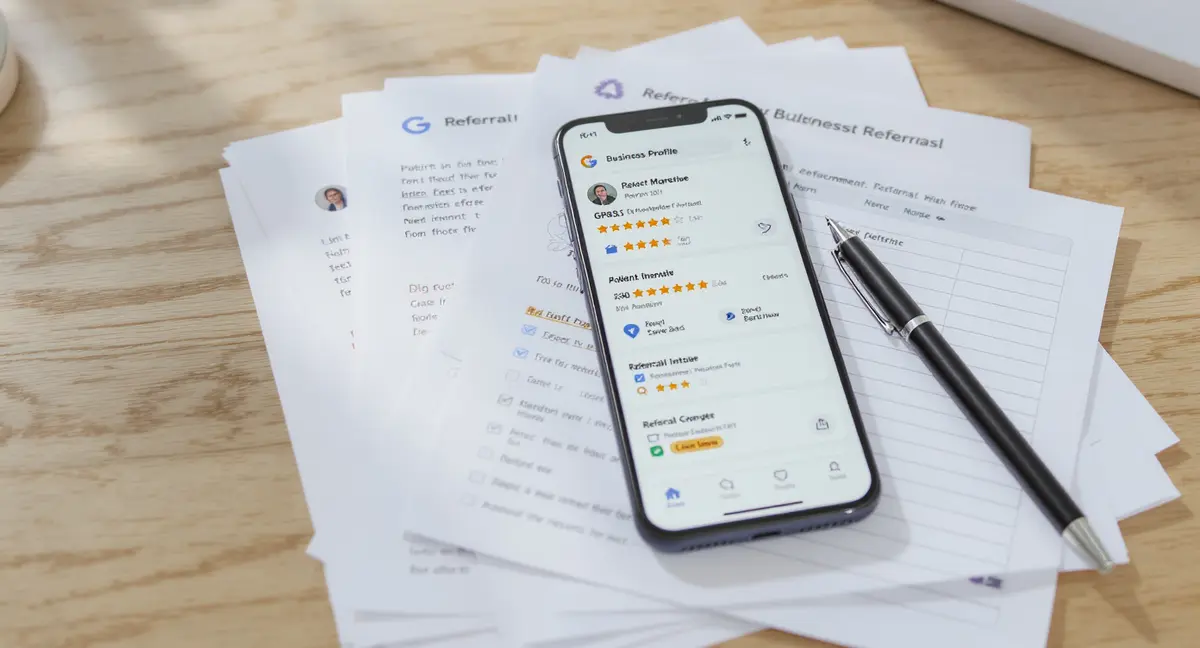
The short answer: Strategyc is a content and visibility system for home health care agencies looking to own their lead generation infrastructure. Marketing for home health care services combines local search optimization, trust-building content, referral ecosystem management, and conversion-focused website design. Success in marketing for home health care services comes down to Google Business Profile optimization, reputation infrastructure, and service-area content. According to BrightLocal's 2024 Local Consumer Review Survey, 98% of consumers read online reviews for local businesses, and healthcare ranks among the highest-trust categories where reviews directly influence purchasing decisions. Google's AI Overviews now appear in 50% of search queries, which means agencies that haven't invested in AI search optimization are invisible to half the families searching for care.
Home health care agencies face a unique marketing challenge. Your customers are often adult children researching care for aging parents, not the patients themselves. They're scared, overwhelmed, and looking for immediate reassurance that you're safe, responsive, and qualified. Generic healthcare marketing doesn't work here.
The decision cycle is short but high-stakes. Families typically research 3-5 providers before making contact, and 76% of those who search for something nearby on their smartphone visit a business within 24 hours, according to Google. If your agency doesn't appear in local search results, manage a strong review profile, and answer the questions families are actually asking, you've lost the lead before the phone rings.
Marketing for home health care services in 2026 requires a different playbook than it did even two years ago. Google's AI Overviews now appear in 50% of search queries, reshaping how families discover providers. Voice search through Alexa and Google Assistant is becoming the first touchpoint for caregivers juggling multiple responsibilities. The agencies that win are the ones building visibility infrastructure across every channel where families search, not just running ads and hoping for callbacks.
This article breaks down the six strategies that drive measurable lead volume for home health care agencies: local search dominance, reputation systems, referral marketing, content that converts anxious families into calls, paid acquisition that doesn't burn budgets, and measurement frameworks that show what's actually working.
Why Local Search Dominates Marketing for Home Health Care Services
Local search is the primary lead source for home health care agencies because the decision is both urgent and geographically constrained. Families need care in their specific city or county, often within days. They're not browsing national directories. They're typing "home health care near me" or "in-home caregivers your area" into Google while sitting in a hospital discharge meeting or after a parent's fall.
BrightLocal's 2024 research found that 87% of consumers used Google to evaluate local businesses in 2023, up from 81% the year before. For healthcare services, that percentage is even higher because trust and proximity are non-negotiable. If your agency doesn't appear in the Local Pack, the map results that show up at the top of mobile search, you're invisible to the majority of high-intent searchers.
Google Business Profile Optimization Is Non-Negotiable
Your Google Business Profile is your storefront in local search. It controls whether you appear in map results, what information families see before they visit your website, and how Google's algorithms decide to rank you against competitors. Most home health care agencies treat their profile as a one-time setup task. That's a mistake.
Optimization means weekly posts, complete service listings, accurate service areas, high-resolution photos of caregivers and office locations, and rapid responses to questions and reviews. Google rewards active profiles with better visibility. Agencies that post weekly updates see 50% more engagement than those that don't, according to Google's own SMB research. For marketing for home health care services, engagement translates directly into phone calls.
Service categories matter more than most agencies realize. Selecting "Home Health Care Service" as your primary category is obvious, but adding secondary categories like "Aged Care," "Personal Care Service," and "Nursing Agency" expands the queries where you're eligible to appear. Each category is a signal to Google about what you offer and who you serve.
Service-Area Pages Beat Generic Location Mentions
Most home health care agencies serve multiple cities or counties but only have one location page on their website. That's leaving leads on the table. Service-area pages are dedicated landing pages for each city, town, or neighborhood you serve, optimized for local search queries like "home health care services in your area."
These pages need unique content, not templated text with the city name swapped out. Google's algorithms can detect thin content. A strong service-area page includes local statistics (senior population, common care needs), neighborhood-specific information (proximity to hospitals, senior centers), testimonials from families in that area, and clear calls to action with local phone numbers or contact forms.
Marketing for home health care services at the local level means understanding that "Orlando" and "Winter Park" are different search intents, even though they're adjacent cities. Families in Winter Park want to see Winter Park in your content, your meta descriptions, and your page titles. Generic regional pages don't convert as well because they don't feel specific enough to the searcher's need. The same local search and reputation principles that drive home health leads apply across the broader category of marketing for home services, where trust and proximity determine which businesses get the call.
Reputation Infrastructure: Why Reviews Are Your Most Valuable Marketing Asset
Reputation is the single highest-use marketing investment for home health care agencies. Families are entrusting you with the safety and dignity of someone they love. They will not call you if your reviews are sparse, outdated, or filled with unresolved complaints. According to Podium's 2024 State of Reviews report, 93% of consumers say online reviews impact their purchasing decisions, and healthcare is among the top three industries where reviews are considered "extremely important."
Most agencies collect reviews passively, hoping satisfied families will leave feedback without being asked. That doesn't work. The families most likely to leave reviews unprompted are the ones who had a problem. You need a system that consistently generates positive reviews from happy clients while giving you the opportunity to resolve issues before they become public complaints.
Build a Review Generation System, Not a One-Time Campaign
A review generation system is a repeatable process that asks for feedback at the right moment in the customer experience. For home health care, that moment is usually 2-4 weeks after service begins, when the family has enough experience to form an opinion but is still actively engaged with your team.
The process should be simple: send a text or email with a direct link to your Google Business Profile review page. Don't send families to a third-party review site first. Don't ask them to "leave a review wherever you prefer." Make it one click to the platform that matters most for local search visibility. Agencies that implement automated review requests see 300-500% increases in review volume within 90 days, according to case studies from reputation management platforms.
Responding to reviews is equally important. Google's algorithms factor response rates and response speed into local rankings. More importantly, potential clients read your responses to see how you handle criticism and whether you're actively engaged with feedback. A thoughtful response to a negative review can actually improve conversion because it demonstrates accountability and care.
Reputation Extends Beyond Google Reviews
Google is the primary platform, but families research across multiple channels. They check your Facebook page, read testimonials on your website, search for complaints on the Better Business Bureau, and ask for recommendations in local Facebook groups and Nextdoor threads. Marketing for home health care services requires monitoring and managing your reputation across all of these touchpoints.
Encourage families to share their experiences on your Facebook page and tag your agency in posts. Feature video testimonials on your homepage. Respond to questions in local community groups where families ask for caregiver recommendations. These activities don't directly improve your Google rankings, but they build the trust infrastructure that converts searchers into callers once they land on your site or profile.
Referral Marketing: The Overlooked Channel in Marketing for Home Health Care Services
Home health care is not a pure direct-to-consumer business. A large portion of your leads come from referrals: hospital discharge planners, primary care physicians, elder law attorneys, senior living communities, and rehabilitation centers. These referral sources influence which agencies families consider before they ever search Google.
Most agencies treat referral marketing as relationship-building lunches and occasional check-ins. That's not a system. A referral marketing system includes regular communication, educational resources for referral partners, fast response times that make partners look good, and feedback loops that show partners the outcomes of their referrals.
Make It Easy for Referral Partners to Choose You
Discharge planners and case managers work with multiple home health agencies. They refer families to the agency that's easiest to work with, responds fastest, and has the fewest complaints. Speed is often the deciding factor. If a discharge planner calls your agency and gets voicemail, but your competitor answers immediately and sends an intake coordinator to the hospital within two hours, you've lost the referral.
Marketing for home health care services to referral partners means operational excellence, not brochures. Document your average response time, your intake process, your caregiver vetting standards, and your care continuity protocols. Turn these into one-page PDFs that referral partners can keep on file. When they need to refer a family, they want confidence that you'll handle it smoothly.
Regular communication keeps you top of mind. Monthly emails with case studies, care tips for common conditions, or updates on new services remind partners that you exist and that you're active in the community. Quarterly in-person visits with coffee or lunch maintain the personal relationship that makes someone pick up the phone and call you instead of emailing a generic referral list to the family. Many of the conversion tactics that work for home health care agencies mirror the broader playbook of home services marketing, where speed, local visibility, and trust signals separate winners from everyone else.
Track Referral Sources Like You Track Ad Spend
Most home health care agencies don't know which referral sources actually drive volume. They know Dr. Smith refers patients, but they don't know if that's two patients a year or twenty. Without data, you can't prioritize your time or measure whether your referral marketing efforts are working.
Use a simple CRM or intake form field to capture referral source for every new client. Tag each source: hospital name, physician practice, attorney, senior center, online search, friend/family. Review this data monthly. If one hospital is sending you 40% of your referrals, that relationship deserves more attention. If a physician you've been courting for six months has sent zero referrals, it's time to adjust your approach or move on.
Content That Converts Anxious Families Into Calls
Families researching home health care are not casually browsing. They're stressed, often researching late at night after a crisis, and they have specific questions that generic service pages don't answer. Content marketing for home health care services works when it addresses the actual fears and questions that keep adult children awake at 2 a.m.
The most effective content answers questions like: How do I know if my parent needs in-home care versus assisted living? What does Medicare cover and what will I pay out of pocket? How do I choose a caregiver I can trust? What happens if the caregiver doesn't show up? These are not keyword-stuffed blog posts. They're genuine educational resources that build trust before the family ever picks up the phone.
Answer the Questions Families Are Too Scared to Ask
Families worry about things they won't ask on a sales call: What if my parent refuses care? What if the caregiver steals from us? What if my parent falls and no one is there? Content that acknowledges these fears and explains how your agency mitigates them builds credibility in a way that service descriptions never will.
Write articles and FAQs that address these concerns directly. Explain your caregiver screening process, including background checks, reference verification, and skills assessments. Describe your backup caregiver system so families know what happens if someone calls in sick. Detail your communication protocols so adult children who live out of state know how they'll stay informed about their parent's care.
Marketing for home health care services through educational content also positions your agency in Google's AI Overviews and voice search results. When someone asks Alexa "How do I find a trustworthy home caregiver," Google pulls answers from content that directly addresses the question. Agencies with full FAQ pages and how-to guides get cited more often than agencies with only service pages.
Use Video to Build Trust Before the First Call
Video is the fastest way to humanize your agency and reduce the anxiety families feel about inviting a stranger into their parent's home. Short videos introducing your care coordinators, showing caregivers in action (with client permission), and explaining your intake process make your agency feel real and trustworthy.
You don't need expensive production. A smartphone, good lighting, and authentic delivery are enough. Film a 60-second introduction from your owner or director explaining your agency's mission and values. Record a caregiver talking about why they love the work and how they build relationships with clients. Create a 90-second walkthrough of what families can expect during the first week of service.
Post these videos on your homepage, your Google Business Profile, your Facebook page, and YouTube. Families watch them before they call, which means the first conversation starts with a baseline of trust instead of skepticism. Video also improves your local search rankings because Google treats video content as a quality signal, especially when hosted on YouTube and embedded on your site.
Ready to take the next step with Strategyc?
Our team is ready to help you achieve your goals. Get Your Free Scan. Many of the conversion tactics that work for home health care agencies mirror the broader playbook of home services marketing, where speed, local visibility, and trust signals separate winners from everyone else.
Paid Acquisition: When and How to Use Ads Without Burning Your Budget
Paid advertising can accelerate lead volume for home health care agencies, but it's expensive and easy to waste money if you don't understand the economics. Google Ads for healthcare-related keywords can cost $15-$50 per click in competitive markets, and conversion rates from click to call are often below 5%. That means you might spend $300-$1,000 to generate a single lead, and not every lead becomes a client.
Paid ads work best as a supplement to organic visibility, not a replacement. If your Google Business Profile is optimized, your website converts well, and you have a review system in place, ads can fill gaps in coverage for high-intent keywords where you don't rank organically yet. If those foundations aren't in place, ads will drive traffic to a site that doesn't convert, and you'll blame the channel instead of the infrastructure.
Target High-Intent Keywords and Exclude the Wrong Audience
The most expensive mistake home health care agencies make with Google Ads is bidding on broad keywords like "home care" or "senior care." These terms attract job seekers, people looking for senior housing, and families researching options they're not ready to buy. You pay for every click, even if the searcher has zero intent to hire a caregiver.
Focus your ad spend on high-intent, service-specific keywords: "home health aide your area," "in-home caregiver for dementia," "24-hour home care services near me." Use negative keywords aggressively to exclude searches for jobs ("caregiver jobs," "home health aide hiring") and non-service queries ("home care definition," "Medicare home health benefit").
Marketing for home health care services through paid search also requires geographic precision. If you serve a 20-mile radius, don't run ads across the entire metro area. Tighten your location targeting to the zip codes you actually serve, and use location-specific ad copy ("Serving families in your neighborhood since ") to improve relevance and click-through rates.
Retargeting Converts Researchers Into Callers
Most families don't call the first agency they find. They visit 3-5 websites, compare services and pricing, read reviews, and then make a decision. Retargeting ads keep your agency visible while they're researching, increasing the likelihood that they'll remember you and return to your site when they're ready to call.
Retargeting works by placing a tracking pixel on your website that identifies visitors and shows them your ads as they browse other sites and social media. You can create custom messages for people who visited specific pages: show a testimonial ad to someone who read your "About Us" page, or a pricing guide to someone who visited your services page but didn't fill out a contact form.
Retargeting is considerably cheaper than search ads because you're not bidding on competitive keywords. Cost per click for display retargeting is often $0.50-$2.00, and because you're targeting people who already know your brand, conversion rates are higher. For agencies with limited ad budgets, retargeting delivers better ROI than broad search campaigns.
Owned Visibility Infrastructure: The Alternative to Renting Your Marketing
Most home health care agencies rent their marketing. They pay a monthly retainer to an agency that manages their Google Ads, posts to their social media, and maybe writes a blog article or two. When the retainer stops, everything stops. The content, the ad accounts, the processes, all of it lives with the agency, not with you.
The alternative is building owned visibility infrastructure. That means installing the systems that generate leads, optimized service pages, review generation workflows, content calendars, referral tracking, inside your business so they keep working whether you're paying a vendor or not. Marketing for home health care services as infrastructure instead of a service changes the economics entirely.
What Owned Infrastructure Actually Looks Like
Owned infrastructure starts with a website designed for conversion, not just information. That means fast load times, mobile-first design, clear calls to action on every page, service-area pages for every city you serve, and content that answers the questions families actually ask. It also means owning your hosting, your CMS, and your analytics so you can see what's working without asking a vendor for a report.
It includes a review generation system that runs automatically: text messages or emails sent at the right point in the customer experience, with direct links to your Google Business Profile, and a dashboard that tracks response rates and review volume. You should be able to see how many review requests went out last month and how many turned into published reviews without logging into a third-party tool.
Platforms like Strategyc take this approach by installing owned content systems rather than offering monthly retainers. The system is built once, trained to your business, and then produces content and visibility on an ongoing basis without requiring continuous vendor dependency. For agencies that want to own their lead generation infrastructure instead of renting it, this model shifts the cost from recurring expense to one-time investment. The referral tracking and partner communication systems that work for home health agencies are nearly identical to the relationship infrastructure required in insurance marketing strategies, where trust and consistent follow-up determine long-term volume.
The Compounding Value of Systems You Own
When you own your marketing infrastructure, every piece of content you publish, every review you generate, and every service page you optimize adds to a foundation that compounds over time. A blog article written this month still drives traffic two years from now. A service-area page optimized for local search continues to rank and convert long after the initial work is done.
Rented marketing doesn't compound. When you stop paying, the value stops. The blog posts live on the agency's platform. The ad campaigns pause. The social media accounts go quiet. You're back to zero, and you have to start over with a new vendor or try to rebuild in-house without the systems or knowledge to do it well.
Marketing for home health care services as owned infrastructure means treating visibility like an asset, not an expense. The upfront cost is higher, but the long-term ROI is exponentially better because you're not paying rent forever. You're building equity in your ability to generate leads without dependency on external vendors.
The Bottom Line
Marketing for home health care services in 2026 requires a multi-channel approach that prioritizes local search, reputation infrastructure, referral ecosystems, and trust-building content. Families researching care for aging parents are anxious, time-constrained, and highly selective. They choose agencies that appear in local search, have strong reviews, answer their questions clearly, and feel trustworthy before the first phone call.
The agencies that win are the ones building systems, not running campaigns. They own their Google Business Profile optimization process, their review generation workflows, their referral tracking data, and their content publishing infrastructure. When you own the systems that generate visibility and leads, you stop renting your marketing and start building an asset that compounds over time. The decision is whether you want to keep paying monthly for results that disappear when the checks stop, or invest once in infrastructure that keeps producing long after the work is done.
Frequently Asked Questions
How long does it take to see results from marketing for home health care services?
Local search optimization typically shows measurable improvement in 60-90 days once your Google Business Profile is optimized and you're generating consistent reviews. Content marketing and service-area pages take 4-6 months to gain traction in organic search. Paid ads can drive leads immediately, but sustainable results come from owned infrastructure that compounds over time.
What is the most cost-effective marketing channel for home health care agencies?
Google Business Profile optimization and review generation deliver the highest ROI because they're low-cost, high-impact activities that directly influence local search rankings. Most agencies can implement these systems in-house or with minimal vendor support. Referral marketing is also highly cost-effective if you have the operational discipline to respond quickly and track sources consistently.
Can I build marketing for home health care services infrastructure in-house?
Yes, if you have the time, expertise, and discipline to implement systems consistently. Owned infrastructure requires someone on your team to manage content publishing, review requests, service-area page optimization, and analytics tracking. Many agencies start in-house, realize the workload, and either hire a dedicated marketing person or install a system that automates the repetitive tasks while keeping ownership internal.
How do I measure ROI from organic content and local search?
Track three metrics: lead source (where calls and form fills come from), cost per lead (what you spent to generate each lead), and conversion rate (how many leads become clients). Use call tracking software to attribute phone calls to specific campaigns or pages. Review Google Analytics and Google Search Console monthly to see which content and keywords drive the most traffic and conversions.
Do I need to hire an agency or can I own my visibility infrastructure?
You can own it. The question is whether you want to build it yourself, hire in-house, or install a system that runs with minimal ongoing intervention. Agencies charge $2,000-$5,000+ per month for services that stop when you stop paying. Owned infrastructure costs more upfront but eliminates recurring fees and gives you permanent control over your lead generation systems. The right choice depends on your budget, timeline, and preference for ownership versus delegation.