Local SEO for Franchises: How to Dominate Search Without Losing Brand Control
Why Most Franchise SEO Strategies Fail Before They Start
The Corporate vs. Local Control Problem
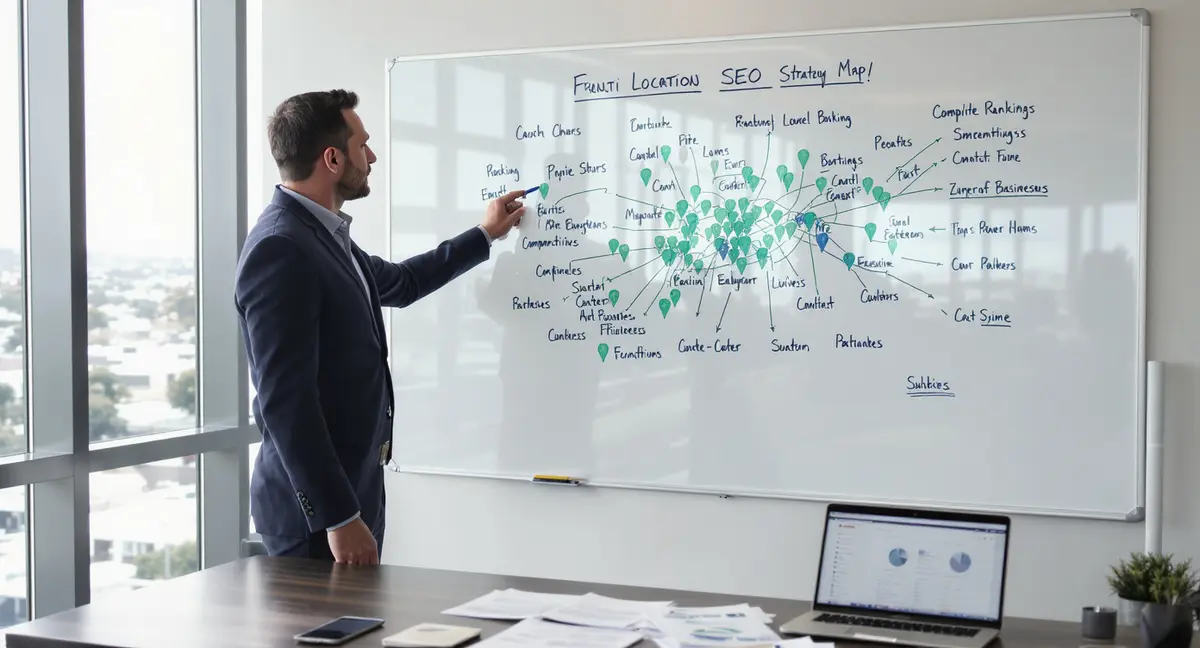
Most franchise SEO efforts collapse under the weight of their own structure. Corporate wants brand consistency. Franchisees want local autonomy. SEO needs both, and most organizations can't deliver either effectively. What matters is what happens: corporate builds a national website with a store locator. Each location gets a thin landing page with the same template, the same generic copy, just different addresses. Google sees hundreds of near-duplicate pages and ranks none of them well. Meanwhile, franchisees either can't publish local content because corporate won't allow it, or they publish whatever they want and dilute the brand. Local SEO for franchises fails when neither side owns the visibility infrastructure. The data backs this up. Only 8% of marketers feel confident they can measure ROI from their marketing efforts (Firework, 2025). That confidence gap is even wider in franchise systems where attribution crosses corporate campaigns, local franchisee marketing, and organic search. When you can't measure what's working, you can't scale what works.The Duplicate Content Trap That Kills Multi-Location Rankings
Google's algorithm treats duplicate content as a ranking liability. When you operate 50 franchise locations with identical service descriptions, identical "About Us" copy, and identical blog content, Google picks one version to rank and ignores the rest. That's not a penalty. It's just math. Why would Google show searchers 50 identical pages when one will do? According to Whitespark's 2024 Local Search Ranking Factors study, unique localized content is the third most important ranking factor for local pack results, behind Google Business Profile signals and review signals. But most franchise systems don't produce unique content. They produce templated pages with city names swapped in. That's not localization. That's duplication with a find-and-replace function. The fix requires actual local content: neighborhood-specific service information, local market expertise, city-level topic coverage. A plumbing franchise in Austin needs content about Austin water quality, Austin building codes, and Austin seasonal plumbing issues. That content can't be copied to the Dallas location with "Austin" replaced by "Dallas." It needs to be written for Dallas water systems and Dallas regulations. Local SEO for franchises only works when each location builds genuine local authority.The Foundation: Google Business Profile Optimization at Scale
Why GBP Is the Highest-Leverage Asset for Franchise Visibility
Google Business Profile optimization is the single most important local ranking factor (Whitespark, 2024). Businesses with complete GBP profiles are 70% more likely to attract location visits (Google). For franchises, that multiplies across every location. Optimize 100 profiles correctly and you've built 100 local visibility engines. But most franchise systems treat GBP as an afterthought. Profiles sit incomplete. Photos are outdated. Posts are never published. Reviews go unanswered. That's not just missed opportunity. It's actively handing local pack rankings to competitors who do the work. Consider what complete GBP optimization looks like for franchise locations: accurate NAP (name, address, phone) data that matches citation sources exactly, primary and secondary categories that reflect actual services, complete business hours including holiday schedules, high-quality photos uploaded monthly (exterior, interior, team, services in action), Google Posts published weekly with local offers or updates, Q&A section seeded with common customer questions, and review response within 24-48 hours for every review. That's the baseline. Most franchises aren't close.Managing 50+ Profiles Without Losing Your Mind
Manual GBP management breaks down around 10 locations. At 50 locations, it's impossible without systems. You need centralized tools, standardized processes, and clear ownership. The operational model that works: corporate controls brand elements (logo, brand description, service categories, photo guidelines), franchisees control local elements (hours, local posts, review responses, location-specific photos), and both feed into a centralized management platform that enforces consistency while allowing local flexibility. Tools like GBP's multi-location management dashboard or third-party platforms can handle bulk updates, but the governance model matters more than the software. Consider a fitness franchise with 200 locations. Corporate creates photo guidelines, brand messaging templates, and category standards. Each location uploads its own facility photos, posts local class schedules, responds to reviews in its market, and updates hours for local holidays. Corporate monitors compliance through the dashboard and flags locations that fall behind. That's scalable local SEO for franchises. The review component alone justifies this structure. Organic search leads have a 14.6% close rate versus 1.7% for outbound marketing (Search Engine Journal). Reviews directly influence that conversion rate. A franchise location with 50 recent positive reviews and active responses converts search traffic at multiples of a location with 10 old reviews and no engagement.Building Location Pages That Actually Rank
The Anatomy of a High-Performing Franchise Location Page
Location pages are where most franchise SEO strategies die. They're either too thin to rank (just NAP data and a map) or too duplicated to differentiate (templated copy with city names swapped). Neither works. A location page that ranks needs: unique local content (300-500 words minimum, not templated), embedded Google Map with schema markup, complete NAP data matching GBP and citations, service area description with neighborhood names, local customer testimonials or reviews, location-specific photos, clear calls-to-action (directions, call, book), and internal links to relevant service pages. That's the structure. The content is what makes it rank. enterprise SEO platform research shows that AI-sourced visitors convert at 27% versus 2.1% from traditional search (SingleGrain, 2025). That gap exists because AI search answers pull from content that demonstrates specific local expertise. A generic location page doesn't get cited. A page with genuine local market knowledge does.How to Localize Content Without Duplicating It
True localization means each location page addresses its specific market. A home services franchise operating in Phoenix and Minneapolis can't use the same content. Phoenix needs content about monsoon season property damage, desert landscaping, and cooling system maintenance. Minneapolis needs content about winter weatherization, frozen pipe prevention, and snow load roof concerns. The pattern that scales: corporate creates content frameworks and topic clusters, franchisees or local content teams fill in market-specific details and examples. A pest control franchise might have a corporate content framework for "seasonal pest prevention." The Florida location writes about palmetto bugs, fire ants, and termite swarms. The Pacific Northwest location writes about carpenter ants, rodents, and moisture-related infestations. Same topic, different local execution. This approach also solves the AI search visibility problem. When someone asks ChatGPT or Perplexity "best pest control for Florida homes," the AI model pulls from content that specifically addresses Florida pest issues. Generic templated content doesn't make the cut. Local SEO for franchises in 2026 means writing for AI models that prioritize specific, factual, locally-relevant content over generic brand messaging.Citation Management and NAP Consistency Across Hundreds of Locations
Why NAP Inconsistency Kills Local Rankings
Citations are mentions of your business name, address, and phone number on other websites. Google uses citation data to verify your business exists and to determine where it should rank. When your NAP data is inconsistent across citation sources, Google loses confidence in your location data. Rankings drop. For single-location businesses, citation management is tedious but manageable. For franchises, it's exponentially harder. One location with inconsistent NAP data is a problem. Fifty locations with inconsistent data is a crisis. Common issues: old addresses from moved locations still appearing in directories, phone numbers that changed but weren't updated everywhere, business names formatted differently across sources (Joe's Pizza vs. Joe's Pizza - Downtown vs. Joes Pizza), and suite numbers included in some citations but not others. According to Moz's Local Search Ranking Factors survey, citation signals account for roughly 10% of local pack ranking factors. That might not sound like much, but in competitive markets where multiple businesses are optimized, 10% is the difference between position 1 and position 4. Position 1 in the local pack gets 27.6% of clicks (Backlinko, 2024). Position 4 gets scraps.Building a Scalable Citation Audit and Cleanup Process
Citation management for franchises requires three things: a single source of truth for NAP data, systematic audits to find inconsistencies, and a cleanup process that scales. Start with the source of truth. Build a spreadsheet or database with the correct, current NAP data for every location. Include business name (exactly as it should appear), full address with suite numbers if applicable, primary phone number, website URL, and GBP listing URL. This becomes the reference document for all citation work. Next, audit existing citations. Manual citation hunting doesn't scale past 10 locations. Use tools that crawl major directories and aggregators to identify where your locations are listed and how the data appears. The goal is finding mismatches between your source of truth and what's published. Priority one: high-authority directories like Yelp, Facebook, Apple Maps, Bing Places, and industry-specific directories relevant to your vertical. Then execute cleanup. For franchises, this often means working with data aggregators (Localeze, Neustar, Factual) that feed information to hundreds of smaller directories. Correcting data at the aggregator level cascades corrections downstream. For high-priority directories, submit corrections directly. For low-priority or outdated directories, sometimes the best move is suppressing the old listing rather than updating it. The operational reality: citation cleanup is a one-time project with ongoing maintenance. New directories launch. Locations move. Phone numbers change. Build quarterly citation audits into your local SEO for franchises process, or accept that your rankings will slowly decay as data drifts out of sync.Review Generation and Reputation Management at Scale
The Compounding Effect of Reviews on Local Rankings and Conversions
Reviews are both a ranking factor and a conversion factor. Google's algorithm considers review quantity, review velocity (how often new reviews come in), review ratings, and review content when determining local pack rankings. Customers consider the same factors when deciding whether to visit. The numbers: 88% of consumers trust online reviews as much as personal recommendations (BrightLocal, 2024). A one-star increase in Yelp rating leads to a 5-9% increase in revenue (Harvard Business School). For franchises, that means a location with 4.8 stars and 200 reviews will outperform a location with 4.2 stars and 30 reviews in both rankings and conversions. But here's the problem most franchise systems face: review generation is inconsistent. Some locations actively ask for reviews and respond to every one. Others ignore reviews entirely. The result is wildly uneven reputation profiles across the franchise network. High-performing locations thrive. Low-performing locations struggle. Local SEO for franchises requires systemizing review generation so every location builds reputation at the same pace.Building a Review System That Franchisees Will Actually Use
Most review generation programs fail because they're too complicated or too pushy. Franchisees don't have time for complex workflows. Customers don't respond to aggressive review requests. The system that works is simple, automated, and customer-friendly. The pattern: trigger review requests automatically after positive service interactions, make the request feel personal (not spammy), make leaving a review easy (direct link to GBP review form), and follow up once if no response. That's it. No incentives (Google prohibits them), no pressure, no manipulation. Operationally, this means integrating review requests into your existing customer communication. A restaurant franchise can send a review request 24 hours after a dine-in visit (captured via reservation system or loyalty program). A home services franchise can send a request 48 hours after service completion (captured via scheduling software). An automotive franchise can send a request after service appointments or vehicle purchases. Response matters as much as generation. Responding to reviews signals to both Google and potential customers that the business is engaged and cares about feedback. The response pattern that works: thank the customer, address specific points they mentioned, resolve any issues they raised, and invite them back. Template responses are fine for positive reviews. Negative reviews need personalized attention. For franchises, this often means corporate creates response templates and guidelines, franchisees customize them for local context, and both monitor response rates through a centralized dashboard. A franchise location that responds to 90% of reviews within 48 hours will outperform a location that responds to 20% of reviews within two weeks.Ready to take the next step with Strategyc?
Our team is ready to help you achieve your goals. Get Your Free Scan. If your franchise locations aren't appearing in AI-generated answers, you need a systematic approach to AI search optimization that positions your brand as the authoritative source AI models cite.
Content Strategy for Multi-Location Brands
The Corporate Content Hub vs. Local Content Model
Content strategy for franchises has to solve two problems: building brand authority at the corporate level and building local relevance at the location level. Most franchise systems do one or the other. The ones that win do both. The corporate content hub lives on the main franchise domain. It covers industry expertise, brand positioning, national trends, and thought leadership. This content builds domain authority, earns backlinks, and positions the brand as an expert in its category. A national HVAC franchise might publish content about new HVAC technology, energy efficiency regulations, indoor air quality research, and seasonal maintenance best practices. This content isn't geo-targeted. It's expertise-targeted. Local content lives on location pages or location-specific blog sections. It covers local market conditions, neighborhood-specific services, local events, and community involvement. This content builds local relevance and helps individual locations rank for "near me" and city-specific queries. The same HVAC franchise's Phoenix location might publish content about cooling costs in Arizona summers, monsoon season HVAC maintenance, and Maricopa County energy rebates. The Minneapolis location publishes content about heating efficiency in Minnesota winters, ice dam prevention, and Minneapolis energy audit programs. Companies that blog get 55% more website visitors than those that don't (marketing automation platform, 2024). For franchises, that stat multiplies when you combine corporate authority content with local relevance content. The corporate blog drives domain authority that lifts all location pages. The local content drives location-specific rankings that convert local search traffic.How to Produce Local Content Without Hiring 100 Writers
The operational challenge: producing unique local content for dozens or hundreds of locations without breaking the budget or sacrificing quality. Most franchises can't hire a content writer for every location. The solution is a hybrid model. Corporate creates content frameworks, templates, and topic clusters. These are 70% complete content pieces with sections for local customization. A dental franchise might create a framework article on "How to Choose a Family Dentist." The framework covers universal decision factors: credentials, services offered, technology, insurance acceptance, patient reviews. It leaves sections blank for local customization: "What to Look for in a your area Dentist," "your neighborhood Dental Services," and "Insurance Providers We Accept in your area." Franchisees or local marketing coordinators fill in the local sections. This doesn't require professional writers. It requires someone who knows the local market and can answer specific questions. Total time investment: 30-45 minutes per article. Output: genuinely localized content that ranks. The alternative model: corporate produces all content but customizes it per location using local market research. A corporate content team writes unique location-based articles by researching local conditions, local competitors, local regulations, and local customer questions. This costs more but delivers higher quality. A 50-location franchise might budget for 2-4 unique local articles per location per year, producing 100-200 pieces of genuinely differentiated local content annually. Both models beat templated content. And both models align with how AI search systems evaluate content. Research from Princeton and Georgia Tech published at KDD 2024 shows that structured, factual, citation-rich content improves AI visibility by 30-40%. Local content that cites local data sources, local regulations, and local conditions gets cited by AI models. Templated content doesn't.Technical SEO Considerations for Multi-Location Websites
Site Architecture That Supports Hundreds of Location Pages
Site structure matters more for franchise SEO than for single-location SEO. A poorly structured multi-location site confuses Google, dilutes authority, and creates internal competition between location pages. The structure that works: a clear hierarchy with location pages nested under a /locations/ directory, each location page at /locations/city-name/ or /locations/city-name-neighborhood/, service pages at the root level or under /services/, and blog content under /blog/ or /resources/. This structure tells Google which pages are location-specific and which pages are service-specific. It prevents internal keyword cannibalization where multiple pages compete for the same search query. Example structure for a home services franchise: domain.com/ (homepage), domain.com/services/plumbing/ (service page), domain.com/services/hvac/ (service page), domain.com/locations/austin/ (Austin location page), domain.com/locations/dallas/ (Dallas location page), domain.com/blog/ (corporate blog). Each location page links to relevant service pages. Each service page links back to location pages in its service area. Internal linking distributes authority and helps Google understand relationships between pages. Schema markup is non-negotiable for franchise SEO. Every location page needs LocalBusiness schema with complete NAP data, geo-coordinates, opening hours, and service area. This structured data helps Google display rich results and feeds AI search systems with clean, parseable business information. According to research published at KDD 2024, schema markup is one of the signals that increases the likelihood of being cited in AI-generated answers.Avoiding Crawl Budget Waste on Large Multi-Location Sites
Crawl budget is the number of pages Google will crawl on your site in a given timeframe. For small sites, crawl budget is irrelevant. For franchise sites with hundreds or thousands of location pages, it matters. If Google wastes crawl budget on low-value pages, it might not crawl your important pages frequently enough to keep them indexed and ranked. Common crawl budget wasters on franchise sites: duplicate pages created by URL parameters, paginated location directories with dozens of pages, old location pages for closed franchises that were never removed, and auto-generated tag or category pages with thin content. The fix: implement canonical tags to consolidate duplicate pages, use pagination markup correctly, 301 redirect closed location pages to nearby active locations, and noindex low-value pages. Core Web Vitals (page speed, interactivity, visual stability) are confirmed ranking factors. For franchises, this means every location page needs to load fast. Heavy images, unoptimized scripts, and bloated page templates kill performance. The operational fix: use a lightweight page template for location pages, compress and lazy-load images, minimize third-party scripts, and use a CDN to serve assets quickly regardless of user location. A franchise site with 200 locations that loads in 1.5 seconds will outrank a competitor site with 200 locations that loads in 4 seconds, assuming similar content and authority. Speed is a tiebreaker in competitive local markets. It's also a direct conversion factor. A one-second delay in page load time reduces conversions by 7% (Neil Patel).Link Building and Local Authority for Franchise Locations
Why Traditional Link Building Doesn't Scale for Franchises
Link building for single-location businesses follows a predictable pattern: local sponsorships, chamber of commerce memberships, local news mentions, guest posts on local blogs. It's manual, relationship-driven, and time-intensive. For a franchise with 100 locations, that approach is impossible. You can't manually build links for 100 locations without an army of outreach coordinators. The solution isn't scaling traditional link building. It's building content-based authority that earns links without active outreach. Sites with original research get 4x more backlinks than sites without original research (Backlinko). For franchises, that means corporate-level content that's genuinely valuable: industry research, proprietary data, expert analysis, and tools or resources that other sites want to reference. A national real estate franchise might publish annual market reports with city-level data. A fitness franchise might publish research on workout trends or nutrition. A home services franchise might publish seasonal maintenance guides or cost calculators. This content lives on the corporate domain, earns backlinks to the root domain, and lifts the authority of all location pages through domain-level trust.Local Link Opportunities That Franchisees Can Execute
While corporate handles authority-building content, franchisees can pursue local link opportunities that require minimal time and expertise. The tactics that work: local event sponsorships (Little League teams, charity runs, school fundraisers), local business associations (chamber of commerce, BNI groups, industry associations), local news and PR (press releases for new location openings, community involvement stories, expert commentary on local issues), and local partnerships (cross-promotion with complementary local businesses). These tactics don't require SEO expertise. They require community involvement. A franchise location that sponsors a local youth sports team gets a link from the team's website, brand visibility in the community, and goodwill that converts into customer loyalty. That's local SEO for franchises that aligns with business development rather than fighting against it. The measurement challenge: attributing revenue to link building is difficult. But the correlation is clear. Franchise locations with more local backlinks rank higher in local pack results. Locations that rank higher in local pack results get more traffic. More traffic converts into more customers. The ROI exists even when attribution is fuzzy.Measuring What Matters: KPIs for Franchise Local SEO
The Metrics That Actually Predict Revenue
Most franchise SEO reporting focuses on vanity metrics: keyword rankings, organic traffic, impressions. Those metrics matter, but they don't predict revenue. The metrics that predict revenue: local pack rankings for high-intent keywords, Google Business Profile actions (calls, direction requests, website clicks), organic traffic to location pages (not just the domain), and conversion rate from organic traffic to leads or sales. Local pack rankings matter most. Position 1 in the local pack gets 27.6% of clicks (Backlinko, 2024). Position 2 gets 13.1%. Position 3 gets 7.6%. Everything else gets scraps. A franchise location that moves from position 4 to position 1 for "plumber near me" in its market will see 3-4x more clicks. That's measurable, attributable traffic growth. GBP actions are the clearest signal of search-driven intent. When someone clicks "Call" or "Get Directions" from your GBP listing, they're in buying mode. Track these actions per location, per month. A location generating 50 GBP calls per month from organic search is producing measurable pipeline. A location generating 5 calls per month is invisible.Building a Reporting Dashboard That Scales Across Locations
Reporting for franchise SEO has to balance detail and scalability. Corporate needs to see system-wide performance. Franchisees need to see their individual location performance. The dashboard that works: location-level scorecards showing key metrics (local pack rankings for top 5 keywords, GBP actions, organic traffic, reviews), network-wide rollups showing aggregate performance and trends, and benchmarking showing how each location compares to the network average. The operational model: pull data from Google Search Console (organic traffic by location page), Google Business Profile Insights (actions by location), and rank tracking tools (local pack positions by location and keyword). Automate the dashboard so it updates monthly without manual data entry. Share location-level scorecards with franchisees so they can see their performance and understand what drives results. This transparency creates accountability. Franchisees who see their location ranking on page 2 while a nearby location ranks in the local pack will ask what the difference is. That creates internal pressure to adopt best practices: completing GBP profiles, generating reviews, publishing local content, maintaining NAP consistency. Local SEO for franchises works when the entire network understands what drives results and has the tools to execute.What This Means for Your Franchise
Local SEO for franchises is not a one-time project. It's infrastructure that compounds over time. The franchise networks that dominate local search in 2026 are the ones that built systems two years ago. The ones that will dominate in 2028 are building systems now. The work breaks into three phases: foundation (GBP optimization, citation cleanup, site structure), content (location pages, local content, corporate authority content), and growth (reviews, links, measurement). Most franchises never finish phase one. The ones that do own their markets. AI search is reshaping visibility right now. 50% of Google queries trigger AI Overviews. AI-sourced visitors convert at 27% versus 2.1% from traditional search. Early AI search adopters are seeing 120x impression increases and 800% year-over-year traffic growth from LLMs (enterprise SEO platform, 2025). That opportunity window is open today. It won't stay open forever.Frequently Asked Questions
How long does it take to see results from local SEO for franchises?
Most franchise locations see measurable improvement in local pack rankings within 3-6 months after implementing GBP optimization, citation cleanup, and location page improvements. Full authority-building through content and links takes 12-18 months. The timeline depends on market competition and current site authority. The same localization principles that drive franchise visibility apply across service industries, which is why local SEO for roofers follows a similar pattern of market-specific content and citation management. The operational challenges of managing dozens or hundreds of location pages extend beyond franchises to any business with multiple storefronts, making multi-location local SEO a distinct discipline that requires centralized systems and local flexibility.
Can we build local SEO for franchises in-house or do we need an agency?
In-house is possible if you have dedicated resources for content production, technical SEO, and ongoing optimization across all locations. Most franchises lack the bandwidth and expertise. The alternative is installing a system you own rather than renting monthly services. Owned infrastructure keeps producing results after the initial build. While franchise systems face unique scaling challenges, the foundational principles of visibility, authority, and conversion apply universally, which is why understanding SEO for your business matters regardless of your organizational structure. Service-based franchises in healthcare verticals face similar local visibility challenges, particularly in competitive markets where SEO for dental practices demonstrates how location-specific expertise drives patient acquisition.
What's the biggest mistake franchises make with local SEO?
Treating location pages as templates rather than unique local assets. Duplicating the same content across dozens of locations with city names swapped in guarantees poor rankings. Each location needs genuinely local content that addresses its specific market, customers, and competitive space.
How do we handle franchisee compliance with SEO best practices?
Build systems that make compliance easy and visible. Centralized GBP management, standardized content frameworks, and location-level performance dashboards create accountability. When franchisees see their location underperforming compared to network averages, they ask how to improve. Make the path to improvement clear and simple.
Does local SEO for franchises work for AI search and voice assistants?
Yes, but it requires structured content with schema markup, factual density, and clear section formatting. AI models cite sources that provide specific, verifiable information. Voice assistants pull answers from featured snippets and local pack results. Optimizing for traditional local SEO also improves AI and voice visibility when you structure content correctly.