Local SEO Benefits: Why Your Business Needs Visibility
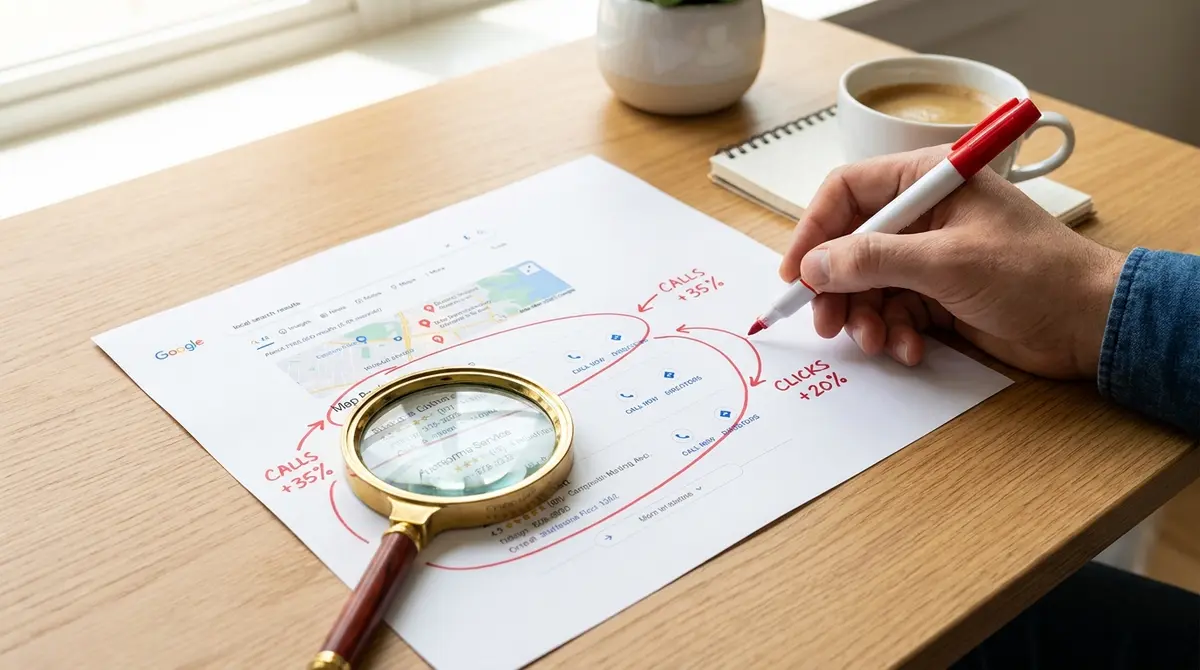
The short answer: Local SEO benefits businesses by connecting them with nearby customers actively searching for their services right now. It drives foot traffic, phone calls, and website visits from people in your area through Google Maps, local search results, and AI-powered answers. Three variables move the needle: Google Business Profile optimization, location-specific content, and review volume. According to BrightLocal, 93% of consumers read online reviews before choosing a local business, making local visibility a direct revenue driver. The same optimization principles that get your business cited in Google's AI Overviews apply to Perplexity SEO, where structured data and expert-attributed content determine which sources appear in conversational answers.
You're losing customers to competitors who show up in the Map Pack. That's the reality for businesses without local SEO. When someone searches "plumber near me" or "best Italian restaurant downtown," Google shows three businesses. If you're not one of them, you don't exist. Local SEO benefits extend far beyond rankings. They create a direct pipeline from search intent to revenue. A potential customer searches for your service, finds your business in Maps, reads your reviews, and calls within minutes. That conversion path happens thousands of times daily across every industry. Businesses that optimize for local search capture this demand. Those that don't watch competitors take the phone calls, foot traffic, and sales. The shift to local-first search behavior accelerated dramatically. More than half of consumers now prefer shopping locally and supporting smaller brands, according to BrightLocal's research. Mobile searches with local intent convert faster than any other channel. When someone searches on their phone for a service they need immediately, they're not browsing. They're ready to buy. Local SEO positions your business as the answer to that urgent need. This article breaks down the tangible local SEO benefits that drive measurable business outcomes. You'll see how local visibility translates to foot traffic, why reviews matter more than you think, and which factors actually move the needle in local search results.How Local SEO Increases Foot Traffic and In-Store Visits
| Factor | What it is | Impact |
|---|---|---|
| Map Pack visibility | Appearing in the top 3 Google Maps results for local queries | High |
| Google Business Profile completeness | Photos, hours, services, posts, and Q&A content on your GBP | 70% more likely to attract visits |
| Review volume and recency | Number and freshness of customer reviews across platforms | High |
| Local content depth | City-specific service pages and neighborhood guides on your site | Medium |
| Mobile optimization | Site speed and usability on smartphones | Medium |
Why the Map Pack Matters More Than Organic Rankings
The Map Pack sits above traditional organic results. It dominates mobile screens, pushing organic listings below the fold. For local queries, the Map Pack gets the first click. Businesses outside the top three become invisible to most searchers. BrightLocal's data reveals more than half of consumers prefer supporting local businesses and smaller brands. That preference only matters if those businesses appear when customers search. The Map Pack creates a winner-take-most dynamic. The top three businesses capture the majority of clicks, calls, and visits. Position four through ten see dramatically lower engagement. Consider a coffee shop competing with two others on the same street. All three have similar quality, prices, and atmosphere. The one that ranks in the Map Pack gets discovered by tourists, new residents, and anyone searching "coffee shop near me." The other two rely entirely on walk-by traffic and existing customers. Over months, that visibility gap translates to hundreds of new customers for the Map Pack business.Converting Searchers Into Store Visitors
Local SEO benefits multiply when businesses optimize for immediate action. Google Business Profile features like "Call" buttons, "Get Directions," and "Visit Website" remove friction between search and conversion. A potential customer sees your business, taps one button, and either calls or works through to your location. According to research cited by the U.S. Chamber of Commerce, 60% of smartphone users contact a business directly from local search results. That's not awareness. That's activation. The search result becomes the first touchpoint in a customer relationship that starts with a phone call or visit within hours. Businesses that add photos to their Google Business Profile see higher engagement. A restaurant with menu photos, interior shots, and food images attracts more clicks than one with just a storefront photo. A dental office with photos of the waiting room and treatment areas builds trust before the first visit. These visual elements don't just improve rankings. They increase the conversion rate from impression to action.What Local SEO Does for Your Online Visibility
Local SEO benefits your business by making it discoverable across every platform customers use to find services. That means Google Search, Google Maps, Apple Maps, voice assistants, and AI-powered answer engines. When someone asks Siri "Where's the nearest hardware store?" or searches ChatGPT for "best family dentist in Portland," your business either appears or it doesn't. Visibility compounds over time. Each citation, review, and piece of location-specific content adds another signal that your business exists and serves a particular area. Google aggregates these signals to determine which businesses deserve visibility for local queries. The more signals you create, the more queries you rank for, and the more potential customers discover you.Building Visibility Through Citations and Structured Data
Citations are mentions of your business name, address, and phone number across the web. They appear in directories, review sites, local blogs, and industry-specific platforms. Each citation reinforces your business's legitimacy and location. Google uses citation consistency as a trust signal. Businesses with accurate, widespread citations rank higher than those with sparse or inconsistent information. BrightLocal's research identifies citations as a core local ranking factor. The quantity matters, but so does the quality. A citation on a high-authority local directory carries more weight than one on a low-quality aggregator site. Businesses that systematically build citations across relevant platforms see measurable visibility improvements within weeks. Structured data markup tells search engines exactly what your business is, where it operates, and what services it offers. Local business schema provides this information in a format AI systems can easily parse and cite. When you add schema to your site, you make it easier for Google, ChatGPT, and Perplexity to understand and reference your business. According to Princeton and Georgia Tech research published in KDD 2024, structured markup improves AI visibility by 30-40%.Capturing Voice Search and AI-Powered Queries
Voice search queries differ from typed searches. People ask complete questions: "What's the best pizza place open right now?" instead of typing "pizza near me." Businesses optimized for natural language queries appear in voice results. Those that only target short keywords miss this growing search channel. AI Overviews now trigger for 50% of Google queries, according to DemandSage's 2025 data. These AI-generated summaries cite 3-5 sources per answer. If your business isn't one of them, your competitor is. The businesses that appear in AI answers have optimized for how AI models select sources: clear factual content, proper attribution, FAQ sections, and expert-attributed insights. Consider a home services business competing for "emergency plumber" searches. Traditional SEO gets them into organic results. Local SEO gets them into the Map Pack. Voice and AI optimization gets them cited when someone asks their smart speaker "Who should I call for a burst pipe?" or queries ChatGPT for plumber recommendations. Each channel requires different optimization, but local SEO benefits extend across all of them.Why Local SEO Drives More Qualified Leads Than Paid Ads
Local SEO benefits businesses by attracting customers with high purchase intent at a fraction of the cost of paid advertising. Organic search leads have a 14.6% close rate compared to 1.7% for outbound marketing, according to Search Engine Journal. That's not a small difference. That's an eight-fold improvement in conversion efficiency. The cost structure favors organic visibility. Paid ads require continuous spending. The day you stop paying, the traffic stops. Local SEO builds an asset that produces results long after the initial investment. A well-optimized Google Business Profile generates calls and visits for years. Location-specific content ranks for relevant queries indefinitely. Reviews accumulate and compound, making your business more attractive with each new five-star rating.How Local Search Intent Differs From General Search
Someone searching "marketing agency" might be researching options, comparing services, or just learning about the industry. Someone searching "marketing agency Boston" has narrowed their options to a specific location. Someone searching "marketing agency near me open now" is ready to contact a business immediately. Local search queries carry stronger commercial intent than general queries. Data from the U.S. Chamber of Commerce shows consumers visiting or contacting businesses shortly after local searches. The time between search and action compresses to hours or even minutes. A restaurant doesn't need to nurture a local searcher through a weeks-long funnel. They show up in the Map Pack at lunch time, and the searcher makes a reservation or walks in. That's the local SEO benefit that paid ads struggle to replicate cost-effectively. Paid local ads compete with organic results and the Map Pack. A business paying for ads still competes with businesses ranking organically. If your competitor ranks organically and you're paying for visibility, they're capturing the same customers at lower cost. Over months, that cost difference becomes substantial. A business spending $2,000 monthly on local search ads could invest that same amount into permanent visibility infrastructure that keeps producing results after the spending stops.Building Trust That Converts Searchers Into Customers
Local SEO benefits extend to trust and credibility. A business ranking organically in local results appears more legitimate than one only visible through ads. Consumers understand the difference. They know ads are paid placements. They perceive organic rankings as earned positions based on relevance and quality. Reviews amplify this trust factor. BrightLocal's research found 93% of consumers read online reviews before choosing a local business. A business with 50+ recent reviews and a 4.5-star average converts more searchers than one with three reviews from two years ago. Reviews serve as social proof that previous customers had positive experiences. The combination of organic visibility and strong reviews creates a trust multiplier. A searcher finds your business in the Map Pack, sees dozens of positive reviews, reads specific feedback about your service quality, and feels confident choosing you over competitors. That confidence translates directly to higher conversion rates. According to AIOSEO's analysis, businesses that actively manage their local SEO see measurable improvements in conversion rates as visibility and reviews compound over time.What Happens When You Optimize for Local Search Rankings
Local SEO benefits manifest as higher rankings, which translate to more visibility, which drives more customer actions. But the process isn't linear. Small improvements in rankings create disproportionate increases in traffic because of how users interact with search results. Backlinko's 2024 research shows organic CTR for position one is 27.6%. Position two drops to roughly 15%. Position three gets about 10%. The gap between positions one and four represents a 70% difference in click-through rate. That means a business ranking fourth in local results gets less than a third of the clicks the first-position business receives, even though both appear on the same screen.Which Local Ranking Factors Actually Matter
Google Business Profile optimization is the number one local ranking factor, according to Whitespark's 2024 research. Businesses with complete profiles are 70% more likely to attract location visits. Completeness means accurate business information, categories, attributes, hours, services, photos, posts, and Q&A content. Each element contributes to how Google evaluates your relevance for local queries. Review signals matter greatly. Google considers review quantity, recency, velocity, and sentiment. A business that consistently earns new reviews signals ongoing customer satisfaction. One that hasn't received a review in six months appears less active or less popular than competitors with steady review flow. On-site signals include location-specific content, local keywords in title tags and headers, city and neighborhood names in content, and structured data markup. A plumbing company serving five cities needs dedicated pages for each location. Generic "service areas" pages don't rank as well as pages optimized for specific cities with unique, locally-relevant content.How Long Before You See Results
Local SEO benefits begin appearing within weeks for Google Business Profile optimization. A business that claims and fully optimizes their profile often sees increased impressions and actions within 7-14 days. Map Pack rankings can improve within a month if the profile was previously incomplete or unverified. Content-based local SEO takes longer. New location pages need time to get crawled, indexed, and evaluated. Most businesses see meaningful organic traffic increases within 3-6 months of publishing location-specific content. The timeline extends for competitive markets where multiple businesses target the same local keywords. Review accumulation is ongoing. A business starting with five reviews won't immediately outrank one with 200 reviews. But consistent review generation closes that gap over time. A business earning 10 reviews monthly will surpass a competitor with 200 old reviews within a year, especially if those old reviews lack recency. Consider a dental practice in a mid-sized city. They optimize their Google Business Profile in January, launch five location-specific service pages in February, and implement a review generation system in March. By April, they see increased Map Pack impressions. By June, their new pages start ranking for long-tail local queries. By September, their review count has doubled, and they've moved from position five to position two in the Map Pack for their primary keyword. By December, they rank first and receive 3x more calls from organic search than they did in January. That's a realistic timeline for local SEO benefits in a moderately competitive market.See How Your Business Shows Up in AI Search
Get a free AI visibility scan. See exactly where you rank on ChatGPT, Perplexity, and Google AI, and what to do about it. Get Your Free Scan. Managing citations, reviews, and structured data across dozens of directories becomes unmanageable without the right tools, which is why most businesses rely on local SEO platforms to automate consistency and scale their visibility efforts.