Link Building Strategies That Work in 2026
The short answer: Link building strategies are methods for earning external websites to link to your content, signaling authority to search engines and AI models. The link building strategies that work in 2026 combine content quality, relationship development, technical opportunity identification, and consistent outreach. Success in link building strategies comes down to linkable asset creation, competitor gap analysis, and digital PR execution. According to Ahrefs' 2024 study, 66.31% of pages have zero backlinks, meaning most businesses never execute a working link strategy. If your business is not linked to by authoritative sites in your industry, AI models will not know you exist, which is why AI search optimization has become inseparable from link building strategy.
Link building strategies remain the single most misunderstood and poorly executed element of SEO. Business owners hear they need backlinks, hire someone to "do link building," and six months later have nothing to show except a vague report and a recurring invoice.
The problem is not that link building strategies have stopped working. The problem is that 90% of what gets sold as link building is either ineffective busywork or outright harmful. Meanwhile, the businesses that understand how to build links systematically are compounding authority every month while their competitors stay invisible.
Search engines and AI models like ChatGPT, Perplexity, and Google's AI Overviews use backlinks as trust signals. If your content is not linked to by authoritative sources, AI systems will not cite you. Your competitors will own the visibility you are losing.
This article breaks down the link building strategies that produce measurable results in 2026, the execution frameworks that separate effective campaigns from wasted effort, and the structural shift from rented link building services to owned content systems that earn links continuously.
Why Link Building Strategies Still Determine Search Visibility
Backlinks are not a vanity metric. They are the primary external signal that tells Google, Bing, and AI language models whether your content deserves to be trusted and cited. Without them, even the best-written content stays buried.
According to Backlinko's analysis of 11.8 million search results, the number one result in Google has an average of 3.8 times more backlinks than positions two through ten. That gap has not shrunk. It has widened as AI-powered search systems rely even more heavily on link-based authority signals to decide which sources to cite in AI Overviews and conversational answers.
The shift to AI search has not made backlinks obsolete. It has made them more critical. When ChatGPT or Perplexity generates an answer, it pulls from a knowledge base that prioritizes sources with strong backlink profiles. If your business is not linked to by authoritative sites in your industry, AI models will not know you exist.
Backlinks Signal Trust to Both Humans and Algorithms
A backlink is a vote of confidence. When a reputable website links to your content, it tells search engines that your information is credible enough to reference. This is why link building strategies focus on earning links from high-authority domains rather than accumulating hundreds of low-quality links from irrelevant sites.
Google's algorithm uses backlinks as one of the top three ranking factors, alongside content quality and RankBrain. Moz's 2024 search ranking factors study found that domain authority, which is built almost entirely through backlinks, correlates strongly with higher rankings across competitive keywords.
AI search systems extend this logic. BrightEdge's 2025 research found that sources cited in AI Overviews have an average domain authority 23 points higher than sources that rank on page one but are not cited. AI models favor established, well-linked sources because they reduce the risk of hallucination and misinformation.
Most Businesses Never Build a Single High-Quality Link
Ahrefs' 2024 study of 1.8 billion web pages found that 66.31% of pages have zero backlinks. Not one. This is not because link building strategies have become impossible. It is because most businesses publish content and hope links will appear organically, which rarely happens.
The businesses that do invest in link building often hire agencies that promise "white-hat link building" but deliver directory submissions, low-quality guest posts on irrelevant blogs, and comment spam. These tactics do not move rankings. They waste budgets and sometimes trigger manual penalties.
The opportunity gap is massive. If your competitors are in the 66% with no backlinks, a focused link building strategy can create a defensible advantage in months. If your competitors are actively building links, you are losing ground every day you wait.
Content-First Link Building Strategies: Creating Assets People Want to Link To
The most effective link building strategies start with content worth linking to. You cannot outreach your way past mediocre content. If what you are asking people to link to provides no unique value, no amount of email templates will fix it.
Linkable assets are content pieces designed specifically to attract backlinks. They include original research, complete guides, interactive tools, case studies with real data, and visual resources like infographics or charts. The common thread is that they provide something other content creators need and cannot easily replicate.
BuzzSumo's analysis of 100 million articles found that long-form content (3,000+ words) earns an average of 77.2% more backlinks than short-form content. This does not mean every piece should be 5,000 words. It means depth and thoroughness matter. Surface-level blog posts do not earn links.
Original Research and Data-Driven Content
Original research is the single highest-ROI link building strategy for businesses that can execute it. When you publish proprietary data, industry benchmarks, or survey results, you become the primary source. Every journalist, blogger, and content creator who writes about that topic has an incentive to link to you. Original research works across industries, from SaaS to professional services to insurance marketing strategies where proprietary data on claim trends or customer behaviour can position a firm as the authoritative source.
Consider how companies like marketing automation platform, Backlinko, and backlink analysis software have built massive backlink profiles. They publish annual reports, original studies, and data sets that become reference points across their industries. marketing automation platform's State of Marketing report earns thousands of backlinks every year because it is the authoritative source for marketing statistics.
You do not need a research team to execute this link building strategy. A survey of 200 customers, an analysis of publicly available industry data, or a case study with measurable before-and-after results can all function as original research. The key is publishing something citable that did not exist before you created it.
Comprehensive Resource Guides and Pillar Content
Comprehensive guides earn links because they save other content creators time. When someone is writing an article and needs to reference a complex topic, they will link to the most thorough existing resource rather than explaining it themselves.
This is why Backlinko's "Link Building Strategies: The Complete List" with 170+ tactics earns consistent backlinks. It is easier to link to that resource than to compile a similar list from scratch. The same principle applies to any topic where fragmented information can be consolidated into one authoritative guide.
The structure matters. Comprehensive guides should include a table of contents, clear section headings, and scannable formatting. They should answer every major question a reader might have about the topic, not just skim the surface. Length alone does not make content linkable. Completeness does.
| Factor | What it is | Impact |
|---|---|---|
| Content uniqueness | Original data, perspective, or depth not available elsewhere | High |
| Visual assets included | Charts, infographics, or embeddable images that illustrate key points | Medium |
| Practical applicability | Readers can implement the information immediately without additional research | High |
| Source authority | Content cites credible research and demonstrates subject matter expertise | High |
| Shareability | Format and structure make it easy for others to reference or embed | Medium |
Broken Link Building: Turning Dead Links Into Backlink Opportunities
Broken link building is one of the most reliable link building strategies because it solves a problem for the website owner. When you find a broken link on a high-authority site and suggest your content as a replacement, you are offering value rather than asking for a favor.
The process is straightforward. Identify relevant websites in your industry, use a technical audit tool to find broken outbound links on their pages, create content that matches or improves on what the dead link originally pointed to, and reach out to the site owner with a helpful suggestion.
According to Ahrefs, the average website has broken links on 25% of its pages. Most site owners are unaware of these dead links until someone points them out. This creates a natural opening for outreach that does not feel like spam.
Finding Broken Link Opportunities at Scale
Manual broken link prospecting is inefficient. The most effective approach uses a technical audit crawler to scan competitor backlink profiles and industry resource pages for 404 errors and dead external links.
Start by identifying 10-20 authoritative websites in your niche. These could be industry publications, association sites, educational institutions, or high-traffic blogs. Run a backlink audit or site crawl to identify broken outbound links. Filter the results to focus on resource pages, link roundups, and editorial content where broken links are most likely to be replaced.
Once you have a list of broken links, evaluate whether you already have content that could replace them. If not, create it. The replacement content should match the intent and depth of the original resource. If the broken link pointed to a 2,000-word guide on a specific topic, a 300-word blog post will not cut it.
Outreach That Gets Responses
Broken link outreach works because you are leading with value. Your email should make it easy for the recipient to understand the problem and the solution in under 30 seconds.
Effective outreach follows a simple structure: identify yourself briefly, point out the specific broken link (include the URL and anchor text), explain why it is broken, and suggest your content as a relevant replacement. Keep it short. Do not oversell. The broken link is the reason they should care, not your content's brilliance.
Response rates for broken link outreach typically range from 5% to 15%, according to Pitchbox's 2024 outreach benchmarks. That is considerably higher than cold guest post pitches or generic link requests. The key is volume and targeting. A campaign of 100 personalized emails to relevant broken link opportunities will produce better results than 500 generic mass emails.
Unlinked Brand Mention Reclamation: Earning Links You Already Deserve
Unlinked brand mentions are one of the easiest link building strategies to execute because the hard part is already done. Someone has written about your business, product, or content, but they forgot to include a hyperlink. All you have to do is ask.
Semrush's 2025 study found that unlinked brand mentions account for 12-18% of total brand citations across the web. That means for every ten times your business is mentioned, one to two of those mentions are missing a link. Over time, those missed links add up to meaningful lost authority. Original research works across industries, from SaaS to professional services to insurance marketing strategies where proprietary data on claim trends or customer behaviour can position a firm as the authoritative source.
The process is simple. Use a brand monitoring tool or set up Google Alerts to track mentions of your business name, product names, or key personnel. When you find an unlinked mention on a relevant site, send a polite email asking the author or editor to add a hyperlink. Most will comply because it improves their content and requires minimal effort.
Monitoring Brand Mentions Across the Web
Brand monitoring tools track when your business is mentioned in articles, blog posts, forums, and social media. The goal is to identify unlinked mentions quickly so you can request the link while the content is still fresh.
Google Alerts is the free baseline option. Set up alerts for your business name, product names, and key executives. You will receive email notifications when those terms appear in newly indexed content. The limitation is that Google Alerts only covers content Google has indexed, and it often misses mentions on forums, social platforms, and paywalled sites.
For more detailed coverage, brand monitoring platforms track mentions across a wider range of sources and provide sentiment analysis, competitor mention tracking, and bulk outreach tools. The ROI depends on how frequently your business is mentioned. If you are getting five mentions per month, Google Alerts is sufficient. If you are getting fifty, a monitoring platform saves hours of manual work.
Turning Mentions Into Links
Once you have identified an unlinked mention, the outreach is straightforward. Thank the author for mentioning your business, point out that the mention is currently unlinked, and provide the URL you would like them to link to.
Keep the tone collaborative, not demanding. You are not owed a link just because someone mentioned you. Frame the request as improving their content for readers who might want to learn more. Most authors will add the link because it takes 30 seconds and makes their article more useful.
Response rates for unlinked mention outreach are typically 40-60%, greatly higher than other link building strategies. The mention already exists, so you are not asking for new coverage. You are just asking for a small editorial update.
Digital PR and Earned Media: Scaling Link Building Through Newsworthy Content
Digital PR is the link building strategy that scales fastest for businesses with the resources to execute it. Instead of manually prospecting and pitching one site at a time, digital PR campaigns generate coverage across dozens or hundreds of publications simultaneously by creating genuinely newsworthy content.
The core principle is simple: journalists need stories. If you can provide data, takeaways, or angles that make their jobs easier, they will cover you and link to you. The execution requires understanding what makes content newsworthy, building relationships with relevant journalists, and timing your outreach to match editorial calendars.
According to Cision's 2024 State of the Media report, 65% of journalists say original data and research are the most valuable types of pitches they receive. Newsjacking, expert commentary, and trend analysis also perform well, but original research consistently earns the highest response rates and the most authoritative backlinks.
Creating Newsworthy Assets That Journalists Want to Cover
Newsworthy content has an angle. It is not just information. It is information that reveals something surprising, challenges conventional wisdom, or provides timely finding into a trending topic.
Original surveys and industry reports are the most reliable digital PR assets. If you survey 500 customers about a relevant industry trend and publish the results, you have created a citable data source. Journalists writing about that trend will reference your findings and link to your report.
Newsjacking works when you can provide expert analysis on breaking news in your industry. If a major regulatory change affects your sector, a well-timed opinion piece or data analysis can earn coverage from trade publications and industry blogs. The key is speed. Newsjacking opportunities close within 24-48 hours.
Building Relationships With Journalists and Editors
Cold pitching works, but relationship-based outreach works better. Journalists are more likely to cover your content if they have worked with you before and know you provide reliable information.
Start by identifying 20-30 journalists who cover your industry. Follow them on social media, read their recent articles, and look for opportunities to provide helpful context or data when they are working on a story. The goal is not immediate coverage. The goal is to become a known resource they can turn to when they need expert input.
When you do pitch, personalize every email. Reference a recent article they wrote, explain why your content is relevant to their beat, and make it easy for them to use your material. Include key data points, quotes, and visuals in the pitch so they can extract what they need without extra work.
Ready to take the next step with Strategyc?
Our team is ready to help you achieve your goals. Get Your Free Scan. This approach scales across verticals, including highly regulated industries like life insurance marketing where educational content and trust-building resources naturally attract editorial links.
Competitor Backlink Gap Analysis: Reverse Engineering What Works
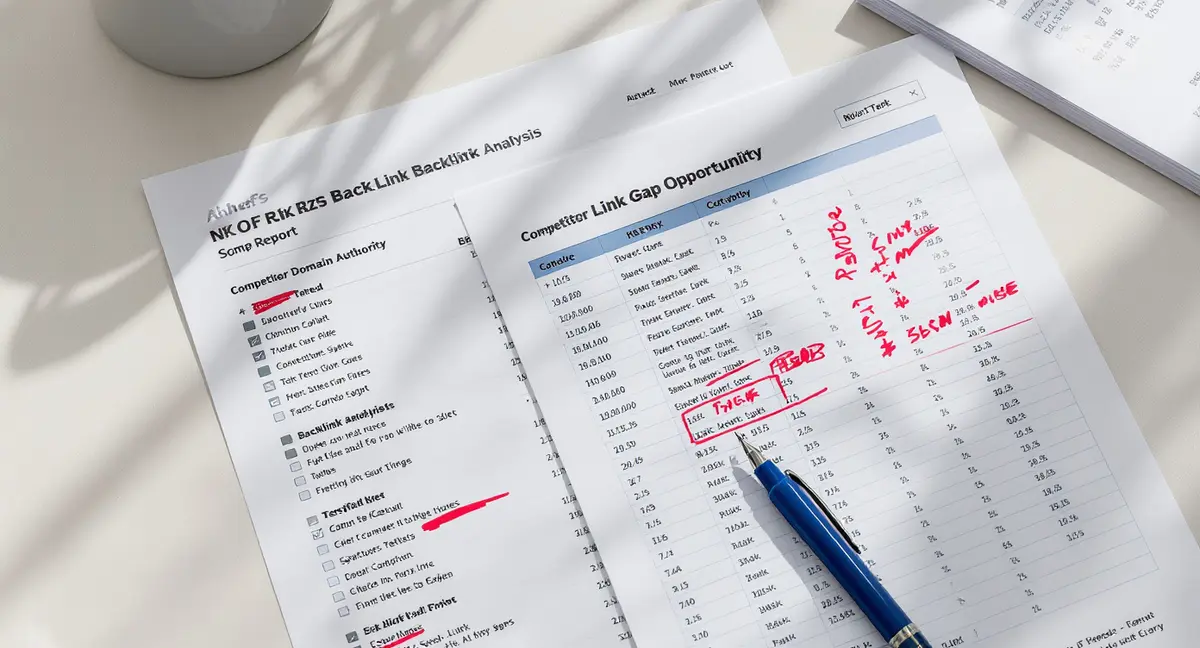
Competitor backlink gap analysis is the link building strategy that tells you exactly where to focus. Instead of guessing which sites might link to you, you identify the sites already linking to your competitors and target those same opportunities.
The logic is simple: if a website links to your competitor's content, they have already demonstrated interest in your topic. They are a qualified prospect. Your job is to create content that gives them a reason to link to you as well, either as an additional resource or as a replacement.
Backlink gap analysis tools compare your backlink profile to your competitors' profiles and surface the domains linking to them but not to you. This creates a prioritized target list of high-probability link opportunities.
Identifying Your True SEO Competitors
Your SEO competitors are not always your business competitors. They are the websites that rank for the keywords you are targeting. A local law firm's SEO competitors might include national legal information sites like Nolo or FindLaw, even though those sites do not compete for clients.
Start by identifying the top five sites that rank for your primary target keywords. Run a backlink profile analysis on each one. Look for patterns. Are they all getting links from industry directories? Legal resource pages? Guest posts on specific blogs? Those patterns reveal the link building strategies that work in your niche.
Focus on competitors with similar domain authority. If you have a domain authority of 30, analyzing a competitor with domain authority of 80 will surface mostly unattainable opportunities. Analyze competitors within 10-15 points of your current authority to find realistic targets.
Prioritizing High-Value Backlink Opportunities
Not all backlinks are worth pursuing. A link from a high-authority, relevant site in your industry is worth more than 100 links from low-quality directories. Prioritization separates effective link building strategies from wasted effort.
Evaluate each opportunity based on three factors: domain authority, topical relevance, and link placement. A link from a site with domain authority above 50 in your industry, placed in editorial content rather than a footer or sidebar, is a high-value target. A link from a random blog with domain authority 15 is not worth your time.
Create a target list of 50-100 high-value opportunities and work through them systematically. Track outreach, responses, and placements in a spreadsheet or CRM. Link building strategies fail when they are executed sporadically. Consistency and follow-up matter more than perfect pitch templates.
Guest Posting Done Right: Selective Placement on Relevant Sites
Guest posting has a bad reputation because it has been abused by low-quality link builders who spam irrelevant blogs with thin content. Done correctly, guest posting is still one of the most effective link building strategies for building authority and reaching new audiences.
The key is selectivity. Guest posting works when you contribute genuinely valuable content to authoritative sites in your industry. It does not work when you pay $50 for a guest post on a random blog that accepts any submission and has no real audience.
Search Engine Journal's 2024 link building survey found that 43% of SEO professionals still use guest posting as a core tactic, but only 18% reported positive ROI. The gap comes down to targeting. Guest posts on high-authority, relevant sites move rankings. Guest posts on low-quality link farms waste time and risk penalties.
Finding Guest Posting Opportunities That Matter
The best guest posting opportunities are sites you already read and respect. If you would not want your content associated with a site, do not pitch it. Your backlink profile is a reflection of the company you keep.
Start by identifying industry publications, trade journals, and high-traffic blogs in your niche. Look for sites that publish contributor content and have clear editorial standards. Check their domain authority, traffic, and engagement. A site with domain authority 60 and 50,000 monthly visitors is a worthwhile target. A site with domain authority 20 and no visible audience is not.
Avoid sites that explicitly sell guest posts or accept any submission without editorial review. Google's link spam algorithms are sophisticated enough to identify link schemes, and a backlink profile full of paid placements on low-quality sites can trigger a manual penalty.
Writing Guest Posts That Editors Accept
Editors reject 80-90% of guest post pitches because most pitches are thinly-disguised link requests with no value for the publication's audience. To get accepted, your pitch and content must solve a problem for the editor and their readers.
Pitch topics the site has not covered recently. Check their content archive to avoid proposing something they published three months ago. Explain why your angle is unique and why their audience will care. Include a brief outline showing you have thought through the structure.
When you write the post, follow the site's style and tone. If they publish 1,500-word tactical guides, do not submit a 600-word opinion piece. If they avoid promotional language, do not stuff the article with product mentions. The goal is to provide value and earn trust, not to maximize backlinks per word.
Owned Content Systems: Moving Beyond Rented Link Building
Most businesses approach link building strategies as a service they rent. They pay an agency or freelancer to build links every month, and when the payments stop, the link building stops. This creates dependency, not ownership. This approach scales across verticals, including highly regulated industries like life insurance marketing where educational content and trust-building resources naturally attract editorial links.
The structural problem with rented link building is that it never compounds. You are always starting from zero each month. The assets, relationships, and processes stay with the agency, not with you. If you leave, you lose everything except the backlinks themselves, which may or may not hold their value over time.
Owned content systems flip the model. Instead of paying for links, you build infrastructure that earns links continuously. This includes publishing original research, creating detailed resource content, developing relationships with journalists and editors, and systematizing outreach workflows. The system keeps producing results after the initial investment.
What an Owned Link Building System Looks Like
An owned link building system has three components: content production, relationship development, and outreach execution. All three must be internal or fully transferred to your team, not locked inside an agency's process.
Content production means you publish linkable assets on a predictable schedule. This could be quarterly industry reports, monthly case studies, or weekly in-depth guides. The format matters less than the consistency and quality. The goal is to always have something worth linking to when opportunities arise.
Relationship development means you build direct connections with journalists, editors, and influencers in your industry. These relationships belong to your business, not an agency account manager. When you have news or data to share, you can reach out directly.
Outreach execution means you have documented processes, templates, and tracking systems for broken link building, unlinked mention reclamation, and guest post pitching. These processes can be executed by internal staff or contractors, but the intellectual property and data stay with you.
Why Platforms Like Strategyc Build Installed Systems
Platforms like Strategyc take this approach by installing owned content systems rather than offering monthly retainers. The engagement installs the infrastructure, trains your team, and transfers all assets and processes. When the project ends, the system keeps running.
The Content & Visibility Engine includes content production workflows, AI search optimization, and link-earning asset development. It is designed to produce compounding results, not campaign-based spikes. The difference is ownership. You are not renting visibility. You are building it.
This model works for businesses that understand content and visibility as infrastructure, not overhead. If your growth depends on search visibility, that visibility should be an asset you own, not a service you rent month to month.
The Bottom Line on Link Building Strategies
Link building strategies work when they focus on earning links through value, not manipulating systems through shortcuts. The tactics that produce sustainable results in 2026 are the same ones that have always worked: create content worth linking to, build relationships with relevant publishers, and execute outreach systematically.
The businesses winning at link building are not the ones spending the most on agencies. They are the ones that have installed systems to produce linkable content, identify opportunities, and execute outreach consistently. That infrastructure compounds. Rented services do not.
AI search has not made backlinks obsolete. It has made them more critical. The sources AI models cite are the sources with strong backlink profiles and established authority. If you are not building that authority now, you are losing visibility to competitors who are.
Frequently Asked Questions
What are the safest link building strategies in 2026?
The safest link building strategies focus on earning links through content quality and relationship development. Original research, thorough guides, broken link building, and unlinked mention reclamation are all low-risk tactics that align with Google's guidelines. Avoid paid links, link exchanges, and mass directory submissions.
How long does it take to see results from link building strategies?
Most businesses see measurable ranking improvements within 3-6 months of consistent link building. The timeline depends on your starting authority, competition level, and the quality of links earned. High-authority backlinks from relevant sites can impact rankings within weeks. Low-quality links may never move the needle.
Can I build an effective link building system in-house?
Yes. Link building strategies require process, not magic. The core components are content creation, opportunity identification, and outreach execution. All three can be handled by internal staff or trained contractors. The key is documentation and consistency. Systems that run on one person's expertise do not scale or survive turnover.
How many backlinks do I need to rank competitively?
There is no universal number. Competitive keywords in established industries may require 50-100+ high-quality backlinks. Less competitive niches may rank with 10-20. Focus on link quality and relevance rather than volume. One link from an authoritative industry publication is worth more than 50 links from random blogs.
What is the ROI of investing in owned link building infrastructure?
Owned link building systems produce compounding returns. The content, relationships, and processes you build continue generating backlinks and visibility after the initial investment. Rented link building services stop producing results the moment you stop paying. ROI depends on execution, but businesses that own their systems typically see 3-5x better long-term results than those renting services.