Hvac Contractor SEO: How Local Visibility Drives Booked Jobs in 2026
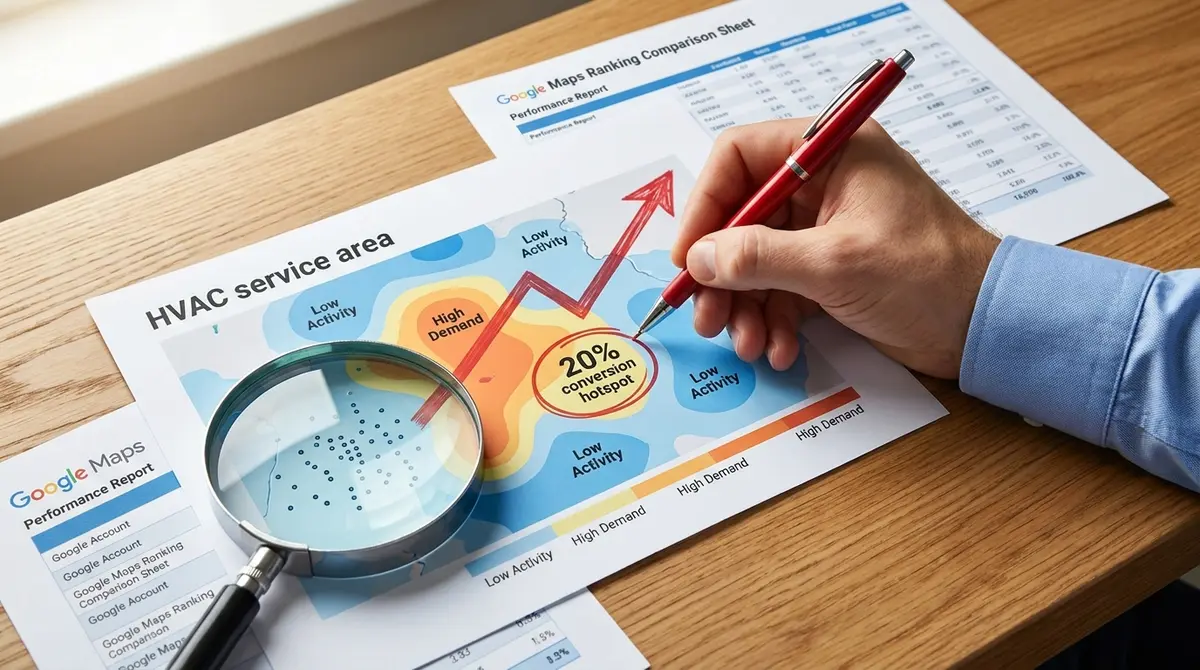
The short answer: HVAC contractor SEO is the process of improving organic visibility in Google, Google Maps, and AI search platforms to drive service calls and booked jobs. It combines local search optimization, structured technical elements, content authority, and reputation signals to capture homeowners searching for heating, cooling, and air quality services. Top performers focus on Google Business Profile optimization, citation consistency, and conversion-focused website infrastructure. According to BrightEdge, 53% of all trackable website traffic comes from organic search. Contractors new to organic visibility should start with a comprehensive SEO checklist that covers technical, local, and content foundations before diving into HVAC-specific tactics.
Why HVAC Contractor SEO Matters More in 2026 Than Ever
Every HVAC contractor knows the phone rings when the temperature drops or spikes. What most miss is that 97% of those calls start with a search. Homeowners facing a broken furnace at midnight do not flip through the Yellow Pages. They open Google on their phone and type "emergency HVAC repair near me." If your business does not appear in the top three map results, you lose the job before the phone rings. HVAC contractor SEO determines which businesses appear in those critical moments. It is the infrastructure that puts your company in front of buyers at the exact second they need service. The difference between ranking first and fifth in local search is the difference between a booked job and a missed opportunity. The competitive stakes have escalated. According to Search Engine Journal, SEO leads close at 14.6% compared to 1.7% for outbound marketing. That gap explains why HVAC companies now invest 26% of their marketing budget in content and visibility, up from 18% three years ago (CMI, 2024). Search is not auxiliary marketing. It is the primary customer acquisition channel for service businesses. AI search platforms have added another layer. Google AI Overviews now appear in 50% of search results, and these AI-generated answers cite only three to five sources per query (DemandSage, 2025). HVAC contractors optimizing for AI visibility report 120x impression increases and 800% year-over-year traffic growth from large language models (enterprise SEO platform, 2025). The businesses that adapt early capture market share while competitors wonder where their leads went.The Shift From Directory Listings to Search Dominance
HVAC marketing used to mean buying ads in local directories and direct mail postcards. That model collapsed when smartphone adoption crossed 85% and homeowners began searching in real time. A 2024 study found that 72% of consumers who performed a local search visited a store within five miles (marketing automation platform). For HVAC contractors, "store" means service area. If you rank locally, you get the call. The shift forced contractors to rethink visibility infrastructure. Directory listings still matter for citation consistency, but they do not drive calls. Google Business Profile rankings, organic search positions, and review volume determine who wins the job. HVAC contractor SEO builds that foundation. It ensures your business appears when homeowners search for "AC repair," "furnace installation," "ductless mini split," or "emergency HVAC service." Multi-location HVAC companies face a compounded challenge. Each service area requires its own local optimization. A contractor serving Phoenix, Scottsdale, and Tempe needs separate location pages, distinct Google Business Profiles, and geo-targeted content for each city. Agencies like CI Web Group specialize in multi-location SEO for HVAC contractors managing manufacturer co-op compliance and enterprise-scale visibility (Built Right Digital, 2026). The technical complexity increases with every additional service area.What Drives Organic Visibility for HVAC Contractors
HVAC contractor SEO is not generic website optimization. It requires understanding how homeowners search for heating and cooling services. Search behavior splits into three categories: emergency repair ("furnace not working"), planned installation ("best HVAC system for 2000 sq ft home"), and maintenance ("AC tune-up near me"). Each query type demands different content and conversion paths. Emergency searches convert fastest but have the highest competition. Homeowners searching at 2 AM for a broken heater need immediate response. HVAC contractor SEO for emergency keywords prioritizes Google Business Profile optimization, fast-loading mobile pages, and prominent phone numbers. According to Backlinko, 27.6% of searchers click the first organic result. For emergency HVAC queries, that click often becomes a booked service call within 30 minutes. Planned installation searches have longer research cycles but higher ticket values. A homeowner replacing a 15-year-old HVAC system will compare contractors, read reviews, and evaluate financing options before booking. Content strategy for these queries focuses on educational articles, system comparisons, and trust signals like certifications and case studies. HVAC contractors that publish authoritative content get 55% more website visitors than those that do not (marketing automation platform, 2024). Maintenance searches represent recurring revenue opportunities. Homeowners searching for seasonal tune-ups or filter replacements are existing system owners. HVAC contractor SEO captures these searches with service pages optimized for "AC maintenance," "furnace cleaning," and "HVAC inspection." These jobs have lower immediate value but higher lifetime customer value when converted into annual service agreements.How Google Business Profile Optimization Drives Map Rankings
Google Business Profile is the single highest-impact element of HVAC contractor SEO. When a homeowner searches "HVAC repair near me," Google displays a map pack with three businesses. Those three positions capture 75% of local search clicks. HVAC contractors outside the map pack might as well be invisible. Profile optimization starts with complete, accurate business information. Google evaluates NAP consistency (Name, Address, Phone) across the web. A contractor listed as "ABC Heating & Cooling" on the website but "ABC HVAC Services" on Google Business Profile confuses Google's algorithm and suppresses rankings. HVAC contractor SEO audits verify NAP consistency across 50+ citation sources including Yelp, Angi, HomeAdvisor, and industry directories. Service area definition matters for multi-location contractors. A business serving multiple cities must either create separate Google Business Profiles for each location or define service areas accurately. Google penalizes businesses that claim service areas they do not actually cover. HVAC contractors expanding into new markets need location-specific optimization before launching service in those areas.Review Volume and Response Strategy
Google's local ranking algorithm weighs review signals heavily. HVAC contractors with 50+ reviews rank higher than competitors with 10 reviews, assuming similar ratings. According to BrightLocal's 2024 survey, 87% of consumers read online reviews for local businesses, and 79% trust online reviews as much as personal recommendations. Review generation requires systematic process, not occasional requests. Top-performing HVAC contractors automate review requests after every completed job. The customer receives an email or text within 24 hours asking for feedback. Timing matters. A homeowner who just had their heat restored in January is far more likely to leave a positive review than one contacted three months later. Review response impacts rankings and conversions. Google's algorithm tracks whether businesses respond to reviews, particularly negative ones. HVAC contractors that respond professionally to one-star reviews demonstrate accountability. A study by Harvard Business School found that responding to reviews increases overall rating over time. The response signals to future customers that the business takes feedback seriously. Negative reviews are not fatal if handled correctly. A contractor with 100 reviews averaging 4.7 stars outperforms a competitor with 15 reviews averaging 5.0 stars. Volume and recency matter more than perfect scores. Homeowners distrust businesses with exclusively five-star reviews because they appear fake. A mix of four and five-star reviews with professional responses to occasional negative feedback builds more credibility.Category Selection and Attribute Optimization
Google Business Profile allows contractors to select primary and secondary categories. The primary category has the strongest ranking influence. HVAC contractors should choose "HVAC contractor" as primary, then add secondary categories like "Air conditioning repair service," "Furnace repair service," and "Air duct cleaning service." Each additional category expands the query types where the profile can rank. Attributes provide additional ranking and conversion signals. HVAC contractors can specify "Emergency service," "Free estimates," "Licensed," "Insured," and "Financing available." Google displays these attributes in search results and uses them as ranking factors. A contractor offering emergency service who fails to select that attribute loses visibility for emergency HVAC searches. Photos impact both rankings and click-through rates. Google Business Profiles with 100+ photos receive 520% more calls than profiles with minimal images (Google). HVAC contractors should upload photos of completed installations, team members, service vehicles, and before-after comparisons. Geotagged photos (images with location metadata) carry more weight in local rankings.| Factor | What it is | Impact |
|---|---|---|
| NAP Consistency | Identical business name, address, phone across all platforms | High, inconsistency suppresses map rankings |
| Review Volume | Total number of Google reviews | High, 50+ reviews substantially boost visibility |
| Review Recency | How recently the business received reviews | Medium, fresh reviews signal active business |
| Category Selection | Primary and secondary business categories | High, determines query eligibility |
| Photo Quantity | Number of geotagged images uploaded | Medium, 100+ photos increase call volume 520% |
Technical Website Infrastructure That Converts Searchers Into Calls
An HVAC contractor's website serves one primary function: convert searchers into phone calls or form submissions. Every technical element should support that goal. Site speed, mobile responsiveness, and conversion path clarity determine whether a visitor calls or bounces. Core Web Vitals are confirmed Google ranking factors. Largest Contentful Paint (LCP) measures how quickly the main content loads. HVAC contractor websites should achieve LCP under 2.5 seconds. Interaction to Next Paint (INP) measures responsiveness to user interactions. Sites with INP under 200 milliseconds provide better user experience and rank higher. Cumulative Layout Shift (CLS) measures visual stability. Pages where content jumps around as it loads frustrate users and suppress rankings. Mobile optimization is non-negotiable. According to StatCounter, 63% of Google searches now happen on mobile devices. A homeowner with a broken AC unit is searching from their phone, not their desktop. HVAC contractor SEO requires mobile-first design with tap-friendly phone buttons, simplified navigation, and fast-loading images. Google's mobile-first indexing means the mobile version of the site determines rankings even for desktop searches.Conversion-Focused Page Architecture
HVAC service pages must answer the searcher's question immediately. A homeowner searching "furnace repair cost" expects pricing information above the fold, not a company history essay. The page should open with a clear headline, a phone number, and either a price range or a "free estimate" offer. Everything else is secondary. Call-to-action placement determines conversion rates. HVAC contractor websites should display the phone number in the header, as a sticky button on mobile, and within the first paragraph of every service page. According to Unbounce, pages with a single focused call-to-action convert 13.5% better than pages with multiple competing CTAs. The primary action for HVAC contractors is always "call now" or "request service." Form design impacts lead quality. Multi-step forms convert 300% better than single-page forms (Venture Harbour). An HVAC contractor collecting service requests should ask for: service type, property type, preferred contact method, and availability. Asking for too much information upfront (square footage, system age, current thermostat model) increases abandonment. Collect detailed information during the phone call, not the web form.Schema Markup for HVAC Contractors
Schema markup is structured data that helps Google understand page content. LocalBusiness schema tells Google your business name, address, service areas, hours, and contact information. Service schema defines the specific HVAC services offered. FAQ schema marks up question-and-answer content for potential featured snippet placement. HVAC contractor SEO uses schema to improve visibility in AI search platforms. ChatGPT, Perplexity, and Google AI Overviews extract information from schema-marked content more reliably than unstructured text. According to research from Princeton and Georgia Tech, structured content with schema markup improves AI visibility by 30-40% (KDD, 2024). Review schema displays star ratings in search results. HVAC contractors with review schema implemented show 4.7-star ratings directly in Google search listings. This visual trust signal increases click-through rates by 35% compared to listings without stars (Search Engine Land). Review schema requires valid markup pointing to actual customer reviews, not fabricated ratings.Content Strategy That Builds Authority and Captures Search Demand
HVAC contractor SEO content serves two audiences: homeowners searching for answers and Google's ranking algorithm. The content must provide genuine value while incorporating the keyword patterns that trigger visibility. This dual purpose eliminates generic blog posts that neither rank nor convert. Educational content captures early-stage research queries. A homeowner searching "how long do HVAC systems last" is not ready to book service, but they are researching future replacement. An HVAC contractor publishing an authoritative article on system lifespan positions as the expert. When that homeowner's system fails 18 months later, they remember the contractor who provided helpful information. According to Demand Gen Report's 2024 study, B2B buyers consume three to seven content pieces before engaging sales. HVAC contractors operate in a similar pattern. Homeowners research HVAC efficiency ratings, compare heat pump vs furnace, and evaluate financing options before requesting quotes. HVAC contractor SEO builds content libraries that answer these questions and establish authority.Keyword Research for HVAC Service Businesses
HVAC keyword research splits into service keywords, location keywords, and question keywords. Service keywords include "AC repair," "furnace installation," "ductless mini split," and "heat pump replacement." Location keywords combine service terms with city names: "HVAC repair Phoenix," "AC installation Scottsdale." Question keywords capture informational searches: "why is my AC not cooling," "how much does a new furnace cost." Search volume varies dramatically by season. "AC repair" searches spike 300% in summer months. "Furnace repair" searches peak in winter. HVAC contractors in temperate climates see year-round search volume. Those in extreme climates experience pronounced seasonal swings. Content strategy must account for these patterns. Publishing furnace content in October positions for winter demand. Publishing AC content in March captures early summer searches. Commercial intent keywords drive immediate revenue. "Emergency HVAC repair near me" indicates a homeowner with a broken system who needs service within hours. "HVAC financing options" indicates a homeowner ready to replace a system but concerned about cost. These keywords justify higher SEO investment because they convert directly to booked jobs. HVAC contractor SEO prioritizes commercial intent keywords over informational queries.Content Formats That Earn Backlinks and Citations
Original research and data attract backlinks naturally. An HVAC contractor that surveys 500 customers about system replacement triggers earns citations from industry publications and local news sites. According to Backlinko, sites with original research get 4x more backlinks than those without. HVAC contractors can conduct simple surveys, compile local energy cost data, or analyze seasonal service patterns. Comprehensive guides establish topical authority. A 3,000-word guide to "Choosing the Right HVAC System for Your Home" that covers system types, sizing calculations, efficiency ratings, and cost comparisons becomes a linkable resource. Other websites reference it when discussing HVAC topics. Google interprets these backlinks as authority signals and improves rankings. Local content builds community relevance. HVAC contractors publishing content about regional climate challenges, local building codes, or city-specific rebate programs demonstrate local expertise. A contractor in Phoenix writing about monsoon season HVAC maintenance shows understanding of local conditions. A contractor in Minneapolis writing about cold-climate heat pumps addresses region-specific concerns.Citation Building and Local Directory Presence
Citations are online mentions of a business's name, address, and phone number. Google uses citation consistency as a local ranking signal. An HVAC contractor listed on 50 directories with identical NAP information ranks higher than a competitor with inconsistent listings across 20 directories. Core citation sources include Google Business Profile, Yelp, Facebook, Angi, HomeAdvisor, Thumbtack, BBB, and industry-specific directories like ACCA and HVAC.com. HVAC contractor SEO audits identify citation gaps and inconsistencies. A business listed as "Smith HVAC" on Google but "Smith Heating & Air" on Yelp confuses Google's entity recognition and suppresses rankings. Structured citations follow a consistent format. The business name should match exactly across all platforms. The address should use the same abbreviations (St vs Street, Suite vs Ste). The phone number should use the same format (dashes, parentheses, or spaces). Even minor variations weaken citation signals. According to Whitespark's 2024 Local Search Ranking Factors survey, citation consistency remains a top-10 ranking factor for local search.Industry-Specific Directories for HVAC Contractors
General directories like Yelp and Yellow Pages provide baseline citation value. Industry-specific directories carry more weight for HVAC contractor SEO. ACCA (Air Conditioning Contractors of America) membership includes a directory listing. NATE (North American Technician Excellence) certified contractors appear in the NATE technician finder. Carrier, Trane, Lennox, and other manufacturers maintain dealer locators that function as high-authority citations. Local chamber of commerce listings provide geographic relevance. A contractor listed in the Phoenix Chamber of Commerce directory gains both a citation and a backlink from a locally-authoritative source. Chamber listings cost $200-500 annually but deliver ongoing SEO value plus networking opportunities. Niche aggregator sites like HVAC.com and Modernize connect homeowners with contractors. These platforms generate leads but also provide citation value. HVAC contractors should claim and optimize profiles on lead-generation platforms even if they do not purchase leads. The citation and review signals benefit organic rankings independent of paid lead flow.Managing NAP Consistency Across Platforms
NAP consistency requires ongoing monitoring. Business information changes when contractors move offices, add phone lines, or rebrand. Every change must propagate across all citation sources. A contractor that moves locations but fails to update Yelp, HomeAdvisor, and industry directories will see rankings drop as Google encounters conflicting information. Citation management tools automate consistency checks. Platforms scan 50+ directories and flag discrepancies. HVAC contractors can manually update citations or use services that submit corrections automatically. The investment scales with business size. Single-location contractors can manage citations manually. Multi-location contractors serving 10+ cities need automation. Duplicate listings damage rankings. Google sometimes creates multiple Business Profiles for the same location due to user-submitted edits or data aggregator errors. HVAC contractors should audit for duplicates quarterly and request removal through Google Business Profile support. Duplicate profiles split review volume and citation signals, weakening both listings.See How Your Business Shows Up in AI Search
Get a free AI visibility scan. See exactly where you rank on ChatGPT, Perplexity, and Google AI, and what to do about it. Get Your Free Scan. The 14.6% close rate for SEO leads compared to 1.7% for outbound marketing settles the SEO vs PPC debate for most service businesses with multi-year customer acquisition horizons.
Paid Search Integration and Budget Allocation
HVAC contractor SEO works best alongside paid search, not as a replacement. Organic visibility takes 4-6 months to build. Google Ads and Local Services Ads deliver immediate visibility while organic rankings develop. The optimal strategy combines both channels with clear budget allocation. Local Services Ads appear above traditional paid ads and map results. HVAC contractors pay per lead, not per click. Google screens contractors, verifies licenses, and displays a "Google Guaranteed" badge. According to Google, Local Services Ads generate 30% higher conversion rates than standard search ads. The tradeoff is less control over targeting and higher cost per lead. Google Ads complement HVAC contractor SEO by capturing high-intent searches where organic rankings lag. A contractor ranking fifth organically for "emergency AC repair" can run ads to capture top-of-page visibility while SEO work improves organic position. Once organic rankings reach the top three, ad spend can shift to less competitive keywords.Seasonal Budget Shifting Between Paid and Organic
HVAC search demand fluctuates seasonally. AC-related searches spike in summer. Furnace searches peak in winter. HVAC contractors should increase paid search budgets during peak seasons to capture maximum demand, then shift budget to SEO during shoulder seasons to build organic visibility for the next peak. A Phoenix HVAC contractor might allocate 70% of budget to paid search from May through September when AC demand peaks, then shift to 70% SEO investment from October through April. This seasonal rebalancing maximizes ROI by matching channel investment to demand patterns. Organic rankings built during off-season compound over time, reducing reliance on paid search. Emergency service keywords justify higher paid search investment. A homeowner searching "24-hour HVAC repair" at 3 AM needs immediate help. Organic rankings matter less than visibility. HVAC contractors should maintain always-on paid campaigns for emergency keywords regardless of season. The high conversion rates and premium pricing for emergency service justify the ad spend.Measuring Cross-Channel Attribution
HVAC contractor SEO requires accurate attribution to measure ROI. A homeowner might click an organic search result, leave without converting, then return three days later via a paid ad and book service. Single-touch attribution credits the paid ad. Multi-touch attribution recognizes the organic visit's contribution. Call tracking enables channel attribution. HVAC contractors assign unique phone numbers to organic search, paid search, and other channels. When a customer calls, the system logs which number they dialed and attributes the lead accordingly. According to CallRail's 2024 data, businesses using call tracking improve marketing ROI by 25% through better budget allocation. Form submissions require UTM parameter tracking. When a homeowner submits a service request through the website, Google Analytics captures the traffic source. HVAC contractors can see which content pages, keywords, or campaigns drove the conversion. This data informs content strategy and budget allocation decisions.Multi-Location SEO for HVAC Contractors With Multiple Service Areas
HVAC contractors serving multiple cities face compounded SEO complexity. Each location needs distinct optimization while maintaining brand consistency. A contractor operating in Phoenix, Scottsdale, Tempe, and Mesa requires separate Google Business Profiles, location-specific landing pages, and geo-targeted content for each city. Location pages must provide unique value, not templated content with city names swapped. Google's algorithm detects thin location pages and suppresses rankings. A strong location page includes: unique service area description, local team photos, city-specific service offerings, local customer reviews, and content addressing area-specific challenges (climate, building codes, common HVAC issues). According to Moz's Local Search Ranking Factors study, location page quality is the third-highest ranking factor for multi-location businesses. HVAC contractors that invest in substantive location pages outrank competitors using template-generated city pages. The content investment scales linearly with service area count, making multi-location SEO more resource-intensive than single-location optimization.Managing Multiple Google Business Profiles
Google requires separate Business Profiles for each physical location. HVAC contractors with multiple offices create individual profiles per address. Service-area businesses without physical locations in every city cannot create multiple profiles. Google prohibits virtual offices and mailbox addresses. The workaround for service-area contractors is defining service areas in a single profile. A Phoenix-based contractor serving 10 surrounding cities lists all cities in the service area field. This approach provides broader geographic visibility but weaker rankings in specific cities compared to competitors with physical locations in those areas. Profile optimization scales across locations. HVAC contractors should replicate best practices (review generation, photo uploads, post publishing) across all profiles. Centralized management tools allow multi-location businesses to update hours, respond to reviews, and publish posts across all locations simultaneously. The efficiency gain becomes critical when managing 10+ profiles.Content Strategy for Geographic Expansion
HVAC contractors expanding into new markets need content strategies that establish local authority before launching service. Publishing city-specific content 3-6 months before entering a market builds organic visibility and brand recognition. A contractor planning to expand from Phoenix to Tucson should publish Tucson-focused content in advance. Local link building accelerates geographic expansion. Sponsoring local events, partnering with real estate agents, and earning mentions from city news sites create backlinks that signal local relevance. An HVAC contractor sponsoring a Scottsdale charity run earns a backlink from the event website and establishes community presence. Geographic keyword targeting requires understanding local search patterns. Homeowners in different cities use different terminology. Some regions say "AC," others say "air conditioner" or "cooling system." HVAC contractor SEO research must account for regional language variations. Keyword tools show search volume by city, enabling precise geographic targeting.Measuring ROI and Performance Metrics for HVAC Contractor SEO
HVAC contractor SEO success is measured in booked jobs and revenue, not rankings or traffic. A contractor ranking first for "HVAC services" but generating zero calls has failed. Effective measurement tracks the full funnel from search impression to completed job. Primary metrics include organic traffic (sessions from non-paid search), lead volume (calls and form submissions from organic traffic), conversion rate (percentage of organic visitors who become leads), and revenue attribution (dollars generated from organic leads). According to Firework's 2025 report, only 8% of marketers feel confident measuring marketing ROI. HVAC contractors must build measurement systems that connect search visibility to revenue. Google Search Console provides impression and click data. HVAC contractors can see which keywords trigger their listings, how often they appear in search results, and what percentage of searchers click through. Average position tracking shows ranking movement over time. A contractor improving from position 8 to position 3 for "AC repair Phoenix" will see corresponding traffic and lead increases.Call Tracking and Lead Attribution
Call tracking assigns unique phone numbers to marketing channels. An HVAC contractor displays one number to organic search visitors, another to paid search visitors, and another to social media visitors. When a customer calls, the system logs the source and records the conversation for quality review. Dynamic number insertion (DNI) changes the displayed phone number based on traffic source. A visitor arriving from organic search sees the organic tracking number. A visitor arriving from a paid ad sees the paid tracking number. DNI enables precise channel attribution without managing multiple phone numbers manually. Form tracking captures lead source for web submissions. When a homeowner submits a service request, the system logs which page they submitted from, which traffic source brought them to the site, and which keywords they searched. This data connects HVAC contractor SEO efforts to measurable lead generation.Lifetime Value and Long-Term ROI
HVAC contractor SEO delivers compounding returns. A single piece of content published in 2026 can generate leads for 3-5 years. According to HubSpot, companies that blog get 55% more website visitors. For HVAC contractors, those visitors convert to service calls, maintenance agreements, and system replacements over time. Customer lifetime value (CLV) matters more than first-job revenue. An HVAC contractor that acquires a customer through organic search might earn $500 on the initial repair, $200 annually on maintenance agreements, and $8,000 when the customer replaces their system five years later. The total CLV is $10,000+. Measuring only the first transaction understates SEO ROI by 95%. Owned infrastructure compounds. Platforms like Strategyc take this approach by installing owned content systems rather than offering monthly retainers. The content, technical optimization, and citation infrastructure continue producing results after the initial investment. A contractor that builds strong HVAC contractor SEO foundations in 2026 will see increasing returns through 2029 and beyond as content ages, backlinks accumulate, and domain authority grows.The Bottom Line
HVAC contractor SEO is infrastructure investment, not a marketing expense. The businesses that treat search visibility as owned infrastructure outperform competitors paying monthly for rented visibility. Google Business Profile optimization, technical website infrastructure, authoritative content, and citation consistency are the four pillars. Each element compounds over time. A contractor that invests systematically in HVAC contractor SEO builds an asset that produces leads and revenue for years after the initial work completes. The competitive window is narrowing. AI search platforms are forming their knowledge bases now. HVAC contractors optimizing for ChatGPT, Perplexity, and Google AI Overviews will dominate the next generation of search while competitors scramble to catch up. Early adopters report 800% year-over-year traffic growth from AI sources. The businesses that move first capture market share that becomes increasingly difficult to displace.Frequently Asked Questions
How long does HVAC contractor SEO take to show results?
Most HVAC contractors see measurable traffic increases within 4-6 months. Google Business Profile optimization can improve map rankings within weeks. Content and citation work take longer to compound. Competitive markets require 9-12 months to reach top rankings for high-value keywords like "HVAC repair your area." HVAC contractors reporting 120x impression increases from AI Overviews need frameworks for measuring AI SEO ROI beyond traditional organic traffic metrics. The shift from directory listings to AI-generated search results illustrates how the future of SEO rewards businesses that adapt infrastructure before competitors recognize the change.
What does it take to own my visibility infrastructure instead of renting it?
Ownership requires building content, technical infrastructure, and citation profiles on your domain and accounts. This means publishing content on your website, not guest posts on other sites. Optimizing your Google Business Profile, not relying on directory placements. Installing systems you control, not paying agencies monthly for access to their tools and data. Contractors asking what is AI SEO should understand that optimizing for AI Overviews requires structured data, entity clarity, and authoritative content that large language models can confidently cite.
Can I build HVAC contractor SEO in-house or do I need outside help?
Single-location contractors with marketing staff can handle basic SEO in-house: Google Business Profile optimization, review generation, and simple content publishing. Multi-location contractors and those in competitive markets typically need specialized help for technical optimization, schema implementation, and content strategy. The decision depends on internal resources and opportunity cost.
How do I measure ROI from HVAC contractor SEO?
Track organic traffic in Google Analytics, implement call tracking to attribute phone leads, and connect web form submissions to traffic source. Calculate cost per lead from organic search and compare to paid channels. Measure customer lifetime value, not just first-job revenue. HVAC customers acquired through SEO often generate $5,000-15,000 in lifetime revenue through maintenance and system replacements.
Does HVAC contractor SEO work for emergency services and after-hours calls?
Emergency HVAC searches have the highest commercial intent and conversion rates. Optimize for "emergency," "24-hour," and "same-day" keywords. Display phone numbers prominently on mobile. Use Google Business Profile attributes to indicate emergency availability. Emergency searches often convert within 30 minutes, making top rankings extremely valuable for contractors offering after-hours service.