GEO Tracking Tools: Where Your Business Appears in AI Search
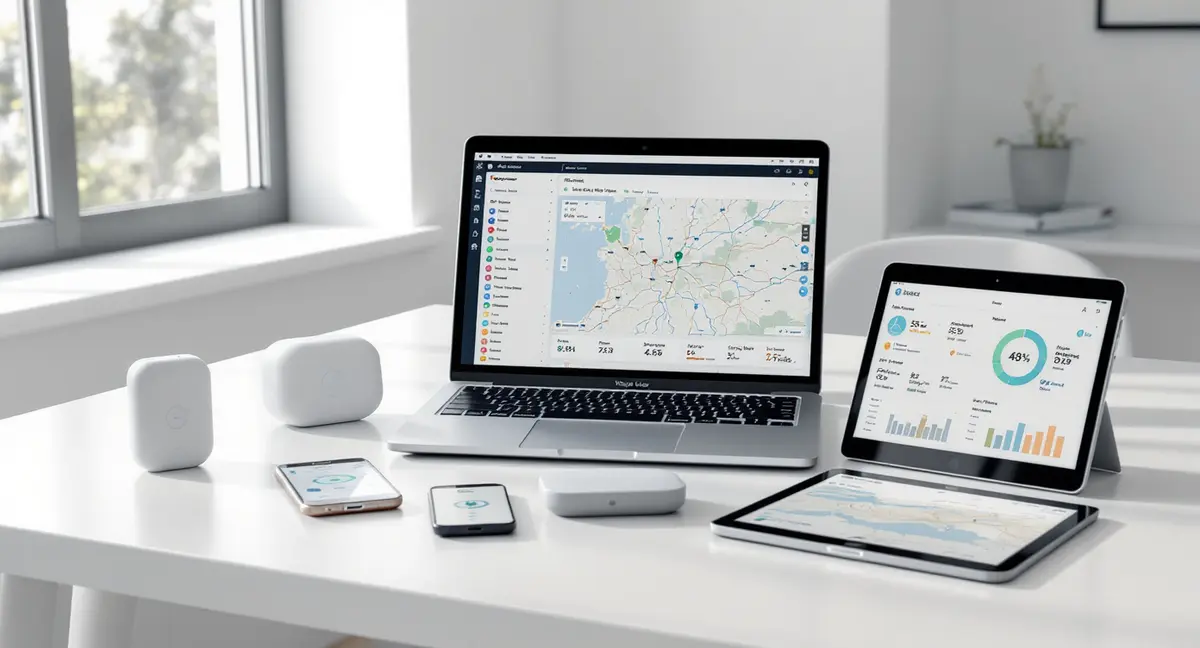
The short answer: GEO tracking tools monitor how often your business appears when AI systems like ChatGPT and Perplexity answer customer questions, or track physical assets using GPS hardware. These platforms measure AI citations, competitor mentions, and prompt coverage across major generative engines. Success in this space comes down to prompt database size, competitor gap analysis, and real-time tracking capability.
GEO tracking tools are reshaping how businesses measure visibility in 2026. When AI Overviews appear on about 16% of Google queries (Semrush, November 2025) and platforms like ChatGPT and Perplexity answer questions without sending traffic to websites, traditional rank tracking becomes incomplete. You need to know if your business gets cited when AI systems answer customer questions. SEO checklist is worth reading alongside this.
The problem? Most businesses still track only Google rankings while AI search adoption jumped from 14% to 29% in six months (HigherVisibility, 2025, via Position Digital). If you're not tracking AI citations, you're flying blind through the biggest search shift since mobile.
This guide breaks down the main GEO tracking tools across two categories: software platforms that monitor AI search visibility (Geoptie, Gauge, Rankscale) and GPS hardware for physical asset tracking (LandAirSea, Tracki, Geotab). You'll see pricing, feature comparisons, and which tools fit specific use cases, from tracking brand mentions in ChatGPT to monitoring fleet vehicles across 190 countries. The right tracking infrastructure tells you what's working before your competitors figure it out.
What GEO Tracking Tools Measure in 2026
GEO tracking tools split into two distinct categories that share a name but serve completely different functions. Understanding this split matters because businesses often search for one and find the other.
| Factor | What it is | Impact |
|---|---|---|
| Prompt Database Size | Number of queries monitored across AI engines daily | Larger databases catch more visibility opportunities |
| Competitor Gap Analysis | Shows which queries cite competitors but not your brand | Identifies content gaps and optimization priorities |
| Tracking Frequency | How often the tool re-checks AI answers, depending on tool tier | Faster alerts enable quicker content adjustments |
| Multi-Platform Coverage | Monitors ChatGPT, Perplexity, Gemini, Claude simultaneously | Reveals which engines prioritize your content |
Generative Engine Optimization Software vs GPS Hardware
GEO tracking tools for AI search monitor how often your business gets cited when people ask ChatGPT, Perplexity, Google AI Overviews, or Claude for recommendations. Platforms like Geoptie track a set of prompts you choose (15, 100 or 400 depending on plan, per Geoptie's pricing page), showing which queries trigger your brand and which send traffic to competitors. Pricing depends on prompt volume and brand count.
GPS tracking tools monitor physical location of vehicles, assets, and personnel in real time. LandAirSea Overdrive uses magnetic mounts for covert vehicle tracking. Tracki's built-in SIM works in about 190 countries (SafeWise). Geotab manages more than 5 million connected vehicle subscriptions (Geotab, September 2025) with fuel optimization and driver safety scoring. These tools charge a monthly service fee plus hardware.
The confusion happens because "GEO" means both Generative Engine Optimization (AI search) and geographic positioning (GPS). A roofing company searching for GEO tracking might want to know if ChatGPT recommends them to homeowners, or they might need to track work trucks. The use cases don't overlap. One measures digital visibility, the other physical location.
Why Traditional Analytics Miss AI Search Performance
Google Search Console shows clicks from Google. Google Analytics tracks website sessions. Neither tool captures what happens when AI systems answer questions without sending users to your site. If your analytics can't see visitors arriving from Perplexity or ChatGPT, you're missing a whole traffic source.
GEO tracking tools fill this gap by monitoring AI platforms directly. Gauge tracks 600 prompts daily across six AI engines at its Growth tier ($599/month, per Stork.ai). Rankscale monitors 480 AI responses monthly for €20 (OMR Reviews). These platforms show citation frequency, competitor mentions, and prompt categories where you're visible or absent.
The shift matters because AI citations don't follow traditional SEO rules. A page ranking #1 in Google might never get cited in ChatGPT. A Princeton and Georgia Tech study found that adding citations, quotations and statistics to content raised its visibility in AI answers by up to 40% on the researchers' own benchmark (Aggarwal et al., KDD 2024). You need different metrics: citation rate, source diversity, prompt coverage. GEO tracking tools provide those metrics. Standard analytics don't.
Top GEO Software Platforms for AI Search Visibility
AI search visibility requires dedicated tracking infrastructure. These platforms monitor how often your business appears when users query ChatGPT, Perplexity, Google AI Overviews, and similar systems.
All-in-One Platform: Geoptie
Geoptie tracks seven AI engines, including ChatGPT, Perplexity, Gemini and Claude, with any four per brand (Geoptie's pricing page). The Starter plan costs $49 monthly for 15 prompts and 2 brands. The Professional plan raises that to 100 prompts and 10 brands. Geoptie includes competitor gap analysis showing which queries cite rivals but not you, plus optimization suggestions for improving citation rates.
Pair Geoptie with your usual SEO tools and you see traditional Google rankings alongside AI citation rates, revealing whether your content performs in both channels or just one. This matters because a page invisible in AI search might still drive Google traffic, or vice versa.
Budget-Friendly Options: Rankscale and Otterly.AI
Rankscale Essentials costs €20 monthly for 480 AI responses across ChatGPT, Claude, and Perplexity. The founder-led team ships updates frequently and supports regional tracking, useful for businesses operating in specific cities or states. Downside? Credits burn fast if you track multiple brands or run daily checks. One review noted UX polish lags behind pricier competitors, but the core tracking works.
Otterly.AI costs $25 monthly on its Lite plan, billed annually (Capterra). It tracks basic citation frequency and sends alerts when competitors appear in prompts where you don't. Feature set is lean, but it answers the essential question: is my business showing up in AI answers? For businesses testing GEO tracking tools before committing to enterprise platforms, Otterly.AI provides proof of concept without financial risk.
Free alternative: HubSpot AI Search Grader. It's a one-time scan rather than ongoing monitoring, but it shows current AI visibility across major platforms at zero cost. Run it quarterly to spot trends, then upgrade to paid tools if you need daily tracking.
GPS Hardware for Fleet and Asset Tracking
Physical tracking needs different infrastructure than AI visibility monitoring. GPS hardware tracks vehicles, equipment, and personnel using cellular, satellite, or hybrid positioning. If you want the practical breakdown, AI SEO is a good next step.
Portable and Covert Trackers: LandAirSea and Tracki
LandAirSea Overdrive uses magnetic mounts for covert vehicle tracking. IP67 waterproof rating means it survives rain and car washes. 4G LTE provides real-time updates every 3 seconds in motion on the top plan, and the tracker sleeps after it stops moving for a while to conserve battery (LandAirSea). Use cases include asset recovery, fleet monitoring, and teen driver oversight. Monthly service is billed on top of the hardware, and faster update rates cost more. The "dark mode" feature disables LED lights for stealth installations (Newegg listing).
Tracki's TrackiPro has a 10,000mAh battery and a built-in SIM with coverage in 150-plus countries (HotAirTag). That's broader global reach than most competitors. Geofencing sends alerts when tracked assets enter or exit designated areas, useful for construction equipment that shouldn't leave job sites overnight. SOS button lets personnel signal emergencies. Subscription price depends on how often the device reports its location (SafeWise).
Both devices install without tools. Slap the magnetic mount under a vehicle bumper or inside an equipment panel. Setup takes under five minutes. Battery life varies by update frequency. LandAirSea rates the Overdrive at 1-3 weeks per charge at its 3-second to 3-minute settings (LandAirSea). Cellular coverage determines reliability, these tools work where phones work, but dead zones remain an issue in rural areas.
Enterprise Fleet Management: Geotab and GPX Intelligence
Geotab supports 5 million-plus connected vehicle subscriptions with detailed telematics. GPS tracking is the foundation, but the platform adds fuel optimization, driver behavior scoring, predictive maintenance alerts and EV integration. Geotab reports a 40% reduction in collision rates among fleets using its safety features (Geotab). API connections let businesses build custom dashboards. Geotab sells through resellers and doesn't publish a price list, so you get a quote based on fleet size.
GPX Intelligence offers AssetTrack for industrial IoT applications: shipping containers, heavy machinery, remote infrastructure. Hybrid positioning uses GPS, Wi-Fi, and Bluetooth to maintain accuracy in environments where satellite signals fail. GPX rates the battery at up to 10 years at one location report per day (GPX). Pricing is quote-only.
These GEO tracking tools target businesses managing 50-plus assets. The ROI comes from operational efficiency: optimized routes save fuel, safety scoring reduces insurance premiums, predictive maintenance prevents breakdowns.
Pricing Models and Feature Comparison
GEO tracking tools use three pricing structures: monthly subscriptions, credit-based systems, and enterprise custom pricing. Understanding which model fits your use case prevents overpaying for unused features.
Subscription Tiers Across AI Search Platforms
Entry-level GEO tracking tools start at $20-49 monthly. Rankscale Essentials (€20) and Geoptie Starter ($49) provide basic prompt tracking for 1-2 brands. You get citation frequency, basic competitor analysis, and monthly reports. These tiers suit businesses testing AI search visibility before scaling investment.
Mid-tier plans add capacity. Geoptie Professional increases it to 100 prompts and 10 brands. Otterly.AI's Standard plan covers 100 prompts with daily tracking (Capterra). At this level you get enough data to identify patterns: which content formats AI systems prefer, which competitor strategies work, which prompts your business should target but currently misses.
Enterprise platforms like Gauge Growth ($599) track 600 prompts daily across six AI engines. You get real-time alerting, API access for custom integrations, and dedicated support. Ahrefs Brand Radar costs $699 monthly for all AI platforms as an add-on to existing Ahrefs subscriptions (Ahrefs). These tools make sense for businesses where AI search drives major revenue, think SaaS companies, professional services, or ecommerce brands competing in high-value categories.
GPS Hardware Costs and Subscription Fees
GPS tracking requires upfront hardware purchase plus monthly service. LandAirSea and Tracki both price their monthly plans by how often the device reports its location, so faster updates cost more. Check current device and plan prices on each vendor's site before you budget.
Fleet management platforms like Geotab charge per vehicle, and the reseller quotes the price.
Credit-based models appear in some GEO tracking tools but remain less common than subscriptions. Rankscale is one example: its Essentials plan comes with 120 credits a month (OMR Reviews). This works for businesses with variable monitoring needs, track heavily during campaign launches, scale back during slower periods. But credit systems require careful monitoring.
| Platform | Starting Price | Prompts/Assets | Best For |
|---|---|---|---|
| Rankscale | €20/month | 480 AI responses | Budget AI tracking |
| Geoptie | $49/month | 15 prompts, 2 brands | Small business GEO |
| Gauge Growth | $599/month | 600 prompts/day | Enterprise AI visibility |
| LandAirSea | Device + monthly plan | 1 device | Covert vehicle tracking |
| Geotab | Quote via reseller | Unlimited vehicles | Fleet telematics |
Core Features That Separate Effective Tools from Noise
Not all GEO tracking tools provide equal value. Effective platforms share specific capabilities that turn data into actionable findings.
Prompt Tracking and Visibility Scoring
Prompt tracking monitors which queries trigger your brand in AI responses. With Geoptie you choose the prompts to monitor, such as "best roofing company in Austin" or "how to choose a CPA for small business." The tool shows whether your business appears in the answer, where you rank among cited sources, and what percentage of relevant prompts include you.
Visibility scores quantify performance. Some platforms give you a 0-100 score built from how often you're cited and how you compare with competitors. Scores below 50 signal problems, your content exists but AI systems don't consider it authoritative enough to cite. Scores above 80 indicate strong AI visibility.
Real-time drift detection alerts you when visibility changes. If your score drops from 70 to 45 over two weeks, something shifted: a competitor published better content, AI models updated their training data, or your site developed technical issues. GEO tracking tools with alerting let you respond before losing large traffic.
Competitor Gap Analysis and Optimization Recommendations
Gap analysis reveals prompts where competitors appear but you don't. Geoptie lists these missed opportunities. Example: "emergency plumber near me" might show your competitor cited 80% of the time while you're absent. That's a content gap. The tool suggests creating FAQ content, adding service area pages, or improving schema markup to close the gap. AI SEO essentials is worth reading alongside this.
Optimization recommendations analyze why AI systems prefer competitor content. Common issues include: lack of factual density (your content is opinion-based while competitors cite specific data), missing structured formatting (competitors use clear H2/H3 headers that AI can extract), absent expert attribution (competitors name credentialed authors), and no FAQ sections (AI systems pull Q&A content preferentially).
Integration with SEO ecosystems matters. Semrush AI Toolkit combines GEO tracking tools with traditional keyword research. You see which queries drive Google traffic and which trigger AI citations. Sometimes they overlap, a keyword ranking #1 in Google also gets you cited in ChatGPT. Often they diverge. A long-tail keyword with 50 monthly searches might generate zero AI citations, while a question with 10 searches appears in ChatGPT constantly. Hybrid tracking prevents resource waste on content that performs in only one channel.
Ready to take the next step with Strategyc?
Our team is ready to help you achieve your goals. Get Your Free Scan.
Integration Capabilities and Custom Workflows
Standalone GEO tracking tools provide data. Integrated systems turn that data into automated workflows that improve visibility without manual intervention.
API Access and Third-Party Connections
API access lets businesses build custom dashboards combining GEO tracking tools with internal analytics. Geoptie, for example, offers a REST API (Geoptie's pricing page) for pulling its tracking data into other systems. Use cases include: combining AI visibility with CRM data to see which citations drive sales, integrating GEO metrics into executive dashboards alongside revenue and traffic, and triggering content creation workflows when visibility drops below thresholds.
Third-party connections expand functionality. Ahrefs Brand Radar integrates with Ahrefs' existing SEO toolkit, you track backlinks, Google rankings, and AI citations in one interface. Semrush AI Toolkit connects to Semrush's keyword research and content optimization features. Both are paid add-ons on top of the base subscription, but they eliminate the need to switch between platforms.
Webhook support enables real-time automation. Set a webhook to fire when your visibility score drops 10 points. That webhook triggers a Slack notification, creates a task in your project management system, and sends an email to your content team. Response time shrinks from days to hours.
Fleet Management Integrations for GPS Tools
GPS tracking platforms integrate with dispatch software, fuel cards, and maintenance systems. Geotab connects to Fleetio for maintenance scheduling. When a vehicle needs an oil change, the system auto-generates a work order. When fuel costs spike on a specific route, the platform flags it for review.
EV integration is the 2026 frontier for fleet GEO tracking tools. Geotab's EV module tracks battery health, charging patterns, and range optimization. It recommends which routes suit EVs based on charging infrastructure. As fleets electrify, this integration prevents range anxiety and maximizes vehicle utilization.
Custom reporting APIs let businesses build client-facing dashboards. A logistics company using GPX Intelligence might give customers real-time shipment tracking through a branded portal. The customer sees their container's location, temperature (for refrigerated goods), and estimated arrival, all powered by GPX's API feeding data to the company's own interface. This white-label capability turns tracking from an internal tool into a customer service differentiator.
Use Cases: When to Deploy Each Tool Type
Choosing the right GEO tracking tools depends on whether you're monitoring digital visibility or physical assets. Mismatched tools waste money and provide irrelevant data.
AI Search Optimization for Service Businesses
Service businesses, plumbers, electricians, lawyers, accountants, need GEO tracking tools that monitor local AI search. When someone asks ChatGPT "best divorce attorney in Seattle," does your firm get cited? Platforms like Geoptie and Rankscale track these location-specific prompts and show citation frequency by service area.
The optimization cycle works like this: Track current visibility to establish a baseline. Identify high-value prompts where you're absent. Create content targeting those prompts using structured formatting, factual density, and FAQ sections. Re-track visibility after 30-60 days to measure improvement.
ROI measurement requires connecting AI citations to revenue. A law firm might track which prompts drive consultation requests. If "what to do after a car accident" generates 15 consultations monthly and you're cited in that prompt 60% of the time, improving to 80% citation rate could add 5 consultations monthly. If each of those consultations became a $5,000 case, that's $25,000 in monthly revenue from one prompt. GEO tracking tools that integrate with CRMs make this attribution possible.
Fleet Management and Asset Recovery
GPS tracking serves businesses managing physical assets: delivery fleets, construction equipment, rental vehicles, shipping containers. Geotab excels at large-scale fleet optimization, 200-plus vehicles where fuel savings and safety improvements generate clear ROI. LandAirSea fits covert tracking needs like asset recovery or monitoring high-theft equipment.
Consider a construction company with $500,000 in equipment spread across 10 job sites. Theft risk is high. Geofencing alerts when equipment moves after hours prevent theft before it happens. The ROI isn't theoretical, it's measurable in prevented losses.
Fleet tracking can also cut fuel waste. Geotab's 2025 Sustainability Report cites idling reductions of up to 30% (IT Brief). If you want the practical breakdown, Ai seo tools is a good next step.
Regulatory Compliance and Privacy Considerations
GEO tracking tools, both AI search and GPS variants, operate in regulated environments. Compliance failures create legal liability and reputation damage.
AI Search Transparency and Data Usage
AI search platforms don't disclose how they select sources to cite. This opacity creates compliance challenges for regulated industries. A healthcare provider using GEO tracking tools to improve visibility in medical AI answers must ensure cited content meets HIPAA standards. Financial advisors optimizing for AI search need content that complies with SEC advertising rules. The tracking tool shows what gets cited, but you're responsible for ensuring cited content follows industry regulations.
Data usage policies vary by platform. Tracking platforms can collect prompt data to improve their databases. This raises questions: who owns the prompt data, can competitors access findings derived from your tracking activity, and how long is data retained? Review terms of service before sharing proprietary information. Enterprise contracts often include data isolation clauses preventing cross-customer takeaways.
Citation attribution creates new liability. If an AI system cites your business in response to a prompt, and that citation contains inaccurate information, are you liable? Legal frameworks remain unclear in 2026. Best practice: regularly audit AI citations using GEO tracking tools to identify and correct misinformation. Document correction attempts. This creates a defensible record if disputes arise.
GPS Tracking Consent and Employee Privacy
GPS tracking employees requires consent in most jurisdictions. Tracking company-owned vehicles during work hours is broadly accepted practice in the US, but state laws add restrictions. California Penal Code 637.7 bans tracking a vehicle without the consent of its registered owner, lessor or lessee. An employer can track its own vehicles, though notice and consent are still best practice (Coblentz Patch Duffy & Bass). New York requires written notice of electronic monitoring of phone, email and internet use, and it's unclear whether that covers vehicle tracking (Barnes & Thornburg). Illinois bans tracking a vehicle without the owner's consent but exempts business-owned or leased vehicles driven by employees (Force Fleet). Failure to comply risks lawsuits and fines.
Best practices for compliant fleet tracking: Obtain written consent before installing devices. Clearly communicate what gets tracked (location, speed, idle time) and what doesn't (personal conversations, off-duty movement). Disable tracking outside work hours or when employees use vehicles for personal errands. Provide employees access to their own tracking data. These steps reduce legal risk and improve adoption, drivers resist systems that feel like surveillance, but accept tools framed as safety and efficiency improvements.
Covert tracking faces stricter rules. Using LandAirSea to track a spouse's vehicle without consent can break state electronic tracking and stalking laws, such as California Penal Code 637.7 and Illinois 720 ILCS 5/21-2.5 (Force Fleet). Tracking a company vehicle without informing the driver is legal in some states but not others. Asset recovery is generally legal, you can track your own property, but using tracking data in criminal proceedings requires proper chain of custody. Consult legal counsel before deploying covert tracking to avoid criminal liability.
The Bottom Line: Matching Tools to Actual Business Needs
GEO tracking tools solve visibility problems, but only when matched to the right use case. AI search platforms like Geoptie and Rankscale answer "does my business appear when people ask AI systems for recommendations?" GPS hardware like Geotab and Tracki answers "where are my physical assets right now?" The tools don't overlap. Buying the wrong category wastes money and provides irrelevant data.
Start with the problem you're solving. If customers find competitors through ChatGPT but not you, invest in AI visibility tracking. If equipment theft or fleet inefficiency costs you money, invest in GPS hardware. If you're guessing which problem matters more, you need assessment before tools. Tools like Strategyc's free AI visibility scan show current AI search performance, you see whether visibility gaps exist before investing in tracking infrastructure.
The tracking infrastructure you install today determines what you can measure tomorrow. Businesses tracking only Google rankings missed the AI search shift until competitors already dominated ChatGPT citations. Companies tracking GPS location but not driver behavior miss fuel savings and safety improvements. Install full tracking now. The data compounds. A year of visibility metrics reveals patterns that a month of data can't show. Your competitors are building this infrastructure right now. The question isn't whether to track, it's whether you'll start before or after you lose market share.
Frequently Asked Questions
What's the difference between GEO tracking for AI search and GPS tracking?
GEO tracking for AI search monitors whether your business gets cited in ChatGPT, Perplexity, and Google AI Overviews when users ask questions. GPS tracking monitors physical location of vehicles and assets. They share a name but serve completely different purposes, one measures digital visibility, the other tracks physical movement.
Can I build AI visibility tracking in-house instead of buying GEO tracking tools?
Building in-house requires API access to AI platforms (the major ones offer public APIs, but API answers can differ from what people see in the apps), infrastructure to run thousands of daily prompts, and data science expertise to analyze citation patterns. Platforms like Geoptie and Rankscale have already built this infrastructure. For most businesses, buying beats building unless you have dedicated engineering resources and budget exceeding $10,000 monthly.
How long before GEO tracking tools show ROI?
AI visibility tracking shows initial data within days, you immediately see current citation rates and competitor gaps. Meaningful ROI takes longer, since you have to create optimized content and then re-track performance. GPS fleet tracking starts reporting fuel use and driver behavior once the devices are installed. Asset recovery ROI is immediate when you prevent or recover from theft.
Do GEO tracking tools work for businesses outside the US?
AI search platforms like Rankscale support regional tracking in Europe, Asia, and other markets. GPS hardware like Tracki works in about 190 countries via a built-in SIM. Geotab operates globally but pricing and features vary by region. Check coverage maps before purchasing, some tools have geographic limitations that aren't obvious until after you've committed.
What happens to tracking data if I stop paying for the service?
Retention policies vary, and you can lose historical data once a subscription ends. Export reports before canceling. GPS tracking data typically remains accessible during the billing period but disappears once service lapses. If you own the tracking infrastructure, like an installed content system, data persists because it lives on your servers, not the vendor's. This is why ownership models matter for long-term visibility measurement.