How Does SEO Work? the Crawl-index-rank System That Controls Your Visibility
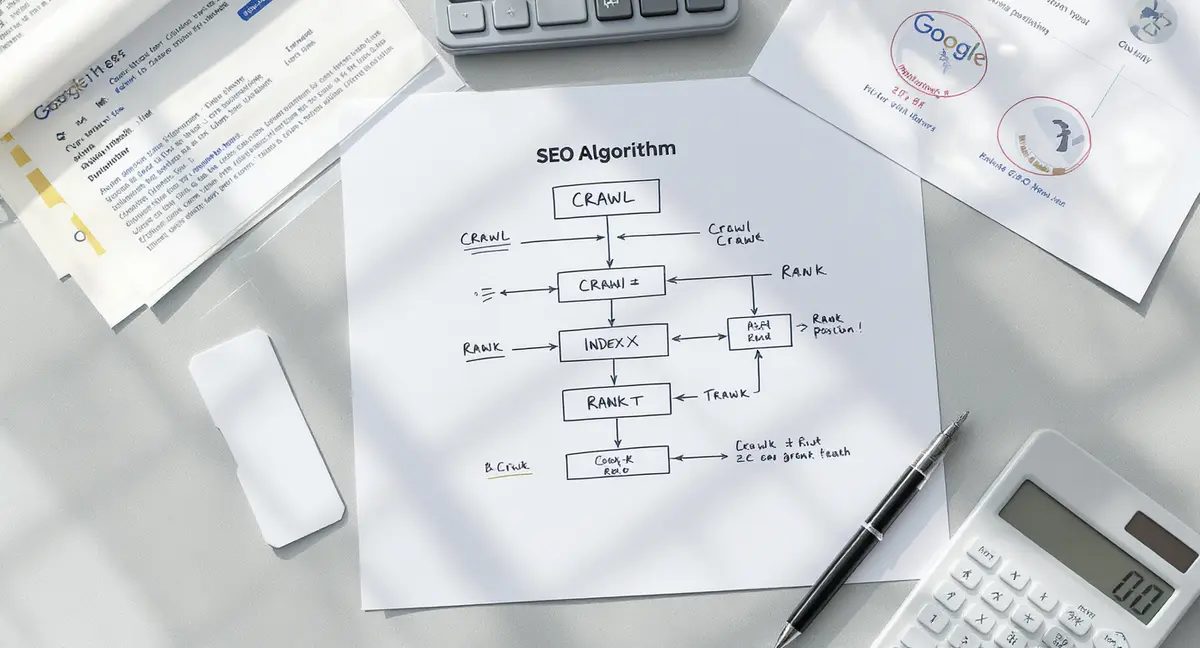
The short answer: SEO works through a three-stage system where search engines crawl your pages, index the content, and rank it based on relevance and authority. Google's algorithm evaluates over 200 signals including content quality, site speed, mobile usability, backlinks, and user experience. Top performers focus on crawlable architecture, keyword-aligned content, and trust signals. According to BrightEdge, organic search drives 53% of all trackable website traffic. If you're ready to apply these principles, our SEO checklist walks through every technical and content factor that moves rankings in 2026.
You type a question into Google. Half a second later, you get 10 results. Behind that speed sits a machine that crawled 400 billion pages, indexed the useful ones, and ranked them based on what it thinks you actually want. That machine is why 53% of all website traffic comes from organic search (enterprise SEO platform). It's also why businesses that understand how does SEO work get 55% more visitors than those that don't (HubSpat State of Marketing 2024). The gap between visible and invisible online comes down to whether your content fits the system Google built to organize the internet. How does SEO work? It starts when a search engine discovers your page, reads it, decides if it's worth remembering, and then compares it to every other page competing for the same query. The businesses that win that comparison show up first. The ones that lose disappear past page two, where 75% of users never look (Backlinko). This article breaks down the crawl-index-rank pipeline, the signals Google uses to decide what ranks, and what you control versus what you don't. You'll see how technical structure, content quality, and external authority combine to determine whether your business gets found or ignored.How Search Engines Discover and Crawl Your Pages
Before Google can rank your content, it has to find it. That discovery happens through crawling, a process where automated bots follow links from page to page across the web. If your pages aren't crawlable, nothing else matters.The Role of Googlebot in Page Discovery
Googlebot is Google's web crawler. It starts with a list of known URLs from previous crawls and sitemaps, then follows every link it finds to discover new pages. When Googlebot lands on your homepage and sees a link to your services page, it adds that URL to its crawl queue. How does SEO work at this stage? It depends on whether Googlebot can reach your pages. If a page isn't linked from anywhere on your site or blocked by robots.txt, Google never sees it. Sites with clear internal linking structures get crawled more efficiently. According to Google Search Central, pages that are only reachable through forms, JavaScript navigation, or behind login walls often get missed entirely. Crawl budget matters for larger sites. Google allocates a limited number of crawl requests per site based on authority and server capacity. If you have 10,000 pages but only 2,000 get crawled per month, the other 8,000 sit invisible. Prioritize your most important pages by linking to them from high-authority sections like your homepage or main navigation.What Blocks Search Engines From Seeing Your Content
Several technical barriers stop crawlers cold. Robots.txt files tell search engines which parts of your site to avoid. A single misconfigured line can block your entire site. The noindex meta tag tells Google to crawl a page but not include it in search results. Canonical tags point to the preferred version of duplicate content, but if misused, they can consolidate ranking signals away from the page you want to rank. JavaScript-heavy sites create crawl problems. If your content only appears after JavaScript executes, Googlebot might see an empty page. Google can render JavaScript, but it's slower and less reliable than static HTML. Sites built on single-page app frameworks often suffer invisible content unless they implement server-side rendering or prerendering. Broken internal links waste crawl budget and create dead ends. If 20% of your internal links lead to 404 errors, Googlebot spends time hitting walls instead of discovering new content. Redirect chains (page A redirects to B, which redirects to C) slow crawling and dilute link equity. Google recommends keeping redirects to one hop maximum.How Indexing Turns Crawled Pages Into Search Results
Crawling finds your pages. Indexing decides if they're worth keeping. After Googlebot crawls a URL, Google's indexing system analyzes the content, extracts key information, and stores it in a massive database. Only indexed pages can appear in search results.What Happens During the Indexing Process
Google reads the HTML, processes text, images, and video files, and identifies the page's topic and intent. The system extracts titles, headings, meta descriptions, and body content. It looks at structured data markup to understand entities like products, events, or FAQs. It evaluates the page's language, freshness, and whether it duplicates content already in the index. How does SEO work when Google decides what to index? Quality filters kick in. Low-quality pages, thin content, or obvious spam get filtered out. Google's Helpful Content Update (September 2023) specifically targets pages written for search engines rather than people. If your content reads like keyword-stuffed filler, it won't make the cut. Duplicate content creates indexing decisions. If you have three pages with nearly identical text, Google picks one as the canonical version and ignores the others. E-commerce sites with product variations or location-based service pages often face this. Canonical tags and strategic noindex directives tell Google which version to prioritize.How to Check If Your Pages Are Indexed
Google Search Console shows exactly which pages Google has indexed. The Coverage report lists indexed pages, pages with errors, and pages excluded by crawl rules or quality filters. If a page you want to rank isn't in the index, you have a technical problem, not a ranking problem. The site: search operator provides a quick check. Type site:yourdomain.com into Google to see indexed pages. If critical pages are missing, inspect them in Search Console. Common reasons for exclusion: blocked by robots.txt, tagged with noindex, flagged as duplicate, or deemed low-quality by Google's algorithms. Indexing can take days or weeks for new pages. Submitting a sitemap through Search Console speeds discovery. Requesting indexing for individual URLs through the URL Inspection tool pushes them to the front of the crawl queue. High-authority sites with frequent updates get crawled and indexed faster than new or rarely-updated sites.| Factor | What it is | Impact |
|---|---|---|
| Crawlability | Whether search bots can access and work through your pages | High |
| Indexability | Whether Google stores your page in its search database | High |
| Content quality | Originality, depth, and user value of your content | High |
| Page speed | Time to Largest Contentful Paint and overall load time | Medium |
| Mobile usability | How well your site functions on mobile devices | High |
How Google Ranks Pages for Search Queries
Indexing gets your page into the database. Ranking determines where it shows up when someone searches. Google's ranking algorithm evaluates hundreds of signals to match queries with the most relevant, authoritative results. How does SEO work at the ranking stage? It's a weighted calculation of relevance, authority, and user experience.The Core Ranking Factors That Determine Position
Content relevance comes first. Google analyzes whether your page answers the query. It looks at keyword usage, semantic relationships, and topical depth. A page targeting "commercial real estate financing" needs to cover loan types, lender requirements, and terms, not just repeat the keyword 20 times. Searcher intent matters. Someone searching "best CRM software" wants comparisons, not a single product pitch. Backlinks remain a top-three ranking factor. Links from authoritative sites signal trust. A link from The New York Times carries more weight than a link from a random blog. According to Backlinko, the top result in Google has an average of 3.8x more backlinks than positions two through ten. Quality beats quantity. Ten links from industry-specific publications outperform 100 links from low-authority directories. User experience signals influence rankings. Core Web Vitals measure page speed, interactivity, and visual stability. Sites with a Largest Contentful Paint under 2.5 seconds rank higher than slow-loading competitors. Mobile usability is non-negotiable; Google uses mobile-first indexing, meaning it evaluates the mobile version of your site for ranking even if the user searches on desktop.How E-E-A-T Affects Content Authority
E-E-A-T stands for Experience, Expertise, Authoritativeness, and Trustworthiness. It's Google's quality framework for evaluating content. How does SEO work when Google assesses authority? It looks for author credentials, citations, original research, and external validation. Experience means first-hand knowledge. A restaurant review written by someone who ate there ranks higher than one scraped from other reviews. Expertise requires demonstrable skill. Medical content written by doctors outranks content written by generalists. Authoritativeness comes from recognition. Sites cited by other authoritative sources gain ranking power. Trustworthiness requires transparency. Sites with clear contact information, privacy policies, and secure HTTPS connections rank higher than anonymous or insecure sites. Google's March 2024 Core Update specifically targeted low-quality AI-generated content. Sites that published thin, unhelpful content saw ranking drops of 40-60%. The algorithm now favors content with original data, expert attribution, and clear sourcing. According to Backlinko, sites with original research get 4x more backlinks than those without.What On-Page SEO Controls and Why It Matters
On-page SEO covers everything you control directly on your website. It's the foundation of how does SEO work because it tells search engines what your page is about and whether it deserves to rank. Get on-page factors wrong, and even the best content stays invisible.Title Tags, Meta Descriptions, and Header Structure
Title tags are the clickable headline in search results. They're also a direct ranking signal. A well-written title includes your target keyword near the beginning, stays under 60 characters, and promises a clear benefit. "How Does SEO Work? The Complete 2026 Guide" beats "SEO Information Page" every time. Meta descriptions don't directly affect rankings, but they influence click-through rate. A compelling description can lift CTR by 20-30%, which indirectly boosts rankings through engagement signals. Keep descriptions under 155 characters and include the target keyword. Google bolds matching terms, making your result stand out. Header tags (H1, H2, H3) organize content for readers and search engines. Your H1 should include your primary keyword and clearly state the page's topic. H2 and H3 tags break content into scannable sections. Google uses header structure to understand content hierarchy. Pages with clear, keyword-rich headers rank higher than walls of unformatted text.Internal Linking and Content Depth
Internal links pass authority between pages on your site. Linking from your homepage to a product page tells Google that product page matters. Anchor text (the clickable words) tells Google what the linked page is about. "Learn how SEO works" is better anchor text than "click here." How does SEO work when you build internal link structures? Authority flows from high-traffic pages to new or underperforming ones. A blog post that ranks well can boost a service page by linking to it with relevant anchor text. Sites with strong internal linking see 40% more pages indexed (Google Search Central). Content depth separates ranking pages from invisible ones. A 300-word overview gets outranked by a 2,000-word guide that covers subtopics, includes examples, and answers related questions. Google favors complete content that keeps users on the page. According to Backlinko, the average first-page result contains 1,447 words. Longer content earns more backlinks and ranks for more keyword variations.See How Your Business Shows Up in AI Search
Get a free AI visibility scan. See exactly where you rank on ChatGPT, Perplexity, and Google AI, and what to do about it. Get Your Free Scan. Understanding the crawl-index-rank pipeline explains how long SEO takes and why most timeline estimates ignore the technical realities of Google's system.
How Technical SEO Creates the Foundation for Rankings
Technical SEO ensures search engines can crawl, index, and understand your site efficiently. It's invisible to users but critical to how does SEO work behind the scenes. A technically broken site can't rank, no matter how good the content.Site Speed and Core Web Vitals
Page speed is a confirmed ranking factor. Google measures three Core Web Vitals: Largest Contentful Paint (LCP), Interaction to Next Paint (INP), and Cumulative Layout Shift (CLS). LCP measures how long the main content takes to load. Target under 2.5 seconds. INP measures responsiveness to user interactions. Target under 200 milliseconds. CLS measures visual stability. Target under 0.1. Sites that meet all three thresholds rank higher than slow competitors. According to Google, 53% of mobile users abandon sites that take longer than three seconds to load. Speed affects both rankings and conversions. A one-second delay in load time reduces conversions by 7% (Portent). Common speed killers: unoptimized images, render-blocking JavaScript, excessive third-party scripts, and slow server response times. Compress images to WebP format. Lazy-load images below the fold. Minimize JavaScript and defer non-critical scripts. Use a content delivery network to serve assets faster.Mobile-First Indexing and Responsive Design
Google indexes the mobile version of your site first, even for desktop searches. If your mobile site is broken or missing content, your rankings suffer across all devices. Mobile-first indexing became the default in 2019, but many sites still serve different content to mobile and desktop users, creating indexing problems. How does SEO work in a mobile-first world? Your mobile site must include all the content, structured data, and metadata present on desktop. Hidden content, collapsed accordions, and mobile-only navigation can block Googlebot. Test your mobile site in Google Search Console's Mobile Usability report. Common issues: text too small to read, clickable elements too close together, content wider than the screen. Responsive design ensures your site adapts to any screen size. It's simpler than maintaining separate mobile and desktop sites and eliminates duplicate content issues. Over 60% of searches now happen on mobile devices (Statista). A site that doesn't work on mobile loses more than half its potential traffic.How Off-Page SEO Builds Authority and Trust
Off-page SEO covers everything that happens outside your website but affects your rankings. It's primarily about backlinks, but also includes brand mentions, social signals, and online reputation. How does SEO work when other sites link to you? Google interprets those links as votes of confidence.Why Backlinks Remain a Top Ranking Signal
Backlinks are links from other websites to yours. They're one of Google's oldest and strongest ranking factors. A link from an authoritative site in your industry passes more ranking power than a link from an unrelated or low-authority site. Link quality matters more than quantity. According to Backlinko, the number one result in Google has an average of 3.8x more backlinks than positions two through ten. Sites with strong backlink profiles rank for more keywords and recover faster from algorithm updates. Google's algorithm evaluates link relevance, authority, and naturalness. A sudden spike of 100 links from random sites looks like spam. Gradual accumulation of links from relevant sources looks natural. Anchor text in backlinks tells Google what the linked page is about. If ten sites link to your page using the anchor text "commercial real estate SEO," Google associates that page with that topic. Over-optimized anchor text (every link uses exact-match keywords) triggers spam filters. Natural backlink profiles include branded anchors, generic anchors like "click here," and varied keyword anchors.How Brand Mentions and Digital PR Affect Rankings
Not all authority signals require a link. Google's algorithm can recognize brand mentions even without hyperlinks. If your company gets mentioned in industry publications, forums, or social media, Google interprets that as a trust signal. Unlinked brand mentions don't pass direct link equity, but they contribute to overall authority. Digital PR earns both links and mentions. Getting featured in trade publications, local news, or industry blogs builds authority faster than traditional link building. A single feature in a major publication can generate dozens of secondary links as other sites reference the story. According to Search Engine Journal, SEO leads have a 14.6% close rate compared to 1.7% for outbound leads, largely because organic visibility builds trust before contact. How does SEO work when you actively build authority? Create content worth citing. Original research, industry surveys, and data-driven reports attract links naturally. Journalists and bloggers need sources. If you publish proprietary data, you become the source they cite. Sites with original research earn 4x more backlinks than those without (Backlinko).How Does SEO Work When AI Search Changes the Rules?
Google's AI Overviews now appear in 50% of search results, fundamentally changing how does SEO work in 2026. AI-generated answers pull information from multiple sources and display it directly in search results, often reducing clicks to traditional organic listings by 61% (DemandSage 2025). The businesses that adapt to AI search mechanics rank in the answer boxes. The ones that don't disappear.What AI Overviews Mean for Organic Traffic
AI Overviews synthesize information from 3-5 authoritative sources and present a direct answer above traditional results. Users get their answer without clicking. That sounds like a traffic killer, but the reality is more nuanced. Sites cited in AI Overviews see an average 120x increase in impressions and 800% year-over-year traffic growth from large language models (enterprise SEO platform 2025). How does SEO work when AI systems choose what to cite? Structure and clarity matter more than ever. AI models favor content with clear section headings, concise answers, and factual density. Schema markup helps AI systems extract specific data points. FAQ sections, bulleted lists, and step-by-step instructions perform well because they're easy for AI to parse and present. The conversion quality of AI-sourced traffic is higher. Visitors who arrive from AI search answers convert at 27% compared to 2.1% from traditional search (SingleGrain 2025). They've already been pre-qualified by the AI system's relevance filtering. If your content gets cited, the traffic you do receive is more valuable.How to Optimize Content for AI Search Systems
AI search optimization requires different tactics than traditional SEO. First, focus on direct answers. Start sections with clear, concise statements that answer specific questions. AI systems extract these as featured snippets or citations. A paragraph that begins "Commercial real estate SEO targets property investors, brokers, and developers" is more extractable than one that meanders into context. Second, use structured data markup. Schema.org vocabulary helps AI systems understand entities, relationships, and data types. Marking up FAQs, how-to steps, and product information increases the chance of citation. Research from Princeton and Georgia Tech (KDD 2024) shows structured content improves AI visibility by 30-40%. Third, build topical authority through content clusters. AI systems favor sites that comprehensively cover a topic over those with isolated articles. If you publish 20 articles about different aspects of SEO, Google's algorithm recognizes you as an authority. Platforms like the Content & Visibility Engine install publishing systems designed specifically for this cluster-based approach, producing content optimized for both traditional search and AI answer engines.The Bottom Line: SEO Is Infrastructure, Not a Campaign
How does SEO work in practice? It's a compound system where technical accessibility, content quality, and external authority combine to determine visibility. Search engines crawl your pages, index the ones worth keeping, and rank them based on relevance and trust signals. The businesses that control those variables show up first. The ones that don't stay invisible. The shift to AI search doesn't change the fundamentals. It accelerates the need for structured, authoritative content and owned publishing systems. Sites that depend on monthly agency retainers lose everything when the contract ends. Sites that install permanent content infrastructure keep producing results years after the initial investment.Frequently Asked Questions
How long does SEO take to work?
Most businesses see measurable improvement within 6-12 months. New sites take longer because they lack domain authority. Established sites with existing traffic can see results in 3-6 months. SEO compounds over time; content published today continues ranking and generating traffic for years. For a deeper technical breakdown of crawling, rendering, and query processing, see our guide on how search engines work. Before committing to an SEO strategy, most small businesses need to understand SEO costs for small business based on real data from companies at similar stages.
Can I build SEO infrastructure in-house?
Yes, if you have the technical resources and content capacity. In-house SEO requires expertise in technical optimization, content strategy, and ongoing execution. Many businesses install systems like the Content & Visibility Engine to own the infrastructure without maintaining an in-house team. As Google's algorithm increasingly relies on machine learning, measuring AI SEO ROI requires tracking engagement and conversion signals, not just keyword rankings.
How does SEO work differently for local businesses?
Local SEO prioritizes Google Business Profile optimization, local citations, and location-specific content. Google uses proximity, relevance, and prominence to rank local results. Reviews, NAP consistency (name, address, phone), and local backlinks matter more than traditional ranking factors.
What's the difference between on-page and technical SEO?
On-page SEO covers content elements like titles, headers, and keyword usage. Technical SEO covers site architecture, speed, mobile usability, and crawlability. Both are necessary. Great content on a broken site won't rank. A fast site with thin content won't rank either.
How do I measure ROI from organic content?
Track organic traffic, keyword rankings, and conversions in analytics software. Calculate customer acquisition cost from organic channels versus paid channels. Most businesses see 14.6% close rates from SEO leads compared to 1.7% from outbound (Search Engine Journal), making organic one of the highest-ROI channels.