Home Services Marketing Software That Drives Booked Jobs, Not Just Leads
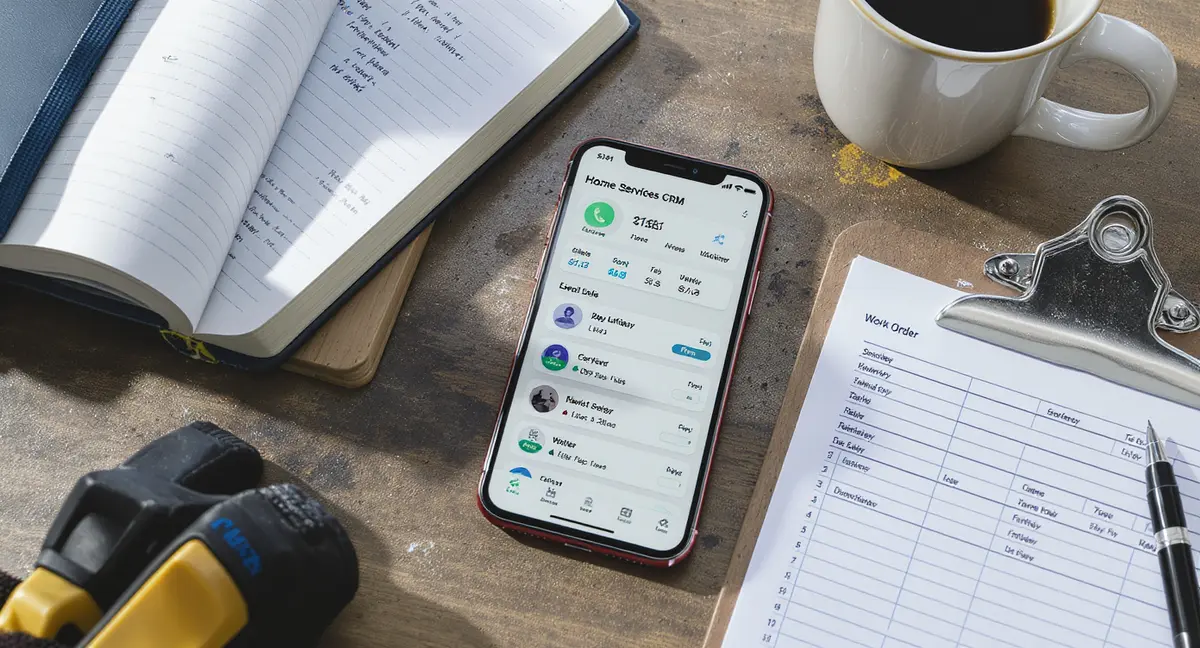
The short answer: Home services marketing software is a CRM and automation platform designed for contractors, plumbers, HVAC companies, and trades. The home services marketing software combines lead management, email automation, review generation, call tracking, and local SEO tools into one system. Three variables move the needle: automated customer lifecycle marketing, reputation management integration, and attribution tracking that connects marketing spend to booked revenue. According to BrightEdge, organic search drives 53% of all trackable website traffic for service businesses. Roofing contractors face the same structural challenge, and the principles of automated lifecycle marketing apply directly to roofing marketing where lead nurture and attribution tracking determine which campaigns actually produce signed contracts.
Most contractors run marketing the same way they ran it in 2015. They pay for Google Ads. They hope reviews show up. They send a newsletter when they remember. Meanwhile, their CRM sits disconnected from their marketing, their reputation management happens manually, and they have no idea which lead sources actually produce revenue. Home services marketing software solves this by centralizing customer data, automating outreach across the entire lifecycle, and tying every marketing dollar to real job outcomes. The best platforms integrate with field service management systems, trigger campaigns based on job completion or membership status, and automate the reputation-building that drives local visibility. The gap between contractors who own a marketing system and those who rent monthly services keeps widening. Businesses with automated nurture sequences see 55% more website visitors than those without consistent content (marketing automation platform State of Marketing, 2024). Companies that automate review requests after every completed job rank higher in local search, book more calls, and spend less on paid ads. This article breaks down what home services marketing software actually does, which capabilities move the revenue needle, how to evaluate platforms against your business model, and what it takes to own a system that compounds value instead of resetting every month.What Home Services Marketing Software Actually Does
Home services marketing software is not a single tool. It is a platform that combines CRM, marketing automation, reputation management, and analytics into one system designed for contractors and trades. The goal is simple: turn more leads into booked jobs, keep customers coming back, and make every marketing dollar accountable.Combines CRM, Automation, and Attribution Into One System
The foundation is a CRM that tracks every customer interaction, job history, estimate status, and service type. Unlike generic CRMs built for SaaS or retail, home services marketing software understands recurring maintenance agreements, seasonal campaigns, and service area targeting. It knows the difference between a one-time emergency call and a membership customer who needs annual HVAC tune-ups. Marketing automation sits on top of the CRM. When a job is completed, the system sends a review request via SMS. When a membership is 30 days from renewal, it triggers an email sequence. When an estimate goes unsold for 14 days, it launches a follow-up campaign. According to Demand Gen Report (2024), B2B buyers consume three to seven content pieces before engaging sales. Home service buyers follow the same pattern. Automated nurture keeps your company visible during that decision window. Attribution tracking connects marketing spend to revenue. Call tracking shows which campaigns generate phone calls. UTM parameters and source tagging reveal which channels produce booked jobs, not just form fills. The home services marketing software dashboard shows cost per booked job by source, so you stop wasting budget on channels that generate leads but never convert.Automates the Customer Lifecycle From Lead to Loyalty
Most contractors focus on lead generation and ignore retention. Home services marketing software automates the entire lifecycle. New leads enter onboarding sequences that educate them about your services, certifications, and service area. Customers who book their first job receive post-service follow-ups asking for reviews and offering maintenance plans. Membership customers get renewal reminders, seasonal service offers, and upsell campaigns for related services. Lapsed customers who have not booked in 12 months enter win-back sequences with limited-time discounts or new service announcements. The system segments by service type, location, and job history, so a plumbing customer does not receive HVAC emails and vice versa. This lifecycle automation drives retention and repeat revenue. SEO leads have a 14.6% close rate compared to 1.7% for outbound (Search Engine Journal). Automated follow-up increases that close rate further by staying top-of-mind without manual effort. The home services marketing software handles the repetition so your team focuses on service delivery, not email campaigns.Core Capabilities That Separate Winners From Pretenders
Not all home services marketing software delivers the same results. The platforms that actually move revenue share four capabilities: reputation management integration, local SEO automation, multi-channel campaign execution, and real-time attribution reporting.Reputation Management and Review Generation
Online reviews determine which contractors get called. Angi's 2025 data shows 78% of homeowners choose contractors based on reviews. The home services marketing software that wins automates review requests immediately after job completion, when satisfaction is highest and the experience is fresh. The best systems send SMS review requests with direct links to Google, Yelp, or Facebook. They monitor review sites for new feedback and alert you to negative reviews within hours. Some platforms let you respond to reviews directly from the dashboard. This speed matters. A contractor who responds to a one-star review within 24 hours can often turn a detractor into a repeat customer. Review volume and recency directly impact local search rankings. Google Business Profile rankings favor businesses with consistent new reviews. Automating review requests ensures a steady flow without relying on manual follow-up. The home services marketing software tracks review velocity, average rating by service type, and response rates, so you know which services generate the most positive feedback.Local SEO and Google Business Profile Integration
Local visibility drives phone calls. The home services marketing software integrates with Google Business Profile to automate posts, update service hours, and sync photos from completed jobs. Some platforms auto-generate service area pages for every city or neighborhood you serve, ensuring your website covers the geographic footprint customers search. Call tracking numbers tied to campaigns let you measure which local SEO efforts produce calls. Schema markup for services, reviews, and service areas helps Google understand what you offer and where you serve. Mobile-first design with click-to-call buttons converts searchers into callers instantly. According to BrightEdge, organic search drives 53% of all trackable website traffic, and for home services, local organic search is the majority of that traffic. NAP consistency across directories, citations, and your website is critical. The home services marketing software monitors citation accuracy and flags discrepancies. Some platforms submit your business to local directories automatically. This consistency signals trust to Google and increases the likelihood your business appears in the Local Pack for high-intent searches like "emergency plumber near me."How to Evaluate Platforms Against Your Business Model
Choosing home services marketing software requires matching platform capabilities to your revenue model, service mix, and growth stage. A one-person handyman operation has different needs than a 50-truck HVAC company with recurring maintenance agreements.Match Features to Revenue Model and Service Type
If you run a recurring-revenue business like pest control, lawn care, or HVAC maintenance, prioritize platforms with strong membership management, renewal automation, and seasonal campaign triggers. Cinch, for example, specializes in pest control and lawn care with fully automated lifecycle campaigns tailored to recurring services. The home services marketing software should segment customers by membership tier, service frequency, and contract renewal date. If you operate on one-time jobs with occasional repeat business (remodeling, roofing, electrical), focus on lead nurture, estimate follow-up, and review generation. ServiceTitan's marketing suite integrates deeply with job history and unsold estimates, triggering follow-up campaigns when estimates age past a threshold. The system should track which lead sources produce the highest job value, not just the most leads. For multi-service contractors offering HVAC, plumbing, and electrical, the platform must handle cross-sell and service-specific segmentation. A customer who books furnace repair should receive offers for AC tune-ups in spring, not plumbing promotions. The home services marketing software needs reliable tagging and segmentation to avoid irrelevant messaging.Integration With Field Service Management and Invoicing
Standalone marketing tools require manual data entry. The best home services marketing software integrates natively with your field service management (FSM) platform or invoicing system. ServiceTitan, for instance, is both an FSM and marketing platform, so job completion, payments, and marketing triggers share the same database. If you use separate FSM software like Jobber or Housecall Pro, verify the marketing platform integrates via API. Real-time data sync ensures campaigns trigger based on actual job status, not outdated spreadsheets. When a technician marks a job complete in the FSM, the marketing system should send a review request within minutes. Integration also enables better attribution. If your FSM tracks job revenue and the marketing platform tracks lead source, combining the data shows cost per acquired customer by channel. You stop guessing which campaigns work and start allocating budget based on revenue outcomes. The home services marketing software becomes a single source of truth for customer lifecycle and marketing performance.See How Your Business Shows Up in AI Search
Get a free AI visibility scan. See exactly where you rank on ChatGPT, Perplexity, and Google AI, and what to do about it. Get Your Free Scan. The same attribution and automation framework that powers effective software platforms also defines the strategic approach to marketing for home services when contractors prioritize owned systems over rented campaigns.
What It Takes to Own a Marketing System vs. Rent One
Most contractors rent marketing services month-to-month. They pay an agency to run Google Ads, manage reviews, or send newsletters. When they stop paying, everything stops. Home services marketing software offers a different model: install the system once, own it permanently, and compound results over time.The Structural Problem With Retainer-Based Marketing
Agencies charge $1,500 to $5,000 per month for SEO, PPC, and reputation management (Ahrefs, 2024). Only 8% of marketers feel confident they can measure ROI (Firework, 2025). When you stop paying, your campaigns pause, your content disappears from the agency's CMS, and your process knowledge walks out the door. You rent visibility, you do not own it. SEO agencies have 38% annual churn (Focus Digital, 2025). That churn is not random. Contractors leave because they cannot see what they are getting, cannot measure impact, and cannot take the system with them. The home services marketing software model inverts this: you license the platform, build your campaigns, own your data, and keep the system running indefinitely. Ownership compounds. Every email sequence you build keeps running. Every automated review request keeps generating new reviews. Every service area page you publish keeps ranking. Retainer services reset every month. Systems compound every month. Platforms like Strategyc take this approach by installing owned content systems rather than offering monthly retainers, positioning marketing infrastructure as a permanent business asset.Building In-House Capability vs. Outsourcing Execution
Owning the home services marketing software does not mean doing everything yourself. It means controlling the system and deciding what to automate, what to delegate, and what to build in-house. You own the CRM. You own the campaign templates. You own the review automation. You decide whether to hire a part-time marketer, train an office manager, or outsource campaign creation to a freelancer. The key is data portability and process transparency. If your marketing lives inside an agency's proprietary dashboard, you cannot replicate it. If your campaigns run on a platform you license directly, you can hire anyone to manage them. The home services marketing software becomes infrastructure, not a service dependency. This ownership model works best for contractors with $500,000+ annual revenue who plan to grow. Below that threshold, a simple CRM and manual follow-up may suffice. Above that threshold, the volume of leads, jobs, and repeat customers demands automation. The home services marketing software scales with revenue, turning more customers into repeat buyers without proportional increases in labor.AI Search Visibility and the Shift to Generative Answers
Google is not the only search engine that matters anymore. ChatGPT, Perplexity, and Google's own AI Overviews now answer service queries directly, often without sending the user to a website. Fifty percent of Google queries trigger AI Overviews, causing a 61% drop in organic click-through rates (DemandSage, 2025). AI systems cite three to five brands per query. If your business is not in that group, your competitor is.Optimizing for AI Search and Voice Assistants
Home services marketing software must now optimize for AI search engines, not just traditional SEO. AI models pull answers from structured data, authoritative content, and frequently cited sources. Your content needs to answer specific questions clearly: "How much does HVAC maintenance cost in your area?" or "What causes a water heater to leak?" Voice search follows the same pattern. Homeowners ask Alexa or Google Assistant for service recommendations. The AI reads answers from top-ranking content or Google Business Profile data. The home services marketing software that integrates structured data markup, FAQ schema, and natural-language content positions your business to appear in these AI-generated answers. Early adopters see results. BrightEdge (2025) reports AI search adopters experiencing 120x impression increases and 800% year-over-year traffic growth from large language models. AI-sourced visitors convert at 27% compared to 2.1% from traditional search (SingleGrain, 2025). The home services marketing software that builds AI-optimized content now captures this high-intent, high-conversion traffic before competitors catch up.Structuring Content for Generative Engine Optimization
Generative Engine Optimization (GEO) is the discipline of making your content citable by AI models. It requires clear headings, concise answers, source attribution, and structured data. The home services marketing software should auto-generate FAQ pages, service guides, and how-to content formatted for AI ingestion. For example, a plumbing company should publish "How to Fix a Leaky Faucet" with step-by-step instructions, cost estimates, and when to call a professional. AI models cite this content when users ask related questions. The article includes schema markup identifying the business, service area, and contact information, so the AI can recommend the company alongside the answer. This strategy works across all home services. HVAC companies publish seasonal maintenance checklists. Electricians publish electrical code explainers. Landscapers publish plant care guides. The home services marketing software templates these content types, automates publishing, and tracks which articles generate AI citations and inbound calls.The Bottom Line
Home services marketing software transforms how contractors generate leads, retain customers, and measure marketing ROI. The platforms that deliver results combine CRM, automation, reputation management, and attribution into one system. They automate the customer lifecycle from first contact to renewal, generate reviews consistently, and track which marketing dollars produce booked revenue. Choosing the right platform requires matching capabilities to your revenue model. Recurring-service businesses need membership automation and seasonal campaigns. One-time job businesses need estimate follow-up and lead nurture. Multi-service contractors need segmentation and cross-sell logic. Integration with field service management systems ensures real-time data sync and accurate attribution. Ownership beats rental. Contractors who license home services marketing software directly, build their campaigns, and control their data compound results over time. Those who rent agency services reset every month. AI search visibility is now critical. Businesses that optimize for ChatGPT, Perplexity, and Google AI Overviews capture high-intent traffic competitors miss.Frequently Asked Questions
What is home services marketing software and who needs it?
Home services marketing software is a CRM and automation platform designed for contractors, plumbers, HVAC companies, electricians, landscapers, and trades. It combines lead management, email and SMS automation, review generation, call tracking, and local SEO tools. Businesses with $500,000+ annual revenue who want to scale without proportional labor increases benefit most. Service businesses outside the trades face identical challenges with retainer churn and attribution gaps, which is why restaurant marketing software follows the same ownership model to turn one-time diners into repeat customers. Lifecycle automation and reputation management extend beyond contractors and trades, and the same principles apply to marketing for home health care services where trust, referrals, and patient retention determine long-term revenue.
How does home services marketing software improve lead conversion rates?
The software automates follow-up sequences for new leads, unsold estimates, and lapsed customers. It segments by service type and job history, ensuring relevant messaging. Automated review requests build social proof. Call tracking and attribution show which campaigns produce booked jobs, not just form fills, so you allocate budget to high-converting channels.
Can I build this marketing system in-house or do I need an agency?
You can build it in-house if you license the platform directly, own your data, and control the process. Many contractors hire a part-time marketer or train an office manager to run campaigns. Agencies often gatekeep data and process. Ownership means you keep the system running indefinitely, even if you change service providers.
How do I measure ROI from home services marketing software?
Track cost per booked job by lead source using call tracking and UTM parameters. Compare revenue from automated email campaigns versus paid ads. Monitor review volume, Google Business Profile ranking changes, and repeat customer rate. The best platforms show revenue attribution by channel, so you see exactly which marketing dollars produce profit.
What is the difference between all-in-one platforms and standalone marketing tools?
All-in-one platforms like ServiceTitan combine field service management, CRM, and marketing automation in one system. Standalone tools like Cinch or marketing automation platform focus on marketing and integrate with your existing FSM software via API. All-in-one platforms offer tighter data integration. Standalone tools offer more flexibility if you already use preferred FSM software.