Google Business Profile Statistics That Matter in 2026
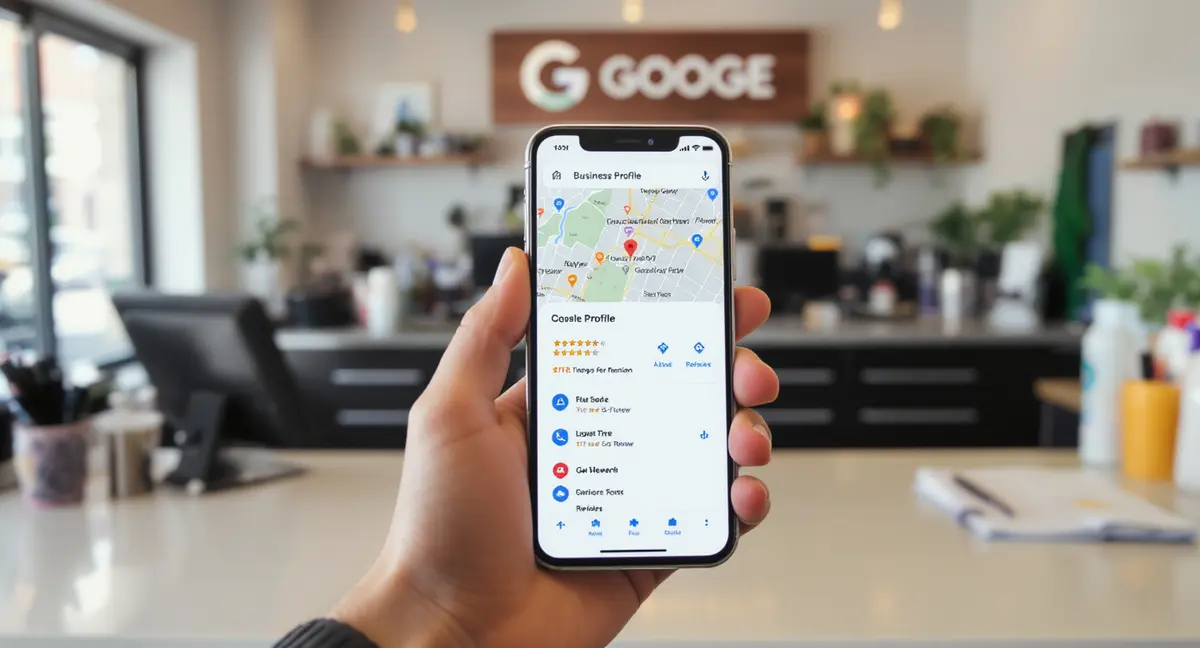
The short answer: Google Business Profile is the most visible local search asset a business can control. The google business profile statistics show 76% of profiles are verified, 86% of impressions come from category searches, and complete profiles earn 2.7x more trust. Three variables move the needle: profile completeness, review velocity, and category optimization. Birdeye's 2026 research found 77-90% of all reviews across industries now happen on Google. Service businesses like roofing contractors face the same challenge: category searches now drive 86% of impressions, which means roofing marketing must prioritize local search visibility over brand awareness.
Your competitors are showing up in local search. You're not.
That's the reality for businesses without an optimized Google Business Profile. And the gap is widening fast. Google business profile statistics from Birdeye show 86% of profile impressions now come from category-based searches rather than branded queries. Translation: people searching for "plumber near me" or "best Italian restaurant downtown" see your competitors first.
The stakes are higher than most business owners realize. According to Search Endurance, 46% of all Google searches involve local information. That's nearly half of all search activity. Miss those queries and you're invisible to half your potential customers.
This isn't about vanity metrics. It's about revenue. The google business profile statistics prove that complete, optimized profiles drive measurable business outcomes: more calls, more direction requests, more website visits. But most businesses leave performance on the table because they don't know what to measure or how to improve it.
This article breaks down the data that matters. You'll see which profile elements drive visibility, how performance varies by industry, and what separates high-performing profiles from the rest. No fluff. Just the numbers that determine whether your business shows up or gets buried.
Why Google Business Profile Performance Matters More Than Ever
Local search has fundamentally changed. It's no longer a secondary channel. For service businesses, retail, and hospitality, it's often the primary discovery mechanism.
Google's own data confirms local results are based on three factors: relevance, distance, and prominence. Prominence reflects how well known a business is, determined by backlinks, review counts, and offline reputation. That last factor is where most businesses fail. They assume proximity alone will carry them. It won't.
The Shift From Branded to Category Search
Birdeye's 2026 State of Google Business Profile report reveals a critical trend: 86% of profile impressions come from category-based searches rather than branded queries. People aren't searching for your business name. They're searching for what you do.
That changes everything. Your profile needs to rank for "emergency plumber" or "family dentist," not just your company name. Category optimization becomes the primary driver of visibility. And google business profile statistics show most businesses haven't adapted to this shift.
The hospitality industry provides a clear example. Search Endurance reports hospitality businesses average 92,600 monthly profile views. That's not because people know the hotel name. It's because profiles rank for "hotels near convention center" and similar category queries.
Trust Signals Drive Conversion
Visibility means nothing without trust. Search Endurance found businesses with complete profiles are 2.7x more likely to be considered trustworthy by consumers. That trust gap directly impacts conversion rates.
Think about your own behavior. You see two plumbers in search results. One has photos, reviews, hours, and a complete description. The other shows a name and phone number. Which one do you call?
The google business profile statistics confirm what intuition suggests: completeness signals legitimacy. Incomplete profiles look abandoned or unprofessional. Complete profiles look like businesses that care about their customers.
Profile Completeness and Verification Benchmarks
Most businesses claim their profile and stop. That's a mistake. Claiming isn't optimizing. And the performance gap between claimed and optimized profiles is massive. Before you optimize any profile element, verify you're following Google Business Profile guidelines to avoid suspension or removal.
According to Search Endurance, 64% of companies have verified Google Business Profiles. That sounds high until you realize it means 36% of businesses haven't even completed the first step. They're competing with one hand tied behind their back.
What Complete Actually Means
Google doesn't publish a definitive completeness checklist, but the pattern is clear from performance data. Complete profiles include: business name, address, phone number, website, hours, category, description, photos, and services or products.
Search Endurance reports 75% of top-ranking profiles have complete descriptions. That's not correlation. It's causation. Google rewards profiles that provide thorough information because they deliver better user experiences.
The description alone matters more than most businesses realize. It's where you define your category positioning, list services, and include location-specific terms. A generic two-sentence description won't cut it. You need 200-750 words that clearly explain what you do and where you serve.
Verification Rates by Industry
Birdeye's enterprise analysis found 76% of profiles were verified. But that aggregate number hides meaningful industry variation. Healthcare and financial services show higher verification rates because regulatory requirements force compliance. Retail and hospitality lag behind.
Verification isn't just a trust signal. It unlocks features. Unverified profiles can't respond to reviews, post updates, or access performance insights. You're flying blind without verification.
The google business profile statistics make the case clear: verification is table stakes, not a competitive advantage. The real differentiation happens after verification, in how you optimize and maintain the profile.
Review Volume and Velocity Trends
Reviews drive prominence. Google's algorithm explicitly considers review count and quality when ranking local results. But the review landscape shifted dramatically in recent years.
Birdeye reports review volume declined 36.7% in 2024, then recovered by just 0.9% in 2026. That's a massive contraction. Businesses that maintained review velocity during that period gained large competitive advantage.
Google's Dominance in Review Platforms
According to Birdeye, Google accounted for 77-90% of reviews across industries in 2026. That's up from roughly 60-70% a few years ago. Yelp, Facebook, and industry-specific platforms are losing ground.
The implication: you can't diversify review platforms anymore. Google is the only platform that matters for most businesses. Every review request should prioritize Google first.
The google business profile statistics show review concentration creates winner-take-all dynamics. Businesses with 50+ reviews dominate local packs. Businesses with fewer than 10 reviews rarely appear. There's no middle ground.
Review Recency Matters More Than Total Count
A profile with 200 reviews from 2022 loses to a profile with 50 reviews from the past three months. Google prioritizes recency because it signals active, engaged businesses.
That creates a maintenance burden. You can't build reviews once and forget about them. You need a systematic process to generate 2-4 reviews per month, every month. Consistency beats volume.
Most businesses fail here because they lack a system. They ask for reviews sporadically, when they remember. That produces lumpy, unpredictable results. The businesses that win treat review generation as a core operational process, not a marketing afterthought.
Category and Keyword Optimization Impact
Your primary category determines which searches trigger your profile. Choose wrong and you're invisible. Choose right and you compete for high-intent queries. The impact of visual content goes beyond quantity, which is why your profile photo selection and quality standards determine whether browsers become customers.
Google allows one primary category and multiple secondary categories. The primary category carries the most weight. Secondary categories provide additional relevance signals but don't drive rankings the same way.
Category Selection Strategy
Most businesses choose categories that describe what they are, not what customers search for. A business might select "General Contractor" when "Kitchen Remodeler" would capture more relevant traffic.
The google business profile statistics from Birdeye confirm 86% of impressions come from category searches. That means your category selection directly determines visibility. Get it wrong and you don't show up, regardless of how complete your profile is.
Test category performance by monitoring which queries trigger your profile in Google Search Console. If you're ranking for irrelevant categories, adjust. If you're missing high-value categories, add them as secondaries.
Description and Service Keyword Optimization
The description field isn't just for humans. Google parses it for relevance signals. Include location-specific terms, service keywords, and category variations naturally throughout the description.
The services or products section provides another keyword opportunity. List every service you offer, using the exact terms customers search for. Don't say "residential services" when customers search for "house cleaning" or "lawn mowing."
This isn't keyword stuffing. It's clarity. Google rewards profiles that clearly communicate what they offer and where they serve. Vague descriptions produce vague results.
See How Your Business Shows Up in AI Search
Get a free AI visibility scan. See exactly where you rank on ChatGPT, Perplexity, and Google AI, and what to do about it. Get Your Free Scan.
Photos, Posts, and Engagement Signals
Visual content drives engagement. Profiles with photos get more clicks, more calls, and more direction requests than profiles without photos. The difference isn't marginal. It's 2-3x in most cases.
Google doesn't publish exact photo benchmarks, but industry analysis shows top-performing profiles have 50+ photos across categories: exterior, interior, team, products, and work examples.
Photo Quality and Quantity Standards
Quality matters more than quantity. Blurry phone photos hurt more than they help. Invest in professional photos for your exterior, interior, and key products or services. Use phone photos for timely updates and behind-the-scenes content.
The google business profile statistics show photo engagement correlates with overall profile performance. Profiles with regular photo updates rank higher and convert better than profiles with static, outdated images.
Upload photos monthly. Show seasonal changes, new products, team updates, and completed projects. Fresh photos signal an active business. Stale photos signal abandonment.
Posts and Updates Strategy
Google Business Profile posts appear in search results and Maps. They're free advertising space. Yet most businesses ignore them.
Posts expire after seven days. That creates a maintenance burden, but also an opportunity. Businesses that post weekly own more real estate in search results than competitors who post quarterly or never.
Use posts for offers, events, new products, and content. Link to blog articles, landing pages, or booking systems. Every post should have a clear call to action and a destination URL.
Book a 30-minute Content & Visibility Scan to see how your Google Business Profile compares to competitors in your category and location.
Measuring Performance and Attribution
Google provides performance data inside Business Profile Manager. You'll see search queries, customer actions, photo views, and direction requests. But that data doesn't connect to revenue without additional tracking. Most businesses upload a logo and move on, but your profile picture is often the first trust signal potential customers evaluate.
Most businesses look at profile views and stop. That's a mistake. Views mean nothing without conversion. You need to track calls, website visits, direction requests, and ultimately, closed deals.
Connecting Profile Actions to Revenue
Use call tracking numbers on your profile to attribute phone calls to Google Business Profile specifically. Use UTM parameters on your website URL to track profile-driven website visits in Google Analytics 4.
Track direction requests by asking new customers how they found you. Most businesses skip this step and lose attribution data. A simple intake question captures the information you need.
The google business profile statistics show profile-driven leads convert at higher rates than other channels because they're high-intent. Someone who searched for your category, found your profile, and took action is further down the funnel than someone who saw a display ad.
Benchmark Your Performance Against Industry Averages
Search Endurance reports hospitality businesses average 92,600 monthly views. Use that as a benchmark if you're in hospitality. If you're getting 10,000 views, you're underperforming. If you're getting 150,000, you're winning.
Industry benchmarks vary widely. Professional services typically see lower view counts but higher conversion rates. Retail sees higher views but lower conversion rates. Know your industry's baseline and measure against it.
Track month-over-month trends, not just absolute numbers. A 10% monthly increase in profile views compounds to 3x growth over a year. Consistent improvement matters more than one-time spikes.
The Bottom Line
Google Business Profile isn't optional anymore. It's the primary local discovery mechanism for most industries. The google business profile statistics prove complete, optimized profiles drive measurable business outcomes.
Focus on three priorities: complete every profile field, generate 2-4 reviews monthly, and optimize your primary category for high-intent searches. Those three actions produce 80% of the results.
Most businesses treat their profile as a set-it-and-forget-it asset. That's a losing strategy. The businesses that win treat it as a dynamic, maintained system that requires weekly attention. Photos, posts, reviews, and responses compound over time.
Frequently Asked Questions
What google business profile statistics matter most for local rankings?
Review count, review recency, profile completeness, and category relevance drive local rankings. According to Birdeye, 86% of impressions come from category searches, making primary category selection the most critical optimization decision.
How often should I update my Google Business Profile?
Post weekly, upload photos monthly, and respond to reviews within 24-48 hours. Consistent activity signals an engaged business. Profiles with regular updates rank higher than static profiles, even when other factors are equal.
Can I track ROI from my Google Business Profile?
Yes, but it requires call tracking and UTM parameters. Use a dedicated tracking number on your profile and tag your website URL with source=google&medium=organic&campaign=gbp. Connect those actions to closed deals in your CRM.
What's the difference between claimed and optimized profiles?
Claimed means you've verified ownership. Optimized means you've completed every field, uploaded 50+ photos, generated 20+ reviews, and post weekly. Search Endurance found 75% of top-ranking profiles have complete descriptions. Claiming is step one, not the finish line.
Do I need to hire someone to manage my Google Business Profile?
Not necessarily. Profile management takes 2-3 hours per month for a single location: posting updates, uploading photos, responding to reviews, and monitoring performance. Multi-location businesses need systematic processes or dedicated resources to maintain consistency across locations.