Digital Marketing for Plumbers: How to Dominate Local Search and AI Visibility in 2026
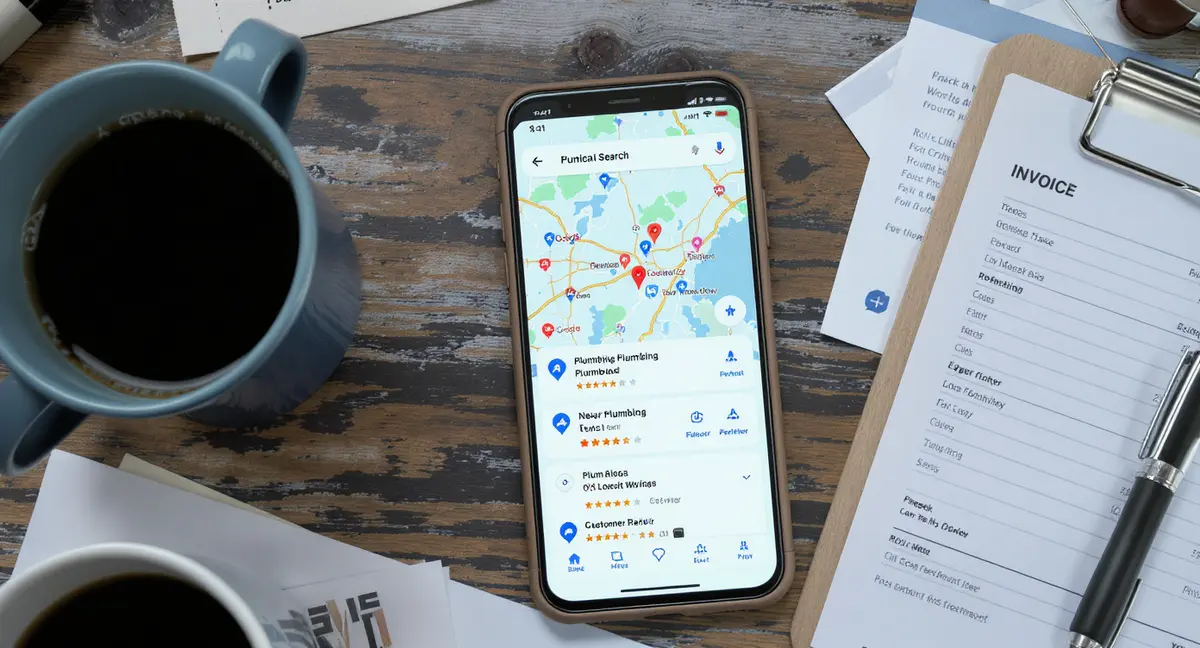
The short answer: Digital marketing for plumbers combines local search visibility, content authority, and conversion infrastructure to generate consistent leads. The most effective plumbing businesses rank in Google Maps, publish weekly content that answers homeowner questions, and optimize for AI search results. Success in this space comes down to local SEO dominance, authority-building content, and owned visibility systems. AI systems now cite only 3-5 brands per query, making visibility non-negotiable (DemandSage, 2025).
Digital marketing for plumbers isn't optional anymore. It's the difference between a phone that rings and one that doesn't. While your competitors wait for referrals to dry up, the plumbing businesses winning in 2026 are the ones showing up in Google Maps, AI search results, and voice queries when homeowners search "emergency plumber near me" at 11 PM. If you're not showing up when AI systems answer customer questions, you're already behind competitors who've invested in AI search optimization.
The rules changed. Traditional directories and Yellow Pages ads are dead. Google AI Overviews now appear in 50% of searches, and AI systems only cite 3-5 brands per query (DemandSage, 2025). If your plumbing business isn't in that group, your competitor is.
This article breaks down what works: local SEO that gets you ranked, content that positions you as the expert, and AI optimization that puts your business in front of customers before they even visit a website. You'll see the exact strategies plumbing companies use to generate consistent leads without paying for ads every month.
Why Most Plumbers Waste Money on Digital Marketing
Most plumbing businesses throw money at digital marketing without understanding what they're buying. They sign up for $1,500/month SEO retainers, run Google Ads that bleed budget on unqualified clicks, and post on social media because someone said they should.
The problem isn't effort. It's structure.
According to Firework's 2025 research, only 8% of marketers feel confident they can measure ROI from their marketing spend. For plumbers, that number is worse. You're paying for services you can't track, building on platforms you don't own, and when you stop paying, everything stops.
That's not marketing. That's rent.
The Agency Dependency Trap
SEO agencies churn at 38% annually (Focus Digital, 2025). When you leave, you take nothing with you. No content ownership, no process documentation, no system you can hand to the next person.
Most agencies gatekeep the work. They don't teach you how to write content that ranks. They don't show you how to optimize for AI search. They keep you dependent because that's how they keep billing.
The businesses that win are the ones that own their visibility infrastructure. They build systems that keep producing results after the engagement ends.
What Drives Plumbing Leads
Data from Search Engine Journal shows SEO leads close at 14.6%, compared to 1.7% for outbound marketing. Organic search drives 53% of all trackable website traffic. When someone searches "water heater repair" and finds your content, they're already problem-aware and ready to buy.
The businesses dominating local search aren't running more ads. They're publishing content that answers the questions homeowners ask before they call. They're optimizing for Google Business Profile. They're showing up in AI Overviews and voice search results.
Digital marketing for plumbers works when it's built on owned assets, not rented visibility.
The Core Components of Digital Marketing for Plumbers
Effective digital marketing for plumbers requires three systems working together: local search visibility, content authority, and conversion infrastructure. Most plumbing companies focus on one and ignore the others. That's why they get traffic but no calls, or calls but no conversions.
| Factor | What it is | Impact |
|---|---|---|
| Local Search Dominance | Google Business Profile optimization, NAP consistency, reviews, weekly updates | Accounts for 36% of local ranking factors; shows up in emergency queries |
| Content Authority | 1,200–1,800 word articles targeting long-tail keywords homeowners search | Ranks above Map Pack; cited in AI Overviews; converts at 14.6% closure rate |
| Conversion Infrastructure | Clear CTAs, click-to-call buttons, contact forms above fold, mobile optimization | Home services conversions average 4–6% per 100 visitors; fast sites convert 24% higher |
| Review Generation | Post-job follow-ups, direct review links, 24-hour response protocol | Businesses with 50+ reviews rank higher; 87% of consumers read reviews |
Consider what each system does and why you need all three.
Local Search Dominance
Local search is where plumbing leads happen. When someone's basement floods at 2 AM, they're not browsing your blog. They're typing "emergency plumber near me" into Google.
Your Google Business Profile is the most important asset you own. Research from Whitespark (2024) found that Google Business Profile signals account for 36% of local ranking factors. That means your profile completeness, review count, review velocity, and response rate directly impact whether you show up in the Map Pack.
But most plumbers treat their profile like a business card. They fill out the basics and forget it exists. The businesses that dominate local search post weekly updates, respond to every review within 24 hours, and upload photos of completed jobs. These foundational systems work even better when combined with tactical campaigns, which is why we've documented 17 proven plumber marketing ideas that fill schedules without burning through ad budgets.
Citations matter too. Your business name, address, and phone number need to be consistent across every directory, review site, and local listing. Inconsistent NAP data confuses Google and tanks your rankings.
Content That Builds Authority
Content is how you own the search results above the Map Pack. When homeowners search "how to fix a leaking faucet" or "signs you need to replace your water heater," your content should be the answer.
According to Demand Gen Report (2024), B2B buyers consume 3-7 pieces of content before engaging sales. For plumbing, that number is lower, but the principle holds. Homeowners research before they call. If your content educates them, you're the business they trust.
The businesses winning with content publish consistently. They target long-tail keywords like "how much does it cost to replace a sewer line in your area" and "tankless vs traditional water heater." They answer the questions homeowners ask.
And they optimize for AI search. AI systems like ChatGPT and Perplexity pull from authoritative content to answer queries. If your content is cited in an AI Overview, you get visibility without the click.
Common Mistakes That Kill Plumbing Marketing Campaigns
Most plumbing businesses make the same mistakes. They launch campaigns, see no results, and assume digital marketing doesn't work. The problem isn't the channel. It's execution.
Take a look at what breaks most campaigns.
Targeting the Wrong Keywords
Plumbers waste budget targeting keywords like "plumber" or "plumbing services." Those terms are too broad, too competitive, and too expensive. You're bidding against national franchises with million-dollar ad budgets.
The businesses that win target hyper-local, high-intent keywords. "Emergency plumber in your neighborhood" converts better than "plumber near me." "Water heater repair cost your area" brings in qualified leads, not tire-kickers.
Long-tail keywords have lower search volume, but they convert at 2.5x the rate of head terms (backlink analysis software, 2024). You'd rather rank #1 for 20 specific queries than #47 for one generic term.
Ignoring Mobile and Page Speed
Over 60% of local searches happen on mobile devices (Google, 2024). If your website takes more than 3 seconds to load, you've lost the lead. Homeowners with an emergency don't wait. They hit the back button and call the next business.
Page speed is a ranking factor for both desktop and mobile. Google's Core Web Vitals measure how fast your page loads, how quickly it becomes interactive, and how stable it is while loading. Sites that fail Core Web Vitals see 24% lower conversion rates (Google, 2024).
Most plumber websites are slow because they're built on bloated WordPress themes with 47 plugins and uncompressed images. Fast sites are built lean. They prioritize speed over design gimmicks.
No Clear Conversion Path
Traffic without conversions is vanity. Most plumber websites bury the phone number, hide the contact form, or force visitors to click through three pages to request a quote.
Your conversion path should be obvious. Phone number in the header, click-to-call button on mobile, contact form above the fold. Every page should answer: "What do I do next?"
According to Unbounce (2024), the average landing page conversion rate is 9.7%. For home services, it's closer to 4-6%. That means for every 100 visitors, you should get 4-6 calls or form submissions. If you're below that, your site is the problem.
Building a Digital Marketing System That Compounds
Digital marketing for plumbers works best when it's a system, not a campaign. Campaigns end. Systems compound. Every piece of content you publish, every review you earn, every citation you build adds to your visibility. The same AI visibility principles apply across home services, and HVAC contractors are seeing similar results with AI marketing for HVAC businesses.
Check out how to build infrastructure that keeps working after the initial setup.
Content Publishing Framework
Start with a content calendar. Publish one article per week targeting a specific keyword. Focus on questions homeowners ask: "How do I know if my sump pump is failing?" "What causes low water pressure?" "When should I replace my garbage disposal?"
Each article should be 1,200-1,800 words, include at least two images, and cite authoritative sources. Use your Google Business Profile posts to promote new content. Share snippets on social media.
The goal isn't to go viral. It's to own the search results for every question a homeowner asks before they call a plumber. Over 12 months, that's 52 articles. Over 24 months, that's 104. You're building a content library that ranks for hundreds of long-tail keywords.
Companies that blog get 55% more website visitors than those that don't (Content Marketing Institute, 2024). For plumbers, that's the difference between 10 leads per month and 25.
Review Generation Process
Reviews are social proof and a ranking signal. Google uses review count, review velocity, and review sentiment to determine local rankings. Businesses with 50+ reviews rank higher than those with 10.
Build a process. After every completed job, send a follow-up text or email asking for a review. Make it easy. Include a direct link to your Google Business Profile review page. Don't ask for 5 stars. Just ask for honest feedback.
Respond to every review, positive or negative, within 24 hours. Thank customers for positive reviews. Address complaints in negative reviews with professionalism and a solution.
According to BrightLocal (2024), 87% of consumers read online reviews for local businesses. The businesses with the most reviews, the highest ratings, and the most recent feedback win.
Technical SEO Maintenance
Technical SEO is the foundation. If Google can't crawl your site, your content won't rank. Use Google Search Console to monitor crawl errors, indexing issues, and mobile usability problems.
Check your site speed monthly. Compress images, enable browser caching, and use a content delivery network if you're serving customers across multiple states. Audit your site for broken links, duplicate content, and missing meta descriptions.
Schema markup helps Google understand your content. Use LocalBusiness schema to mark up your business name, address, phone number, and service area. Use FAQ schema for question-and-answer content. Use Review schema to display star ratings in search results.
Ready to take the next step with Strategyc?
Our team is ready to help you achieve your goals. Get Your Free Scan.
What Results Look Like for Plumbing Businesses
Digital marketing for plumbers isn't theoretical. Businesses that execute consistently see measurable results. This is what the data shows and what real-world outcomes look like.
Traffic and Lead Volume Benchmarks
A well-optimized plumbing website should generate 500-2,000 organic visits per month within 12 months. That assumes consistent content publishing, local SEO optimization, and technical site health.
Lead conversion rates for home services average 4-6% (Unbounce, 2024). If you're getting 1,000 visits per month, that's 40-60 leads. If your close rate is 20%, that's 8-12 new customers per month from organic search alone.
Compare that to paid ads. Google Ads for plumbing keywords cost $15-$50 per click in competitive markets (WordStream, 2024). To generate 40 leads, you'd need 667-1,000 clicks at a 4-6% conversion rate. At $30 per click, that's $20,000-$30,000 in ad spend per month. This content-first approach isn't unique to plumbing, and roofing companies are using the same owned-asset strategy with content marketing for roofers to generate consistent leads.
Organic search has an upfront cost, but it compounds. Paid ads stop the moment you stop paying.
AI Search Visibility Impact
Early adopters of AI search optimization are seeing 120x impression increases and 800% year-over-year traffic growth from large language models (industry research, 2025). AI-sourced visitors convert at 27%, compared to 2.1% from traditional search (SingleGrain, 2025).
For plumbers, that means showing up in ChatGPT, Perplexity, and Google AI Overviews when homeowners ask "best plumber in your area" or "how to fix a burst pipe." AI systems cite 3-5 brands per query. If you're not one of them, you're invisible.
The businesses optimizing for AI search now are building the knowledge base that AI models will reference for years. That's a compounding advantage.
How Digital Marketing for Plumbers Is Changing in 2026
The digital marketing space for plumbers is shifting faster than most businesses realize. What worked in 2024 is already outdated. AI search, voice queries, and zero-click results are reshaping how customers find and choose plumbing services.
Take a look at what's changing and what you need to do about it.
AI Search Is Replacing Traditional Google
Google AI Overviews now appear in 50% of searches (DemandSage, 2025). When someone searches "how to unclog a drain," they get an AI-generated answer at the top of the page, pulling from 3-5 authoritative sources. If your content isn't cited, you don't exist.
AI systems like ChatGPT and Perplexity are becoming primary research tools. Homeowners ask conversational questions like "What's the best way to prevent frozen pipes in winter?" and get instant answers. The businesses that get cited are the ones publishing authoritative, structured content.
Platforms like Strategyc take this approach by installing owned content systems optimized for AI search visibility rather than offering monthly retainers. The goal is to build infrastructure that keeps producing results as AI models evolve.
Voice Search and Conversational Queries
Voice search is growing. Over 40% of adults use voice search daily (Backlinko, 2024). Voice queries are longer and more conversational than typed searches. Instead of "plumber near me," people ask "Who's the best emergency plumber in your neighborhood?"
To rank for voice search, your content needs to answer questions directly. Use natural language. Structure content with clear headings. Include FAQ sections that match how people in practice talk.
Voice search results pull from featured snippets and local pack listings. If you're not in the top 3 for local queries, you won't appear in voice results.
Choosing the Right Approach for Your Plumbing Business
Not every plumbing business needs the same digital marketing strategy. A solo plumber in a small town has different needs than a 20-truck operation in a major metro. What matters is how to evaluate your options and make the right choice.
In-House vs. Outsourced vs. Owned Systems
You have three options: build in-house, hire an agency, or install an owned system.
Building in-house works if you have the time and expertise. You'll need someone who understands SEO, content strategy, and technical optimization. Most plumbers don't have that person on staff, and hiring one costs $50,000-$80,000 per year.
Hiring an agency is the default choice. Average SEO retainers for small businesses run $1,500-$5,000 per month (backlink analysis software, 2024). You get ongoing work, but you don't own the process. When you stop paying, the work stops. And agencies churn at 38% annually (Focus Digital, 2025).
Owned systems are the third option. You pay once to install infrastructure, content, SEO, AI optimization, that you own permanently. No monthly retainers. No dependency. The system keeps working after the engagement ends. While plumbers focus on emergency response and trust signals, other local businesses face different challenges, like the marketing tactics for restaurants that drive foot traffic and repeat visits.
What to Look for in a Digital Marketing Partner
If you're hiring outside help, look for transparency. Ask to see the content calendar, keyword strategy, and reporting dashboard. If they won't show you, they're gatekeeping.
Ask how they measure success. Vanity metrics like "impressions" and "rankings" don't pay the bills. You want leads, calls, and booked jobs. A good partner tracks conversion rates, lead volume, and revenue impact.
Ask what happens if you leave. Do you keep the content? Do you own the Google Business Profile? Do you get the process documentation? If the answer is no, you're renting, not building.
The businesses that win long-term are the ones that own their visibility infrastructure. Services end. Systems compound.
The Bottom Line
Digital marketing for plumbers isn't about running ads or posting on social media. It's about building systems that generate consistent leads without ongoing ad spend. The businesses that dominate local search in 2026 are the ones publishing authoritative content, optimizing for AI search, and owning their visibility infrastructure.
You don't need a massive budget. You need a strategy that compounds. Every article you publish, every review you earn, every citation you build adds to your visibility. Over 12 months, that's a content library that ranks for hundreds of keywords. Over 24 months, that's a lead generation system that works while you're on a job site.
The rules changed. AI search is reshaping how customers find plumbers. The businesses that adapt now will own the next decade. The ones that wait will keep paying rent on visibility they'll never own.
Frequently Asked Questions
How long does it take to see results from digital marketing for plumbers?
Most plumbing businesses see measurable traffic increases within 3-6 months of consistent content publishing and local SEO optimization. Lead volume typically improves within 6-12 months. AI search visibility can happen faster if you're optimizing for featured snippets and AI Overviews from the start.
What's the difference between SEO and digital marketing for plumbers?
SEO is one component of digital marketing. It focuses on ranking in Google search results. Digital marketing for plumbers includes SEO, local search optimization, content strategy, review management, AI search visibility, and conversion optimization. You need all of them working together to generate consistent leads.
Can I build a digital marketing system in-house for my plumbing business?
Yes, if you have the time and expertise. You'll need someone who understands keyword research, content writing, technical SEO, and local optimization. Most plumbing businesses find it more cost-effective to install an owned system once rather than hiring full-time staff or paying monthly retainers.
How do I measure ROI from organic content and SEO?
Track lead volume, conversion rates, and revenue per lead. Use Google Analytics to monitor organic traffic and goal completions. Use call tracking to attribute phone calls to specific content. Calculate cost per lead by dividing your total investment by the number of leads generated. Compare that to your paid ad cost per lead.
What does it take to own my visibility infrastructure instead of renting it?
Owning your visibility infrastructure means building systems you control: a content library on your domain, optimized Google Business Profile, consistent citation management, and AI-optimized content. You pay once to install the system, then maintain it internally. No monthly retainers. No agency dependency. The system keeps producing results after the initial build.