7 Contractor Lead Generation Strategies That Fill Your Pipeline in 2026
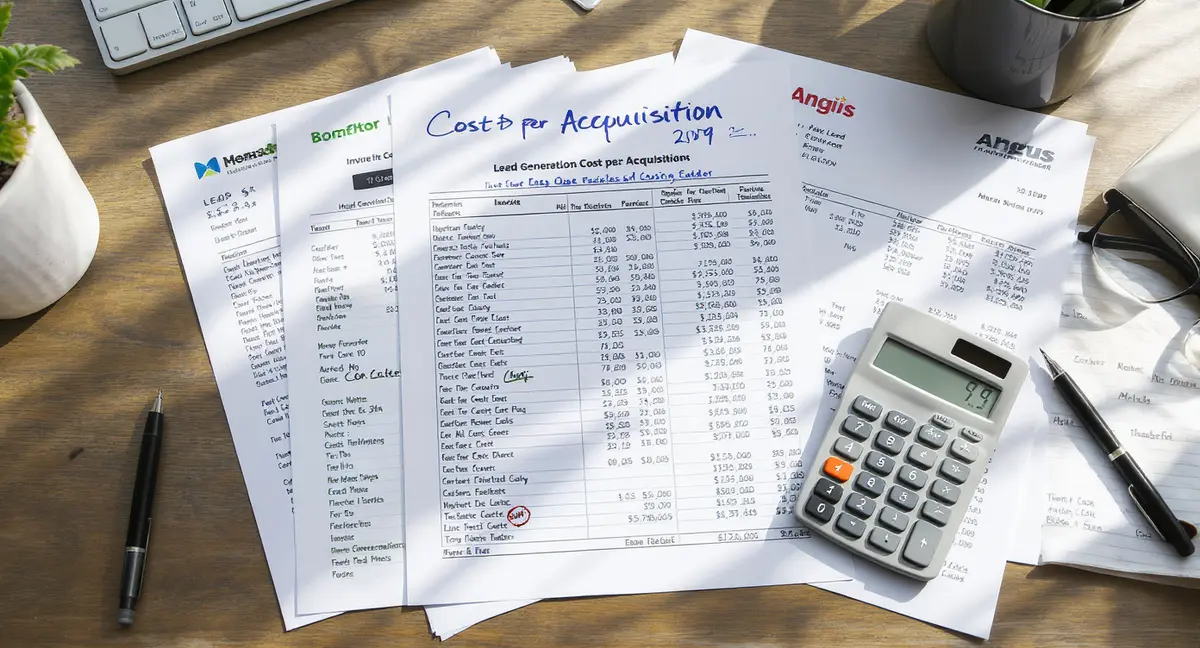
You spent $2,400 last month on lead platforms. You got 18 leads. Three answered the phone. One turned into a job that barely covered your ad spend. That's not contractor lead generation, that's renting hope from a marketplace that sells the same lead to four other contractors. As AI-powered search tools like ChatGPT and Google's AI Overviews reshape how people find contractors, AI search optimization is becoming as critical as traditional local SEO for staying visible when homeowners ask questions.
According to Google, 84% of people use Google Search to find local businesses. Most contractors chase paid leads instead of building systems that capture that search traffic. The result? You're paying $150 per lead when your competitor down the street gets calls for free because they show up first in search and have 47 five-star reviews.
Contractor lead generation is how you fill your calendar with qualified jobs. The right approach combines owned visibility (your Google Business Profile, website, and reviews) with strategic paid channels. The wrong approach burns cash on lead marketplaces where you're bidding against three other contractors for the same homeowner.
This guide breaks down what actually works: local search optimization, review systems, referral infrastructure, and when paid leads make sense. You'll see the difference between lead volume and lead quality, why most contractors waste money on the wrong channels, and how to build a pipeline that doesn't disappear the moment you stop paying.
Why Most Contractor Lead Generation Fails (And What Actually Works)
Most contractors treat lead generation like a slot machine. Throw money at HomeAdvisor, Angi, or Thumbtack and hope something hits. When it doesn't, they blame the platform or the market. The real problem? They're renting leads instead of owning the systems that produce them.
According to BrightLocal, 87% of consumers used Google to evaluate local businesses. That means your lead generation starts the moment someone searches "kitchen remodeler near me" or "emergency plumber." If you're not showing up in that search, you don't exist. If you show up but have three reviews while your competitor has 50, you've already lost.
The Paid Lead Trap
Pay-per-lead platforms sell speed. Sign up, get leads today, close jobs this week. What they don't tell you: you're competing with every other contractor who bought the same lead. HomeAdvisor sells each lead to up to five contractors. You're paying $40-$80 to fight for a homeowner who's already getting four other calls.
The math breaks fast. A $60 lead that converts at 10% costs you $600 in lead spend per job. If your margin is $1,200, you just gave half of it to a marketplace. Scale that across 20 jobs a month and you're handing over $12,000 annually to rent access to homeowners who were searching anyway.
What Ownership Looks Like
Owned lead generation means you control the asset. Your Google Business Profile ranks for local searches. Your website answers the questions homeowners ask before they call. Your review count and rating make you the obvious choice. Your referral system turns past clients into a pipeline that never stops.
According to Google, 76% of people who search for something nearby on their smartphone visit a business within a day. If you own the visibility, you own the lead. No bidding. No split leads. No marketplace taking a cut. The homeowner finds you, calls you, and hires you because you showed up first and looked like the best option.
Local Search: The Foundation of Contractor Lead Generation
Local search is where contractor jobs start. Someone's sink is leaking. Their roof is missing shingles after a storm. They need a deck built before summer. They pull out their phone and search. If you're not in the top three results, you're invisible.
According to Google, 88% of smartphone users who search for a local business call or visit within 24 hours. That's not browsing. That's buying intent. The homeowner is ready to hire. The only question is whether they find you or your competitor.
Google Business Profile Optimization
Your Google Business Profile is the most valuable piece of real estate you own online. It shows up in Maps, local pack results, and AI Overviews. It displays your reviews, photos, hours, and contact info before the searcher even clicks. Optimizing it isn't optional. Once you've built the foundation with local search and reviews, automated lead generation systems can handle follow-up, nurture sequences, and lead qualification without adding hours to your day.
Start with complete information: business name, address, phone, website, service areas, hours, and categories. Add your primary services as categories (general contractor, kitchen remodeler, roofing contractor). Upload 10-15 high-quality photos of completed jobs. Post weekly updates, project photos, tips, seasonal offers. Respond to every review within 24 hours.
Google prioritizes profiles that are active, complete, and relevant. A profile with 50 reviews, 20 photos, and weekly posts will outrank a profile with five reviews and no activity. The difference between ranking #1 and #4 in local pack is the difference between five calls a week and zero.
Service Area Pages and Local SEO
Your website needs dedicated pages for each service area you cover. Not one generic "We serve the metro area" page. Individual pages for each city or neighborhood, with content specific to that location.
Each service area page should include: the service you provide in that city, local landmarks or neighborhoods you've worked in, a call to action with your phone number, and 300-500 words of unique content. Don't copy-paste the same text across 10 cities. Google sees that as thin content and won't rank it.
Link these pages from your homepage and main service pages. Add them to your Google Business Profile as additional URLs. The goal is to own search results for "the service in your area" across every area you serve. When someone in that city searches, you show up. Your competitor who skipped this step doesn't.
Want to see where you currently rank in local search and what's holding you back? Book a 30-minute Content & Visibility Scan to find out if your business is set up to capture local search traffic or if you're leaving leads on the table.
Reviews: The Fastest Way to Win or Lose Contractor Leads
According to BrightLocal, 98% of consumers read online reviews for local businesses. Your review count and rating aren't nice-to-haves. They're the tiebreaker between you and the next contractor. Two businesses show up in search with similar services and proximity. One has 60 reviews at 4.8 stars. The other has 12 reviews at 4.2 stars. The homeowner calls the first one.
Reviews do three things: they prove you're real, they show you're good at what you do, and they give Google confidence to rank you higher. A contractor with 50+ recent reviews will outrank a competitor with better SEO but only 10 reviews. Google treats reviews as a trust signal. More reviews, higher rankings, more leads.
Building a Review System That Runs Itself
Most contractors don't have a review problem. They have a system problem. They do great work, the client is happy, and then nothing happens because no one asked for the review. Six months later they wonder why they only have 15 reviews while their competitor has 80.
The fix is a repeatable process. At job completion, send a text or email asking for a review. Make it easy: include a direct link to your Google Business Profile review page. Follow up three days later if they haven't left one. Offer a small thank-you (a $10 gift card to a local coffee shop, not cash). Track who you asked and who responded.
According to BrightLocal, consumers read an average of 10 reviews before trusting a local business. That means you need volume, not just a handful of five-star reviews from 2022. Aim for 3-5 new reviews per month. In a year, you'll have 40-60 reviews. That puts you ahead of 90% of contractors in your market.
Responding to Reviews (Even the Bad Ones)
Every review gets a response. Five-star reviews get a thank-you that mentions the specific project. Three-star reviews get an acknowledgment and an offer to make it right. One-star reviews get a professional response that shows future readers you care about quality and customer service. The same principles that drive contractor lead generation apply across trades, and HVAC lead generation offers a clear example of how service-based businesses can shift from paid platforms to owned infrastructure.
Homeowners read your responses as much as the reviews themselves. A contractor who responds thoughtfully to a complaint looks better than a contractor who ignores it. The response isn't for the angry reviewer, it's for the next 50 people who read that review and decide whether to call you.
Referrals and Word-of-Mouth: The Highest-Quality Contractor Leads
Referrals close faster, negotiate less, and trust you before the first call. A homeowner who was sent to you by their neighbor doesn't need to be sold. They're calling because someone they trust told them you're the right choice. That's the best lead you'll ever get.
The problem? Most contractors treat referrals like luck. A past client mentions them to a friend, and a new job appears. That's passive. The contractors who dominate their markets build referral systems that produce leads every month without paid ads or lead platforms.
Turning Past Clients Into a Referral Engine
Stay in touch after the job ends. Send a follow-up email 30 days later asking how everything is holding up. Send a seasonal check-in six months later (roof inspection before winter, deck maintenance before summer). Include a simple ask: "If you know anyone who needs the service, we'd appreciate the referral."
Make referring you easy. Give past clients a stack of business cards. Offer a referral bonus ($50 off their next project, a gift card, a donation to a charity in their name). Track who refers you and thank them personally. The clients who refer you once will refer you again if you acknowledge it.
Networking With Builders, Designers, and Property Managers
Referrals don't just come from homeowners. General contractors need reliable subs. Interior designers need trusted tradespeople. Property managers need go-to contractors for tenant turnovers. If you're the name they think of first, you've got a lead source that never dries up.
Join local builder associations, attend chamber of commerce events, and introduce yourself to designers and architects in your area. Bring business cards. Follow up with an email. Offer to be their reliable option when they need your trade. One relationship with a busy GC can fill your calendar for months.
Ready to take the next step with Strategyc?
Our team is ready to help you achieve your goals. .
Paid Channels: When Contractor Lead Generation Platforms Make Sense
Paid lead platforms aren't evil. They're just expensive and low-margin if you use them as your only lead source. HomeAdvisor, Angi, Thumbtack, and Houzz all deliver leads. The question is whether the cost per acquisition makes sense for your business.
A $60 lead that converts at 8% costs you $750 per job. If your average job is $3,000 with a 40% margin, you're netting $1,200. After lead cost, you're down to $450. That's a 15% net margin. One bad job or one scope creep and you're working for free. Compare that to a referral or organic search lead that costs you nothing and converts at 25%. The math is obvious.
How to Use Lead Platforms Without Losing Money
If you're going to buy leads, treat it like a test budget, not your entire marketing strategy. Set a monthly cap ($500, $1,000, whatever you can afford to lose). Track every lead: source, cost, conversion rate, job value, and profit. Kill the platforms that don't hit your target cost per acquisition. Double down on the ones that do.
Respond to paid leads within five minutes. The first contractor to call wins 80% of the time. If you're letting leads sit for two hours while you finish a job, you're paying for leads your competitor is closing. Set up text alerts, use a call-answering service, or have someone on your team handle inbound calls immediately.
Use paid leads to fill gaps, not to build your entire pipeline. If you've got two weeks of downtime in February, buying leads makes sense. If you're relying on HomeAdvisor to fill your calendar year-round, you're renting your business from a marketplace that doesn't care if you're profitable. Roofers face the same marketplace dynamics as other contractors, and the shift toward owned assets is playing out across the industry (see how roofing lead generation has evolved from paid ads to sustainable systems).
Google Local Services Ads vs Lead Marketplaces
Google Local Services Ads (LSA) are pay-per-lead, but they're different from HomeAdvisor. You show up at the top of Google search with a green "Google Guaranteed" badge. You only pay when someone calls or messages you directly. The lead isn't sold to four other contractors.
LSA leads convert better because the homeowner chose you from search results, not from a marketplace list. You're not competing with three other contractors on the same call. The cost per lead is often lower ($20-$50 depending on market and trade). If you're going to pay for leads, LSA is usually the better option.
Website Conversion: Turning Visitors Into Contractor Leads
Traffic without conversion is just expensive hosting. Your website's job isn't to look pretty. It's to turn visitors into phone calls, form submissions, and booked estimates. Most contractor websites fail because they talk about the company instead of solving the homeowner's problem.
The visitor doesn't care that you've been in business since 1987 or that you're family-owned. They care that their deck is rotting, their kitchen is outdated, or their roof is leaking. Lead with their problem, show proof you can fix it, and make it easy to take the next step.
What a High-Converting Contractor Website Includes
Every page needs a clear call to action above the fold. "Get a Free Estimate" or "Call Now for Same-Day Service" with your phone number clickable on mobile. No mystery. No "Learn More" buttons that go nowhere. Tell them what to do and make it one click.
Show proof: before-and-after photos, client testimonials, review count and rating, years in business, certifications, and warranties. Homeowners hire contractors they trust. Trust comes from evidence, not claims. A gallery of 30 completed projects beats a paragraph about quality craftsmanship.
Make your contact form short. Name, phone, email, and a one-line description of the project. Every extra field cuts your conversion rate. You don't need their address, preferred contact time, and budget range before the first call. Get the lead, then qualify them.
Speed Matters More Than You Think
A slow website kills leads. If your site takes five seconds to load on mobile, half your visitors are gone before they see your phone number. Google prioritizes fast sites in search rankings. Homeowners bounce from slow sites and call the next contractor.
Run your site through Google PageSpeed Insights. If your mobile score is below 70, you've got a problem. Compress images, remove unnecessary plugins, and use a fast hosting provider. A two-second load time beats a five-second load time every time.
Tracking and Measuring Contractor Lead Generation ROI
You can't improve what you don't measure. Most contractors have no idea which lead sources actually make them money. They know they got 40 leads last month, but they don't know how many came from Google, referrals, or paid platforms. They don't know which sources converted or which jobs were profitable.
Tracking starts with a simple spreadsheet: lead source, date, contact info, conversion (yes/no), job value, and profit. Every lead gets logged. Every month, you review the data and see which channels are worth the investment. If paid leads cost $60 each and convert at 5%, but referrals are free and convert at 30%, you know where to focus.
Call Tracking and Lead Attribution
Use unique phone numbers for each lead source. One number for your Google Business Profile, one for paid ads, one for your website, one for yard signs. When someone calls, you know exactly where they found you. Call tracking software like CallRail automates this and records calls so you can review what's working. Your website is the hub of your owned lead generation system, and the same conversion principles that apply to a lead generation website in other industries (clear calls to action, trust signals, mobile optimization) apply to contractor sites as well.
Track form submissions the same way. If you're running Google Ads, use conversion tracking to see which keywords and ads produce leads. If you're buying leads from multiple platforms, tag each source in your CRM so you can compare cost per acquisition across channels.
Lead Quality vs Lead Volume
A hundred low-quality leads are worse than ten high-quality leads. A lead that wants a $500 bathroom refresh when you only do full remodels wastes your time. A lead that's calling six contractors to bid a job down to the lowest price isn't worth chasing.
Qualify leads before you spend time on estimates. Ask budget, timeline, and decision-making process on the first call. If they're not ready to move forward in the next 60 days or their budget is half of what the job costs, thank them and move on. Your time is worth more than a 2% close rate on unqualified leads.
The Bottom Line: Build Systems, Not Dependency
Contractor lead generation works when you own the systems that produce leads. That means a Google Business Profile that ranks, a review count that wins trust, a referral process that runs every month, and a website that converts visitors into calls.
Paid leads have a place, but they're a supplement, not a foundation. The contractors who build sustainable businesses invest in owned visibility: local SEO, content, reviews, and relationships. The ones who rent leads from marketplaces stay stuck in a cycle of paying more every year for the same volume.
Start with the free channels. Optimize your Google Business Profile. Build your review count to 50+. Create service area pages for every city you cover. Set up a referral system. Track what's working. Then, if you need more volume, test paid channels with a budget you can afford to lose. Measure everything. Double down on what works. Kill what doesn't.
Frequently Asked Questions About Contractor Lead Generation
What's the fastest way to get contractor leads?
Google Local Services Ads and paid lead platforms deliver leads within days. However, speed costs money and the leads are shared or expensive. Optimizing your Google Business Profile and asking past clients for referrals produces higher-quality leads within 2-4 weeks at near-zero cost.
How many reviews do I need to compete in contractor lead generation?
According to BrightLocal, consumers read an average of 10 reviews before trusting a local business. Aim for 50+ reviews to outrank most competitors. Contractors with 60+ reviews and a 4.7+ rating dominate local search and win the majority of inbound leads in their market.
Are paid contractor lead platforms worth the cost?
It depends on your margins and conversion rate. If a $60 lead converts at 10%, you're paying $600 per job. If your profit per job is $1,200, that's a 50% lead cost. Compare that to organic leads (free) or referrals (free) and decide if the ROI justifies the expense.
Can I build contractor lead generation systems in-house or do I need outside help?
You can build it in-house if you've got time and process discipline. Local SEO, review systems, and referral outreach don't require specialized tools. What kills most in-house efforts is inconsistency, posting to Google Business Profile for two weeks, then stopping. Systems work when they run every week, not when you remember.
How do I measure ROI from organic contractor lead generation?
Track every lead by source (Google, referral, paid ad, website). Log conversion rate, job value, and profit per source. Compare cost per acquisition across channels. If organic search produces 15 leads a month at zero cost and converts at 25%, that's measurable ROI even without ad spend to compare against.