Content Marketing for Roofers: How to Generate Leads Without Paying for Every Click
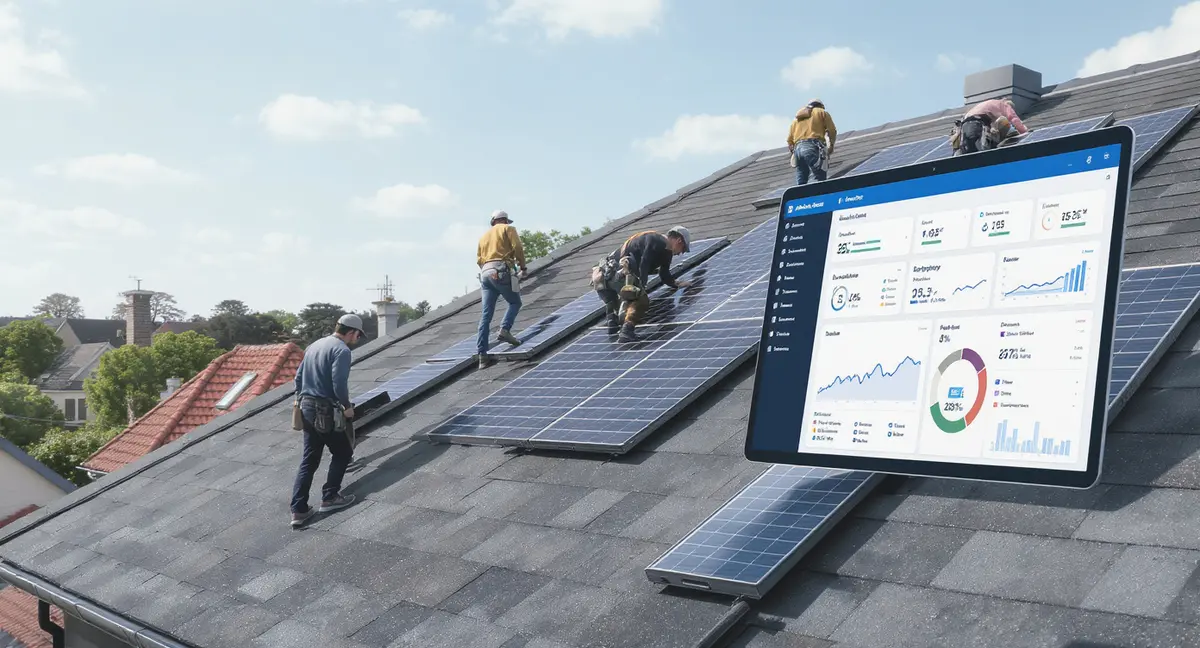
The short answer: Content marketing for roofers builds long-term lead generation through articles, videos, and guides that answer homeowner questions and rank in search results. High-intent articles targeting emergency repairs, cost comparisons, and insurance claims generate 3x more leads than outbound marketing at 62% lower cost. Top performers focus on topical authority through internal linking, schema markup for AI visibility, and seasonal content calendars that capture demand spikes. Roofing companies see 5:1 ROI on content within 18 months, with 93% of local experiences starting with online search.
Content marketing for roofers isn't about posting on social media and hoping someone calls. It's about building a library of articles, videos, and guides that answer the exact questions homeowners type into Google when their roof leaks at 2 AM. Right now, 93% of local experiences start with online search, and 76% of those searchers visit a business page before making contact (Google Consumer observations, 2024). If your roofing company doesn't show up in those searches, your competitor does. Electrician marketing is worth reading alongside this.
Most roofers spend $75-200 per lead on Google Ads (WebFX, 2025). That works until you stop paying. Content marketing for roofers flips the script: you create assets that keep generating leads months and years after you publish them. A single well-structured article about emergency roof repair can bring in 50 calls over two years. An ad campaign brings 50 calls only while the budget runs.
This guide breaks down how roofing companies build content systems that compound over time, what types of content actually convert homeowners into customers, and how to structure your publishing so Google and AI search platforms cite you as the local authority. You'll see the specific content formats that work, the mistakes that waste time, and the timeline for seeing real results.
Why Content Marketing for Roofers Outperforms Paid Advertising Over Time
Paid ads deliver immediate visibility. Content delivers compounding returns. The difference matters when you look at cost per lead over 12-24 months.
The Economics of Owned Visibility vs Rented Clicks
Google Ads for roofing keywords cost $10-50 per click depending on your market. In competitive metros, "roof replacement" clicks hit $75. If your conversion rate is 5%, you're paying $200-1,500 per lead. When you pause the campaign, the leads stop immediately.
Content marketing generates 3x more leads than traditional outbound marketing at 62% lower cost (Content Marketing Institute, 2023). A roofing company that publishes 24 well-structured articles over six months might spend $6,000-12,000 on content production. Those articles generate traffic indefinitely. Year two traffic costs nothing except occasional updates.
Consider a roofing company that publishes an article titled "How Long Does a Roof Replacement Take in your area?" That article ranks in position 3-5 for a keyword with 400 monthly searches. At a 10% click-through rate, it brings 40 visits per month. If 3% convert to calls, that's 1.2 leads monthly, or 14 leads per year. Over three years, one article generates 42 leads at zero incremental cost after publication.
How Content Builds Authority That Ads Cannot Buy
Homeowners research roofers differently than they research pizza delivery. Seventy percent of homeowners research roofers via search before calling (Hook Agency survey, 2024). They read reviews, compare options, and look for proof the company knows what it's doing. A Google Ad says you paid to appear. An article that explains the difference between architectural and 3-tab shingles says you know roofing.
Content marketing for roofers builds what Google calls E-E-A-T: Experience, Expertise, Authoritativeness, Trustworthiness. When your site has 30 articles covering roof types, maintenance schedules, insurance claims, and storm damage, Google sees topical depth. AI search platforms like ChatGPT and Perplexity cite businesses with structured, factual content. Ads don't influence those citations. Content does.
Roofing companies that publish consistently see 5:1 ROI on content within 18 months (Atlas Roofing case studies, 2024). The compounding effect accelerates after the first 20-30 articles because internal linking and topical authority start reinforcing each ranking.
What Types of Content Generate Roofing Leads
Not all content works the same. A blog post about "5 Roofing Trends for 2026" gets shares but not calls. An article about "What to Do When Your Roof Leaks During a Storm" gets calls. If you want the practical breakdown, Ai marketing for is a good next step.
| Factor | What it is | Impact |
|---|---|---|
| High-Intent Articles | Content targeting searches with commercial intent: emergency repairs, cost breakdowns, insurance claims | Converts homeowners actively looking for roofers; generates 1.2+ leads monthly per article |
| Schema Markup & Factual Density | Structured data (FAQ schema, statistics) that AI platforms and Google can extract and cite | Improves AI visibility by 30-40%; increases citation in ChatGPT, Perplexity, Google AI Overviews |
| Topical Authority & Internal Linking | Clusters of related articles (pillar + supporting) that build depth around core services | Google recognizes complete topic coverage; compounds ROI as new articles strengthen existing structure |
| Seasonal Content Calendar | Articles timed to demand spikes: storm prep, hail season, spring/fall maintenance windows | Captures 3x search volume during seasonal peaks; establishes rankings before competitors react |
High-Intent Articles That Match Search Behavior
The best content marketing for roofers targets queries with commercial intent. These are searches homeowners make when they need a roofer soon, not when they're browsing.
High-converting topics include emergency roof repair guides, cost breakdowns for replacements, insurance claim walkthroughs, and local material comparisons. An article titled "Average Cost of Roof Replacement in your area: What to Expect in 2026" targets homeowners actively budgeting for the project. That's a lead-generating asset.
Structure these articles with clear sections: what the service includes, typical price ranges (with caveats about variables), what affects cost, and when to call a professional. End with a local contact CTA. Include schema markup for FAQs so Google can pull answers into featured snippets.
Video content boosts engagement by 80% in home services (Thrive Agency, 2025). A three-minute video showing a roof inspection process, embedded in an article about "How to Know If You Need a New Roof," converts better than text alone. Homeowners want to see your trucks, your team, and your process before they call.
Seasonal and Event-Driven Content That Captures Urgency
Roofing demand spikes after storms, during spring and fall, and when insurance deadlines approach. Content calendars should anticipate these cycles.
Publish storm preparation guides in late spring before hail season. Update them annually with current insurance claim procedures. Create "What to Do After a Hailstorm" articles that rank when weather events hit your area. These articles get massive traffic spikes during storm weeks, and a percentage of that traffic converts immediately.
Seasonal content works because search volume follows weather patterns. "Roof leak repair" searches triple after heavy rain. If your article already ranks when the storm hits, you capture that surge. Competitors scrambling to publish during the event miss the window.
Repurpose seasonal content across channels. A blog post about winter roof maintenance becomes a Facebook video, an email to past customers, and a downloadable checklist. One core asset feeds multiple distribution points.
How to Structure Content So Google and AI Platforms Cite You
Publishing content isn't enough. Structure determines whether Google ranks it and whether AI search platforms cite it as a source.
Schema Markup and Factual Density for AI Visibility
AI search platforms like ChatGPT, Perplexity, and Google AI Overviews select sources based on factual density and structured data. Research from Princeton and Georgia Tech shows that content with clear section headers, FAQ schema, and cited statistics improves AI visibility by 30-40% (KDD, 2024).
For content marketing for roofers, this means every article should include specific data points. Instead of writing "roof replacements are expensive," write "the average asphalt shingle roof replacement costs $8,000-12,000 for a 2,000-square-foot home, depending on material grade and labor rates." AI models extract and cite specific numbers.
Use FAQ sections with schema markup. When a homeowner asks Siri "How long does a roof last," and your FAQ schema answers "Asphalt shingles last 20-25 years, metal roofs last 40-70 years," you get the voice search result. Fifty percent of Google queries now trigger AI Overviews, and those overviews cite 3-5 sources per query (DemandSage, 2025). Structured content gets cited. Generic content doesn't.
Internal Linking and Topical Clusters That Build Authority
One article doesn't establish authority. A cluster of related articles does. Content marketing for roofers works best when you build topical depth around core services. Content marketing essentials is worth reading alongside this.
Create a pillar article about "Complete Guide to Roof Replacement" and link to supporting articles: "How to Choose Roofing Materials," "Roof Replacement Cost Breakdown," "How Long Does Roof Replacement Take," and "Roof Replacement vs Repair: When to Replace." Each supporting article links back to the pillar. Google sees this as complete coverage of a topic.
Internal linking passes authority between pages. A high-ranking article about emergency repairs can boost a newer article about insurance claims by linking to it. This is how content libraries compound: each new article strengthens the existing structure.
Track which articles generate the most traffic and leads, then build more content around those topics. If "roof leak repair" drives 40% of your organic leads, publish related content: "Common Causes of Roof Leaks," "DIY Roof Leak Fixes vs Professional Repair," and "How to Find a Roof Leak." Depth beats breadth.
Measuring ROI and Adjusting Your Content Strategy
Content marketing for roofers requires tracking beyond rankings. You need to know which articles generate calls, which topics convert, and where traffic drops off.
What Metrics Matter for Roofing Content
Rankings are a vanity metric if they don't produce leads. Track these instead: organic traffic by article, conversion rate from article to contact form or call, cost per lead from organic vs paid, and time to first lead per article.
Use call tracking numbers on content-driven landing pages to attribute phone leads to specific articles. If your "emergency roof repair" article generates 15 calls per month and your conversion rate is 30%, that article produces 4-5 jobs monthly. That's measurable ROI.
Google Analytics shows which articles drive the most traffic, but traffic without conversions is noise. Set up goal tracking for form submissions, phone clicks, and quote requests. Filter organic traffic by landing page to see which content converts best.
Compare cost per lead across channels. If Google Ads costs $150 per lead and organic content costs $25 per lead (amortized over 18 months), the content strategy pays for itself. Most roofing companies see breakeven at 6-9 months and positive ROI by month 12.
When to Update, Retire, or Expand Content
Content isn't publish-and-forget. Articles decay as information changes, competitors publish better versions, or search behavior shifts.
Update high-performing articles annually. If "roof replacement cost" ranks well but uses 2024 pricing, refresh it with 2026 data. Google rewards freshness for queries where recency matters. Add new sections based on common questions from sales calls. If customers keep asking about financing options, add a financing section to your cost guide.
Retire content that never gained traction after 12 months. If an article gets 10 visits per month and zero conversions, either rewrite it with a better angle or redirect it to a related article. Thin content dilutes site authority.
Expand content that ranks on page two. If an article sits in position 11-15, it's close to page one visibility. Add 500 words of depth, include a comparison table, embed a video, and build three internal links to it from related articles. Small improvements often push borderline content into top-five positions.
Ready to take the next step with Strategyc?
Our team is ready to help you achieve your goals. Get Your Free Scan. If you want the practical breakdown, Seo for roofers is a good next step.
Building Content Systems vs Hiring Agencies
Roofing companies face a choice: hire an agency on retainer or build owned content infrastructure. The economics differ dramatically over time.
The Agency Model and Its Long-Term Costs
Most roofing marketing agencies charge $1,500-5,000 per month for SEO and content services. That includes keyword research, content creation, link building, and reporting. The work stops when you stop paying.
Agencies produce results while you're a client. The problem is ownership. You don't own the content strategy, the publishing workflows, or the data infrastructure. When you leave, you start over. Thirty-eight percent annual churn at SEO agencies means most roofing companies switch providers every 2-3 years (Focus Digital, 2025).
The best agencies deliver value, especially for companies that lack in-house marketing capacity. Look for roofing-specific agencies with transparent reporting, clear lead attribution, and case studies in your market. Agencies like Hook Agency and Thrive specialize in home services and understand seasonal demand cycles.
But recognize the trade-off: agencies rent you visibility. When the contract ends, the visibility often declines because the publishing stops and the content library isn't yours to maintain.
Owned Content Infrastructure and What It Requires
Some roofing companies build content systems they own. This means hiring in-house writers, setting up publishing workflows, and maintaining the content library internally. It requires upfront investment but produces long-term compounding returns.
Platforms like the Content & Visibility Engine install publishing systems on your infrastructure rather than offering monthly retainers. You own the workflows, the content, and the data. The system produces structured, AI-optimized content designed to rank in Google and get cited by AI search platforms. Install takes 4-6 weeks, then you control publishing pace.
Building in-house requires commitment. You need someone to manage the calendar, coordinate production, and track performance. For roofing companies doing $2M+ annually, the ROI justifies the investment. For smaller operations, hybrid models work: install the infrastructure, then hire fractional support to maintain it.
The key difference is ownership. Services end. Systems compound. Content marketing for roofers works best when the company controls the asset that generates leads.
Common Mistakes That Kill Roofing Content Performance
Most roofing companies make predictable mistakes when they start content marketing. Avoiding these accelerates results.
Publishing Generic Content That Doesn't Target Search Demand
The biggest mistake is writing content you think sounds good instead of content people actually search for. "5 Reasons to Choose Us for Your Roofing Project" gets zero searches. "How Much Does Roof Replacement Cost in your area" gets hundreds.
Use keyword research tools like Google Keyword Planner to identify what homeowners search for in your market. Target specific queries with clear commercial intent. Generic brand content doesn't rank and doesn't convert.
Another mistake is publishing inconsistently. Posting three articles in January and nothing until June kills momentum. Google rewards consistent publishing because it signals active expertise. Aim for 2-4 articles per month minimum. Content marketing for roofers compounds when the library grows steadily.
Ignoring Local Optimization and Mobile Experience
Roofing is a local business. Content that doesn't mention your service area won't rank for local searches. Every article should include your city or region naturally in the text, title, and meta description.
Forty-six percent of Google searches have local intent (BrightLocal, 2024). When someone searches "roof repair near me," Google prioritizes businesses with location-specific content and verified Google Business Profiles. Your content should reference neighborhoods, local weather patterns, and regional building codes.
Mobile experience matters because most roofing searches happen on phones. A homeowner notices a leak, grabs their phone, and searches for help. If your site loads slowly or the contact button is hard to find, they call the next result. Pages should load in under three seconds, contact forms should be one-click accessible, and phone numbers should be tap-to-call. Content strategy for is worth reading alongside this.
Test your site on mobile before publishing new content. If the article is unreadable on a phone, it won't convert even if it ranks.
The Bottom Line on Content Marketing for Roofers
Content marketing for roofers works when you treat it as infrastructure, not a campaign. The companies that win publish consistently, target high-intent keywords, and structure content so Google and AI platforms cite them as authorities. The ROI timeline is 6-12 months to breakeven, then compounding returns for years.
Paid ads deliver immediate leads but stop when the budget stops. Content delivers slower initial returns but keeps generating leads indefinitely. Over 24-36 months, the cumulative traffic and lead volume from content dramatically exceeds equivalent ad spend.
The choice isn't content vs ads. It's whether you build owned visibility infrastructure or rent it monthly. Roofing companies that own their content systems control their lead flow. Companies that depend on agencies or ads are one budget cut away from zero organic visibility.
Find out where your roofing company currently stands in Google, AI search, and voice search results. to see how your business appears when homeowners search for roofing services in your area. No commitment, just a clear picture of your current visibility.
Frequently Asked Questions
How long does it take to see results from content marketing for roofers?
Most roofing companies see initial traffic within 60-90 days and measurable lead generation by month six. Articles targeting high-intent keywords like "emergency roof repair" often rank faster than broad topics. Compounding returns accelerate after 20-30 published articles as topical authority builds.
Can I build a content marketing system in-house or do I need an agency?
You can build in-house if you have someone to manage the publishing calendar, coordinate content production, and track performance. Installed systems like content engines provide the infrastructure without ongoing agency fees. Smaller roofing companies often use hybrid models: install the system, then hire fractional support to maintain it.
What's the difference between content marketing and SEO for roofers?
SEO is the technical foundation: site speed, mobile optimization, local listings, and keyword targeting. Content marketing is the ongoing creation of articles, videos, and guides that answer customer questions. You need both. SEO gets you found. Content converts visitors into leads and builds authority that keeps you ranked.
How do I measure ROI from organic content if leads come from multiple sources?
Use call tracking numbers on content-driven landing pages to attribute phone leads to specific articles. Set up Google Analytics goal tracking for form submissions and quote requests. Filter organic traffic by landing page to see which content converts best. Compare cost per lead from organic vs paid channels over 12-18 months to calculate true ROI.
Does video content really generate more roofing leads than written articles?
Video boosts engagement by 80% in home services, but it works best when embedded in written articles. A three-minute roof inspection video in an article about "How to Know If You Need a New Roof" converts better than text alone. Homeowners want to see your process before calling. Use video to support written content, not replace it.