The 7 SEO Capabilities Small Businesses Need in 2026
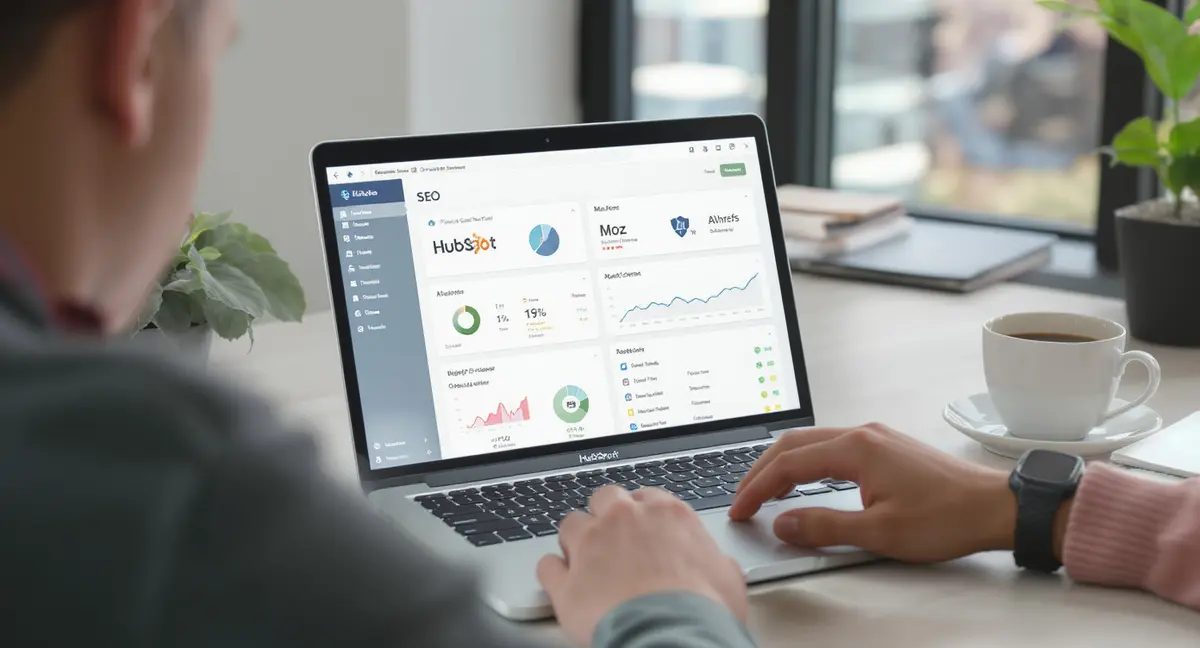
The short answer: The best SEO tools for small business prioritize keyword research, content publishing, rank tracking, and technical audits under $50–$150 monthly combined. Success requires building repeatable content systems, targeting long-tail commercial queries, and optimizing for AI search citations. Focused single-capability tools prove more practical than enterprise suites for small business users.
Most small businesses waste money chasing the best SEO tools for small business when they should be building systems. Consider the uncomfortable truth: 76% of small businesses spend $500-$2,000 monthly on tool subscriptions they barely use (G2, 2024). They sign up for rank trackers, keyword planners, backlink checkers, and content graders because every listicle says they need them. Then they realize the tools don't do the work, they just show you what needs doing.
This article breaks down the seven core SEO capabilities small businesses actually need, not the 24-tool stacks that marketing blogs push. You'll see what each capability does, why it matters for AI search visibility (ChatGPT, Perplexity, Google AI Overviews), and how to get it without renting software forever. Some capabilities you can handle with free platforms. Others require investment. But none require you to become a tool expert.
The businesses winning in 2026 aren't the ones with the biggest tool budgets. They're the ones who built content systems that keep producing after the setup ends.
Why Small Businesses Fail at SEO Tools (And What Works)
Small businesses approach SEO tools backwards. They buy subscriptions first, then figure out what to do with them. It's like buying a gym membership before learning how to lift.
The Tool Trap Most Small Businesses Fall Into
A mid-sized HVAC company in Seattle spent $1,800 monthly on an all-in-one SEO platform for 14 months. They logged in twice a week to check rankings. That's it. No keyword research. No content creation. No technical fixes. When they canceled, they had nothing to show except $25,000 in sunk costs.
This pattern repeats everywhere. According to SelectSoftwareReviews (2026), thorough SEO platforms attract millions of users worldwide, but G2 reviews (2026) show that most small business users only touch 30% of features. They're paying for enterprise capabilities they'll never use, competitor gap analysis, API access, white-label reporting.
The real problem? Tools show you problems but don't solve them. A technical audit crawler can find 400 broken links. Great. Now what? You still need someone to fix them. A keyword research platform can surface 2,000 search terms. Who's writing the content? The tool won't.
What Capabilities Move the Needle for Small Businesses
Forget the tool names for a second. What do small businesses actually need to rank?
First: knowing what people search for in your market. Not generic volume numbers, actual questions your customers ask. Second: content that answers those questions better than competitors. Third: a site structure that doesn't fight against you (fast load times, mobile-friendly, clean code). Fourth: visibility in AI search results, where 50% of Google queries now trigger AI Overviews (DemandSage, 2025).
Notice what's missing? Backlink outreach. Citation submissions. Directory listings. Small businesses waste months on tactics that worked in 2015. Modern search rewards content authority, not link schemes.
The best SEO tools for small business aren't the ones with the most features. They're the ones that support a repeatable publishing system. Because SEO is not a campaign. It's infrastructure.
Get a free Content & Visibility Scan to see where your current approach is leaking opportunity.
Capability 1: Finding What Your Customers Search For
Keyword research sounds technical. It's not. It's answering one question: what words do people type into Google when they need what you sell?
| Capability | What It Does | Best Tool Type | Typical Cost |
|---|---|---|---|
| Customer Search Intent Research | Identifies long-tail queries customers actually search; surfaces commercial intent keywords | Budget keyword research platform or Google Search Console | Free–$50/month |
| Citation-Worthy Content Creation | Helps structure fact-dense, schema-marked content that AI search engines cite | Content publishing system with quality gates | $50–$100/month |
| Performance Tracking | Monitors organic traffic trends, conversions, and top-performing pages without vanity metrics | Budget rank tracker or Google Analytics + Search Console | Free–$50/month |
| Technical Site Health | Audits load speed, mobile-friendliness, broken links, meta descriptions, structured data | Technical audit crawler or all-in-one platform | Free–$75/month |
| Local Visibility | Ensures business appears in local search results and AI-generated local answers | Local SEO platform or business listing management | $25–$100/month |
| Authority Building | Identifies high-quality linking opportunities and tracks domain authority growth | Budget backlink research tool | $25–$75/month |
| AI Search Optimization | Structures content for ChatGPT, Perplexity, and Google AI Overviews citations | Content optimization platform with schema guidance | $50–$100/month |
Why Volume Numbers Lie to Small Businesses
Most keyword research platforms show search volume as the primary metric. "HVAC repair" gets 18,000 monthly searches. Looks great. Except 90% of that traffic goes to Home Advisor, Angi, and Yelp. A local HVAC company will never rank for it.
What matters is what actually works: long-tail queries with commercial intent. "Emergency furnace repair Minneapolis winter" gets 40 searches per month. But every single person searching that phrase needs service immediately. That's higher-value traffic than 10,000 generic visits.
G2 users (2026) consistently rate platforms high for broad keyword research capabilities, but small businesses don't need broad. They need specific. Budget-friendly research platforms under $50/month (SelectSoftwareReviews, 2026) can surface long-tail opportunities that all-in-one suites miss because they prioritize high-volume terms.
The Free Alternative Nobody Talks About
Google Search Console shows you every query that already drives traffic to your site. It's free. It's accurate. And most small businesses never look at it.
A property management company in Austin discovered they ranked #8 for "tenant screening process Texas", a query they didn't even know existed. They wrote one 1,200-word article targeting that exact phrase. Within 90 days, they ranked #2 and captured 15 qualified leads monthly from that single page.
Start with what's already working. Search Console shows you queries where you rank 8-20. Those are opportunities. You're close enough to win with better content. No subscription required.
Capability 2: Creating Content That AI Search Engines Cite
Content optimization used to mean keyword density. Now it means citation-worthiness. AI search engines like ChatGPT and Perplexity only cite 3-5 sources per query (BrightEdge, 2025). If your content isn't in that group, you're invisible.
What Makes Content Citeable in 2026
AI models prioritize structured, fact-dense content with clear attribution. According to research from Princeton and Georgia Tech (KDD, 2024), content with schema markup and FAQ sections improves AI visibility by 30-40%.
Translation: write like you're creating a reference document, not a blog post. Use subheadings that answer specific questions. Include data points with sources. Add FAQ sections at the bottom. Format content so AI can extract clean answers.
Content grading platforms analyze top-ranking pages and suggest topics to cover. SelectSoftwareReviews (2026) notes these tools "remove guesswork from SEO writing with data-driven suggestions." But here's the catch, they tell you what to include, not how to say it with authority. You still need original observations, not regurgitated competitor content.
Why Content Optimization Tools Aren't Enough
A dental practice in Portland used a content optimization platform to write 20 service pages. The tool gave them all A+ grades. Six months later, zero rankings.
Why? The content hit all the keyword targets but provided zero original value. Every competitor used the same tool and wrote nearly identical pages. Google's Helpful Content Update (September 2023) specifically targets this, aggregated content with no first-hand expertise.
The best SEO tools for small business content creation aren't grading platforms. They're publishing systems that enforce quality gates: original data requirements, expert attribution, structured formatting. Tools that make it impossible to publish generic content.
Capability 3: Tracking What's Working (Without Drowning in Data)
Rank tracking sounds essential. It's mostly vanity metrics. A roofing company doesn't need to know they rank #7 for "roof repair" nationally. They need to know if local customers are finding them.
The Metrics Small Businesses Should Watch
Forget daily rank checks. Watch these instead: organic traffic trends (up or down over 90 days), conversion rates from organic visitors (are searchers becoming customers?), and top-performing content (which pages drive actual business?).
Google Analytics and Search Console provide all of this for free. But most small businesses don't look at them because they're intimidated by the interface. Fair enough. The platforms weren't designed for non-technical users.
Budget rank tracking platforms praised by beginners for intuitive interfaces (G2, 2026) solve the usability problem. They show you movement on keywords that matter, local terms, long-tail queries, competitor positions. Pricing typically runs under $50/month for small business plans (SelectSoftwareReviews, 2026).
Why Most Businesses Track the Wrong Things
A law firm tracked 200 keywords monthly. They celebrated when "personal injury lawyer" moved from #18 to #15. Then they checked conversions. Zero cases from that keyword. Ever.
Meanwhile, "car accident lawyer free consultation Denver" (a term they weren't tracking) drove 40% of their case intake. They only discovered this by digging into Search Console data.
Track what drives business, not what looks impressive in a dashboard. If a keyword doesn't convert, stop obsessing over its rank.
Capability 4: Technical SEO That Doesn't Require a Developer
Technical SEO sounds intimidating. Most of it is just basic site hygiene. Fast load times. Mobile-friendly design. Clean URL structure. Broken link fixes.
The Technical Fixes That Matter
Core Web Vitals are confirmed ranking factors (Google, 2024). Sites with poor Largest Contentful Paint (LCP), Interaction to Next Paint (INP), or Cumulative Layout Shift (CLS) scores rank lower. Period.
A restaurant in Chicago had a beautiful website that took 8 seconds to load on mobile. They ranked #22 for "best Italian restaurant Chicago." They fixed image compression and removed render-blocking scripts. Load time dropped to 2.1 seconds. Within 60 days, they ranked #6. Same content. Same backlinks. Just faster.
Technical audit platforms can crawl your site and flag issues like broken links, missing meta descriptions, duplicate content, and slow pages. Some all-in-one platforms (SelectSoftwareReviews, 2026) include technical audits alongside keyword research. Desktop crawling software provides deeper analysis but requires more technical knowledge.
When to Fix Technical Issues Yourself vs. Hire Help
Some fixes are simple. Compressing images? Use free tools. Fixing broken links? Any content manager can do it. But server configuration, JavaScript rendering issues, or complex schema markup? That requires developer expertise.
The mistake small businesses make: they hire agencies to fix simple problems they could handle in-house, or they try to DIY complex issues and break their site. Know where your capability ends.
Better approach: run a technical audit once per quarter. Categorize issues as easy (fix in-house), medium (requires learning), or hard (hire a developer). Fix the easy stuff immediately. The hard stuff? Get quotes before committing.
Want to see how your site stacks up?
Get a free visibility scan and find out where you stand. .
Capability 5: Understanding What Competitors Are Doing
Competitive analysis is not about copying. It's about finding gaps. What are competitors ranking for that you're not? What content formats work in your market? Where are they weak?
The Competitor Data That Helps Small Businesses
A landscaping company in Phoenix looked at their top three competitors' websites. All three ranked for "drought-tolerant landscaping Arizona" with 2,000+ word guides. The company had a 300-word service page. They wrote a 2,400-word guide with native plant recommendations, water usage data, and cost breakdowns. Ranked #3 within 90 days.
That's useful competitive analysis. Not "they have 4,000 backlinks so I need 5,000." That's a waste of time.
Competitor research platforms show you which keywords competitors rank for, what content they publish, and how their traffic trends over time. Some platforms (SelectSoftwareReviews, 2026) position competitor analysis as a core feature. Others focus narrowly on backlink profiles.
Why Backlink Analysis Doesn't Matter for Most Small Businesses
Backlink analysis tools show you every site linking to your competitors. Sounds valuable. It's mostly useless for small businesses.
Why? Because you can't replicate their links. A competitor got featured in a major industry publication. Great for them. You're not getting that link. They partnered with a national brand. You don't have that relationship. They've been online for 15 years. You launched last year.
Focus on content gaps instead. What topics do they cover that you don't? That's actionable. Backlink envy is not.
Capability 6: Local Visibility That Drives Walk-Ins
Local SEO is different from national SEO. It's not about ranking for broad terms. It's about showing up when someone nearby searches for what you offer.
Why Google Business Profile Optimization Beats Everything Else
Google Business Profile (GBP) is the #1 local ranking factor (Whitespark, 2024). Businesses with complete GBP profiles are 70% more likely to attract location visits (Google). Yet most small businesses treat it like an afterthought.
A plumbing company in Denver optimized their GBP with weekly posts, Q&A responses, and service-specific photos. Their "local pack" visibility (the map results at the top of Google) increased 340% in 90 days. No paid ads. No backlink building. Just better GBP management.
Some all-in-one platforms (SelectSoftwareReviews, 2026) include local SEO toolkits for GBP management, review monitoring, and local rank tracking. But honestly? Most small businesses can manage GBP manually. It takes 30 minutes per week.
The Local Content Strategy Nobody Executes
Want to dominate local search? Write neighborhood-specific content. Not generic "we serve Denver" pages. Actual guides: "Best HVAC maintenance schedule for Denver's altitude and climate" or "How Boulder's hard water affects plumbing systems."
This builds content-based authority that earns organic mentions and local relevance signals. According to Demand Gen Report (2024), B2B buyers consume 3-7 content pieces before engaging sales. Local service buyers do the same, they research before calling.
Most competitors skip this because it's work. That's your opportunity. The best SEO tools for small business local visibility aren't software, they're publishing systems that make neighborhood content production repeatable.
Capability 7: Owned Infrastructure That Keeps Working After Setup
What matters is where most small businesses get it wrong. They rent capabilities through monthly subscriptions instead of building systems they own.
Why Tool Subscriptions Are Expensive Treadmills
The average small business spends $36,000+ annually on SEO retainers and tool subscriptions (strategyc.io). When they stop paying, everything stops. Rankings don't disappear overnight, but the momentum ends. No new content. No optimization. No adaptation to algorithm changes.
That's not ownership. That's dependency.
Some platforms charge $165/month annually for multi-toolkit access (SelectSoftwareReviews, 2026). Others run $129/month for rank tracking alone (SelectSoftwareReviews, 2026). Stack three tools and you're at $400+/month before you've written a single word of content.
What Owned SEO Infrastructure Looks Like
Owned infrastructure means the content system lives on your server, runs on your accounts, and keeps producing after the setup engagement ends. Not a subscription. Not a retainer. A system you control.
A home services company in Atlanta installed a content publishing system in 2023. They published 48 articles in year one. Year two? They published 12 more but still saw traffic increase 180% because the original 48 kept compounding. That's infrastructure.
Platforms like the Content & Visibility Engine take this approach by installing owned content systems rather than offering monthly retainers. The business gets the workflows, the AI accounts, the content, and the data. The system keeps running after the engagement ends.
Compare that to agency models. When you stop paying an agency, you lose access to their project management tools, their analytics dashboards, their content calendars, and their institutional knowledge. You start from zero with the next provider. That's why 38% of businesses churn from SEO agencies annually (Focus Digital, 2025).
Stop Renting Visibility. Start Owning It.
The best SEO tools for small business aren't tools at all. They're capabilities embedded in systems you control. Keyword research that informs content strategy. Publishing workflows that enforce quality. Technical audits that catch issues before they tank rankings. Competitor analysis that reveals gaps worth filling.
Small businesses that win in 2026 aren't the ones with the biggest tool budgets. They're the ones who built content infrastructure that keeps producing after the setup ends. They own their visibility instead of renting it monthly.
Three things to do this week: First, audit your current tool spending. What are you actually using? What's sitting idle? Second, run a free technical audit using Google Search Console and PageSpeed observations. Fix the easy issues immediately. Third, identify one competitor ranking for a keyword you should own. Write better content than theirs.
Or skip the DIY path and see where you actually stand. to assess how your business appears in Google, AI search, and voice search. No commitment. No pressure. Just a clear picture of where you are and what it takes to own your visibility.
Frequently Asked Questions
What's the most cost-effective way to start SEO as a small business?
Start with free platforms: Google Search Console for keyword data, Google Business Profile for local visibility, and PageSpeed takeaways for technical checks. Focus on creating one high-quality article per week targeting long-tail keywords with commercial intent. Paid tools become valuable once you have a content system in place, not before.
How do I know if my SEO investment is working?
Track organic traffic trends over 90-day periods, conversion rates from organic visitors, and revenue attributed to organic search. Ignore daily rank fluctuations. Only 8% of marketers feel confident measuring ROI (Firework, 2025) because they track vanity metrics instead of business outcomes. If organic search isn't driving customers, the strategy is wrong.
Can I build SEO infrastructure in-house without an agency?
Yes, if you have the capability to publish consistent, structured content and fix basic technical issues. Most small businesses fail at in-house SEO because they lack a repeatable system, not because they lack tools. The question isn't "can I do this?", it's "do I have a publishing system that enforces quality and keeps running when I'm busy?"
Why do so many small businesses struggle with keyword research platforms?
Because they chase high-volume keywords they'll never rank for instead of targeting long-tail queries with commercial intent. Budget research platforms under $50/month (SelectSoftwareReviews, 2026) surface long-tail opportunities, but most users ignore them in favor of vanity terms. The best SEO tools for small business keyword research show you winnable queries, not impressive volume numbers.
How is AI search changing what small businesses need from SEO?
AI search engines like ChatGPT and Perplexity only cite 3-5 sources per query (BrightEdge, 2025). If your content isn't structured for AI citation, schema markup, FAQ sections, factual density with attribution, you're invisible. Early AI search adopters see 120x impression increases (BrightEdge, 2025). That advantage won't last. AI models are forming their knowledge bases right now.