What Makes an SEO Consultant Company Worth Hiring in 2026
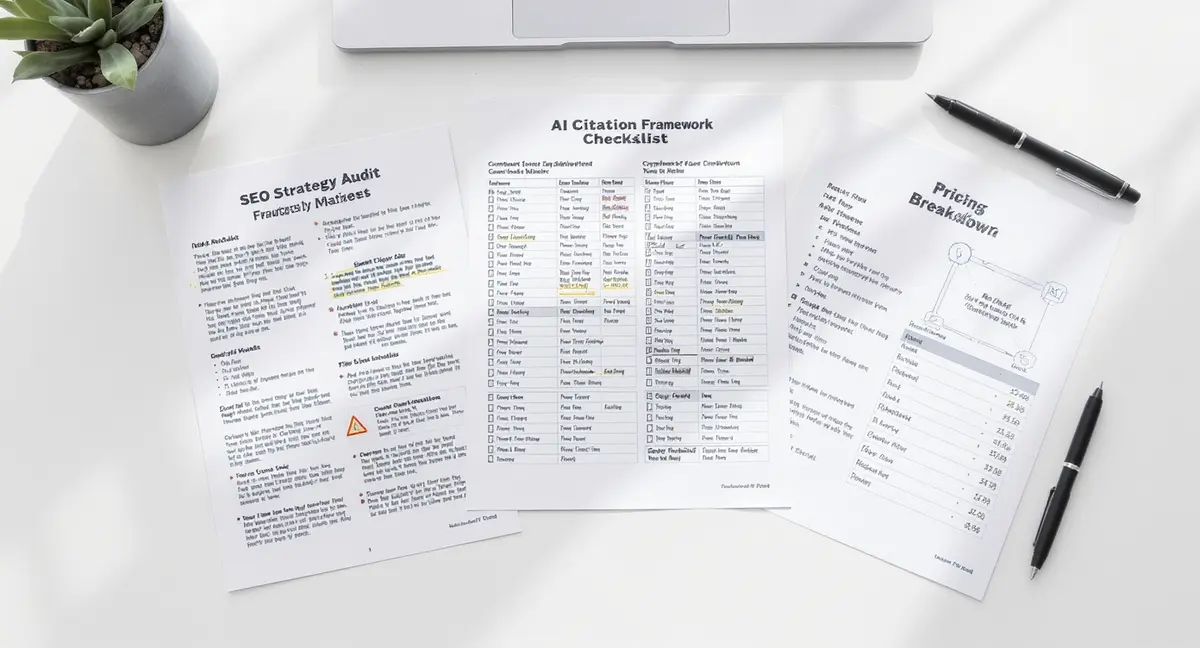
The short answer: Strategyc is a content and visibility system for businesses that need to own their SEO infrastructure. A strong SEO consultant company delivers transparent strategy, measurable outcomes, and infrastructure you control, not monthly dependency. Success in SEO consulting comes down to methodology transparency, ownership structure, and performance accountability. According to Search Engine Journal, SEO leads close at 14.6% compared to 1.7% for outbound marketing. If your content isn't structured for AI citations, you're already losing half your potential visibility to competitors who understand AI search optimization.
Most businesses hire SEO consultants the same way they'd hire a plumber, when something's broken and they don't know how to fix it. That's exactly why so many consulting relationships fail. You're not hiring someone to patch a leak. You're hiring someone to build infrastructure that compounds value over years, not months. The SEO consulting market in 2026 looks nothing like it did two years ago. AI search platforms like ChatGPT, Perplexity, and Google's AI Overviews now answer 50% of queries without sending traffic to websites. Traditional SEO tactics, keyword stuffing, link schemes, content farms, don't just fail anymore. They actively harm your visibility. The businesses winning organic traffic today aren't playing the old game. They're building content systems that AI models cite as authoritative sources. Take a look at what separates a consultant worth hiring from one who'll waste your budget: the best firms show you exactly what you'll own when the engagement ends. They don't gatekeep data. They don't lock you into proprietary dashboards. They build systems you control. This article breaks down how to evaluate SEO consulting companies, what to expect from pricing and deliverables, and how to avoid the structural traps that keep businesses dependent on monthly retainers they can't measure.What an SEO Consultant Company Actually Does in 2026
Strategic Audits That Identify Revenue Leaks
An SEO consultant company starts with a technical and content audit that maps where your visibility is broken. Not surface-level "you need more backlinks" advice. A real audit identifies crawl errors blocking Google from indexing your best pages, schema markup gaps that prevent AI models from citing your content, and Core Web Vitals issues that tank your rankings. According to Backlinko's 2024 research, sites ranking in position 1 capture 27.6% of all clicks, but only if Google can crawl, index, and understand the page. The audit should deliver a prioritized roadmap. Not a 47-page PDF you'll never read. A clear list of what's costing you traffic right now, what'll move the needle in 90 days, and what's long-term infrastructure work. If the consultant can't show you the exact pages losing traffic and why, they're guessing.Content Strategy Built for AI Search and Human Readers
Content strategy in 2026 isn't about blog posts. It's about structured, citable content that AI models use to answer queries. Research from Princeton and Georgia Tech published at KDD 2024 found that content with schema markup, factual density, and clear section-based formatting improves AI visibility by 30-40%. That's the difference between appearing in ChatGPT's answers and being invisible. A strong SEO consultant company builds content frameworks that work across Google, AI Overviews, voice search, and traditional organic results. They don't write 500-word blog posts and call it strategy. They design content systems, FAQ sections that answer voice queries, comparison tables that AI models extract, and expert-attributed observations that establish authority. The Content Marketing Institute's 2024 report shows companies that blog consistently get 55% more website visitors, but only if the content is structured for how search actually works now.Technical Infrastructure That Supports Long-Term Growth
Technical SEO isn't optional anymore. It's the foundation everything else sits on. Page speed, mobile responsiveness, structured data, internal linking architecture, these aren't nice-to-haves. They're ranking factors. Google's Core Web Vitals (Largest Contentful Paint, Interaction to Next Paint, Cumulative Layout Shift) directly impact rankings. Sites that fail Core Web Vitals lose traffic even if their content is excellent. The best SEO consultant company doesn't just point out technical problems. They either fix them or give your team a clear implementation plan. That includes setting up Google Search Console and Google Analytics correctly, implementing schema markup for rich results, and building an internal linking structure that distributes authority across your site. If you're paying for consulting but still need to hire a developer to implement everything, you're paying twice.How to Evaluate SEO Consulting Companies Without Getting Burned
Ask What You'll Own When the Engagement Ends
This is the question most businesses never ask, and it's the most important one. When you stop paying the consultant, what do you keep? Do you own the content they created? Do you have access to the analytics accounts, or were they set up under the consultant's login? Can you see the keyword research, or is it locked in their proprietary tool? A consultant worth hiring builds systems you own. They set up Google Search Console and Google Analytics under your domain. They document their process so your team can maintain it. They deliver keyword research in a spreadsheet you control, not a dashboard that disappears when the contract ends. According to Focus Digital's 2025 research, 38% of businesses churn from SEO agencies annually, and most of them lose everything when they leave because they never owned the infrastructure.Demand Transparent Reporting on Metrics That Matter
Most SEO reports are designed to look impressive without showing whether you're making money. Graphs showing "impressions up 40%" mean nothing if traffic and conversions stayed flat. The best SEO consultant company reports on metrics tied to revenue: organic traffic to high-intent pages, conversion rate by traffic source, leads or sales from organic search, and keyword rankings for terms that actually drive business. Ask to see sample reports before you sign. If they're full of vanity metrics (domain authority, total backlinks, keyword rankings for terms no one searches) and light on business outcomes, walk away. Firework's 2025 study found that only 8% of marketers feel confident they can measure ROI from their marketing spend. That's not because ROI is hard to measure. It's because most agencies don't want you to see the real numbers.Check Their Methodology for AI Search Optimization
If an SEO consultant company isn't talking about AI search in 2026, they're already obsolete. Google AI Overviews now appear on 50% of queries, and research from industry analysts shows they cause a 61% drop in click-through rates to traditional organic results. That doesn't mean SEO is dead. It means the game changed, and most consultants haven't adapted. Ask how they optimize for AI citations. Do they use schema markup? Do they structure content with clear, extractable answers? Do they build FAQ sections that voice assistants can read aloud? According to SingleGrain's 2025 data, visitors arriving from AI-sourced results convert at 27% compared to 2.1% from traditional search. The traffic quality is higher because AI pre-qualifies the query. But you only get that traffic if your content is structured for AI to cite.Pricing Models and What You Should Expect to Pay
Hourly Consulting vs. Project-Based Engagements
Hourly consulting typically runs $150-$400 per hour depending on the consultant's experience and your industry complexity. This model works well for businesses that need strategic guidance but have an in-house team to execute. You're paying for expertise and direction, not implementation. Expect 5-10 hours per month for ongoing strategy, or 20-40 hours for a thorough audit and roadmap. Project-based engagements bundle strategy and implementation into a fixed scope. A technical SEO audit might cost $3,000-$8,000. A complete content strategy with keyword research, competitive analysis, and a 12-month content calendar might run $8,000-$15,000. The advantage: you know exactly what you're paying and what you'll receive. The disadvantage: if the scope expands, so does the cost.Monthly Retainers and What They Should Include
Monthly retainers for SEO consulting range from $2,000 to $15,000+ depending on scope and company size. According to industry research, the average SMB retainer sits around $3,500-$5,000 per month. That should buy you ongoing strategy, performance monitoring, content guidance, and technical optimization. If you're paying $5,000 a month and can't articulate what you're getting, you're overpaying. Consider what a solid retainer includes: monthly performance reports tied to business metrics, ongoing keyword research and content recommendations, technical SEO monitoring and fixes, competitor analysis, and strategic calls to adjust based on results. What it shouldn't include: vague promises of "more traffic," reports full of metrics you can't act on, or work that stops the moment you cancel.Performance-Based and Hybrid Models
Some consultants offer performance-based pricing, you pay based on results like rankings, traffic, or leads. Sounds great in theory. In practice, it's complicated. Rankings fluctuate based on factors outside the consultant's control (algorithm updates, competitor actions, seasonal trends). Traffic can increase without driving revenue if it's the wrong traffic. And no ethical consultant can guarantee specific rankings, Google's algorithm is too complex and changes too often. Hybrid models combine a base retainer with performance bonuses. You might pay $3,000 per month plus a bonus if organic traffic increases by 30% or if you rank in the top 3 for target keywords. This aligns incentives better than pure retainer or pure performance models. Just make sure the performance metrics are ones you actually care about, not vanity numbers that look good in reports but don't move your business forward.Ready to take the next step with Strategyc?
Our team is ready to help you achieve your goals. Get Your Free Scan. E-commerce businesses face unique technical challenges that require platform-specific expertise, which is why Shopify SEO demands a different approach than traditional site optimization.
Red Flags That Signal a Low-Quality SEO Consultant
Guaranteed Rankings and Unrealistic Timelines
If an SEO consultant company guarantees first-page rankings, run. No one controls Google's algorithm. Promising specific rankings is either dishonest or delusional. Ethical consultants talk about improving visibility, increasing qualified traffic, and building authority over time. They set realistic expectations: meaningful results typically take 6-12 months, not 30 days. Same goes for timelines. SEO is compound interest, not a lottery ticket. A consultant promising "page 1 in 60 days" is either targeting keywords with zero competition (which means zero traffic) or planning to use tactics that'll get you penalized. The Demand Gen Report's 2024 research shows B2B buyers consume 3-7 pieces of content before engaging sales. That's not a 60-day cycle. That's a relationship-building process that takes months.Lack of Transparency About Methods and Tools
If a consultant won't explain their process or show you the tools they use, they're hiding something. Maybe they're using automated link-building schemes that violate Google's guidelines. Maybe they're spinning low-quality content and hoping you won't notice. Maybe they don't actually have a process and they're figuring it out as they go. Ask specific questions: How do you build links? (The answer should involve outreach, digital PR, and earning links through quality content, not buying links or using private blog networks.) How do you create content? (The answer should involve keyword research, competitive analysis, and subject matter expertise, not AI content mills.) What tools do you use? (They should be able to name specific platforms for rank tracking, technical audits, and analytics, even if they're generic categories.)Contracts That Lock You In Without Clear Deliverables
A 12-month contract with early termination fees is a red flag unless the deliverables justify it. Some consultants lock you in because they know their results won't justify the cost, and they need time to collect fees before you figure that out. Others lock you in because they're making a genuine investment in your site (like a complete technical rebuild) and need time to see ROI. The difference: clear deliverables. A good contract specifies exactly what you'll receive each month, what metrics define success, and what happens if results don't materialize. A bad contract is vague about deliverables and heavy on penalties for leaving. Before you sign, ask: "If I cancel after 6 months, what do I keep?" If the answer is "nothing," you're renting, not building.When to Hire a Consultant vs. Build In-House vs. Install a System
The Consultant Model: Strategic Guidance for Existing Teams
Hire a consultant if you have an in-house marketing team that needs expert direction but can handle execution. This works well for mid-market companies with 2-5 marketing people who understand the basics but need strategic oversight. The consultant audits your current approach, identifies gaps, builds a roadmap, and checks in monthly to keep you on track. Cost: $2,000-$8,000 per month depending on involvement level. You're paying for expertise, not labor. Your team does the work. The consultant makes sure it's the right work. This model fails if your team doesn't have capacity to execute or if they lack the technical skills to implement recommendations. You'll pay for strategy that never gets built.The In-House Model: Full Control, Full Responsibility
Building in-house makes sense if SEO is core to your business model and you have the budget to hire specialists. You'll need at minimum: an SEO strategist ($70,000-$120,000 annually), a content writer ($50,000-$80,000), and a technical SEO specialist or developer ($80,000-$130,000). That's $200,000-$330,000 in salary alone, plus tools, training, and management overhead. The advantage: complete control and institutional knowledge that stays with your company. The disadvantage: recruiting and retaining SEO talent is hard. Good SEO specialists have options. If your lead SEO person leaves, you're starting over. And if your business is seasonal or your SEO needs fluctuate, you're paying full-time salaries for part-time needs.The Installed System Model: Own the Infrastructure, Skip the Dependency
The third option: install a content and visibility system you own permanently. This is what Strategyc builds, infrastructure that keeps producing results after the engagement ends. Not a monthly retainer. Not an in-house team you have to manage. A system installed on your domain, using your accounts, optimized for Google, AI search, and voice search. to see where your business currently stands in Google, AI search platforms like ChatGPT and Perplexity, and voice assistants like Siri and Alexa. You'll leave with a clear picture of what's working, what's not, and what to do next. No commitment, no pressure, just a clear assessment of your current visibility. The installed system model works for businesses that need content-driven visibility but don't want to rent it monthly or build a full in-house team. You pay once for the system installation (typically $15,000-$40,000 depending on scope), and it keeps working. You control the publishing pace. You own the content. You see the data. When you stop paying, the system doesn't disappear, it's yours.The Bottom Line on Choosing an SEO Consultant Company
The best SEO consultant company in 2026 isn't the one with the flashiest website or the longest client list. It's the one that builds infrastructure you own, reports on metrics that matter, and adapts to how search actually works now, not how it worked in 2023. AI search is reshaping visibility right now. Early adopters are seeing 120x impression increases and 800% year-over-year traffic growth from AI platforms, according to enterprise SEO research. If your consultant isn't optimizing for AI citations, you're already behind. Ask the hard questions before you sign: What do I own when this ends? How do you optimize for AI search? What metrics define success, and how will I track them? If the answers are vague or defensive, keep looking. The right consultant will welcome those questions because they've built their business on transparency and results, not dependency and dashboards you can't access. Most importantly, understand the structural incentive problem. Monthly retainers incentivize agencies to keep you dependent. Installed systems incentivize builders to make you self-sufficient. Choose the model that aligns with where you want to be in two years: still paying monthly for visibility you don't control, or owning infrastructure that compounds value every month without additional cost.Frequently Asked Questions
What's the difference between an SEO consultant and an SEO agency?
An SEO consultant provides strategic guidance and audits but typically doesn't execute the work. An agency handles both strategy and implementation, often through monthly retainers. Consultants cost less but require you to have an in-house team. Agencies cost more but handle everything, though you're dependent on them as long as you're paying. Businesses serving specific geographic areas often waste budget on tools that promise automation but fail to deliver actual visibility, a problem we've documented extensively in our analysis of local SEO software. Legal practices face particularly aggressive competition in organic search, where the cost of client acquisition makes ownership-based visibility critical (we've covered this extensively in our guide to SEO for lawyers).
How long does it take to see results from SEO consulting?
Meaningful SEO results typically take 6-12 months. Technical fixes might show impact in 30-90 days, but building topical authority and earning rankings for competitive keywords takes longer. Any consultant promising page-one rankings in 60 days is either targeting low-value keywords or using risky tactics that'll hurt you long-term. Property professionals face similar infrastructure challenges, which is why many brokerages are abandoning traditional agency relationships in favour of installed systems (the shift we've documented in real estate SEO).
What does it take to own my visibility infrastructure instead of renting it?
Owning your visibility infrastructure means controlling the content, the accounts, the data, and the process. You need either an in-house team (expensive, hard to recruit) or an installed system built on your infrastructure. The key question: when you stop paying, does everything stop, or does it keep working because you own it?
How do I measure ROI from organic content and SEO?
Track organic traffic to high-intent pages, conversion rate by traffic source, and leads or sales attributed to organic search in Google Analytics. Set up goal tracking or ecommerce tracking so you can see revenue, not just traffic. If your consultant can't show you how to measure business outcomes, they're focused on vanity metrics that don't matter.
Can I build an effective SEO system in-house without hiring an agency?
Yes, if you have the right people and tools. You'll need someone who understands technical SEO, content strategy, and how AI search works in 2026. Alternatively, you can install a system once and own it permanently, no ongoing agency fees, no in-house hiring. The question isn't whether you can build it yourself. It's whether that's the best use of your time and budget.