Best Local SEO Audit Tool: 7 Options That Find What's Broken in 2026
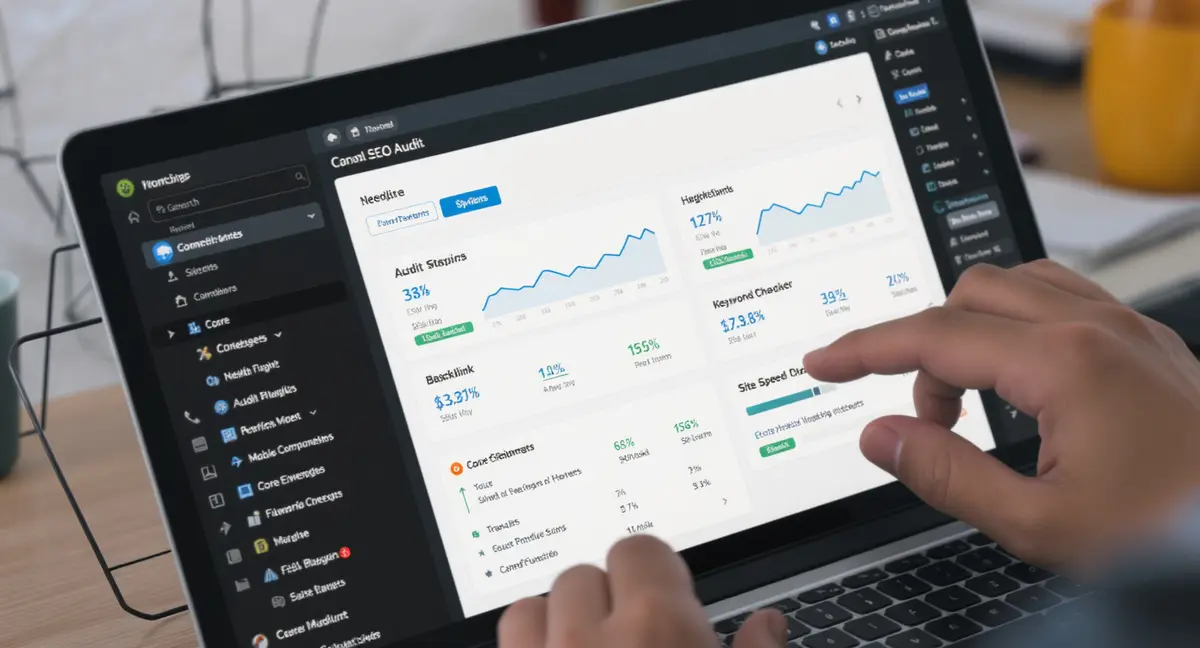
The short answer: The best local SEO audit tool scans citation consistency across 150+ directories, monitors Google Business Profile health, detects AI hallucinations in ChatGPT and Perplexity, and tracks Map Pack rankings with block-level precision. The best tools balance citation audits, GBP optimization, technical site health, and AI search tracking. Success in this space comes down to citation consistency, Google Business Profile completeness, and AI platform monitoring. AI Overviews now appear in 50% of Google queries, and they only cite 3–5 brands per answer, making audit visibility critical.
Finding the best local SEO audit tool in 2026 means choosing software that can track how your business appears across Google Maps, AI search platforms like ChatGPT and Perplexity, and traditional organic results. Most businesses waste money on tools that only monitor rankings without diagnosing why those rankings drop. A proper local SEO audit tool scans citation consistency across 150+ directories, flags Google Business Profile errors, detects AI hallucinations when ChatGPT invents fake information about your business, and measures hyperlocal visibility down to the block level. SEO checklist is worth reading alongside this.
The stakes are higher than they were two years ago. AI Overviews now appear in 50% of Google queries, and they only cite 3-5 brands per answer (DemandSage, 2025). If your business isn't in that group, your competitor is. Meanwhile, 76% of people who search for something nearby visit a business within a day (Google). That means your local visibility directly impacts foot traffic and revenue.
This article breaks down audit tools by what they actually detect: citation errors that confuse Google's Knowledge Graph, GBP health issues that tank Map Pack rankings, technical problems that slow your site, and AI tracking gaps that leave you invisible in ChatGPT answers. You'll see pricing, trial options, and which tools work for solo consultants versus agencies managing 50+ locations. No padding. Just what works in 2026.
What Makes a Local SEO Audit Tool Worth Using
The best local SEO audit tool does more than track keyword rankings. It diagnoses the structural problems that prevent your business from appearing in local search results. That means scanning for citation inconsistencies across directories, auditing your Google Business Profile for completeness errors, checking technical site health like Core Web Vitals, and measuring how you rank in the Map Pack versus organic results. Tools that only track position #3 to #5 movement miss the real issues: duplicate listings, incorrect NAP data, missing schema markup, or AI platforms inventing false information about your services.
| Audit Capability | What It Checks | Impact on Rankings |
|---|---|---|
| Citation Consistency Scanning | NAP data across 150+ directories; flags mismatches in name, address, phone | Prevents Knowledge Graph confusion; improves Map Pack visibility |
| Google Business Profile Health | Profile completeness, categories, service menus, photos, Q&A unanswered items | Directly influences Map Pack position and local pack eligibility |
| Technical Site Audit | Core Web Vitals, mobile responsiveness, local schema markup, page speed | Affects organic ranking and user experience quality scores |
| AI Search Tracking | Monitors mentions in ChatGPT, Perplexity, Google AI Overviews; detects hallucinations | Captures visibility in AI-driven search; prevents false business info spread |
| GeoGrid Rank Tracking | Rankings at multiple GPS coordinates across service area; block-level heatmaps | Shows hyperlocal performance gaps; enables targeted optimization by zone |
Core Audit Components That Matter in 2026
A complete local audit covers four layers. First, citation consistency: your business name, address, and phone number must match exactly across Google, Yelp, Facebook, Apple Maps, and 150+ other directories. Even small variations like "St." versus "Street" confuse Google's Knowledge Graph. Second, Google Business Profile health: missing categories, incomplete service menus, low-quality photos, and unanswered questions all hurt Map Pack rankings. Third, technical site audits: slow load times, broken mobile layouts, and missing local schema markup cost you visibility. Fourth, AI tracking: ChatGPT and Perplexity pull business information from sources that aren't always accurate, and you need to know when they're citing outdated or incorrect data about your company.
Tools like SE Ranking can scan 200+ pages in under a minute and assign a health score out of 100, making it easy to prioritize fixes (Semrush, 2026). But speed doesn't matter if the tool misses local-specific signals like geo-modified keywords or Map Pack fluctuations. The best local SEO audit tool balances breadth with depth.
GeoGrids and Hyperlocal Rank Tracking
Most rank trackers report citywide averages, which hides critical variations. A plumbing company might rank #1 in the downtown core but #12 in suburban neighborhoods three miles away. GeoGrid technology solves this by checking rankings at dozens of GPS coordinates across your service area, creating a heatmap that shows exactly where you're visible and where you're not. This matters because Google serves different Map Pack results based on the searcher's precise location.
Platforms that offer GeoGrid reporting let you see block-by-block performance, which is essential for businesses with multiple service zones or competitors clustered in specific neighborhoods. This level of granularity turns vague "improve local rankings" goals into actionable tasks like "optimize for the east side where we rank #8 instead of #2." Visual heatmaps also make client reporting dramatically easier for agencies.
AI Search Tracking and Hallucination Detection
The best local SEO audit tool in 2026 must track how your business appears in AI search platforms, not just Google. ChatGPT, Perplexity, Google's AI Overviews, and Gemini are forming their knowledge bases right now, and they don't always get it right. AI hallucinations happen when these models invent services you don't offer, cite outdated addresses, or recommend competitors when users ask about your business category. Early adopters of AI search optimization are seeing 120x impression increases and 800% year-over-year traffic growth from LLMs (BrightEdge, 2025). But you can't optimize what you can't measure. If you want the practical breakdown, AI SEO audit is a good next step.
Share of Voice in AI Platforms
Traditional SEO tracks how often you rank for target keywords. AI search tracking measures how often AI models cite your business when answering category-relevant queries. If someone asks ChatGPT "best Italian restaurants in Portland," does your restaurant appear in the answer? How many times per 100 queries? This metric, called Share of Voice in AI search, tells you whether you're building authority that AI systems recognize.
Tools that integrate AI tracking alongside traditional SERP monitoring give you a complete picture. You might rank #3 in Google organic results but have zero presence in ChatGPT answers, which means you're invisible to the growing segment of users who rely on conversational AI for recommendations. Tracking both channels lets you allocate resources to the platforms where your audience actually searches.
Fixing AI Errors Before They Cost You Customers
AI hallucinations aren't theoretical. A roofing company might discover that ChatGPT lists them as "permanently closed" because an outdated directory listing fed that information into the model's training data. Or a law firm finds that Perplexity recommends a competitor when asked about estate planning lawyers in their city, even though they have more authoritative content on the topic. The best local SEO audit tool flags these errors so you can correct the source data before potential customers see false information.
Detection tools scan AI platforms for mentions of your business and compare the results to your actual service offerings, hours, and contact information. When discrepancies appear, you get alerts with the specific query that triggered the hallucination and the likely source of the bad data. This lets you update the upstream citation or schema markup that AI models are pulling from.
Citation Management and Directory Scanning
Citation audits are the foundation of local SEO, but most businesses don't realize how many directories matter. Google cross-references your NAP data across hundreds of sources to verify your business is legitimate and consistent. Inconsistent citations dilute your authority and confuse the Knowledge Graph, which can drop you out of the Map Pack entirely. The best local SEO audit tool scans 150+ directories, flags discrepancies, and prioritizes fixes based on the authority of each source.
Inconsistency Detection Across 150+ Directories
A complete citation audit checks your business name, address, phone number, website URL, and category across every major directory: Google Business Profile, Bing Places, Apple Maps, Yelp, Facebook, Yellow Pages, and industry-specific platforms like Avvo for lawyers or Healthgrades for doctors. Even small variations create problems. "ABC Plumbing LLC" on Google and "ABC Plumbing" on Yelp signals to search engines that these might be two different businesses.
Platforms like Semrush Local and Whitespark scan directories systematically and generate reports showing where your data is correct, incomplete, or conflicting. They also track whether your listings are claimed and verified, which matters because unclaimed profiles can be edited by anyone, leading to vandalism or outdated information. Fixing these issues isn't glamorous, but it's the difference between appearing in the Map Pack and being invisible.
Rollover Credits and Agency Pricing Models
For agencies managing multiple clients, per-location pricing adds up fast. Some tools charge $50-$100 per location per month, which becomes unaffordable when you're tracking 50+ businesses. Credit-based systems offer an alternative: you buy a pool of credits that roll over month to month, and you allocate them across clients as needed. This flexibility matters when some clients need intensive audits during onboarding but lighter monitoring after issues are fixed. Seo audit essentials is worth reading alongside this.
Rollover credits also prevent waste. If you prepay for 100 location audits in January but only use 70, the remaining 30 don't disappear. They carry forward to February, letting you scale up or down based on client needs without losing money on unused capacity. This model works better for agencies than rigid per-seat subscriptions.
Rank Tracking for Map Pack and Organic Results
Local businesses need to track two types of rankings: Map Pack (the three businesses that appear with map pins at the top of local search results) and organic listings below the map. The best local SEO audit tool monitors both because the factors that influence each are different. Map Pack rankings depend heavily on proximity, Google Business Profile optimization, and review quantity. Organic rankings prioritize content authority, backlinks, and on-page SEO. A business might dominate the Map Pack but rank on page two organically, or vice versa.
Dual Monitoring for Complete Visibility
Tracking only Map Pack rankings misses half the opportunity. Organic results drive traffic from users further down the funnel who are researching solutions, comparing options, or looking for in-depth information. These visitors often convert at higher rates because they've already done preliminary research. A complete audit tool tracks both channels and shows how your visibility changes across them.
For example, a dentist might rank #2 in the Map Pack for "emergency dentist near me" but #15 organically for "root canal cost." That organic gap represents lost traffic from price-conscious researchers. Dual monitoring reveals these opportunities so you can create content that targets the keywords where you're weak. Tools that separate Map Pack and organic data also make it easier to diagnose sudden ranking drops, since the cause is often channel-specific.
Geo-Modified Keyword Clustering
Local keywords aren't just "plumber" or "lawyer." They include geo-modifiers like "plumber in Brooklyn," "Brooklyn emergency plumber," "24-hour plumber near Prospect Park," and hundreds of variations. The best local SEO audit tool clusters these keywords by intent and location, showing which combinations drive traffic and which ones you're missing. Entity-based clustering groups keywords by the service or product they reference, making it easier to build content that targets entire topic clusters instead of individual phrases.
Platforms like Semrush Local excel at this by analyzing which geo-modified keywords competitors rank for and suggesting gaps in your coverage. If three competitors rank for "estate planning lawyer your neighborhood" but you don't, that's a content opportunity. Clustering also prevents keyword cannibalization, where multiple pages compete for the same term and dilute each other's authority.
Ready to take the next step with Strategyc?
Our team is ready to help you achieve your goals. Get Your Free Scan.
Reputation Management and Review Monitoring
Reviews directly impact local rankings and customer decisions. Google considers review quantity, recency, and sentiment when determining Map Pack placement. A business with 200 reviews averaging 4.8 stars will usually outrank a competitor with 30 reviews at 5.0 stars. The best local SEO audit tool includes review monitoring across Google, Yelp, Facebook, and industry-specific platforms, with sentiment analysis that flags negative trends before they damage your reputation.
Multi-Platform Review Aggregation
Customers leave reviews on whichever platform is convenient, which means your reputation is fragmented across a dozen sites. Manually checking Google, Yelp, Facebook, Healthgrades, Avvo, and TripAdvisor every day is impractical. Audit tools that aggregate reviews into a single dashboard save time and ensure you never miss a negative review that needs a response. Fast responses to negative reviews can mitigate damage and even improve your reputation if handled well. If you want the practical breakdown, Best ecommerce seo is a good next step.
Sentiment analysis tools scan review text for keywords that indicate dissatisfaction (slow, rude, overpriced) or praise (professional, thorough, affordable). Tracking sentiment trends over time reveals whether service quality is improving or declining. A sudden spike in "slow service" mentions might indicate a staffing problem that needs immediate attention. This proactive approach prevents small issues from becoming reputation crises.
Review Velocity and Competitive Benchmarking
Review velocity (how many new reviews you get per month) matters as much as total count. Google favors businesses with consistent recent reviews over those with many old ones. If you got 50 reviews in 2024 but only 5 in 2026, Google interprets that as declining relevance. The best local SEO audit tool tracks your review velocity and compares it to competitors, showing whether you're keeping pace or falling behind.
Competitive benchmarking also reveals gaps. If your average rating is 4.3 and your top competitor is at 4.7, you know reputation is costing you Map Pack rankings. Some tools calculate the exact number of additional reviews or rating points needed to match or surpass competitors, turning vague "get more reviews" goals into specific targets.
Free Trials, Pricing, and What You Get
The best local SEO audit tool fits your budget and use case. Free trials let you test functionality before committing, but pay attention to limits: some restrict the number of locations, keywords, or audit depth during the trial period. Pricing varies widely based on features, location count, and whether the tool is designed for solo consultants or agencies. Understanding what you're actually buying prevents overpaying for features you'll never use or choosing a cheap tool that can't scale.
Free and Low-Cost Entry Points
Semrush Site Audit is free for up to 100 pages, making it viable for small businesses with simple sites (Semrush, 2026). Screaming Frog offers free crawls for up to 500 URLs, though the paid version at $279/year unlocks advanced features like JavaScript rendering and custom extraction (Semrush, 2026). BrightLocal provides a 14-day free trial with access to citation audits, rank tracking, and review monitoring, giving you enough time to run a complete audit before deciding whether to subscribe (LocalRank, 2026).
Budget-conscious options include Morningscore, which starts at $49/month and gamifies SEO audits with point-based health scoring (Semrush, 2026). Moz Pro begins at $39/month and includes basic local rank tracking and citation management (City Web Company, 2026). Netpeak Spider offers a 3-day free trial and costs $20/month for unlimited crawls, making it one of the most affordable technical audit tools (Semrush, 2026). These tools work well for solo consultants or businesses with 1-3 locations.
Agency-Tier Tools and White-Label Reporting
Agencies need tools that scale across dozens of clients without per-location fees that become prohibitive. White-label reporting lets you brand audit reports with your logo and colors, presenting findings as if they came from your agency rather than a third-party tool. This maintains client relationships and justifies higher service fees. BrightLocal offers white-label options and is popular among agencies for its balance of features and cost (LocalRank, 2026).
Credit-based pricing models work better than per-location subscriptions when client needs fluctuate. You might run intensive audits for new clients but only need monthly monitoring for established ones. Rollover credits prevent waste and let you allocate resources dynamically. Some platforms also offer tiered pricing where advanced features like AI tracking or GeoGrids cost extra, letting you pay only for what you use. Always calculate total cost of ownership: a tool that costs $200/month but includes unlimited locations might be cheaper than one at $99/month with $25 per additional location. Local business seo is worth reading alongside this.
The Bottom Line on Choosing Your Audit Tool
The best local SEO audit tool for 2026 tracks more than rankings. It scans citations across 150+ directories, monitors Google Business Profile health, detects AI hallucinations in ChatGPT and Perplexity, and measures hyperlocal visibility with GeoGrids. Free trials from BrightLocal, Semrush, and Screaming Frog let you test before committing. Budget options like Morningscore ($49/month) work for solo consultants, while agencies need white-label reporting and credit-based pricing to scale. The key is matching tool capabilities to your actual needs: citation management for multi-location businesses, AI tracking for competitive industries, and technical audits for sites with performance issues. Don't pay for features you won't use, but don't skimp on the diagnostics that reveal why your visibility is stuck.
Most businesses don't need another tool. They need a system that turns audit data into action without requiring a full-time SEO team. If you're tired of monthly retainers that deliver reports but no infrastructure, consider how an installed content system changes the equation. Book a to see where you stand in Google, AI search, and voice platforms. No commitment. Just a clear picture of your current visibility and what's actually broken.
Frequently Asked Questions
What's the best local SEO audit tool for small businesses with one location?
For single-location businesses, Google Search Console (free) combined with a tool like Moz Pro ($39/month) covers citation tracking, GBP health, and basic rank monitoring. BrightLocal's 14-day trial lets you run a complete audit before deciding whether ongoing monitoring justifies the cost. Avoid enterprise tools with per-location pricing designed for agencies.
How do I track local rankings block-by-block instead of citywide averages?
GeoGrid technology checks rankings at dozens of GPS coordinates across your service area, creating heatmaps that show hyperlocal visibility. Tools offering this include platforms focused on visual reporting. This matters because Google serves different Map Pack results based on searcher location, and citywide averages hide critical gaps in suburban or neighborhood-level coverage.
Can I build citation management and audit workflows in-house without tools?
Manual citation audits are possible but inefficient. Checking NAP consistency across 150+ directories takes 20+ hours per location. Tools automate detection and prioritize fixes based on directory authority. For businesses with 5+ locations, the time saved justifies tool costs. In-house workflows work if you have dedicated staff and build spreadsheets to track progress systematically.
Do free local SEO audit tools miss critical issues that paid versions catch?
Free tools like Semrush Site Audit (100 pages) and Screaming Frog (500 URLs) provide solid technical audits but lack citation scanning, GBP health checks, and AI tracking. Free versions also limit location count and historical data. For businesses serious about local visibility, paid tools prevent missing citation inconsistencies or AI hallucinations that free audits don't detect.
How often should I run a local SEO audit to catch problems before they hurt rankings?
Run full audits quarterly for established businesses, monthly during active optimization periods, and immediately after major changes like address updates or website redesigns. Set up automated monitoring for critical signals: citation changes, GBP edits, review velocity, and ranking fluctuations. Weekly alerts for new reviews and monthly reports for citation consistency prevent small issues from becoming ranking disasters.