AI Chatbot for Roofing Website: How to Capture More Leads Without Hiring More Staff
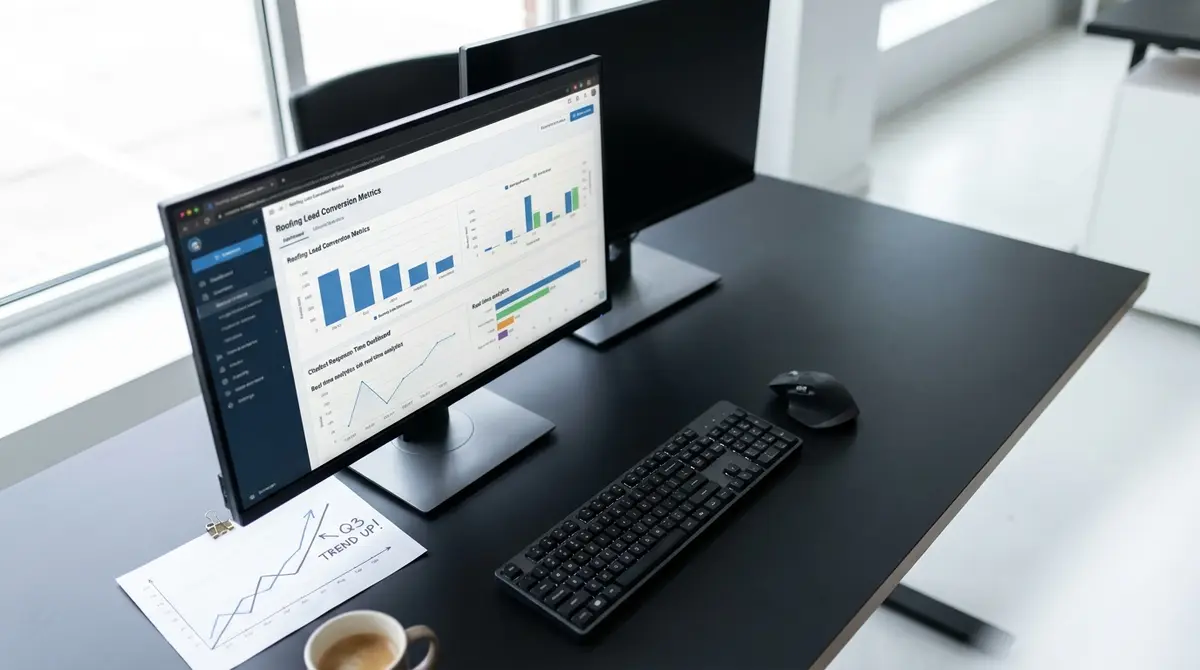
An AI chatbot for roofing website installations is changing how roofing companies capture and qualify leads in 2026. Homeowners searching for roof repairs at 11 PM during a storm no longer wait until business hours to reach out. They expect instant answers, and if your website can't provide them, they move to the next contractor. For roofing companies, that means losing high-intent leads to competitors who respond faster. An AI chatbot for roofing website deployment solves this by qualifying visitors, answering common questions, and booking inspections 24/7, without adding payroll. AI chat is one lever in a broader roofing marketing strategy that balances paid ads, SEO, and conversion tools to maximize lead volume without overspending.
The technology works because it understands roofing-specific inquiries. Not generic customer service scripts. Real questions like "Do you handle insurance claims?" and "How much does a shingle replacement cost?" The chatbot qualifies the lead, captures contact details, and routes urgent cases to your team immediately. This article breaks down how AI chatbots work for roofing businesses, what they capture that contact forms miss, and how to deploy one that actually converts traffic into booked jobs.
Why Roofing Companies Need AI Chat in 2026
Homeowner behavior shifted dramatically between 2023 and 2026. People research contractors on their phones, often outside business hours. A static contact form doesn't engage them. It collects a name and email, then waits. By the time you follow up the next morning, they've already called two other roofers who answered their questions immediately.
AI chatbots for roofing websites intercept that moment. When a visitor lands on your site at 9 PM researching storm damage, the chatbot opens a conversation: "Need help with roof damage? I can answer questions and schedule a free inspection." The interaction feels immediate and human. The chatbot asks qualifying questions, roof type, age, damage description, urgency, and determines whether this is a $500 repair or a $15,000 replacement. It books an inspection slot directly into your calendar. No missed leads. No delayed responses.
The Cost of Slow Response Times
A Lead Response Management study by InsideSales.com and MIT's James Oldroyd found that calling a lead within five minutes makes you 100 times more likely to reach them than calling after 30 minutes. For roofing companies, the window is even tighter. Storm-season leads move fast. A homeowner with a leak doesn't wait. They call the first contractor who picks up or responds online. If your team is on a roof during business hours, calls go to voicemail. Emails sit unread. The lead books with someone else.
An AI chatbot for roofing website deployment eliminates that gap. It responds in seconds, every time. During a storm, it can sort active leaks from routine inspections, put emergencies first and schedule non-urgent jobs for the following week. The result: more revenue captured during peak season without hiring additional office staff.
What AI Chat Captures That Forms Don't
Contact forms are passive. They ask for a name, phone number, and a text box labeled "Tell us about your project." Most visitors abandon them. Unbounce's Conversion Benchmark Report puts the median landing page conversion rate for home improvement at 2.6%. AI chat flips the dynamic. It starts the conversation, asks one question at a time, and adapts based on the visitor's answers.
Example: A homeowner visits your site searching for "roof leak repair near me." The chatbot asks, "Are you dealing with an active leak right now?" If yes, it escalates: "Got it. Let's get someone out today. What's your address?" If no, it shifts to qualification: "When did you first notice the issue?" The conversation feels natural, not transactional.
How AI Chatbots Work on Roofing Websites
An AI chatbot for roofing website functionality is built on large language models (LLMs) trained to understand natural language. When a visitor types "How much does a metal roof cost?", the chatbot doesn't search for exact keyword matches. It interprets the intent, pulls from its knowledge base, and responds with a range: "Metal roofing typically runs $8–$14 per square foot installed, depending on material and pitch. Want a more accurate estimate? I can schedule a free inspection." That range is within HomeAdvisor's published costs for metal roof installation. The same principles that drive roofing leads through instant engagement apply to other high-intent industries, where local search optimization and fast response times determine who captures the buyer.
The system combines three components: a conversational AI layer (the LLM), a knowledge base (your FAQ content, service descriptions, pricing guidelines), and integration logic (connecting to your CRM, calendar, or lead management system). When deployed correctly, the chatbot feels like talking to an informed receptionist who knows your business inside out. It doesn't hallucinate answers or make promises you can't keep because it's trained on your content and constrained by guardrails.
Training the Bot on Roofing-Specific Knowledge
Generic chatbots fail in roofing because they lack domain expertise. A visitor asks, "Do you work with insurance adjusters?" and the bot responds with vague corporate-speak. That kills trust. Roofing-specific AI chatbots are trained on your past proposals, service pages, manufacturer warranties, and common objections. You feed it real questions from past customers: "How long does a roof replacement take?" "Do you handle storm damage claims?" "What's included in your warranty?"
You upload documents, FAQ lists, and transcripts from previous customer calls. The AI ingests this content and builds a knowledge graph. When a visitor asks a question, the bot retrieves the most relevant answer and delivers it in conversational language. Platforms like Noform and RoofD AI allow roofing companies to customize tone and branding. You can make the bot sound professional and direct, or friendly and approachable, depending on your market.
Conversation Flows and Lead Qualification Logic
The best AI chatbots for roofing websites don't just answer questions, they qualify leads. A well-designed conversation flow asks strategic questions in sequence: (1) What type of service do you need? (Repair, replacement, inspection) (2) What material is your current roof? (Asphalt shingle, metal, tile) (3) How old is your roof? (Under 10 years, 10–20 years, 20+ years) (4) Is this related to storm damage or wear? (5) Do you have homeowner's insurance? (6) What's your address and best contact method?
Each answer triggers a different path. If the visitor says "active leak" and "insurance claim," the bot prioritizes the lead and offers same-day scheduling. If they say "thinking about replacing in the next year," the bot captures their info and tags them for long-term nurture. This logic mirrors what a trained sales rep does on the phone, but it happens instantly and scales infinitely. You're not paying someone to sit by the phone waiting for leads. The AI handles initial qualification, and your team focuses on closing.
Lead Capture and Qualification Specifics for Roofers
Roofing leads vary wildly in urgency and value. A homeowner with an active leak during a rainstorm is worth more than someone casually browsing roof styles. An AI chatbot for roofing website deployment sorts these leads in real time. It asks the right questions to determine intent, budget readiness, and timeline. The goal isn't just to capture contact info, it's to understand whether this lead is worth a same-day visit or a follow-up call next week.
Qualification starts with damage type. The chatbot asks, "What's prompting you to look into roofing services?" Common answers: storm damage, visible leaks, missing shingles, age-related wear, or planning ahead. Storm damage and leaks trigger urgent workflows. The bot asks for photos, address, and availability for an immediate inspection. Age-related wear or planning-ahead inquiries get routed to a nurture sequence. This triage prevents your crew from chasing low-intent leads while high-value jobs sit unscheduled.
Residential vs Commercial Lead Workflows
Residential and commercial roofing leads require different qualification paths. Residential jobs are typically faster sales cycles, homeowner makes the decision, often driven by immediate need. Commercial jobs involve property managers, building owners, and longer approval processes. An AI chatbot for roofing website use adapts the conversation based on early signals. If the visitor selects "commercial property" or mentions square footage over 10,000 sq ft, the bot shifts tone and questions.
For commercial leads, the chatbot asks: "Who's the decision-maker for this project?" "What's your timeline for completion?" "Do you need this work done during off-hours?" These questions surface whether the lead is a property manager gathering quotes or an owner ready to move. The bot can also request building specs or photos of the existing roof. This upfront information helps your estimator prepare a more accurate bid before the site visit, saving time and improving close rates. Most roofing companies run their websites on WordPress, and understanding whether WordPress for SEO still holds up in 2026 matters when you're investing in chat tools that depend on organic traffic to feed them leads.
Insurance, Urgency, and Budget Signals
Three data points predict lead quality in roofing: insurance involvement, urgency level, and budget awareness. The chatbot captures all three during the conversation. It asks, "Is this damage covered by insurance?" If yes, it explains your claims-assistance process and asks if an adjuster has visited yet. Insurance-backed jobs have higher close rates because the homeowner isn't paying out of pocket.
Urgency is the second filter. "When do you need this work completed?" Answers like "ASAP" or "as soon as possible" signal hot leads. The chatbot offers same-day or next-day inspection slots. Budget awareness matters too. If a visitor asks, "How much does this cost?" the bot provides a range and immediately follows with, "Want a firm quote? I can schedule a free inspection." This positions the inspection as the natural next step, not a hard sell.
Integration with Roofing CRMs and Scheduling Tools
An AI chatbot for roofing website functionality becomes exponentially more valuable when it connects to your existing systems. Standalone chatbots that email you transcripts are better than nothing, but they still require manual data entry. Integrated chatbots push lead details directly into your CRM, create tasks for your sales team, and book inspection appointments without human intervention. This eliminates the lag between lead capture and follow-up.
Common roofing CRMs include JobNimbus, AccuLynx, Jobber and GoHighLevel. Modern chatbot platforms integrate with these systems via API. When a visitor completes the qualification conversation, the chatbot creates a new lead record, populates custom fields (roof type, damage description, insurance status), and assigns it to the appropriate sales rep. If the visitor books an inspection, the chatbot checks your calendar availability and confirms the appointment in real time.
Automated Lead Routing and Task Creation
Lead routing rules ensure the right person handles each inquiry. You can configure the chatbot to route storm-damage leads to your insurance-claims specialist, commercial inquiries to your commercial estimator, and routine repairs to your general sales queue. This prevents leads from sitting in a generic inbox while team members figure out who should respond. Routing happens instantly based on the qualification answers the chatbot collected.
Task creation is equally important. When a high-priority lead comes in, active leak, same-day request, the chatbot creates a task in your CRM with a due date of "today" and sends a notification to your dispatch team. For lower-urgency leads, it creates a follow-up task for 24 hours later. This automation ensures no lead falls through the cracks. Your team sees exactly what needs attention and when, without manually reviewing every conversation.
Smart Scheduling and Calendar Integration
Calendar integration transforms the chatbot from a lead-capture tool into a scheduling assistant. When a visitor says, "I need an inspection," the bot pulls available slots from your calendar system (Google Calendar, Outlook, Acuity, Calendly) and offers options: "I have openings tomorrow at 10 AM, 1 PM, or Thursday at 9 AM. Which works best?" The visitor selects a time, and the appointment is confirmed instantly. Both parties receive calendar invites and reminders.
This eliminates phone tag. Instead of "someone will call you to schedule," the job is booked before the visitor leaves your site. For roofing companies, this means more inspections booked per week without adding administrative overhead. Your estimators show up to pre-qualified appointments with lead details already in the system.
Too Many Storm Leads for Your Office to Answer?
We build a system on your accounts that asks your qualifying questions and routes each lead to whoever should have it. How Lead Qualification Works. Roofing companies and other local service providers share the same challenge photographers face: turning website visitors into booked appointments, which is why service-based SEO tactics that prioritize conversion over vanity metrics apply across industries.
Storm Season, Emergency Leaks, and After-Hours Behavior
Roofing demand spikes during storms, and that's when traditional lead-capture systems break down. Your phone lines are overwhelmed. Voicemail boxes fill up. Emails go unanswered for hours. Meanwhile, homeowners with leaks are frantically searching for help. An AI chatbot for roofing website deployment handles this surge without collapsing. It can hold many conversations at the same time. No hold times. No missed calls.
Storm-season chatbot behavior should prioritize triage. The bot asks, "Are you experiencing an active leak or emergency right now?" If yes, it escalates immediately, captures address, offers same-day or emergency service, and notifies your on-call team via SMS. If no, it qualifies the damage type (missing shingles, visible wear, preventive inspection) and schedules a non-urgent appointment. This ensures your crew focuses on revenue-critical emergencies while still capturing future work.
After-Hours Lead Capture During Peak Damage Events
Homeowners research roofing contractors late at night, especially after storms. They're awake because they hear dripping. They're stressed. They want answers now. A static website with a "Call us Monday" message loses them. The chatbot stays on, engaging visitors at 2 AM the same way it does at 2 PM. It answers questions about emergency tarping, temporary repairs, and insurance timelines. It books the first available inspection slot for the next morning.
Escalation Rules and Human Handoff Triggers
Not every conversation should stay with the bot. Some situations require immediate human intervention: structural concerns, complex insurance disputes, or high-value commercial projects. You configure escalation rules that trigger a handoff. For example, if a visitor mentions "sagging roof" or "structural damage," the chatbot says, "This sounds serious. Let me connect you with one of our specialists right away," and sends an instant alert to your team via SMS or Slack.
Handoff triggers can also be based on lead value. If the chatbot detects a commercial project over 20,000 square feet, it routes the conversation to your senior estimator instead of the general queue. Or if a visitor asks about a full roof replacement on a large home, the bot flags it as high-value and ensures a senior sales rep follows up within an hour. These rules balance automation with personalization, AI handles the routine, humans handle the complex.
Training the Chatbot on Roofing-Specific Knowledge
The difference between a generic chatbot and an effective AI chatbot for roofing website deployment is training. Generic bots give vague answers. Roofing-trained bots sound like they've worked in the industry for years. They know the difference between architectural shingles and three-tab. They understand that "flashing" isn't a photography term. They can explain why a 20-year-old roof might not qualify for insurance coverage. This expertise comes from feeding the AI your company's knowledge base.
Training starts with documents. You upload service descriptions, past proposals, manufacturer spec sheets, warranty terms, and FAQ content. The AI reads these files and builds a semantic understanding of your offerings. When a visitor asks, "Do you install GAF Timberline shingles?", the bot checks your uploaded content and responds accurately: "Yes, we're a GAF Master Elite contractor. Timberline HDZ is one of our most popular options. It comes with a Lifetime limited warranty, and we can upgrade that to GAF's Golden Pledge warranty with up to 50 years of non-prorated coverage." No guessing. No hallucinations.
Tone, Branding, and Multi-Language Support
Your chatbot should sound like your brand. If your company's voice is friendly and approachable, the bot should use casual language: "Hey there! Need help with your roof?" If your brand is more formal and technical, the bot adjusts: "Good afternoon. How can I assist with your roofing project today?" Most platforms let you set tone guidelines during setup. You can specify vocabulary preferences, formality level, and even regional phrasing. Before deploying an AI chatbot, run a website audit to confirm your site is fast, mobile-friendly, and structured to convert the traffic the bot will engage.
Multi-language support matters in diverse markets. If you serve areas with large Spanish-speaking populations, the chatbot can detect the visitor's language preference and switch automatically. This isn't just translation, it's culturally adapted conversation. A bilingual AI chatbot for roofing website use expands your addressable market without hiring bilingual staff. According to CSA Research's 2020 Can't Read, Won't Buy study, 76% of consumers prefer product information in their own language, and 40% will never purchase from websites in other languages.
Continuous Improvement Through Conversation Review
AI chatbots get smarter over time. Every conversation generates data: which questions visitors ask most, where they drop off, what answers lead to booked inspections. You review these transcripts monthly and refine the bot's knowledge base. If multiple visitors ask about financing options and the bot doesn't have a good answer, you add financing details to its training data. If visitors frequently mention a specific roofing material you don't offer, you update the bot to recommend alternatives.
This feedback loop turns the chatbot into a continuously improving asset. Unlike a static website or a human receptionist who answers the same way every time, the AI adapts based on real interactions. The bot becomes a genuine business asset, one that captures more leads, qualifies them better, and frees your team to focus on closing.
The Bottom Line
An AI chatbot for roofing website deployment solves the core problem roofing companies face in 2026: too many leads slip away because of slow response times and after-hours inquiries. Homeowners expect instant answers. If your site can't provide them, they move on. The chatbot captures those visitors, qualifies their needs, and books inspections 24/7 without adding payroll. It handles storm-season surges, triages emergencies, and integrates with your CRM to eliminate manual data entry. The technology isn't experimental anymore, it's table stakes for contractors who want to compete in a mobile-first, always-on market.
Frequently Asked Questions
How much does an AI chatbot for roofing website cost?
Most roofing-specific AI chatbot platforms charge $100–$500 per month depending on conversation volume and integrations. Noform's published pricing is roughly that range. A custom build has its own setup cost plus monthly hosting.
Can I build and train the chatbot myself, or do I need a developer?
No-code platforms like Noform and RoofD AI let non-technical users build and train chatbots through visual interfaces. You upload documents, set conversation flows, and connect integrations without writing code.
Will an AI chatbot replace my receptionist or sales team?
No. The chatbot handles initial qualification and after-hours inquiries, freeing your team to focus on closing high-value leads and managing jobs. It's a force multiplier, not a replacement. Your team still handles complex questions, site visits, and final sales conversations.
How do I measure ROI from an AI chatbot for roofing website use?
Track three metrics: (1) number of qualified leads captured per month, (2) inspection-to-close conversion rate for chatbot-sourced leads, and (3) after-hours lead volume. Compare these to your previous contact-form or phone-only performance.
What happens if the chatbot gives incorrect information about pricing or services?
Well-trained chatbots use guardrails to avoid hallucinations. They only answer questions based on uploaded knowledge-base content. If a visitor asks something outside the bot's training, it escalates to a human: "Great question, let me connect you with a specialist who can give you an accurate answer."